

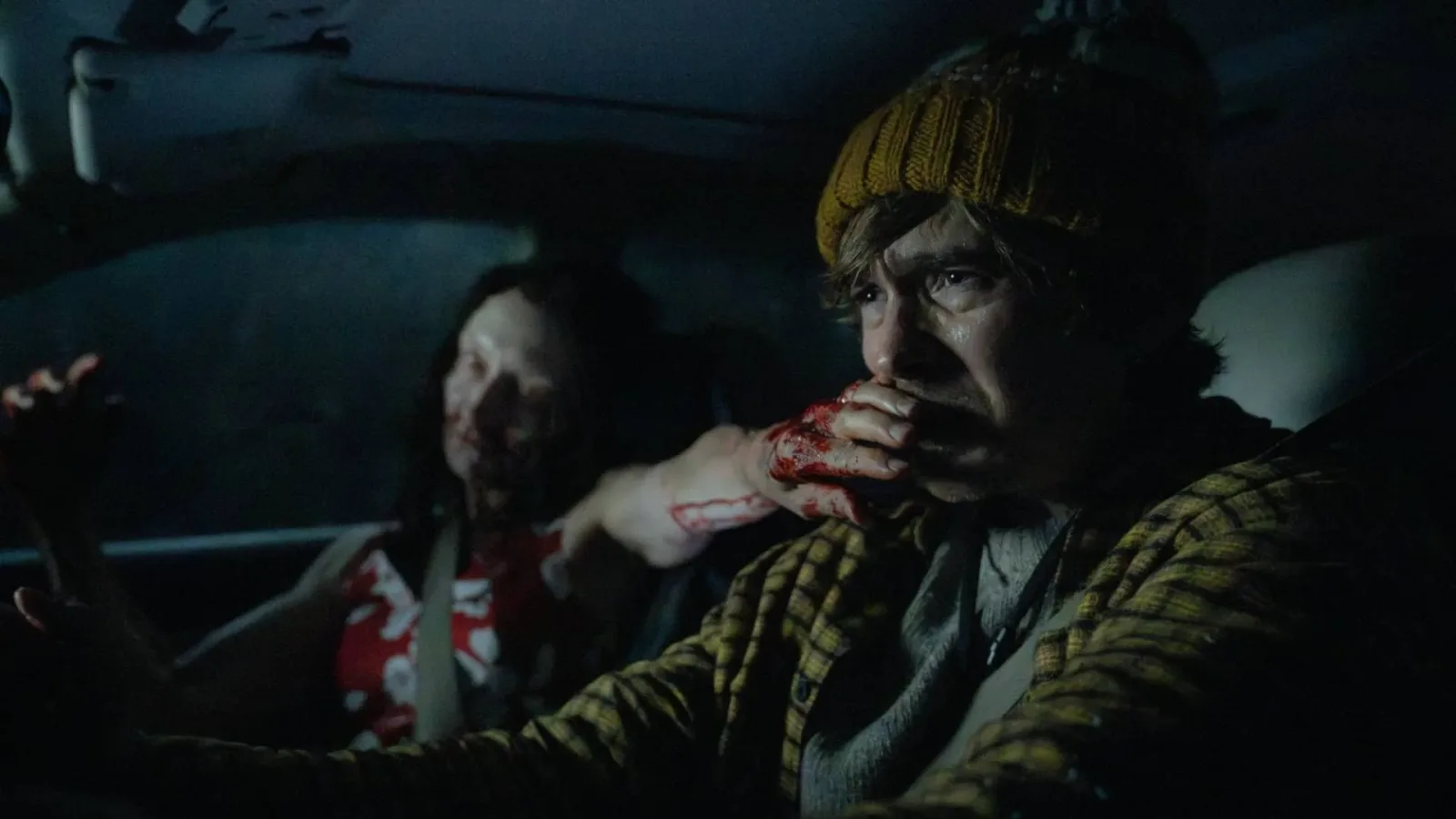
The first wave of reactions to Zach Cregger's Resident Evil movie suggests the director's unusual approach to the long-running survival-horror series may have paid off. Rather than retelling one of Capcom's familiar game narratives or building its plot around recognizable heroes, the film follows a new character caught in the orbit of Resident Evil 2's catastrophe. Early viewers have responded especially enthusiastically to that decision, with several describing a movie that seeks to reproduce the sensation of playing the games instead of simply recreating their most famous plot points.
Resident Evil stars Austin Abrams as Bryan, a hospital courier assigned to make a delivery to Raccoon City General Hospital. What should be a straightforward job turns into a fight for survival when an outbreak erupts around him. Bryan is not presented as one of the franchise's established game protagonists. He is a comparatively ordinary, ill-prepared person thrust into an escalating nightmare, a setup that appears designed to put audiences in the same vulnerable position as a player exploring an unfamiliar, dangerous space.
That perspective is central to Cregger's adaptation. The new movie is set on the periphery of the events associated with Resident Evil 2, but it does not appear to depend on directly reenacting the storylines of Leon S. Kennedy, Claire Redfield, or other major figures from the game. Instead, Cregger has framed his goal as translating the feeling of a Resident Evil play session: the mounting dread, abrupt shocks, limited sense of safety, grotesque creatures, and constant fear that the next hallway or door may bring a new problem.
Embedded X/Twitter post
Embedded X/Twitter post
Embedded X/Twitter post
A Video Game Feeling Rather Than a Checklist Adaptation
That distinction has become the dominant theme of the initial reactions. Perri Nemiroff called the film one of the strongest video game adaptations she has seen, while also praising it as an exceptionally effective horror comedy. Her response highlighted a difficult balance: the movie reportedly finds room for frequent laughs without reducing the danger or blunting the terror surrounding its characters.
For useful background on this topic, read Zombi Returns in a New Atari Lynx Demo for Its 40th Anniversary.
Erik Davis similarly argued that the film works less as a literal adaptation and more as a movie that makes viewers feel as if they are playing a game. His reaction encouraged audiences not to fixate too heavily on whether every expected piece of franchise lore has been included. In his view, the film takes the spirit of the games and pushes it in its own direction.
For a property with decades of games, films, animated projects, and competing interpretations, that could be a meaningful point. Resident Evil has always had a broad identity. It can be a carefully paced survival-horror experience built around exploration and scarce resources. It can also become action-heavy, conspiratorial, campy, tragic, or outright bizarre. Its best-known games frequently mix deadly seriousness with heightened dialogue, impossible bio-weapons, and moments of deliberate absurdity. A film that wants to capture the franchise may need more than familiar costumes, creatures, locations, or character names. It may need to understand why the series can make a player laugh nervously one moment and panic the next.
The early praise indicates Cregger may have found that unstable tonal space. Courtney Howard described the movie as a fast-moving, unpredictable thrill ride, calling attention to its kinetic action, severe body horror, and mutant chaos. She also singled out Abrams' performance as the film's hapless central figure. That description fits a version of Resident Evil that embraces both the terror of a viral outbreak and the stranger, more excessive energy that has long been part of the franchise's appeal.
Why the Raccoon City Setting Matters
Placing Bryan near Raccoon City General Hospital gives the movie immediate access to one of the series' most important dramatic ideas: a public institution transformed into a death trap. Hospitals are already environments filled with long corridors, sealed rooms, uncertain noises, medical equipment, and people in distress. In a Resident Evil story, those qualities can be sharpened into a nightmare of contamination, isolation, and mutation.
The fact that Bryan is a courier also offers a useful horror premise. He is moving through the city because of a job, not because he is a trained officer, an elite operative, or an established monster hunter. That can create a more direct connection to the vulnerability that defines classic survival horror. A protagonist with little control over the situation must navigate a place that is becoming less understandable by the minute, while every attempt to complete a simple task opens another route into danger.
It is also an approach that allows the film to respect Resident Evil 2 without being trapped by it. The games have their own canonical images, characters, locations, and player expectations. Retelling them beat for beat risks inviting constant comparison while losing the tension of uncertainty. A side story can preserve the broader outbreak and recognizable atmosphere while letting the film surprise even viewers who know Raccoon City inside out.
Mark Cassidy's reaction addressed precisely that concern. He noted that the movie may not use recognizable characters or storylines in the expected way, but said its focus on the games' relentless tension made it feel like the most faithful screen version yet. That is a significant claim, particularly for a franchise whose adaptations have often been judged by how closely they reproduce particular game details.
Horror Comedy Is a Delicate Fit for Resident Evil
The strongest early responses repeatedly mention comedy alongside the horror, and that may be the most intriguing aspect of the project. A horror-comedy can fail when jokes make threats feel weightless, or when a movie shifts so abruptly between tones that neither scares nor laughs land. Nemiroff's comments suggest the new Resident Evil avoids that issue by keeping the stakes intact even as it finds humor in Bryan's bad luck and the escalating insanity around him.
Cregger is no stranger to unsettling material and tonal misdirection. That makes him a potentially natural fit for a series where dread often sits next to the ridiculous. The games can turn a key item, a puzzle, or an awkward line reading into something memorable precisely because it occurs amid genuine danger. They are not always solemn, but their monsters and pressure can still be frightening. The early reactions imply the movie understands that a laugh does not have to break suspense; sometimes it can make the next scare feel sharper.
Abrams' role appears important to that balance. Descriptions of Bryan as doofy and hapless point toward a protagonist who may not react with the polished confidence often associated with action-horror heroes. If the performance keeps the character human rather than invincible, the comedy can emerge from panic, bad timing, and desperation instead of from mocking the threat. That is a promising framework for a film built around someone who has wandered into a biohazard nightmare with no obvious way out.
What First Reactions Can and Cannot Tell Audiences
The response so far is highly positive, but these are still first reactions rather than a full critical consensus. Early social responses often focus on immediate impressions and may come from viewers attending a premiere or special screening. They can reveal which elements are landing most strongly, but they do not settle every question about the finished movie, its broader reception, or how dedicated fans will respond to its creative departures.
Those departures will likely remain the key discussion point. Some players understandably want adaptations to feature familiar heroes and closely follow landmark game plots. Others may welcome a standalone story that treats the world of Resident Evil as a setting capable of generating new nightmares. The initial reactions make clear that Cregger's film is leaning into the latter philosophy. Its apparent faithfulness is being measured through mood, pacing, tension, monster design, and the sensation of being trapped in a hostile survival-horror scenario.
That could make the film accessible to viewers who have never played a game while giving longtime fans something different from another lore recap. The story's place beside Resident Evil 2 gives it a recognizable foundation, while Bryan's journey offers an entry point not dependent on prior knowledge of franchise mythology.
Resident Evil arrives in theaters on September 18. Until then, the early buzz paints a clear picture: Cregger's movie is not trying to be a museum of famous franchise moments. It is aiming to recreate the uneasy, unpredictable rush of opening a door in Raccoon City and realizing that whatever waits on the other side is probably worse than expected.
Community
Discussion
Start the conversation.
No comments have been posted yet.