

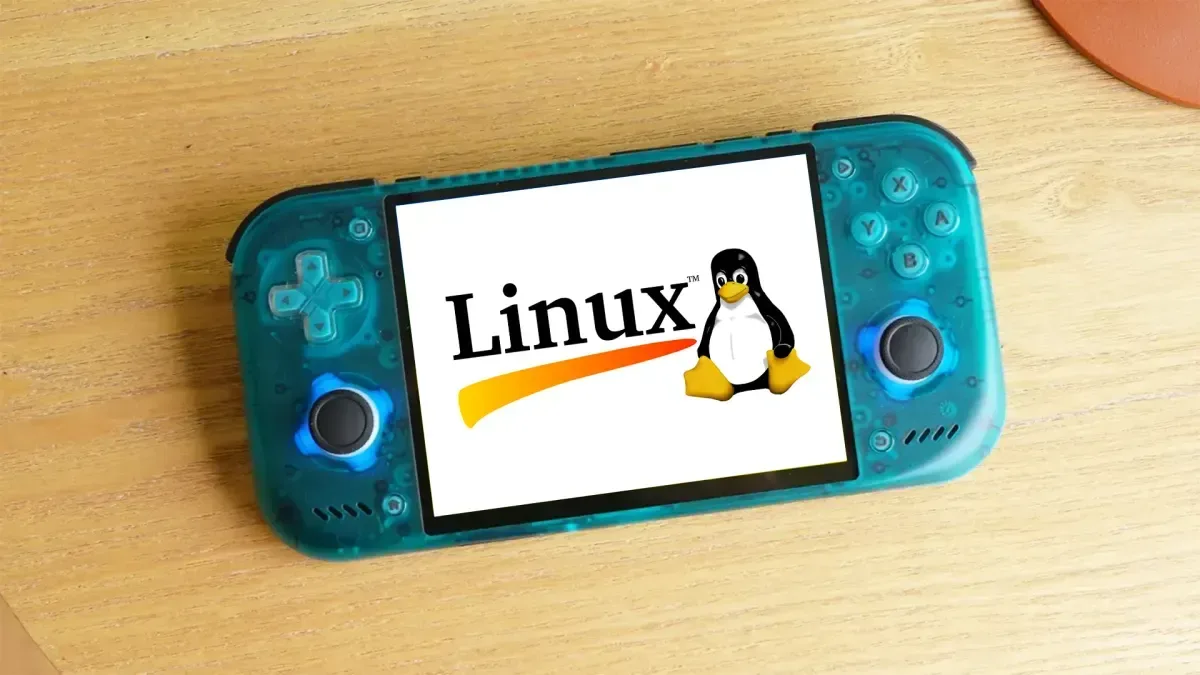
Retroid has announced mainline Linux support for three of its modern handhelds: the Retroid Pocket 6, Retroid Pocket Nova, and Retroid Pocket Duo. The news gives technically minded owners a new operating-system route beyond the Android software these devices are normally built around, while also marking a meaningful step for the wider enthusiast handheld scene.
The initial implementation is based on Linux Kernel 7.3. Retroid shared the development news through its public Discord community and identified supported hardware across the three machines, including controls, display-related functions, audio, wireless connectivity, graphics, storage, USB-C video output, and thermal fan control. It is an encouraging feature list for an early community-facing Linux effort, though prospective users should treat it as a hands-on project rather than a polished replacement image intended for every owner.
For years, Retroid's handheld identity has been closely tied to Android. That approach has made sense: Android provides broad emulator access, extensive configuration options, touch-friendly software, and a substantial catalogue of native games. On higher-specification handhelds, it can also offer enough headroom to raise settings in compatible Android titles and emulators. Linux support does not erase those advantages, but it gives users who prefer an open desktop-style foundation another way to shape their devices.
Three Retroid handhelds are included
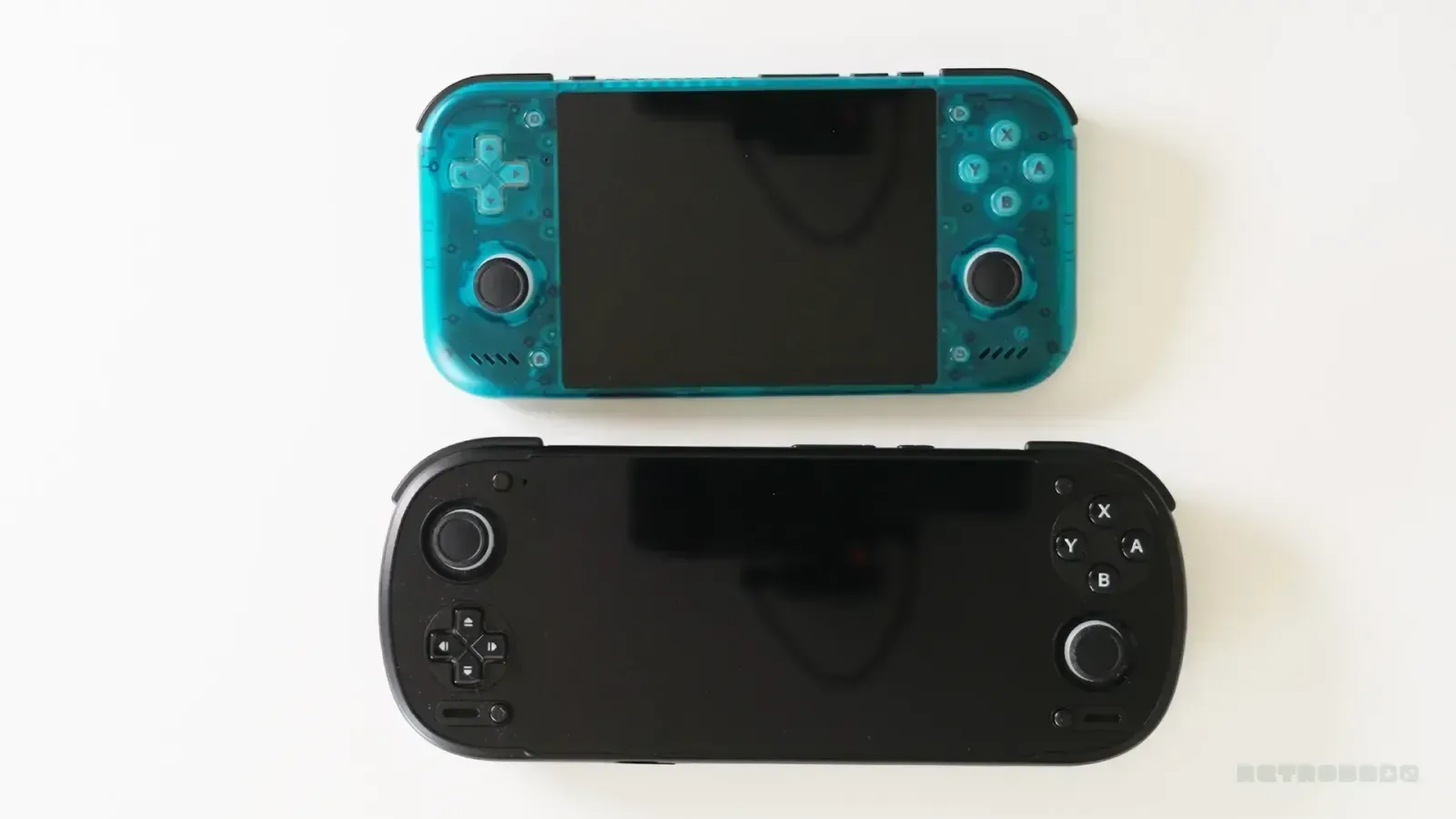
The currently named compatible systems are the Retroid Pocket 6 and Retroid Pocket Nova, both identified with the QCS8550 platform, plus the Retroid Pocket Duo, identified as Eliza. Retroid has framed the list as the supported selection for now, leaving open the possibility that additional hardware could be considered later. No promise of wider device support has been made.
For useful background on this topic, read Super Mario Galaxy Is Being Rebuilt for Game Boy Advance.
The Pocket Nova is especially notable in this context. It has quickly become one of Retroid's more talked-about recent handhelds following its launch a few months ago, and the availability of Linux work may add another point of interest for owners who enjoy experimenting with alternative firmware and software environments. The Pocket 6 and Duo are included from the outset as well, rather than being left behind for a future stage.
Linux on gaming handhelds can mean different things depending on the project. Some devices ship with a purpose-built Linux interface and a tightly controlled software stack. Others offer unofficial ports maintained by volunteers. Retroid's announcement sits in a useful middle ground: the company is supplying resources and enabling the necessary platform work, but the current information does not present Linux as a consumer-ready operating system preinstalled on retail units.
What is working in the current build
Retroid's published compatibility rundown is substantial. Input support covers the touchscreen, gamepad through RSInput, and joysticks. That foundation is essential for any practical handheld Linux experience, whether the aim is emulation, game streaming, native applications, or desktop use with a controller-oriented launcher.
The Pocket 6 and Nova also have working RGB lighting. While lighting is not as fundamental as controls or storage, its inclusion suggests attention is being paid to device-specific features rather than only the bare minimum needed to boot an operating system.
Audio support is similarly broad in the current list. Retroid says the following functions are operational:
- Built-in speakers
- Headphone output
- Internal microphones
- Headset microphone input
- DisplayPort audio on the Pocket 6 and Pocket Nova
That matters because audio can be one of the more frustrating areas of alternative operating-system development. A handheld that boots and recognizes buttons is of limited value if it cannot reliably handle speakers, headphones, microphones, or sound sent through a display connection. The stated support for DisplayPort audio on the two QCS8550-based devices could be particularly useful for owners connecting their handhelds to a monitor or television through USB-C.
Wireless functions are also listed as available. The Pocket 6 and Nova use WCN7850 for Wi-Fi and Bluetooth, while the Duo uses WCN7750. Reliable wireless support is important for downloading software, pairing controllers and headphones, accessing network storage, using remote-play services, and transferring files without depending entirely on cables or removable media.
Graphics, storage and display output are accounted for
Retroid's announcement also names the GPU and video decode and encode among the working elements. Those areas will be closely watched by anyone interested in Linux gaming, video playback, streaming, or emulation workloads. The statement establishes that the underlying features are supported, but it should not be read as a promise of a particular game's performance, a specific emulator configuration, or universal compatibility with Linux software.
On the connectivity side, the supported list includes USB-C with DisplayPort Alt Mode, UFS storage, and microSD. Taken together, these features cover the core practical needs of a portable gaming machine. Internal UFS storage and expandable microSD space are vital for operating-system files, game libraries, BIOS files where legally appropriate, and media. USB-C DisplayPort support makes it possible to envision a more flexible docked setup, especially on the Pocket 6 and Nova where DisplayPort audio is specifically listed.
Retroid has additionally confirmed the PWM fan with thermal control as working. Thermal management is easy to overlook in a feature checklist, but it is especially significant on powerful compact hardware. Sustained workloads can generate considerable heat, and functional fan behavior and thermal control are necessary ingredients for a stable experience during longer sessions.
This is aimed at experienced users
Anyone planning to install Linux should be prepared for a technical process. Retroid has made the relevant materials available through GitHub, including the kernel branch identified as retroidpocket/v7.3, an audio topology branch identified as retroidpocket/v1.0.5, and a UCM configuration branch identified as retroidpocket/v1.2.16. These are components for people comfortable working with operating-system installation, device partitions, drivers, configuration files, and troubleshooting.
Audio requires particular care. Retroid has stated that both the audio topology package and the UCM configuration must be installed for sound support. Users who install only one of those pieces should not expect the audio stack to be complete. That requirement also illustrates why this should not be approached like a standard app download or a simple launcher swap.
The current Linux support is best understood as an enabled platform for the community, not a one-click conversion of every Retroid handheld into a fully supported Linux console.
For enthusiasts, that distinction is not necessarily a downside. Access to mainline Linux support can give developers and community maintainers a stronger starting point for creating distributions, interfaces, scripts, controller mappings, performance profiles, and other tools. It may ultimately lead to more approachable installation options, but those possibilities remain dependent on continued work from Retroid and the community.
What Linux could mean for Retroid owners
Alternative operating systems appeal to handheld owners for several reasons. Some prefer Linux for its openness, package management, customization, or conventional desktop tools. Others are interested in lighter gaming-focused environments that avoid the overhead and interface conventions of Android. Linux can also be attractive to developers who want a familiar environment for testing software, building utilities, or exploring device hardware.
At the same time, Android remains an important strength for Retroid's existing machines. It has a mature ecosystem, broad emulator availability, touch support, and native mobile apps that may not have direct Linux equivalents. For many players, Android will remain the easiest and most practical choice. The important part of this announcement is not that one operating system has replaced another; it is that owners of the Pocket 6, Nova, and Duo now have more freedom to choose.
There are sensible cautions. Installing an alternative operating system can involve data loss, failed boots, missing features, recovery steps, and a need to keep track of versions and dependencies. Retroid's announcement does not indicate that it will provide comprehensive customer support for community Linux installations, nor does it confirm plans to ship future hardware with Linux preinstalled. Users should therefore back up important data, read all available documentation carefully, and only proceed if they understand the risks of modifying their handheld's software.
Still, the move is a notable signal. Retroid has long been associated with Android-powered retro handhelds, and bringing mainline Linux support to the Pocket 6, Pocket Nova, and Pocket Duo gives the community a more capable foundation for experimentation. With core inputs, audio, wireless, graphics, video functions, storage, USB-C DisplayPort, and thermal controls all listed as working, the project begins with far more than a basic proof of concept. The next question is how quickly developers and players turn that foundation into practical Linux experiences for everyday handheld use.
Community
Discussion
Start the conversation.
No comments have been posted yet.