

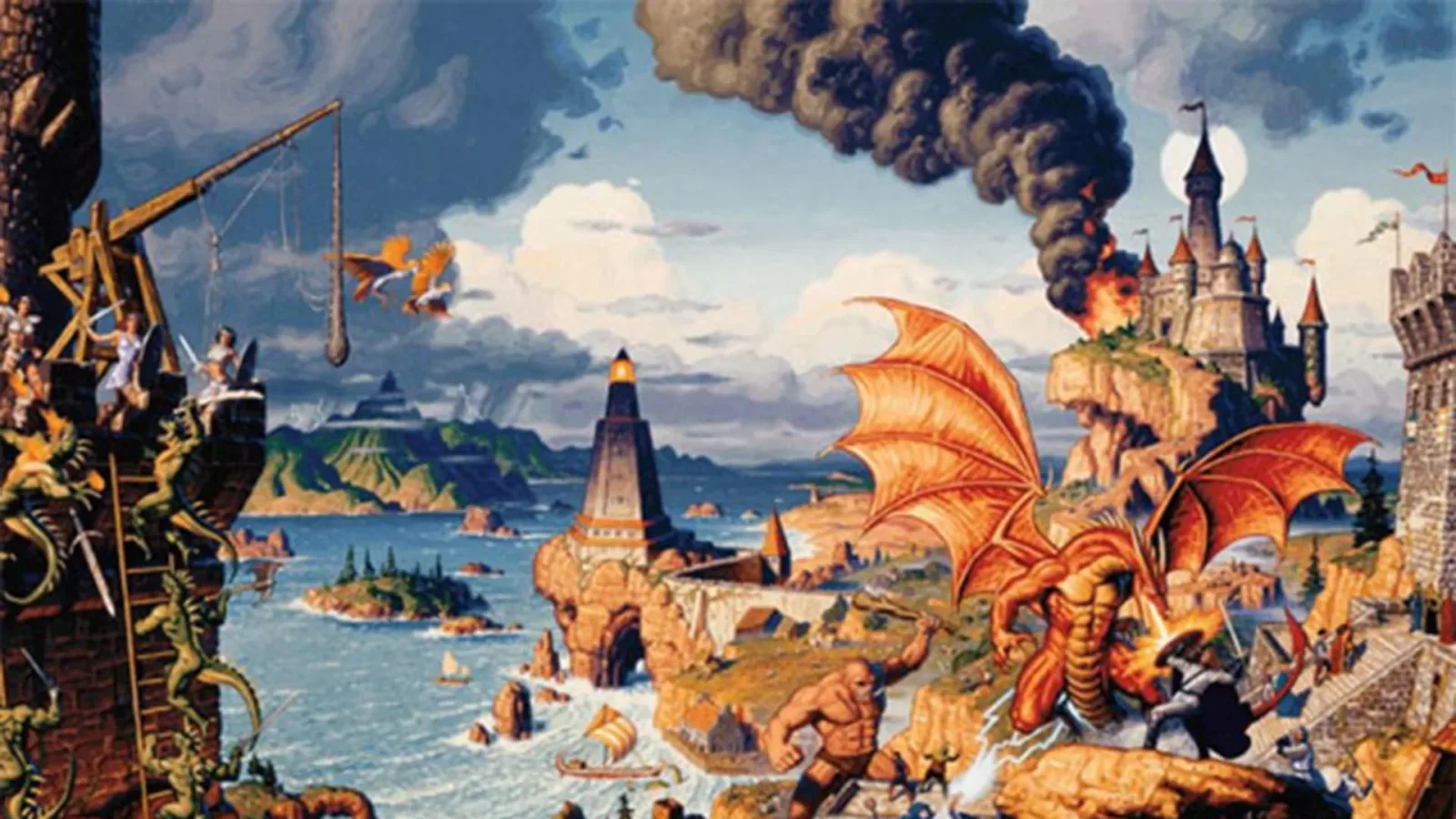
Ultima, one of the most influential names in computer role-playing history, may be approaching a major turning point. Series creator Richard Garriott says he is working toward regaining the copyrights connected with the long-dormant RPG franchise from Electronic Arts, a development that could give him renewed control over the future of the property as early as next year.
For fans who have watched Ultima sit largely untouched for decades, the news is significant even before any game has been announced. Garriott has not committed to a specific project, studio, platform strategy, or release plan. Still, he has said that reclaiming the copyrights could allow for anything from rereleasing the earliest Ultima titles to creating entirely new sequels. That possibility naturally raises questions around a modern mainline Ultima, refreshed versions of the classics, and even the long-lost idea of an Ultima Online 2.
Nothing has been confirmed beyond Garriott's stated efforts and ongoing discussions. EA remains the rights holder for now, and the exact boundaries of any future arrangement have not been detailed publicly. But after years in which the franchise seemed unlikely to receive meaningful attention, the prospect of its original creator having a larger role again makes Ultima's future far less settled than it was.
A foundational RPG series with a complicated history
Garriott created Ultima during the formative years of the PC role-playing genre. Across its early installments, the series evolved from comparatively simple fantasy adventures into expansive worlds with detailed party systems, exploration, simulation elements, moral choices, and an unusual willingness to change its setting and structure from one entry to the next. The later games, particularly those set in Britannia, helped establish ideas that remain central to RPG design.
For useful background on this topic, read Fan Fest Fall 2026 Sets October Showcase With 90+ Reveals.
The franchise's influence reaches well beyond its own numbered entries. Ultima helped popularize the notion that an RPG world could feel responsive and inhabited rather than functioning solely as a sequence of combat encounters and menus. Its systems, storytelling ambitions, and open-ended player interaction left a lasting mark on PC gaming. Ultima Online, released in 1997, was equally consequential: it became one of the defining early massively multiplayer online role-playing games and demonstrated how a persistent virtual world could support a vast community of players.
That legacy makes Ultima's extended absence especially notable. Garriott sold Origin Systems, the studio he co-founded with his brother and father, to EA in 1992. The deal also transferred the rights to the Ultima intellectual property. He remained involved at the company for years, directing multiple Ultima RPGs and serving as producer on Ultima Online.
Origin's circumstances changed dramatically at the end of the 1990s. In 1999, EA canceled the studio's projects that were then in development, a period shaped in part by the disappointing reception of Ultima IX: Ascension. Garriott departed not long afterward. Origin continued supporting Ultima Online and worked on another online Ultima project that was ultimately canceled before EA closed the studio in 2004.
Since then, the franchise has remained part of EA's catalog, but it has not received a new major installment. That long gap has transformed Ultima into a particularly intriguing dormant property: it is revered by RPG historians and veteran PC players, yet its best-known games can feel inaccessible to audiences accustomed to contemporary interfaces and design conventions.
Garriott says a copyright provision could change the situation
In a recent interview, Garriott described a United States copyright provision that he says enables original rights holders to reclaim assigned or sold copyrights after 35 years, provided advance notice is given. He said he notified EA in April of this year that he intended to take back the Ultima copyrights and that the company acknowledged the legal framework he described.
"At the very least it means I could re-release the early Ultimas, but it also means I could sequel them," Garriott said, describing the prospect of having control again over the future of his best-known product line.
Garriott also said he is actively discussing with EA whether the two sides should pursue anything together. That detail is important. The public comments establish neither a fully completed transfer nor a specific publishing agreement. Intellectual-property arrangements can involve separate considerations for copyrights, trademarks, distribution rights, legacy contracts, and commercial partnerships. Until Garriott and EA outline a finalized arrangement, the practical result for players remains uncertain.
Even so, Garriott's comments are a meaningful indication that Ultima could be headed for a more active future. If he does regain the relevant rights next year as anticipated, he could have options unavailable to him for much of the past three decades. A straightforward rerelease campaign would be one route. A new installment would be a much more ambitious one. The possibility of collaboration with EA adds another variable, since it could shape how broadly any future project is funded, marketed, or distributed.
What a return could look like
The most immediate opportunity may be preservation. The early Ultima games are historically important, but many were built for hardware and operating environments that modern players rarely use. Updated compatibility, carefully considered interface improvements, accurate documentation, and options to preserve original mechanics could make the series easier to discover without rewriting the qualities that made it distinctive.
A remake or remaster approach would need restraint. Ultima's identity is tied to ideas that can seem unconventional today: broad player freedom, systems that invite experimentation, persistent consequences, and at times an unapologetically demanding pace. A modernized presentation could help, but a redesign that strips out the games' quirks and simulation-minded character could lose the reason many fans still champion them.
There is also room for a new sequel, though that would bring greater risks. The numbered Ultima games shifted dramatically in tone and technology over their long history, from early fantasy journeys to the ethical conflicts of Britannia and later experiments with increasingly cinematic 3D presentation. Any new game would need to answer a difficult question: should it recreate the feel of classic computer RPGs, continue the narrative and design ideas of the later series, or establish a fresh direction that simply carries Ultima's values forward?
Garriott's emphasis on the ability to "sequel" the games will inevitably fuel speculation. A modern Ultima might pursue systemic role-playing, world simulation, player agency, and moral consequence rather than attempting to compete directly with every current blockbuster RPG on scale or production values. Those principles are where the franchise has historically been most distinctive.
Why Ultima Online 2 remains a compelling possibility
The most tantalizing scenario for some longtime players is a return to the online branch of the series. An official Ultima Online 2 was announced in 1999 and later canceled in 2001. The project was remembered for its proposed steampunk direction, a notable departure from the more familiar Britannian fantasy setting.
Its cancellation has given it an almost mythical position among fans of early MMOs. Ultima Online itself was enormously important, not just because of its scale but because of the social stories it generated. Player-run economies, conflict between communities, housing, crafting, role-playing, and unscripted disasters all helped define what persistent online worlds could be.
A sequel today would face a vastly different marketplace. Modern online games are expected to launch with years of service plans, extensive security measures, sustainable moderation, accessibility features, and a clear approach to monetization. Recreating the freedom and volatility that made the original memorable would be challenging, particularly in a contemporary environment with very different player expectations.
Still, an Ultima Online successor does not necessarily need to chase the largest MMO model. A smaller, systems-driven world focused on player interdependence and emergent storytelling could occupy a distinct space. That is speculation, not a stated plan, but it illustrates why Garriott's comments have attracted attention. Few dormant RPG properties carry both the single-player heritage of Ultima and the online legacy of Ultima Online.
A hopeful development, with important unanswered questions
Garriott's influence on RPGs is unquestionable, but a potential Ultima revival would arrive with understandable caution from parts of the gaming community. His post-Ultima career has included projects that received mixed reactions, as well as controversy surrounding efforts connected to an NFT-based MMO. Reverence for the original series does not automatically guarantee that a new game would meet modern expectations.
That uncertainty is part of what makes this moment compelling. There is no announced remake, remaster, sequel, or online game. There is no release window, no named development team, and no indication of which platforms any future project might target. But Garriott's stated plan to regain the copyrights suggests that Ultima may no longer be destined to remain solely a cherished part of RPG history.
For now, the clearest takeaway is simple: a series once assumed to be permanently dormant may have a path back. Whether that path leads to preserved classics, a new Britannian adventure, a collaboration with EA, or an entirely different vision will depend on how the rights discussions conclude. If Garriott's expectations are realized next year, Ultima's next chapter could finally become more than a historical what-if.
Community
Discussion
Start the conversation.
No comments have been posted yet.