

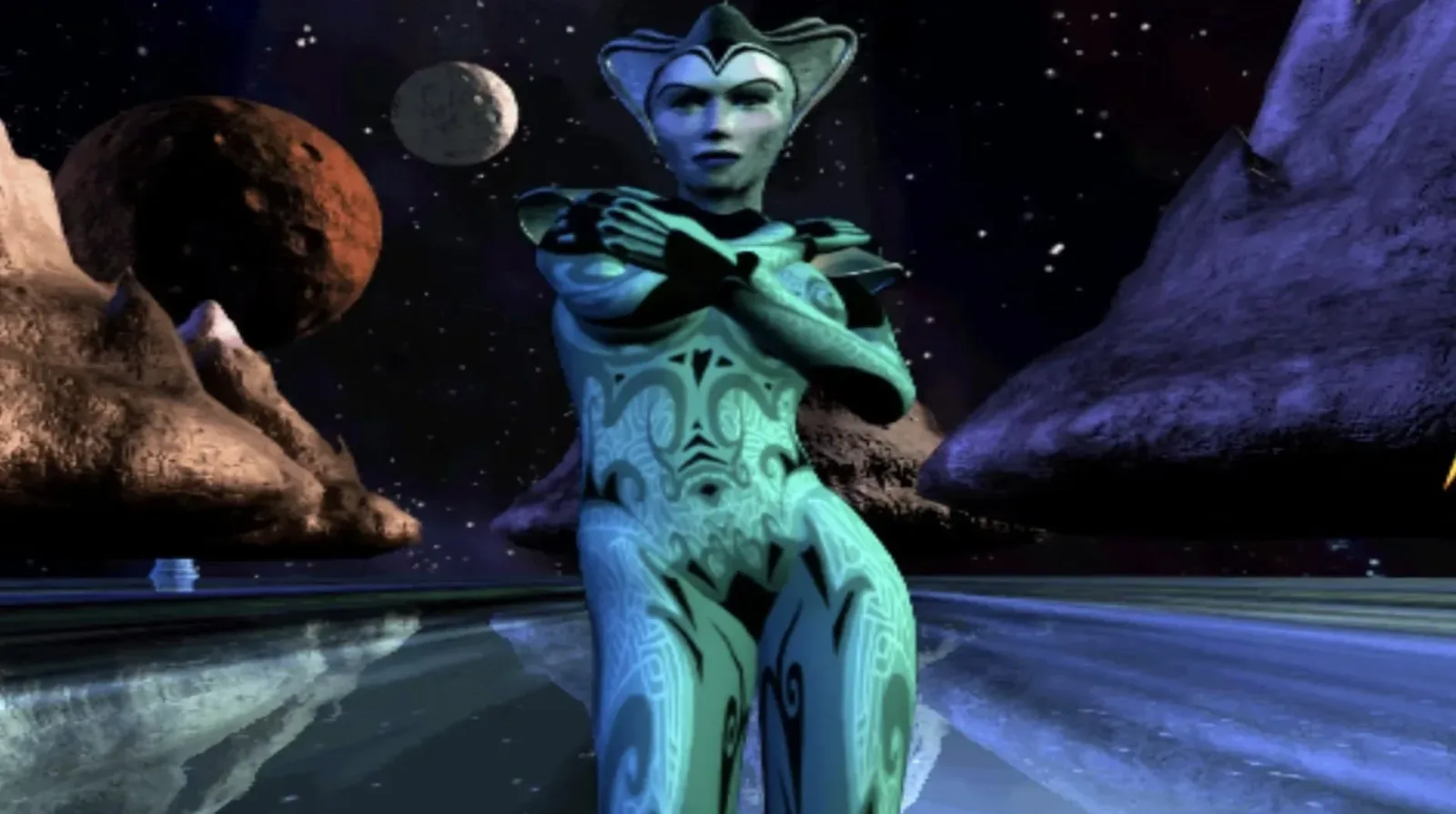
A previously unavailable Dreamcast version of Ring: The Legend of the Nibelungen has been preserved in playable form, giving one of the more unusual point-and-click adventures of the late 1990s an unexpected second life on Sega's final console. The prototype is not a newly made fan conversion or a conceptual reconstruction: it is an unfinished-era build of a port that was once expected to arrive on Dreamcast around 2000.
Originally released for PC in 1998 by Arxel Tribe, Ring: The Legend of the Nibelungen was an ambitious adventure inspired by the Nibelung mythos. It was also a game with a complicated legacy. Commercially, it reportedly sold more than 600,000 copies, a notable number for a PC adventure of its period. Critical reaction, however, was far less kind. Reviews at the time were frequently harsh, and IGN's 2.7/10 assessment famously described the game as "abysmal at best."
That contrast between sales and reputation has helped make the game a curiosity years later. Its newly accessible Dreamcast incarnation adds another layer to that curiosity, preserving a version of the title that was known to have been in development but never reached store shelves. For Dreamcast preservation enthusiasts, it is the kind of discovery that illustrates how many planned console releases from the era disappeared when projects were cancelled, publishers changed direction, or a platform's commercial future became uncertain.
A lost Dreamcast release comes back into view
The playable prototype was preserved by Comby Laurent of Sega Dreamcast Info. The build is a three-disc release, reflecting the sizable amount of material carried over from the original CD-ROM-era adventure. Getting it operational is reportedly more involved than simply loading a standard retail Dreamcast disc, but the important result is that the game can be played rather than merely viewed through screenshots, promotional material, or development remnants.
For useful background on this topic, read The Battle of Olympus Returns as Original Creators Rebuild the NES Adventure for Steam.
The port appears to have been handled by Success, the company known to many players for the Cotton series. That connection is a fascinating detail because Ring is dramatically different from the brightly stylized shooting games with which Success is often associated. A port of an elaborate, cinematic, puzzle-focused PC adventure would have been a very different technical and creative undertaking for the Dreamcast team.
There is no indication that the prototype represents a finished, retail-ready Dreamcast product. Its significance instead lies in showing that the conversion existed in substantial playable form. It offers a chance to examine how a PC adventure designed around a multimedia-heavy late-1990s presentation was adapted for a console release, including the way its broad visual style, navigation, inventory puzzles, and lengthy narrative were brought to Sega hardware.
Lost software is often discussed as though it has vanished completely, but projects like this demonstrate that the reality can be more complicated. A cancelled game may survive as a prototype, a review build, a nearly complete master, an early demo, or an archival disc stored outside the public eye. Each recovered build can answer questions about a game's development while raising new ones about what might have changed before release.
For another perspective on this story, read A Playable Dreamcast Prototype of Ring: The Legend of the Nibelungen Has Emerged.
The strange opening that players can now experience
Dreamcast Junkyard has tested the build and highlighted just how surreal Ring: The Legend of the Nibelungen can become almost immediately. The game's first adventure puts players in control of Alberich, who wakes after a lengthy sleep and learns that he once ruled the surrounding region. That setup may sound suitably mythic, but the first set of actions takes a sharp turn into the bizarre.
Early on, Alberich encounters a dwarf who provides a magic frog and another unusual creature. Hitting the dwarf can also result in receiving a glass plate, an item needed for a later puzzle. From there, the player uses a motorbike positioned on train tracks, placing the creature received from the dwarf into the vehicle's engine compartment. Feeding it minerals from the inventory allows it to power the bike and carry the adventure onward.
It is a chain of events that sounds less like a conventional adaptation of Germanic legend and more like a fever-dream interpretation of an adventure-game inventory puzzle. Yet that offbeat design is now part of what makes the recovered Dreamcast port compelling. It captures a particular late-1990s approach to adventure games, when developers often paired elaborate rendered environments and serious literary or historical inspirations with puzzle logic that could become delightfully--or frustratingly--abstract.
The Dreamcast version's opening makes clear that this is not a restrained fantasy epic. A magic frog, an engine creature, minerals, a rail-bound motorbike, and a punchable dwarf establish its tone in a hurry.
For some players, that eccentricity may be exactly the appeal. Games with a poor contemporary reputation are not necessarily without value decades later. Time can alter the way audiences view awkward controls, strange writing, difficult puzzles, and ambitious visual experiments. What was once dismissed as a failed prestige adventure can become a valuable artifact of a period when PC CD-ROM games regularly attempted extravagant storytelling on a scale that was difficult to realize within the technology and design conventions of the day.
Why this prototype matters beyond one game
The Dreamcast had no shortage of cancelled software. Sega's hardware was admired for its arcade capabilities, online ambitions, and distinctive library, but its short commercial lifespan meant that many announced or in-progress projects never crossed the finish line. As a result, the system's history has continued to evolve through prototype discoveries, dumped builds, development materials, and research by fans who document projects that once existed only as rumors or short mentions in old release schedules.
Ring: The Legend of the Nibelungen is particularly notable because it was not an obscure game invented solely for a console pitch. It had already shipped on PC, had achieved substantial sales, and was attached to source material with major cultural recognition. The Dreamcast edition therefore represents a real attempt to expand an established release onto another platform, not just an abandoned early-stage concept.
It also shows the value of preservation in retaining the less celebrated corners of game history. Preservation is not only about acclaimed classics, famous franchises, or games that command high collector prices. Sometimes the most revealing finds are flawed, forgotten, or openly ridiculed titles. They can reveal development practices, porting techniques, market trends, and creative risks that polished successes do not show as clearly.
A playable build is especially valuable because it lets players and researchers judge the work directly. They can inspect performance, controls, presentation, disc structure, interface choices, and content differences instead of relying on a cancelled-game announcement or a few surviving images. In the case of Ring, players can also decide for themselves whether its eccentricity is unbearable, entertaining, historically interesting, or some combination of all three.
An artifact from an adventurous PC era
The original 1998 release arrived during an era when point-and-click adventures were under pressure to prove they could evolve alongside 3D action games, first-person shooters, and increasingly cinematic console experiences. Many adventure developers responded by pursuing full-motion video, panoramic environments, famous creative collaborators, high-concept stories, or lavish art direction. Those ambitions could produce memorable work, but they also sometimes resulted in games whose scope exceeded the clarity of their design.
Ring: The Legend of the Nibelungen fits comfortably into that historical context. Its Norse and Germanic mythological framework gave it grand source material, while its gameplay retained the inventory-driven structure associated with the genre. The bizarre progression outlined in the opening sequence shows how that combination could lead to moments that are difficult to predict through ordinary real-world logic.
The Dreamcast prototype may therefore be more than a novelty for dedicated Sega collectors. It is a preserved snapshot of a moment when PC adventures were still being considered for console adaptation, when multi-disc releases remained normal for expansive projects, and when developers were willing to build games around dense worlds and inscrutable puzzle chains. Even its rough edges are part of the record.
Playable, preserved, and still unapologetically odd
Anyone approaching the Dreamcast version should do so with realistic expectations. The game's reputation did not emerge from nowhere, and a recovered prototype is unlikely to transform every weakness into a hidden strength. Its controls, pacing, puzzle design, and overall structure may remain challenging for modern players, while the prototype's setup requirements mean it is not as straightforward as revisiting a commercially released Dreamcast title.
But the existence of a playable build changes the conversation. Rather than being another item on a list of abandoned Dreamcast games, Ring: The Legend of the Nibelungen can now be explored as an actual console experience. Players can see how Success approached the conversion, how the three-disc format was used, and whether the game's peculiar mythology-fueled adventure works differently on Dreamcast than it did on PC.
For those drawn to the stranger margins of retro gaming, that opportunity is likely enough. The Dreamcast library has always benefited from discoveries that reinforce its unusual character, and few recovered projects seem better suited to that legacy than a cancelled fantasy adventure where a sleeping former king, a magic frog, a strange engine creature, and a train-track motorbike all appear within the opening stretch.
It may never become a universally beloved Dreamcast essential, and its original critical reputation remains impossible to ignore. Still, its preservation is a win for historical access. Sometimes the most important recovered game is not the one everyone remembers fondly. Sometimes it is the one that makes players stop, laugh, and ask how such a thing was ever made in the first place.
Community
Discussion
Start the conversation.
No comments have been posted yet.