

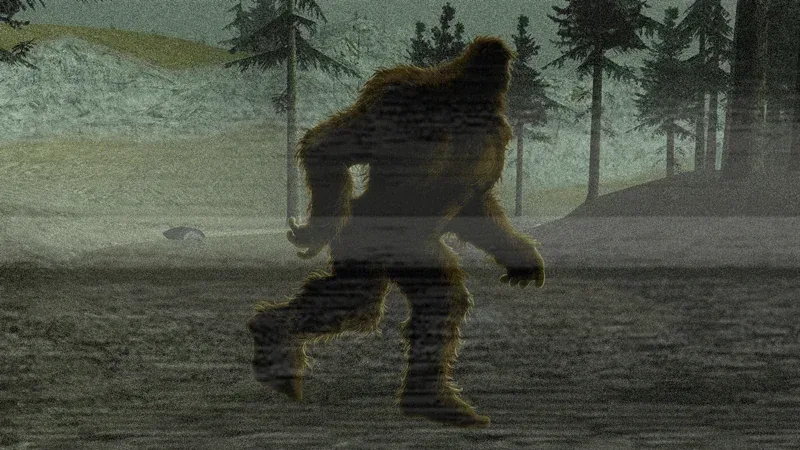
Grand Theft Auto 6 may be built around crime, cars, coastal cities, and the enormous open spaces of Leonida, but Rockstar's latest world also has room for things that are much harder to explain. Players have already found the Skunk Ape lurking in the game's swamps, continuing a tradition that has made Rockstar open worlds fertile ground for UFO hunters, cryptid chasers, conspiracy theorists, and players determined to inspect every distant silhouette.
That tradition is not an accidental side effect of creating huge maps. Rockstar North head of production Rob Nelson has explained that the studio deliberately makes space for bizarre details, paranormal ambiguity, and creature encounters in its biggest games. The reasoning is partly practical: Rockstar now has the size and experience to devote teams to unusual, optional details. But the answer is also much simpler. The developers enjoy making them.
"We love that stuff," Nelson said while discussing why Grand Theft Auto 6 features these kinds of mysteries. In a game inspired by Florida's distinct mix of real-world oddity, local folklore, wilderness, tourism, criminality, and larger-than-life characters, the appeal of adding something unsettling or absurd becomes even clearer.
Leonida Is a Natural Home for the Unexplained
Florida has long had a reputation for strange headlines and stranger legends. Its wetlands, isolated backroads, dense forests, beach communities, amusement attractions, and murky waterways provide an ideal backdrop for stories that sit somewhere between credible and ridiculous. Rockstar's fictional Leonida turns that atmosphere into an open-world playground.
For useful background on this topic, read GTA 6 Keeps More Than 700 Stores Open 24/7 for Player Convenience and Better Robberies.
Nelson said the team enjoys playing with the uncertainty surrounding paranormal discoveries. A creature sighting can raise an immediate question: did the player really see something supernatural, or did they witness a hoax? Is a figure in the trees genuinely Bigfoot, or simply a person in a costume? That uncertainty is a major part of the fun. Rockstar does not always need to give its audience a tidy answer for a mystery to be memorable.
The Skunk Ape is particularly fitting for Leonida. The creature is a well-known piece of Florida folklore, usually described as an ape-like cryptid said to inhabit swamps and remote wilderness. Its inclusion gives GTA 6 a regional flavor while also connecting the game to Rockstar's long-running interest in Bigfoot-style myths. The studio is not merely dropping random monsters into its worlds; it is drawing from the places, legends, and cultural expectations that surround each setting.
That approach allows strange encounters to feel like part of the world rather than a disconnected novelty. Leonida's cities can deliver the expected chaos of Grand Theft Auto, while the swamps and wilderness invite a different type of curiosity. When players leave the roads and built-up districts behind, they have reason to believe something unusual may be waiting beyond the next tree line.
A Long Rockstar History of Secrets
Rockstar's fascination with unexplained phenomena stretches across multiple open-world releases. Grand Theft Auto V became famous for its UFO mysteries, ghostly encounters, cryptic murals, and the long-running hunt for hidden Bigfoot-related content. Those details encouraged players to compare clues, trade theories, replay missions under specific conditions, and search locations at unusual times of day.
Red Dead Redemption 2 continued that same spirit in a very different era and landscape. Its frontier setting made room for eerie cabins, cults, strange experiments, unexplained noises, legends, and a vampire hidden within the game's broader world. The effect was important because it made the map feel less like a series of mission spaces and more like a place filled with stories that may exist whether or not the player ever encounters them.
These secrets often work because they do not demand attention. A central story mission may never tell a player to investigate an odd mural or stand in a particular clearing at night. Instead, the discovery emerges through wandering, experimentation, rumor, or pure chance. That format rewards the kind of player who treats an open world as something to explore rather than merely a route between objective markers.
It also means that a mystery can live on well after a game's launch. Even when a secret has been solved, players can still debate its interpretation, revisit it with friends, or discover it for the first time years later. For games with the lifespan of Rockstar's largest releases, those moments create a lasting sense that the world contains more than any one person has seen.
More Developers Can Mean More Unexpected Details
Nelson pointed to Rockstar's current resources as a key reason the studio can include so much optional material. Earlier development teams had to place their energy across a broad range of essential work: mission design, environments, animation, systems, writing, vehicles, performance, and countless other tasks required to make a large open-world game function. As teams expand and gain experience, developers can dedicate more attention to individual details that might once have been impossible to prioritize.
That does not make small secrets easy. A seemingly minor creature encounter or paranormal scene still needs art, animation, sound, world placement, scripting, testing, and design consideration. It must fit the atmosphere of the surrounding location, work reliably under different player conditions, and ideally feel rewarding without becoming so obvious that it loses its mystique.
But specialized groups within a large studio can focus on those details. Nelson described teams whose members may previously have carried much broader responsibilities, but can now spend time enriching particular corners of the game. That structure helps explain how an enormous production can still contain handcrafted oddities: hidden ghosts, unusual animals, cryptid sightings, eerie environmental storytelling, or encounters players may not see during a standard playthrough.
The result is not simply more content in a numerical sense. It is content with a different purpose. Main missions keep a narrative moving, while mysteries encourage people to slow down. They turn a wilderness area from empty travel space into a possible source of stories. They make players glance at a distant light or an unfamiliar sound and wonder whether they have found something intentional.
Making the Wilderness Matter
One of GTA 6's biggest design challenges is making the natural portions of Leonida feel as compelling as its urban centers. Cities have obvious built-in activity: traffic, pedestrians, businesses, missions, landmarks, police chases, and dense visual detail. Wilderness can be more difficult. If it is only a scenic gap between populated locations, players may pass through it without giving it much thought.
Nelson said Rockstar wanted GTA 6's map to feel full and continually surprising. That goal applies to rural spaces as much as it does to the city. The studio wants players to have a sense that something weird could be out there, even when they are far from the main action.
Paranormal and cryptid material is especially useful for this purpose because it changes how players read an environment. A swamp is no longer just a swamp if it may contain the Skunk Ape. A lonely road can become a place worth revisiting if players think a strange event might occur after dark. A distant object in the sky can become the beginning of a new community investigation.
The best version of that design does not require every player to encounter every secret. In fact, rarity can make an unusual find more powerful. When players hear that someone else saw a creature, found an unexplained scene, or triggered an event they have missed, it creates a reason to return. The world gains a reputation for being bigger than the individual player's experience of it.
Mysteries Are Part of the Open-World Fantasy
Rockstar's paranormal additions matter because they support a core promise of open-world games: the possibility that going off course will be worthwhile. Players may begin with a practical objective, then take a detour because a road looks unfamiliar, a rumor sounds plausible, or a strange noise draws their attention. The discovery itself becomes the reward.
There is also a playful relationship between developer and audience at work. Rockstar knows players will scrutinize screenshots, count symbols, inspect inaccessible buildings, and test theories. The studio's willingness to include apparent hoaxes alongside genuine surprises gives those communities more to discuss. Not every clue has to point to a definitive answer. Sometimes the uncertainty is the feature.
For GTA 6, that philosophy appears well suited to Leonida. The setting can support satire and spectacle in populated areas while maintaining a more unsettling, mythic edge in its remote spaces. A player may spend one evening causing mayhem in the city and the next chasing a rumor through the wetlands. Both experiences contribute to the feeling of a world designed to keep producing stories.
Nelson hopes there will be discoveries for players to make for a long time. Given Rockstar's history, that expectation seems reasonable. The Skunk Ape may be one of the first notable mysteries identified in GTA 6, but it is unlikely to be the last thing that sends players into the wilds of Leonida looking for answers.
Community
Discussion
Start the conversation.
No comments have been posted yet.