

Grand Theft Auto 6 is full of the kind of environmental detail that encourages players to stop, stare, and build stories around seemingly minor objects. A cluttered apartment can say as much about a character as a dramatic cutscene, especially when that apartment belongs to one of the game's central playable protagonists. In Jason Duval's case, the object drawing particular attention is not a gun, a vehicle part, or a stack of criminal cash. It is a book.
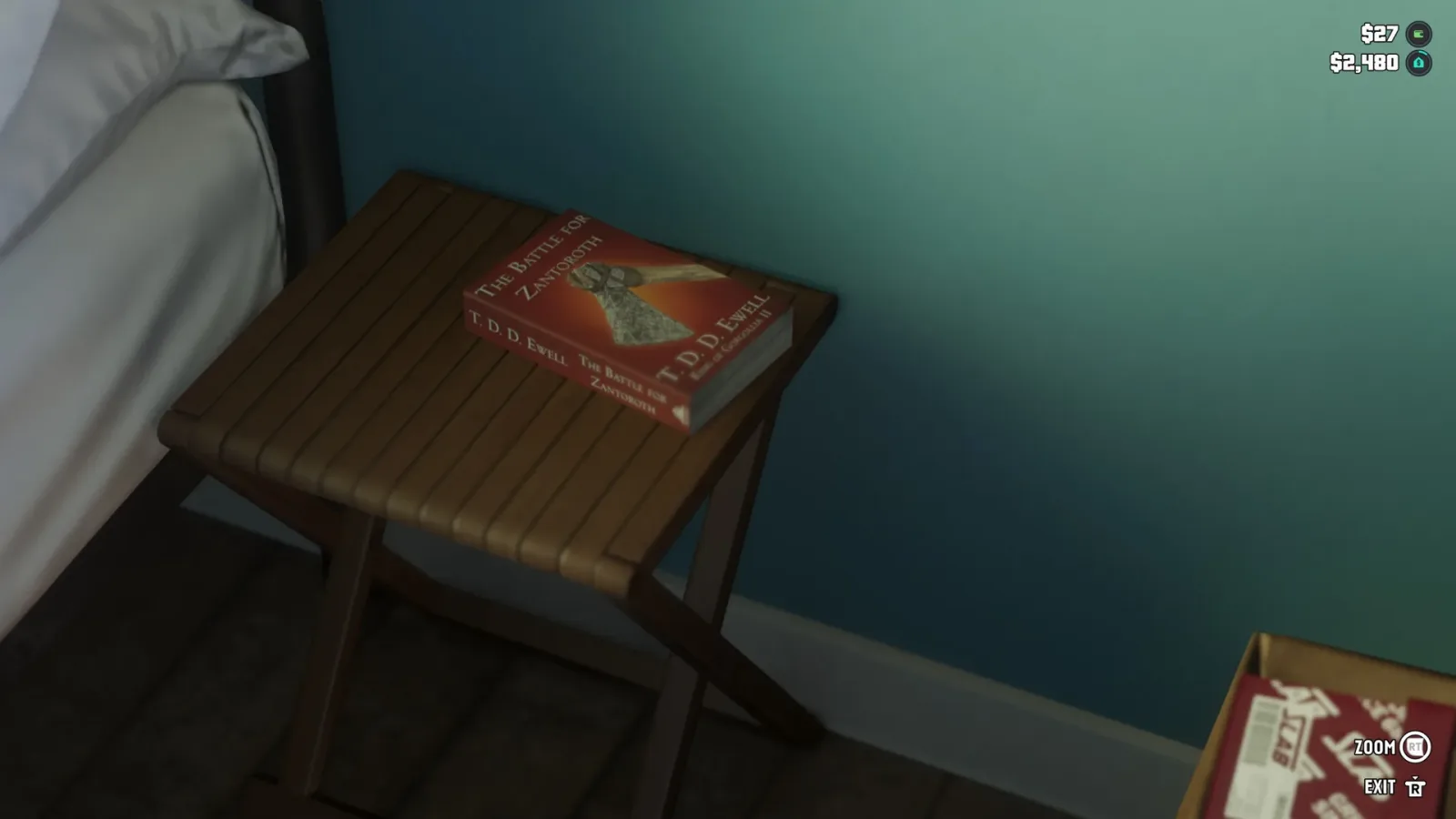
More specifically, it is a fantasy-looking novel placed on Jason's nightstand: The Battle For Zantoroth, credited to T. D. D. Ewell. The cover identifies it as part of a series called King of Gorgolla, apparently the second installment. That placement is what makes the discovery so compelling. A book sitting close to a character's bed does not feel like generic set dressing in the same way as a random magazine tossed on a table. It suggests something being read now, or at least something Jason wants close at hand.
Players can inspect several pieces of reading material around the apartment, but this particular title appears to resist interaction. That limitation has only made it more intriguing. If Jason's strange fantasy book cannot be opened and sampled in the same manner as other readable items, then it becomes a deliberately--or perhaps accidentally--mysterious piece of characterization. What is The Battle For Zantoroth? Why is Jason reading the second volume? And, most importantly, does this mean one half of GTA 6's criminal duo is secretly a dedicated science-fiction and fantasy fan?
Jason's apartment offers a different first impression
Pre-release trailers had left plenty of room for players to make assumptions about Jason. His reserved demeanor, criminal surroundings, and comparatively stoic delivery could easily be read as signs of a straightforward hardened outlaw: capable, dangerous, and not especially inclined toward introspection. Early time spent with him presents a more textured version of that image.
For useful background on this topic, read Maingear Zero Mk.2 Review: A Premium Gaming PC Built to Be Seen.
Before Lucia is available following her prison release, the game has players spend several hours in Jason's shoes. That opening space gives his day-to-day surroundings greater weight. Domestic actions, such as handling repairs or tidying up dishes, can shape the player's sense of who he is beyond the broad outline of a man caught up in Vice City's criminal world. Even when those actions are player-directed rather than definitive biography, they create an opportunity to view Jason as more than a stock action-game antihero.
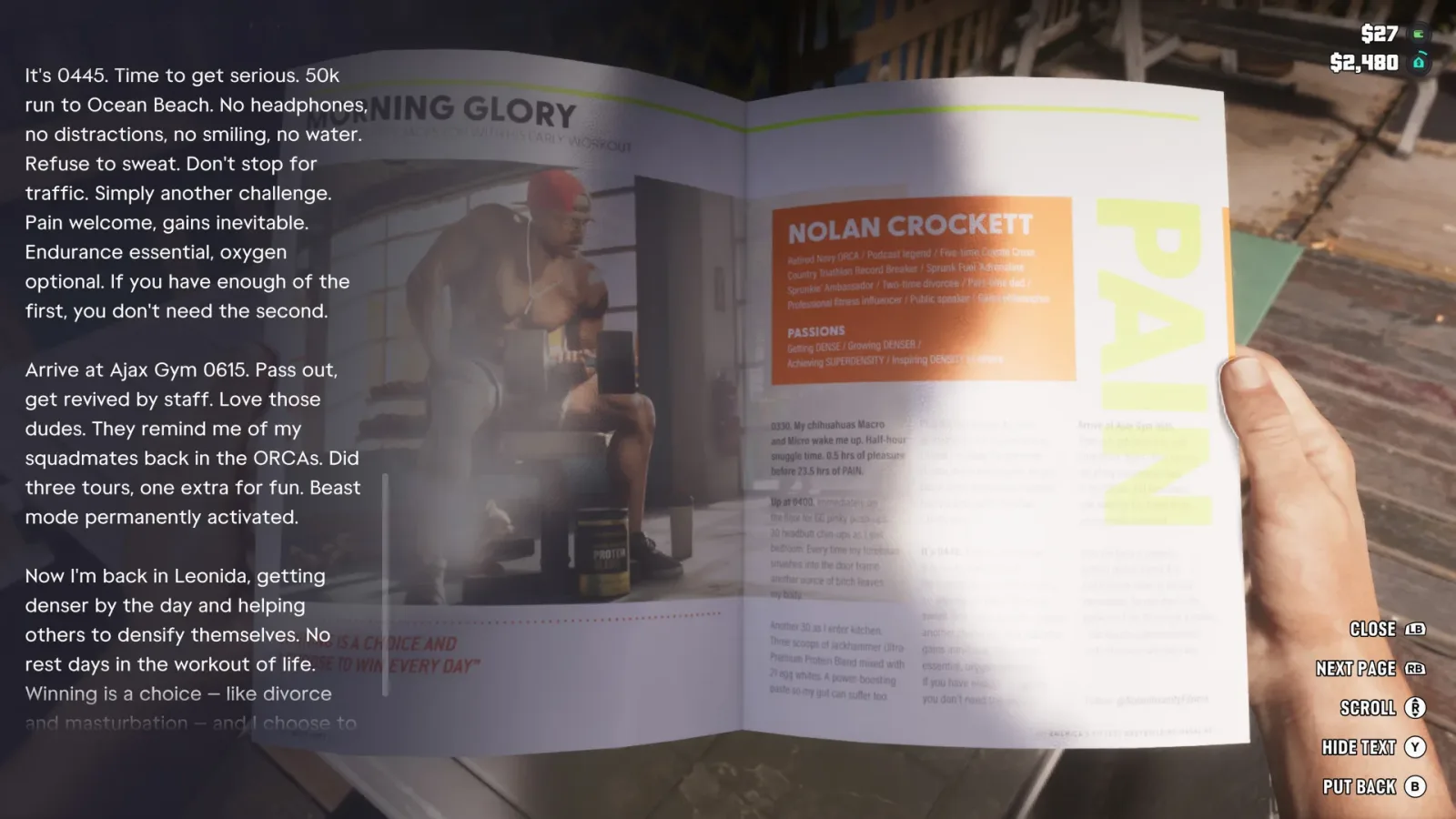
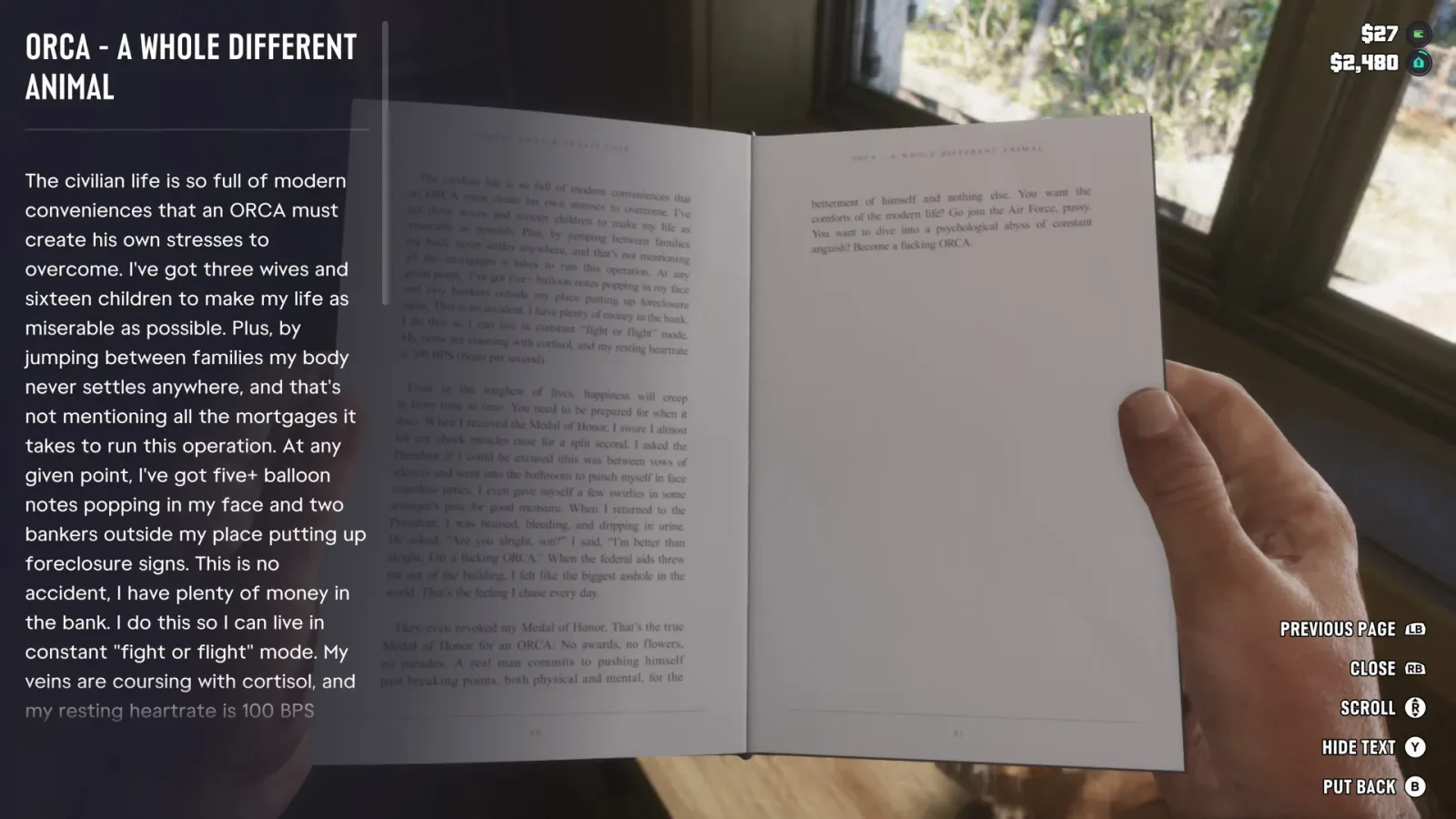
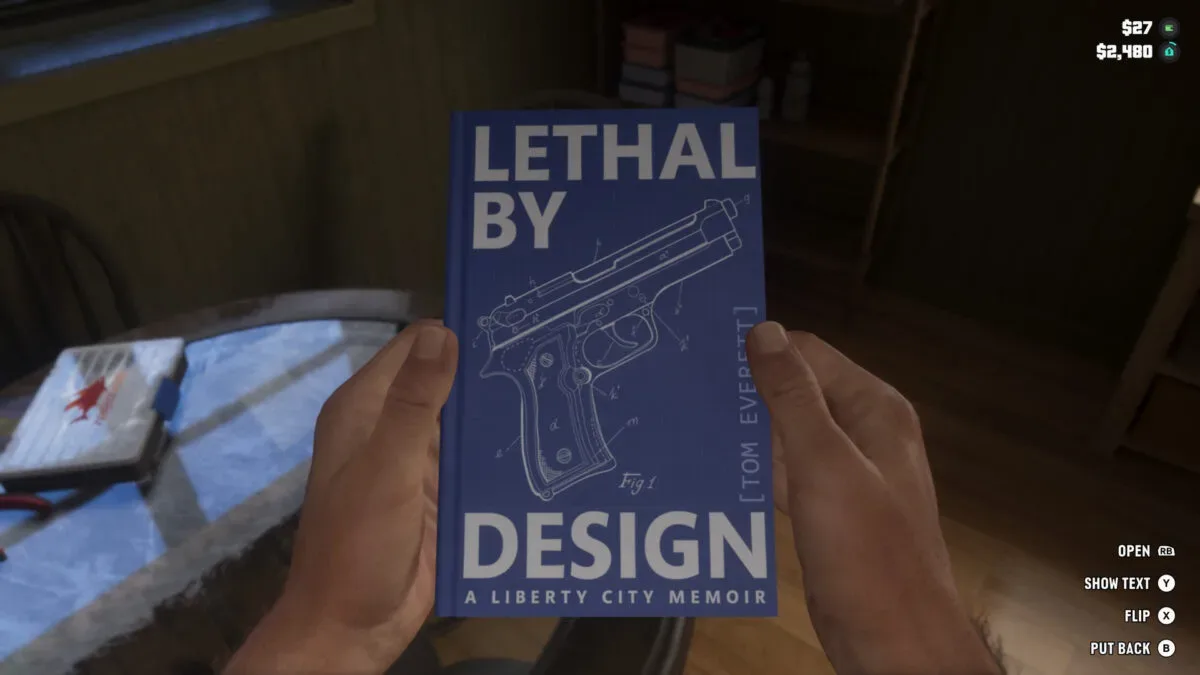
The reading material scattered around his home adds to that effect, although much of it initially appears to reinforce a familiar masculine caricature. There are books and magazines tied to military fantasies, extreme fitness culture, and exaggerated tough-guy attitudes. One item references GTA 6's ORCA military unit. Another fictional military novel reportedly leans into an aggressively juvenile vision of squad-based warfare. A fitness magazine is filled with material that reads less like practical health advice and more like an uncomfortable parody of obsessive self-optimization.
In a Rockstar game, those details are unlikely to be neutral. The series has long used fake brands, advertisements, broadcasts, and purchasable media to poke at consumer culture, political posturing, celebrity, militarism, and other parts of modern life. The titles in Jason's apartment can therefore be read as jokes aimed at the genre and the kind of marketing language that surrounds it. They may also be the sort of trashy, heightened entertainment a person enjoys without endorsing every ridiculous thing it contains.
Then there is The Battle For Zantoroth, which stands apart from the rest.
A nightstand book is stronger character evidence than a random prop
There is a practical reason players are focusing on this one item. A nightstand creates context. Games are packed with assets, and not every can, flyer, book, or piece of paper deserves to be treated as a window into a protagonist's soul. But developers use object placement to communicate. A book by a bed suggests leisure, habit, comfort, or an unfinished reading session. It feels personal in a way that a magazine left in a living room may not.
Because The Battle For Zantoroth is labeled as the second entry in King of Gorgolla, it also carries an implication of continuity. If Jason is actively reading volume two, then he may have completed, or at least started, an earlier installment. That is a more specific kind of interest than picking up a standalone paperback at random. Series fiction is built on return visits: readers invest in a setting, learn its rules, and want to know what happens to its characters after the first adventure ends.
Of course, it is possible that the book is simply a visual gag. The title could be designed to sound like an outsized fantasy epic, and the multiple initials in T. D. D. Ewell may be a playful nod toward genre-author naming conventions. Its cover has also invited comparisons to the familiar look of major epic fantasy paperbacks, including the sort of bold, dramatic design associated with long-running sword-and-sorcery or political-fantasy series.
Yet a parody can still reveal something about the person holding it. Jason might genuinely enjoy absurd fantasy adventures. He might read them ironically. He may have picked up the novel because a friend recommended it, because he likes escapism, or because he is trying something outside his usual habits. The game does not currently provide an answer, and that uncertainty is exactly why the prop works.
The unreadable book becomes an invitation to speculate
Games often turn inaccessible details into unexpected points of fascination. If a player can inspect one book but not another, the unavailable object can become more memorable than the one that yields actual text. In this case, the inability to open The Battle For Zantoroth leaves the imagined version of the book unrestricted. Players are free to picture everything from a sincere dragon-filled epic to a vicious send-up of fantasy clichés.
There is also a charming contrast in the idea of Jason as a fantasy reader. GTA protagonists are generally defined by movement through enormous urban spaces: driving, planning jobs, escaping authorities, meeting contacts, and surviving escalating trouble. Reading an ongoing fictional series is quiet, solitary, and patient. It introduces the possibility that Jason has an inner routine that exists outside the immediate rush of crime and survival.
That does not mean a paperback suddenly transforms him into a saint or makes every rough edge disappear. Grand Theft Auto has always been interested in characters who are contradictory, compromised, funny, and occasionally awful. A love of genre fiction would not overwrite Jason's place in the story. It would simply make him feel more particular.
In fact, the contrast may be the point. People can enjoy aggressive action stories and fantastical escapism while also doing dishes, fixing things around the house, worrying about someone they care about, or making poor decisions in bigger areas of their lives. The most memorable open-world characters usually have those layers, even when the game communicates them through fragments rather than lengthy exposition.
Rockstar's smallest jokes often encourage the biggest detours
Part of the pleasure of a Rockstar open world is that it rewards players who pause. The main story may push forward with urgency, but the spaces between missions invite investigation. Television channels, radio stations, store shelves, pedestrian chatter, in-game websites, and scattered printed material provide a second layer of writing. Some of it is essential to the narrative; much of it is there to establish atmosphere or land a joke.
Jason's library, modest as it may be, fits neatly into that tradition. The militaristic fiction and dubious fitness material appear built for satire, while the fantasy book creates a more open-ended question. Rather than presenting one clear statement about Jason, the apartment allows players to construct a reading of him from competing signals. Is he an earnest reader? A collector of trashy entertainment? A person whose tastes are much broader than his exterior suggests? Maybe all three?
It is worth resisting the urge to treat every object as confirmed canon. Game environments are made by large teams, and a prop can exist because it looks right in a room, because it supports a joke, or because it gives a space more texture. But environmental storytelling does not need to be a locked dossier of official facts to be meaningful. Sometimes its purpose is to provoke exactly this kind of playful interpretation.
For now, The Battle For Zantoroth remains a small mystery in Jason Duval's home. The title may never receive a full fictional bibliography, an excerpt, or a quest-related explanation. Still, that little fantasy paperback has done something valuable: it has made a potentially familiar character feel newly unpredictable. Among the military posturing, fitness nonsense, and crime-fiction energy surrounding him, Jason may have a soft spot for a sprawling tale of Gorgolla and Zantoroth. And that possibility makes exploring his apartment feel a little more rewarding.
Community
Discussion
Start the conversation.
No comments have been posted yet.