

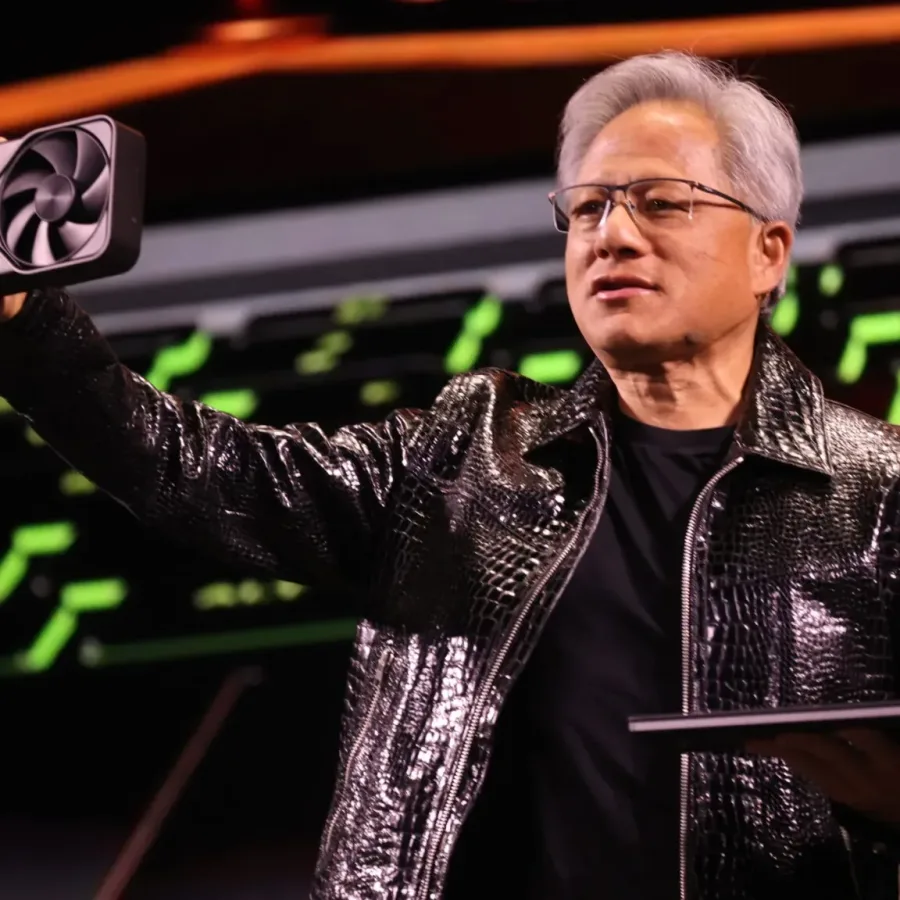
Fresh claims surrounding Nvidia's GeForce RTX 5090 have reignited concerns over the state of the ultra-high-end PC graphics card market. A prominent hardware leaker has said that there will be no further GB202 chip supply for the RTX 5090, adding that future GB202 allocation will be exclusive to RTX Pro products. If accurate, that would point toward an effective end to production for Nvidia's current flagship gaming GPU.
However, the key word is if. Nvidia has not announced that the RTX 5090 has been discontinued, has not outlined changes to its GeForce production plans, and has not confirmed how it intends to divide future GB202 supply. The report should therefore be treated as a rumor rather than a final statement on the card's future.
Even so, the suggestion has landed at a moment when the RTX 5090 is already barely a practical retail product for ordinary DIY PC gamers. The card launched in January 2025 with a $1,999 MSRP, but standalone listings have since climbed dramatically. Some current retail listings are approaching the $10,000 range, making the GPU substantially less attainable than it was at launch and, in some cases, more expensive than entire premium gaming desktops equipped with the same graphics hardware.
What GB202 Means for the RTX 5090
GB202 is the name of the GPU die used by the GeForce RTX 5090. It is not a chip made only for that one gaming card, though. The same foundational silicon also supports a wider family of professional workstation and data-center hardware. That matters because the markets served by those products can be far more lucrative than consumer gaming hardware.
For useful background on this topic, read GTA 6 PC Version Reportedly Targeting Early 2027 Release.
Nvidia's RTX Pro 6000 Blackwell, for example, is positioned as a professional-grade product and carries a price around $18,000. Hardware at that level is aimed at organizations that need substantial compute capacity for AI workloads, advanced visualization, engineering, content production, research, and other commercial tasks. A company buying infrastructure for those purposes has very different purchasing priorities from a person assembling a gaming PC at home.
From a manufacturing and allocation perspective, it is easy to understand why a limited supply of a high-end die might be directed toward professional products. That does not prove that GeForce production has ended. It does, however, illustrate why gamers are concerned whenever reports suggest that high-end silicon is being redirected away from consumer cards.
The current claim is not that GB202 itself is disappearing, but that future supplies could be reserved for RTX Pro hardware rather than the GeForce RTX 5090.
That distinction is important. A continued supply of GB202 chips for workstation and data-center products would mean the underlying silicon remains in use, while the gaming version could receive fewer units or none at all. In practice, either scenario could make RTX 5090 availability even tighter than it is now.
No Official Confirmation Yet
The lack of an Nvidia announcement leaves plenty of room for uncertainty. Supply rumors can be compelling, particularly when they come from sources with a history of tracking hardware production, but they do not always tell the full story. A pause, reduction, revised allocation plan, or short-term manufacturing slowdown can look like a discontinuation from the outside.
There is a recent example that urges caution. Similar discussion emerged around the GeForce RTX 5070 Ti earlier this year, with claims suggesting that the card could be on its way out because memory resources were being prioritized for data-center products. Those claims did not result in an actual discontinuation of the RTX 5070 Ti.
That earlier situation does not disprove the RTX 5090 rumor, but it does show why buyers should avoid treating a leak as settled fact. Nvidia could be reducing the flow of RTX 5090 cards without permanently ending the model. It could also be shifting inventory between board partners, system builders, regional markets, or professional channels. Until Nvidia provides a direct response, the exact situation remains unclear.
The RTX 5090 Is Already Out of Reach for Many Builders
For most enthusiasts, a formal discontinuation may make little practical difference. The RTX 5090's launch price was already positioned at the extreme high end of the market. The subsequent surge in street prices has pushed it into a category that is difficult to justify for all but the most dedicated enthusiasts, wealthy buyers, or professionals with a specific reason to use it.
At roughly $9,000 in some current listings, the standalone GPU costs several times its $1,999 launch MSRP. That gap changes the conversation from whether the RTX 5090 is the fastest gaming card available to whether it should even be considered as a consumer purchase. For the overwhelming majority of PC players, the answer is no.
The unusual market has also produced an awkward contrast between individual components and prebuilt systems. Certain prebuilt gaming PCs fitted with an RTX 5090 have not seen the same explosive pricing as the card sold separately. It is possible to find premium desktop configurations, including some Alienware systems, for less than the price being asked for a standalone RTX 5090 at some retailers.
That does not make those desktops inexpensive, of course. It instead demonstrates how distorted component availability has become. System manufacturers may have supply agreements or allocation arrangements that are not available to individual buyers. If new RTX 5090 production truly slows sharply or ends, those prebuilt machines could become more difficult to find as well, and their pricing may eventually reflect the shortage.
AI Demand Continues to Shape the Market
The rumor also fits into the broader shift in Nvidia's business priorities. AI computing has become a major focus for the company, and gaming is no longer presented as a standalone category in its earnings reporting in the same way it once was. It has been folded into the wider Edge Computing segment.
That reporting change does not mean Nvidia has abandoned GeForce. The company still sells gaming GPUs, supports PC games with driver updates and technologies, and maintains a massive consumer brand. But it reflects the reality that AI and professional compute demand now carry exceptional strategic and financial weight.
For gamers, the concern is less about whether Nvidia will keep making graphics cards and more about what kinds of cards it will prioritize when premium components are constrained. When top-tier memory, advanced packaging capacity, and cutting-edge silicon are all in demand across data centers and enterprise customers, consumer flagships can become increasingly expensive or difficult to obtain.
This backdrop has been described by many PC enthusiasts as a kind of RAM shortage crisis, with memory pressure rippling outward into graphics card supply and pricing. The RTX 5090 is an especially visible example because it sits at the very top of Nvidia's gaming stack, but the pressures influencing it can affect the entire high-end market.
A Long Wait Could Make the Situation Worse
Adding to the uncertainty, there is also a rumor that Nvidia's next generation of graphics cards may not arrive until 2028. That timetable has not been confirmed, and future product roadmaps are always subject to change. Still, if the current generation remains in place for an extended period, it could leave buyers facing high prices and limited supply for much longer than they expected.
Historically, a new generation has offered at least the possibility of improved availability, more competitive pricing tiers, or a reset in value expectations. There is no guarantee that will happen in the next cycle, particularly if AI infrastructure demand remains intense. But a lengthy wait between generations would make the present RTX 5090 situation more significant, not less.
What PC Gamers Should Take From the Rumor
The most sensible conclusion is that the RTX 5090's future is uncertain, while its accessibility problem is very real. There is currently no official confirmation that Nvidia has discontinued the card. Prospective buyers should be wary of panic purchases based on unverified supply claims, especially at prices far above the GPU's original MSRP.
- Do not assume the RTX 5090 is officially discontinued: Nvidia has not made that announcement.
- Expect availability to remain a concern: even reduced production could keep retail prices elevated.
- Compare complete systems with standalone parts: prebuilt RTX 5090 PCs may sometimes represent a less extreme purchase than the card alone.
- Consider actual gaming needs: the flagship's performance is impressive, but its current pricing makes alternatives far more sensible for most players.
For now, the RTX 5090 stands as a striking symbol of the divide between cutting-edge gaming hardware and the market conditions surrounding it. Whether or not Nvidia has truly stopped making the card, the practical result for many DIY builders has been similar for months: the flagship exists, but at current prices, it may as well be out of the consumer market entirely.
Community
Discussion
Start the conversation.
No comments have been posted yet.