

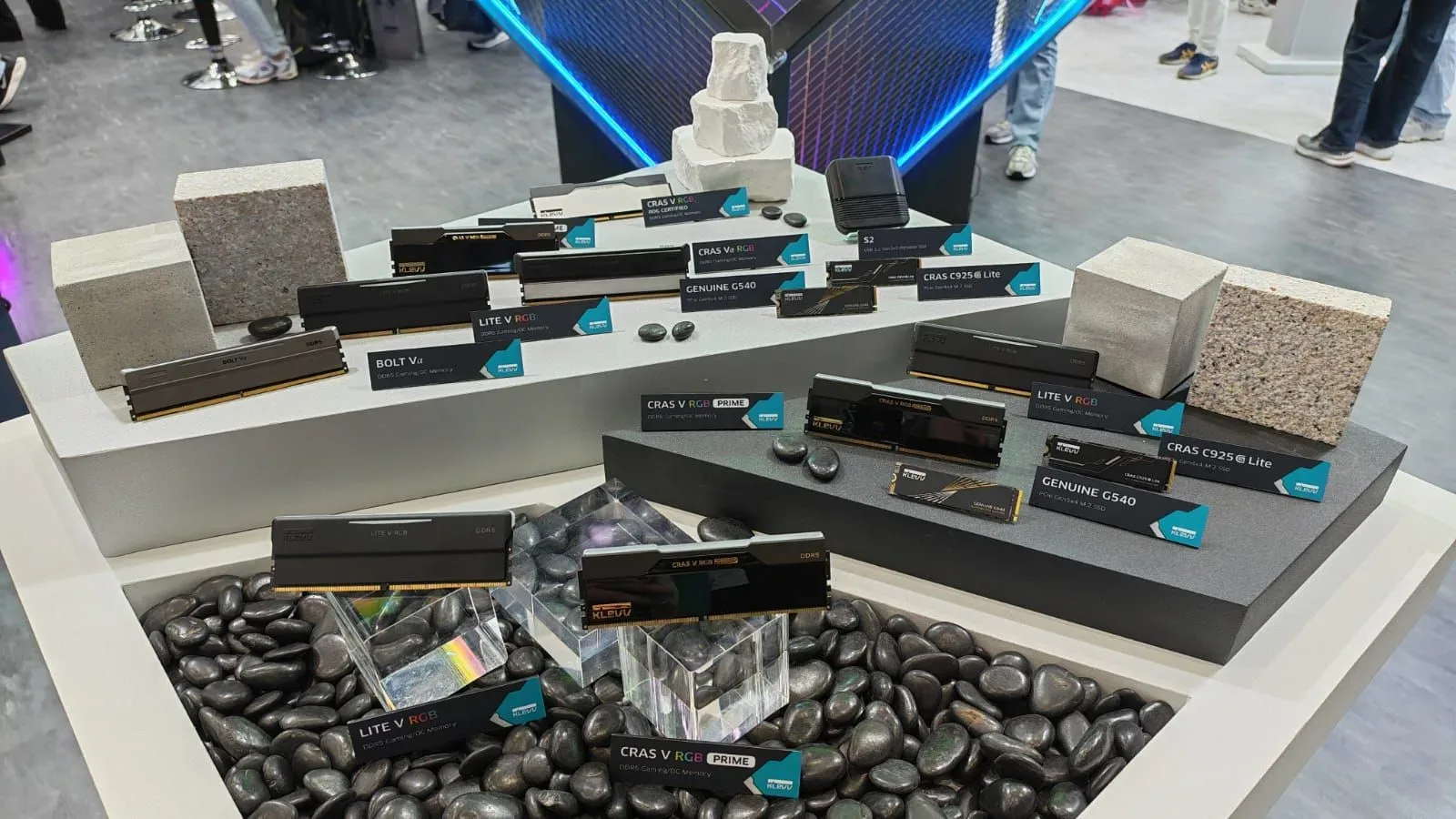
Gaming PC owners have another reason to feel uneasy about the ongoing memory crunch after comments from OpenAI CEO Sam Altman renewed a familiar argument: whether consumer hardware should be treated as a less important use of limited components than the massive data centers powering artificial intelligence.
In remarks that circulated widely in early November, Altman described the global allocation of DRAM as inefficient when large quantities sit in individual computers. He argued that memory installed in personal devices may see relatively low utilization compared with hardware in cloud infrastructure, where operators can aim to keep resources in constant use during a supply-constrained period.
That framing has landed badly with many PC enthusiasts, and not simply because it can sound dismissive of people who build, upgrade, and rely on their own machines. The concern is tied to a broader market reality: AI companies are consuming enormous volumes of memory and storage hardware for model training and data-center expansion, while gamers and other consumers are confronting higher prices, restricted availability, and difficult upgrade decisions.
The dispute is therefore bigger than one executive's choice of words. It reflects a growing clash between the needs of personal computing and the demands of an AI industry whose infrastructure ambitions are changing the component market at an extraordinary scale.
For useful background on this topic, read Palworld Publishing Lead Says Creative Control Matters More Than the Indie Label.
Why the idea of "unused" RAM frustrates PC users
RAM is not an optional extra that only matters while a game is visibly open. A PC requires system memory to boot and run its operating system, background applications, browser tabs, communication tools, security software, launchers, creative programs, and games. Gaming workloads in particular can make extensive use of RAM, with modern releases often benefiting from 16GB, 32GB, or more depending on settings, multitasking habits, mods, streaming, and the software running alongside the game.
It is true that a computer's installed memory is not always filled to maximum capacity. That is normal. Consumers buy headroom so their systems remain responsive when demand spikes and so they do not need to replace parts every time a new game or application raises its requirements. Having spare memory available is a feature of a stable, usable PC, not proof that the hardware has no value.
There is also an important distinction between utilization of a component and the role it plays in a system. A gaming PC may spend portions of a day idle, asleep, or performing light tasks. That does not mean its RAM can simply be redirected to a cloud operator. The memory is installed in a privately owned device, used for personal work and entertainment, and is part of a complete platform built around an individual's needs.
Altman's observation may have been aimed more broadly at dormant or rarely used computers rather than active gaming rigs. Even with that charitable interpretation, the message has proven combustible. PC gamers are already highly aware that their hardware budgets are under pressure, and they see the data-center boom as a major factor behind that pressure.
AI infrastructure is reshaping the memory market
Training and operating advanced AI systems requires substantial computing power, but processors are only part of the equation. Data centers also require immense quantities of DRAM, high-bandwidth memory, storage, networking equipment, cooling, and electricity. As companies race to build larger systems, they are competing for a finite manufacturing supply that also serves PCs, phones, consoles, enterprise equipment, and other electronics.
Samsung, one of the world's largest memory manufacturers, reportedly reached a supply agreement with OpenAI late in 2025 involving 900,000 DRAM and HBM wafers per month. That volume has been described as roughly 40% of global RAM manufacturing output. Further reports in November 2026 indicated that Altman had negotiated an additional arrangement with Samsung amid the broader shortage.
Even if the precise impact of a single agreement is difficult to isolate, the scale illustrates why consumers are worried. OpenAI is not alone in seeking enormous memory allocations. Anthropic, Google, Meta, xAI, and other major AI developers are all expanding infrastructure and pursuing access to the components needed to support their own models and services.
That demand is occurring in a market where production cannot be reconfigured overnight. Memory manufacturing is capital-intensive, technically complex, and shaped by long-term contracts. When suppliers see exceptionally strong demand from deep-pocketed data-center customers, consumer-oriented products can face lower availability or less favorable pricing.
Gaming hardware feels the consequences
For someone planning a gaming PC build, the consequences are straightforward. More expensive RAM can force a compromise: buying a smaller kit, delaying a platform upgrade, settling for slower specifications, or redirecting money away from the graphics card, CPU, storage, monitor, or peripherals. The cost of a single part rarely exists in isolation; it affects the balance of an entire build.
Recent market indicators underline how challenging the environment has become. IDC reported that PC hardware shipments fell 20.1% in the third quarter of 2026. A shipment decline does not mean every component has become cheap or plentiful. In an uneven market, consumers may still face elevated prices as suppliers prioritize profitable segments and manufacturers navigate constrained inputs.
Graphics cards are another major point of anxiety. Video memory is expensive, and rising VRAM costs have prompted questions over whether Nvidia and AMD will introduce a new GPU generation in 2027. Neither company's future launch plans should be assumed without official confirmation, but the discussion itself shows how concerns around memory supply are extending beyond standard desktop RAM.
For gamers, that is especially significant. A graphics card upgrade is often the most expensive and meaningful change in a PC build. If memory pricing contributes to higher GPU prices, reduced memory configurations, or delayed product plans, the effects could be felt across the hobby for years.
Long-term contracts could keep prices elevated
Shortages are rarely permanent, but a return to better supply conditions does not automatically mean an immediate return to old prices. Memory makers have strong incentives to avoid the steep price swings that have historically defined the DRAM market. The industry has repeatedly moved through periods of oversupply, falling prices, underinvestment, and then scarcity.
Micron has reportedly signed agreements with certain customers that could lock in pricing structures through at least 2030. Such deals can offer stability to suppliers and their biggest buyers, but they may also reinforce the perception that consumer customers will have less influence over future pricing than hyperscale data-center operators.
That does not mean every RAM kit will remain permanently unaffordable, nor does it establish that AI demand is the only force affecting the market. Manufacturing yields, product transitions, inventory levels, geopolitical risk, consumer demand, and currency conditions all matter. But AI has become too large a buyer to dismiss as a minor variable.
The wider cost of the AI buildout
The hardware debate also connects to broader concerns about the environmental footprint of AI data centers. Large facilities require substantial electrical capacity and cooling infrastructure. Depending on their design and location, water usage can also be considerable. Communities and policymakers are increasingly questioning how quickly this infrastructure is being built, who pays for associated upgrades, and what oversight should apply.
Those questions matter to gamers because gaming has long faced scrutiny over power consumption, hardware waste, and the environmental cost of frequent upgrades. It is understandable that consumers bristle at being told their personal hardware is inefficient while industrial-scale AI expansion consumes vast resources and contributes to component scarcity.
There is a practical point beneath the anger: personal computers remain valuable tools. They give people control over their software, files, games, creative projects, and private computing. A gaming PC is not merely a reservoir of parts waiting to be consolidated into a remote server farm. It is a device built to serve its owner.
What PC gamers can take from the debate
Altman's comments have become a flashpoint because they touch on a fear that has been building throughout 2026: that the AI race is treating consumer technology as secondary collateral. Whether or not he intended to criticize active PC users directly, the response shows there is little patience for messaging that minimizes how people use their own hardware.
For prospective builders, the immediate lesson is to plan carefully rather than panic-buy. Check whether a proposed RAM capacity suits the games and multitasking workloads you actually run, compare compatible kits across retailers, and avoid paying for specifications that will provide little practical benefit on your chosen platform. Existing owners may find that targeted upgrades, storage housekeeping, or better settings management can extend the life of a system while prices remain difficult.
The larger question will take longer to answer. AI companies, memory manufacturers, and hardware vendors will continue to shape the market through supply agreements and data-center investments. Gamers cannot control those negotiations, but they can remain clear about one essential point: RAM in a personal computer is not wasted simply because it is not permanently running at full capacity. It is there so the computer is ready to work, play, create, and respond when its owner needs it.

Community
Discussion
Start the conversation.
No comments have been posted yet.