

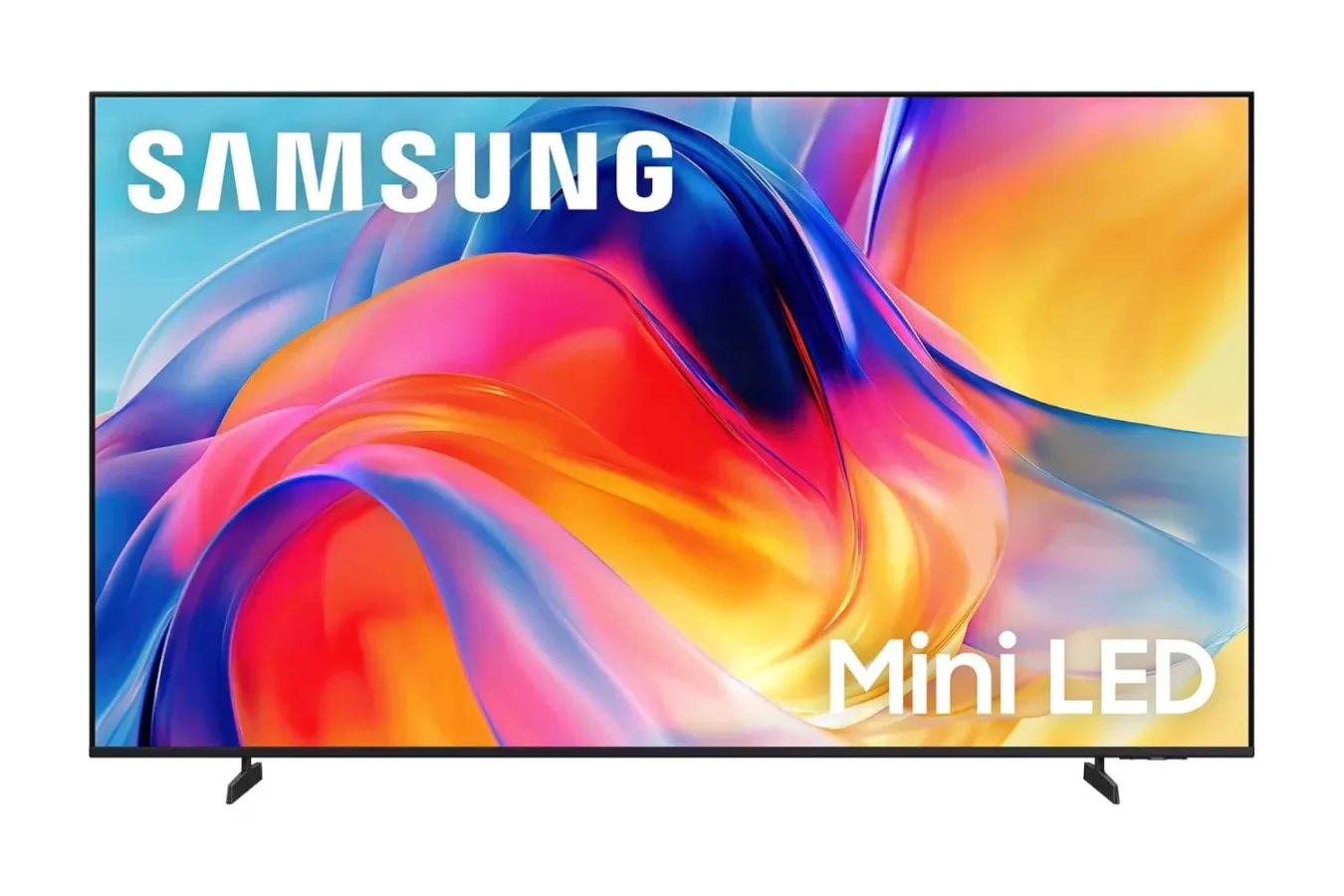
Gamers shopping for a larger display without moving into premium OLED pricing may want to keep an eye on Samsung's 55-inch M70H 4K Smart TV. The model is listed at $300, reduced from its usual $348 price, a $48 cut that brings a full-size 4K set with Mini LED technology and a 120Hz refresh rate into a notably more accessible range.
That price was available on September 24, 2026, and was described as the lowest seen for the model in the previous 90 days. As with any retailer promotion, availability and pricing can change quickly. Still, for players planning to upgrade a bedroom setup, secondary gaming room, apartment living room, or a console station that has outgrown a smaller monitor, the specifications are worth a closer look.
The central appeal is straightforward: this is a 55-inch 4K television that advertises 120Hz operation, a built-in game mode, smart-TV features, and Mini LED-backed picture performance. Those individual features have become increasingly common across the TV market, but seeing them attached to a $300 listed price is what makes this particular deal potentially relevant to gaming households.
Why 120Hz matters more than a typical TV specification
Resolution is often the first number shoppers see, and 4K remains an important baseline for a large modern television. At 55 inches, a 4K image provides the pixel density necessary to keep games, interface text, streamed video, and fine environmental details looking appropriately sharp at normal couch-viewing distances. But refresh rate can make just as meaningful a difference to the actual feel of a game.
For useful background on this topic, read GMKtec M6 Ultra Mini PC Drops to $500 With Ryzen 5 7640HS and Radeon 760M.
A 120Hz display is capable of refreshing the image up to 120 times each second. When a game and connected hardware can output at that rate, movement may look clearer and feel more immediate than it does at 60Hz. Fast camera pans, racing games, sports titles, shooters, fighting games, and action-heavy adventures are obvious beneficiaries, though smoother motion can be pleasant even in slower-paced games.
For current console players, 120Hz support is particularly useful because PlayStation 5 and Xbox Series X|S games can offer 120 frames-per-second modes in selected titles. Those modes are not universal, and they frequently involve visual compromises such as lower internal resolution, reduced ray tracing, or less demanding graphical settings. Even so, a TV that can display a compatible high-frame-rate output gives players the option to choose responsiveness and motion clarity when the game supports it.
PC players can also benefit, especially if their system is connected to the living-room display. Reaching 120 frames per second at 4K can be demanding, even for high-end hardware, but scalable settings, performance-focused presets, older games, indie releases, and esports titles can make it more feasible. A large television can be an appealing alternative for controller-first games, local multiplayer, simulators, and relaxed single-player sessions where a desk monitor is not the preferred setting.
Mini LED is aimed at a more vivid 4K picture
The M70H is described as using a Mini LED setup. In simple terms, Mini LED televisions use a backlight system with smaller LEDs than conventional LED TVs. The approach is intended to offer stronger brightness and more controlled illumination, which can improve contrast and color impact depending on the content and the TV's implementation.
That matters for games because modern releases make extensive use of very dark environments, intense highlights, neon-lit city scenes, bright spell effects, glowing HUD elements, and cinematic lighting. A display with more capable backlighting can help those contrasting elements stand apart. It can also be useful in brighter rooms, where screen brightness and image punch become important when daylight or overhead lighting would otherwise dull a picture.
It is important to keep expectations proportional to the price. A $300 55-inch Mini LED television should be evaluated on its own specifications and intended use rather than assumed to perform identically to Samsung's more expensive flagship models or high-end OLED sets. Premium TVs can offer additional picture processing, more advanced local dimming behavior, wider feature sets, and other refinements. The attraction here is the combination of a large 4K panel, 120Hz capability, smart features, and a gaming mode at a substantially lower cost than shoppers may associate with those categories.
A game mode is a practical addition
The built-in game mode is another feature that makes the M70H more than simply a screen for streaming shows. TV game modes generally prioritize quicker response by limiting or adjusting image processing that can add delay between a controller input and what appears on screen. The exact experience can vary by game and configuration, but the intent is clear: reduce the sensation of lag while retaining a picture suited to play.
For casual games, turn-based RPGs, or strategy titles, input delay may not be a major concern. For competitive shooters, rhythm games, fighting games, precise platformers, and sports games, however, responsiveness can matter much more. Gamers who have spent years playing on older TVs may find that moving to a modern set with a dedicated gaming option makes controls feel more direct, particularly if their prior display applied heavy motion smoothing or other processing by default.
Anyone buying a TV mainly for gaming should still check the available connections and settings after setup. A 120Hz panel is most useful when the relevant input and source device are configured to use the desired output mode. Players should review console video settings, PC display settings, and the television's picture mode menu to ensure game mode is enabled when appropriate. It is also worth confirming the capabilities of the cables already in use, particularly when targeting 4K at higher refresh rates.
One screen for games, streaming, and live channels
Outside of gaming, the M70H is positioned as a full smart TV. That means access to streaming services and other connected entertainment features without requiring a separate streaming stick or dedicated box for every app. For a shared living room or a space where the television will handle movies, series, music, sports, and games, that all-in-one convenience is part of the value equation.
The TV also includes free viewing options and live channels, creating another route to casual viewing when there is no particular game or subscription show on the agenda. This may be especially useful for a secondary room where simplicity matters more than building a full home-theater rack. A single display can serve as the screen for a PS5, Xbox Series X|S, Nintendo Switch, or gaming PC while remaining useful to everyone else in the home.
Sports-focused picture settings are also available. While those modes are not gaming features, they reinforce the M70H's broad-use design. Players who also watch football, motorsports, basketball, or esports broadcasts may appreciate having tailored viewing options alongside a gaming mode rather than manually changing multiple image controls each time they change activities.
Who should consider this Samsung TV deal?
The M70H's listed $300 price makes the most sense for buyers who want a large, versatile screen and value the presence of 120Hz support, but do not need to chase the very highest tier of television performance. It could fit well in a first apartment, a student setup, a family room that needs a more modern gaming display, or a second room where a premium set would be difficult to justify.
- Console players who want a 55-inch 4K television capable of taking advantage of supported 120fps modes.
- PC players who sometimes prefer controller gaming from the couch rather than playing exclusively at a desk.
- Multiplayer households that need a larger screen for split-screen games, party titles, and co-op sessions.
- Entertainment-focused buyers who want streaming features and live channels in addition to a gaming-ready display.
- Upgraders replacing an older 1080p or 60Hz television and looking for a meaningful spec jump without a high-end price.
There are also shoppers for whom it may not be the ideal fit. Those building a dedicated competitive PC setup may still prefer a smaller monitor with a much higher refresh rate. Enthusiasts seeking the deepest possible black levels or the most advanced HDR presentation may want to compare more expensive Mini LED and OLED options. Buyers with very specific connectivity requirements should verify the full port specification before committing.
A compelling price for a broad gaming setup
At its current listed price, Samsung's 55-inch M70H makes a strong case as a practical upgrade rather than a luxury purchase. The discount is not enormous in percentage terms, but the $300 total is the key figure. It lowers the barrier to getting a large 4K smart television with 120Hz support, Mini LED picture technology, and a gaming-oriented mode in one package.
For gamers, display upgrades can be among the most noticeable changes to a setup. Better resolution, smoother motion, a larger viewing area, and a mode designed to reduce processing can affect every session, regardless of whether the game is a high-budget open-world release, a competitive online title, or a local co-op favorite. This Samsung set will not replace a specialized high-refresh desktop monitor for every use case, but at 55 inches and $300, it offers a lot of flexibility for the money.
Those interested should confirm the current price and stock before buying, since television promotions can be short-lived. But for shoppers already considering a 4K gaming TV, this is a timely opportunity to get a 120Hz-capable Samsung display at a lower-than-usual cost.
Community
Discussion
Start the conversation.
No comments have been posted yet.