

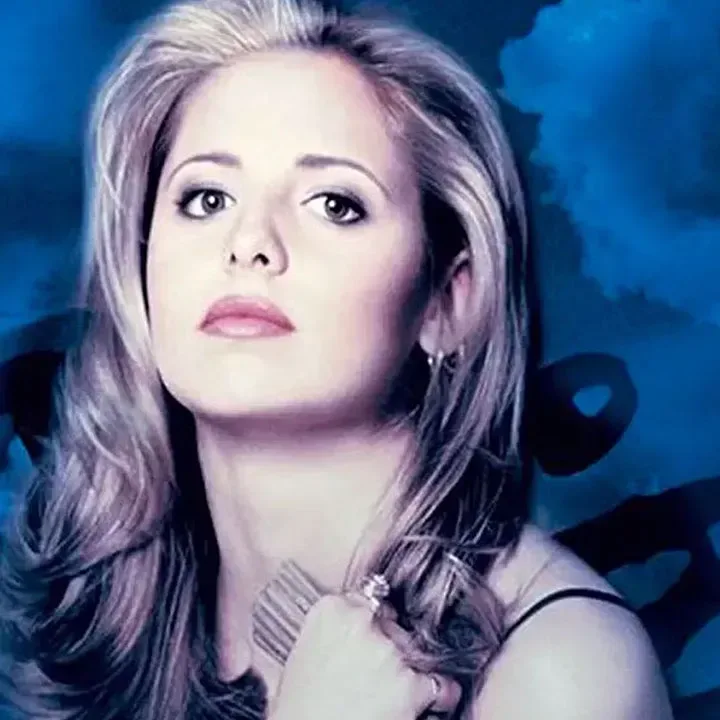
The cancellation of Hulu's planned Buffy the Vampire Slayer revival has left plenty of unanswered questions for longtime viewers, but Sarah Michelle Gellar found a way to turn one of the biggest into a punchline. Appearing alongside David Boreanaz at the Emmy Awards, the actors briefly returned to the enduring debate around Buffy Summers and Angel -- then used the cancelled project to underline why fans may never get a new answer.
Gellar and Boreanaz, who played Buffy and Angel across the original supernatural drama and its connected universe, reunited on stage to present an award. During their exchange, Boreanaz said that he had always believed Buffy and Angel would eventually end up together. Gellar's response was direct and knowingly bleak: with the new series no longer moving forward, it appears audiences will not get to find out.
The joke earned laughs because it touched a real point of frustration surrounding the project's abrupt end. The proposed show was designed as a soft reboot rather than a simple continuation, bringing the Slayer mythology into a contemporary version of Sunnydale with a new young Slayer at the center. Gellar had been closely involved and was expected to return in a recurring capacity, providing a meaningful bridge between the original story and its new generation.
Embedded X/Twitter post
That setup offered a potentially rare opportunity for the franchise. Rather than merely revisiting familiar characters for nostalgia, the reboot could have established a fresh lead and a new cast while allowing Buffy's legacy to remain part of the world. It also left room for questions that had stayed alive among the fanbase for decades, including whether Angel, Spike, or neither would factor into Buffy's eventual romantic future.
For useful background on this topic, read Resident Evil Director Zach Cregger Is Comfortable Going Digital, Even as Physical Media Debate Intensifies.
An Old Debate Meets a New Cancellation
Buffy and Angel's relationship remains one of the defining emotional threads of Buffy the Vampire Slayer. Their connection was shaped by romance, danger, sacrifice, separation, and the supernatural rules that consistently made an ordinary future impossible. Angel's move into his own series expanded the mythology further, but it also ensured that the pair's relationship would remain complicated long after their initial breakup.
For many viewers, the possibility of Buffy and Angel reuniting has never entirely disappeared. Others have long argued that Buffy's later relationship with Spike carried its own weight and should not be treated as a lesser alternative. Still others see Buffy's growth as inseparable from the idea that she does not need a final romantic pairing to complete her story. The planned reboot was not confirmed to resolve any of those arguments, but Gellar and Boreanaz's exchange showed how naturally the question still follows the characters.
Angel's appearance in a future season was never announced. Yet the existence of a continuing franchise, especially one that would have included Gellar beyond a one-off cameo, would have made almost any legacy reunion imaginable. Boreanaz's on-stage remark played with that possibility, while Gellar's answer made clear that the door now appears closed for this particular version of the project.
James Marsters, who played Spike, had previously indicated that he expected to appear at some point if the reboot continued, though he suggested such a return would likely not happen until a second season. That detail reinforces the apparent long-term ambitions for the show. It was not simply envisioned as a single nostalgia-driven episode; the project looked positioned to gradually reintroduce elements of the original universe as the new cast and lead Slayer became established.
A New Sunnydale That Will Not Arrive
What has emerged about the show's development suggests that its early creative challenge centered on balance. The pilot was reportedly built around introducing the new Slayer and the updated Sunnydale setting, while Gellar's Buffy made only a brief appearance near the end. This approach made sense from a storytelling perspective: a reboot needs space for new characters to establish their identities instead of being overwhelmed by returning icons.
At the same time, Buffy's limited presence seems to have become a key obstacle. Reports have indicated that Hulu was unhappy with Gellar receiving just a single line in the original pilot draft and requested a revision that would give her substantially more screen time. Buffy's expanded role in later episodes was reportedly being set up, but the request for a more prominent introduction appears to have changed the direction of the project before it could move ahead.
The situation highlights a common difficulty for legacy revivals. Audiences often want an authentic continuation of the world they loved, and returning performers can give a new series credibility. But the more a project depends on those original faces, the harder it can be for a new protagonist to claim the spotlight. A modern Buffy series would have needed to negotiate that tension carefully: honoring Gellar's Slayer without making a younger successor feel like a supporting player in her own story.
Gellar had previously attributed the cancellation to the actions of one executive, saying that person had openly stated they were never a Buffy fan. That public frustration reflects how personally invested she was in shaping the reboot. Her involvement was not presented as a detached cameo arrangement. She had committed to helping bring the franchise forward, only for the revival to fall apart before viewers could see its new version of Sunnydale.
There have also been suggestions that Hulu may remain interested in attempting another Buffy reboot in the coming years. That possibility remains uncertain, and there is no indication that the cancelled version will be revived in its intended form. More importantly, Gellar may be difficult to persuade to return after this experience. If another attempt does materialize, it could arrive with a different creative team, a different approach to the legacy cast, or without Buffy herself appearing on screen at all.
A Reunion With a More Somber Note
The Emmy appearance was not solely about a fan-favorite romance or an unmade television revival. Gellar and Boreanaz also used their time on stage to acknowledge a difficult recent period for the wider Buffy cast and crew. Gellar noted that the group had endured a tough two years and paid tribute to Anthony Stewart Head, Nicholas Brendon, and Michelle Trachtenberg.
Head played Buffy's Watcher, Rupert Giles, a mentor whose role evolved into one of the series' emotional anchors. Brendon portrayed Xander Harris, one of Buffy's closest friends from the beginning of the show, while Trachtenberg joined later as Buffy's younger sister Dawn. Their characters were central to different eras of the series, and Gellar said she and Boreanaz felt fortunate to have known and worked with such remarkable people.
That tribute gave the reunion a different context. The original series has always been defined by more than its vampires, romances, and iconic one-liners. Its lasting appeal also comes from the ensemble surrounding Buffy: friends, family, mentors, rivals, and allies who made Sunnydale feel like a world worth defending. Any reboot faced the challenge of honoring that history while telling something new, and the loss of several key performers adds further emotional weight to the prospect of revisiting it.
The Slayer Story Remains Open-Ended
For now, the planned Hulu revival stands as another unrealized chapter in a franchise that has never lacked for passionate discussion. Fans can still debate Buffy and Angel, Buffy and Spike, or Buffy's independence without needing a canonical final answer. They can also imagine what a modern Sunnydale might have looked like under Gellar's guidance, with a new Slayer carrying the central story and familiar faces arriving gradually around her.
But imagination is all this cancelled version can offer. No confirmed Angel return was ever announced, no second-season Spike appearance can take place, and no new episodes will clarify how Buffy's life might have unfolded in this continuity. Gellar's Emmys joke distilled all of that unfinished potential into a single line.
In a series built on prophecies, alternate futures, resurrections, and seemingly impossible returns, it would be unwise to declare the Buffy universe permanently finished. Yet any future revival will have to start over from a difficult place. Until then, the old questions remain where they have been for years: in the memories of viewers, in fan arguments, and in the unwritten stories that will never make it to Sunnydale.
Community
Discussion
Start the conversation.
No comments have been posted yet.