

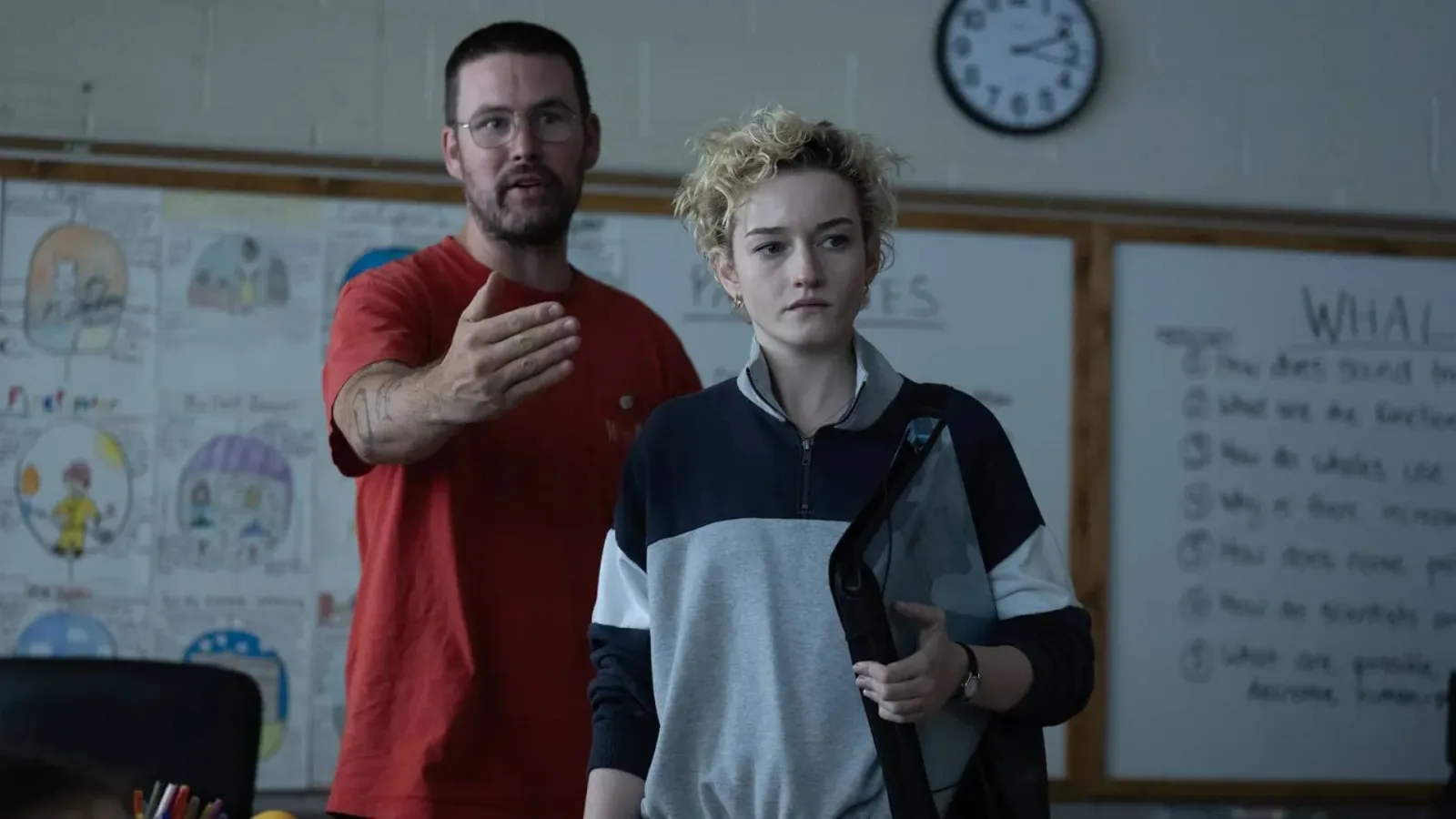
Zach Cregger has offered a notably personal perspective on the continuing argument over physical games, digital downloads, and what ownership means in an increasingly online entertainment market. The director, whose Resident Evil film reaches theaters on September 18, 2026, says he is broadly comfortable downloading games rather than collecting discs. His reasoning is less about convenience or a rejection of physical formats than it is about his own tendency to misplace and damage things.
The discussion arrives during a tense period for players concerned about the future of boxed games and disc-based hardware. PlayStation's recent announcement has prompted considerable debate across the gaming community, with physical-media supporters raising familiar questions about preservation, resale, lending, offline access, and whether a digital purchase can truly be considered permanent ownership. Cregger does not dismiss those concerns. However, he has made it clear that, for his own habits and home, a download remains the more practical option.
"I'm not a physical media guy," Cregger said in an interview. He explained that he has used physical formats at different points in his life, but that he regularly loses or breaks possessions. In that context, a downloaded game is appealing because it should be available again when he wants to play it, without requiring him to find a particular case, disc, cartridge, or shelf.
A practical preference, not a blanket dismissal of discs
Cregger's comments are likely to land differently for players depending on how they approach game libraries. For collectors, the value of physical media can be much greater than simply avoiding a download. A disc or cartridge can be displayed, traded, loaned to a friend, sold later, or preserved as an artifact of a particular release. It can also offer a degree of reassurance when storefront policies change, licenses expire, or a publisher removes a title from sale.
For useful background on this topic, read Marvel's Wolverine Shows How the MCU Can Make Its X-Men Reboot Feel New.
But Cregger's position reflects another reality of modern game ownership: not everyone wants to manage an ever-growing stack of boxes and discs. For people living in smaller spaces, moving often, sharing a household, or simply trying to keep clutter down, building a massive physical library can create its own problems. The director said he does not have the room to store every game he would like to own physically, and that his history of losing and breaking items makes digital storage an easier fit.
That distinction matters. The current debate is often presented as a simple contest in which digital distribution is convenient while physical media is principled. In practice, players have different needs. Some want local media because they value control and preservation. Others prefer the ability to install a game from an account library without keeping track of an object that could be scratched, misplaced, or damaged. Cregger falls squarely into the latter camp.
Still, his view is not that digital platforms are flawless. He specifically recognized the worry that a purchased download may not always remain accessible. Players frequently point out that games can be delisted, altered by updates, affected by expired music or technology licenses, or tied to services that may not operate forever. In the most skeptical version of the argument, consumers do not own a digital game in the traditional sense; they possess access under terms that can change.
"Now, I know there's a lot of people saying, 'Not always, dude, because they can just delete it and then you've paid for it,'" Cregger said. "And, yeah, that's too bad. I don't like that."
That acknowledgement gives his comments more nuance than a simple endorsement of an all-digital future. Cregger sees the vulnerability in digital ownership, but believes the trade-off works for him personally. If he owned a huge number of movies and games on physical media, he would need somewhere to keep them, and he is not confident those items would remain intact or easy to locate.
The ownership question remains unresolved
The physical-versus-digital conversation has become one of the defining consumer issues in games. Digital storefronts have made buying, preloading, updating, and switching between games easier than at any earlier point in the medium's history. A player can acquire a title without traveling to a shop, preserve a wish list across hardware generations, and access a large account library from a single console. Subscriptions and cloud services have pushed the convenience model even further.
Yet the same systems that reduce friction can make ownership feel less tangible. A physical release is not a complete solution to every preservation problem, particularly when many modern games depend on patches, server connectivity, downloadable content, or online features. Even so, a disc or cartridge gives players a copy they can hold, store, and potentially use long after a digital listing disappears. That distinction remains important to collectors and to consumers who distrust the long-term stability of platform ecosystems.
PlayStation's announcement has therefore reignited concerns that physical releases could become less central to the company's plans. The full implications of that shift, and how it may affect individual consoles, games, retailers, and regions, remain a subject of active discussion. What is clear is that the reaction has reached beyond a narrow collector audience. Players who regularly buy digital games are also asking what rights they retain, how redownloads will work in the future, and what protections exist if access changes.
Cregger's answer does not attempt to solve those wider policy questions. Instead, it underscores why the issue has no universal answer. A person with carefully organized shelves, rare editions, and a strong preservation mindset may see a physical library as indispensable. Someone else may view those same shelves as expensive clutter and prefer an account-based collection that cannot be accidentally left behind during a move.
Resident Evil arrives amid heightened interest in game adaptations
While the physical media debate has drawn attention to Cregger's remarks, his immediate connection to gaming comes through Resident Evil. The film is set to open in theaters on September 18, 2026, placing one of horror's most recognizable game franchises back on the big screen. Cregger is also known for Weapons, and his involvement in Resident Evil brings added scrutiny from audiences eager to see how the adaptation handles a series with decades of history across games, films, animation, and other media.
Resident Evil has long occupied a distinctive place in video game culture. Its identity has shifted between survival horror, action-heavy spectacle, remakes, multiplayer experiments, and cinematic storytelling, while its cast, locations, monsters, and corporate conspiracies have become widely recognizable beyond the games themselves. Any new screen adaptation faces the difficult task of satisfying viewers who know the franchise intimately while still functioning for those who have never played it.
That larger context may also explain why Cregger's media habits have attracted interest. A director adapting a landmark game property is inevitably asked about his relationship with games and the culture around them. His remarks suggest a relatively ordinary relationship to buying entertainment: he wants access to the things he likes, but does not want the responsibility of maintaining an enormous physical archive.
"I just don't have room in my physical space for all of the games that I want to own," he explained. "And I lose them. I always do. I always lose and break stuff. So no, I'm fine with downloading."
Different players, different priorities
There is no single conclusion to draw from Cregger's preference, and that may be the most useful part of his contribution to the discussion. Digital downloads can be an excellent fit for players who prize simplicity, quick access, and reduced physical clutter. Physical games remain essential for people who value collecting, sharing, resale, long-term access, and preservation. Many players will continue to use both formats, buying special editions or favorite series on disc while relying on digital stores for smaller releases, sales, or games they want immediately.
The concern raised by PlayStation's announcement is not likely to fade soon, because it reaches beyond the question of whether people enjoy owning boxes. It touches on the durability of purchases in a connected world, the role of retailers, and the responsibility platform holders have to customers whose libraries may span years or decades. Cregger sympathizes with the fear that digital access can be taken away, but his own experience leads him to accept that risk over the chance that he will misplace the physical alternative.
For now, his focus will soon return to Resident Evil's theatrical debut. As the film arrives this week, audiences will be able to judge Cregger's take on a major gaming property for themselves. His comments on physical media, meanwhile, offer a reminder that the industry's transition toward digital distribution is not experienced the same way by every player. For some, a disc is security. For others, it is one more thing that might get lost.
Community
Discussion
Start the conversation.
No comments have been posted yet.