

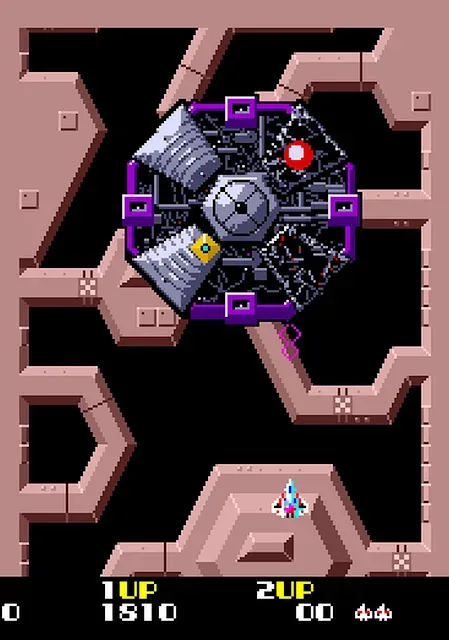
Scion Ex, a largely forgotten 1984 arcade shoot 'em up from Seibu Denshi, has been given a new life on Commodore Amiga hardware. Developer Peppe74 has released an unofficial conversion of the vertical shooter, made with assistance from AI tools and designed to run on remarkably modest original specifications: a stock Amiga 500 with 512K of RAM, or an Amiga 1000 equipped with the A1050 front-panel expansion.
The project is notable not simply because it brings another coin-op game to the Amiga library, but because the original Scion had a limited home-computer history. Following its arcade debut, it received a Japanese MSX release in 1985, but did not build the wide international legacy enjoyed by many of the era's better-known arcade shooters. This Amiga version consequently gives retro players a chance to experience a particularly obscure piece of mid-1980s shooting-game design on hardware that never received an official conversion.
A mission built around air combat and demolition
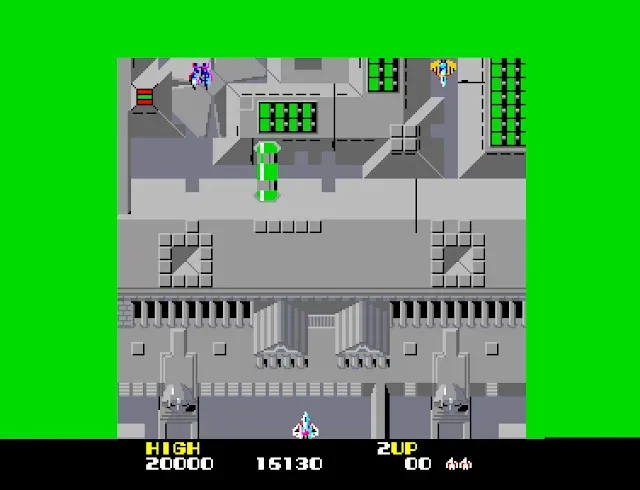
At first glance, Scion Ex follows a familiar arcade-shooter formula. Players pilot a compact fighter craft through rapidly moving, vertically scrolling battlefields, confronting formations of hostile alien ships. Staying alive amid the airborne assault is naturally essential, with the action demanding quick movement and steady fire as enemies approach from above.
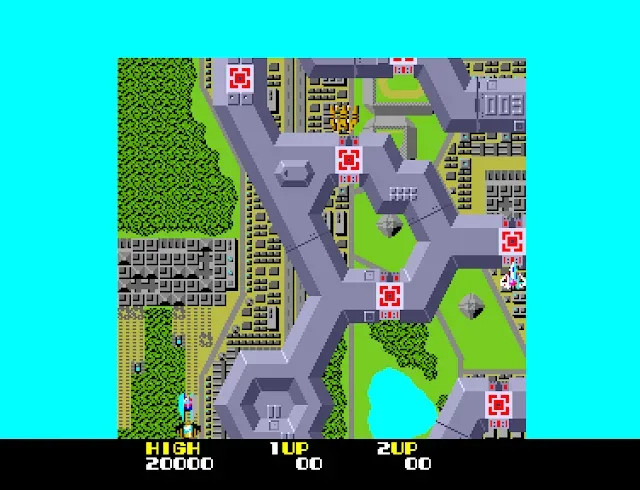
What separates the game from a straightforward score-chasing shooter is its stage objective. Each area includes a huge latticed installation on the ground below. Destroying ordinary enemies will not be enough to clear the mission: the player must locate and shoot down a particular airborne target in order to gain access to an additional weapon. That weapon enables bombing runs against the square targets embedded throughout the structure.
For useful background on this topic, read GTA 6: How to Solve Boogie's Laptop Password Puzzle.
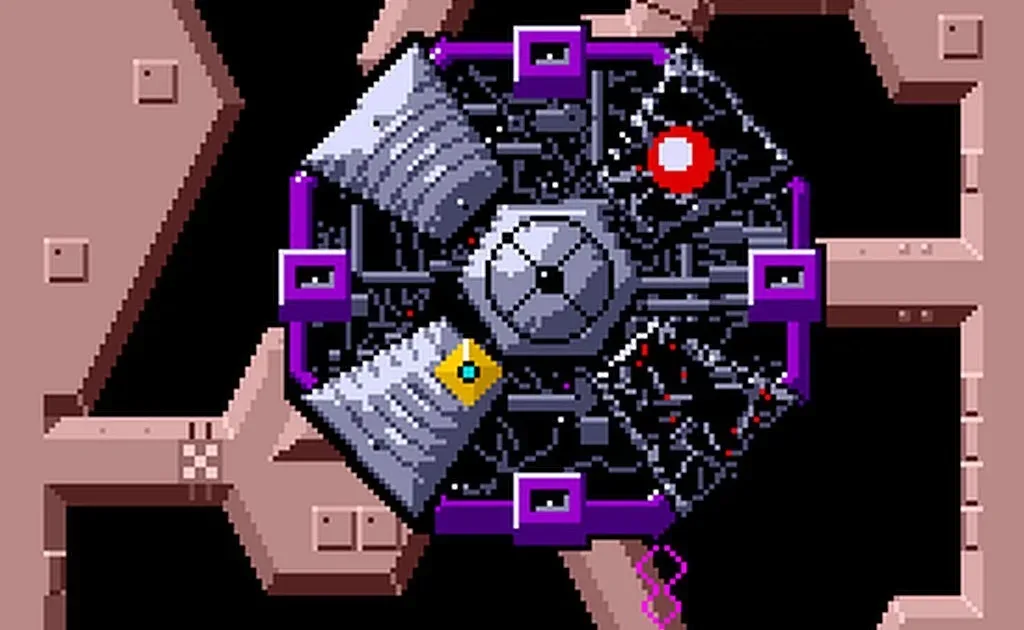
Only after the installation has been completely demolished can the player move onward, ultimately reaching the stage-ending enemy base. The result is a shooter with two connected priorities. There is the immediate pressure of surviving waves of airborne attackers, but there is also a more deliberate objective involving weapon acquisition, target identification, and systematic destruction of the ground complex.
That mix gives Scion Ex a different rhythm from games in which every enemy exists purely to be shot for points or survival. The player has to watch the skies, recognize the special craft that unlocks the required firepower, and make effective use of that opportunity before returning attention to the wider dogfight. It is an old arcade concept, but one that remains appealing because it adds a clear mission structure to the moment-to-moment shooting.
Designed around base Amiga hardware
One of the most striking aspects of this conversion is its hardware target. Rather than requiring a heavily expanded Amiga configuration, Scion Ex is intended to operate on an original OCS Amiga 500 with just 512K of memory. It can also run on an Amiga 1000 when paired with the A1050 expansion. Those specifications place the project firmly in the realm of machines close to the Amiga's original consumer baseline.
That constraint has influenced the presentation. Peppe74 initially considered a traditional side panel for score and life information, a layout associated with many arcade games and home conversions of the period. A side display would have helped fill out the screen visually, but it created a demanding technical problem. Redrawing the panel continuously while maintaining smooth dual-playfield scrolling caused a substantial performance penalty.
The chosen solution was to move the HUD to a status bar at the bottom of the screen. That means the gameplay area does not occupy the full display, but it allows the game to prioritize smoother movement and maintain its scrolling action within the limits of the target hardware. For a fast-paced shooter, that is a sensible compromise. Consistent scrolling and responsive play are often more important to the feel of an arcade conversion than maximizing the size of the visible playfield.
It also reflects the sort of decisions that defined commercial Amiga development. The machine's graphics hardware offered impressive possibilities, but memory, display layout, blitting workloads, and frame timing all had to be balanced carefully. A project that aims to support an unexpanded 512K Amiga cannot simply treat the machine as a blank canvas; every interface choice and graphical feature competes for limited resources.
An unofficial preservation-minded conversion
Scion Ex is an unofficial port, not a newly announced licensed reissue. That distinction matters for expectations, but it also underlines why projects of this kind are valuable to enthusiasts. Arcade games with only narrow regional distribution and minimal home conversions can be difficult to revisit decades later. When a title's prior home presence was limited to a Japanese MSX release, a new version for another vintage platform can introduce it to an audience that may never have encountered it otherwise.
The conversion was built with the help of AI tools. That detail will likely draw interest, particularly because retro development communities increasingly include projects made with a mixture of traditional programming, art workflows, reverse engineering, modern utility software, and AI-assisted processes. The important result here is a working game designed with the restrictions of authentic old hardware in mind, rather than a modern remake merely styled after an Amiga title.
Its arrival also demonstrates the continued vitality of the Commodore Amiga homebrew scene. Decades after the platform's commercial peak, developers are still producing original games, conversions, prototypes, and technical experiments for real systems. Some projects target accelerated machines with extra memory and advanced capabilities, while others deliberately focus on the earliest common configurations. Scion Ex belongs decisively to the latter camp.
Why the bottom HUD is more than a cosmetic choice
The bottom-mounted status display may sound like a minor visual adjustment, but it reveals the core challenge of adapting arcade software to fixed vintage hardware. In a scrolling shooter, animation and movement are the foundation of the experience. If the screen update becomes uneven, enemy patterns become harder to read and the player's controls can feel less precise, even if the game technically contains all of the expected artwork and mechanics.
By avoiding the constant redraw demands of the original planned sidebar, the port can devote more of its available performance budget to dual-playfield scrolling and active gameplay. The trade-off leaves unused space compared with a full-screen design, but the decision favors playability over ornament. It is exactly the kind of compromise that is easy to overlook in screenshots yet immediately noticeable when a game is running.
For players who appreciate the technical side of 16-bit development, that makes Scion Ex worth examining beyond its value as an arcade curiosity. The game is an example of a developer adapting interface design to the real behavior of the target machine, rather than forcing a layout that compromises the action. On a stock Amiga 500, efficient use of the display is part of the game design.
A new route into an overlooked shooter
Scion Ex arrives as both a playable conversion and a small act of game-history recovery. Seibu Denshi's 1984 shooter is not among the genre's most commonly discussed names, yet its combination of aerial combat and bomb-driven base destruction gives it a distinct identity. The Amiga edition carries that premise onto a platform with its own strong shooter tradition, while taking care to accommodate one of the system's least demanding standard hardware setups.
Players should expect a vertically scrolling, alien-blasting challenge in which simply shooting everything in sight is not enough. Progress depends on securing the extra weapon, using it against the grid-like ground installation, and surviving long enough to bring down each stage's opposing base. With its focus on original OCS-era limits and its practical HUD redesign, Peppe74's version offers an especially interesting release for Amiga owners, hardware enthusiasts, and fans of neglected arcade shooters alike.
Community
Discussion
Start the conversation.
No comments have been posted yet.