

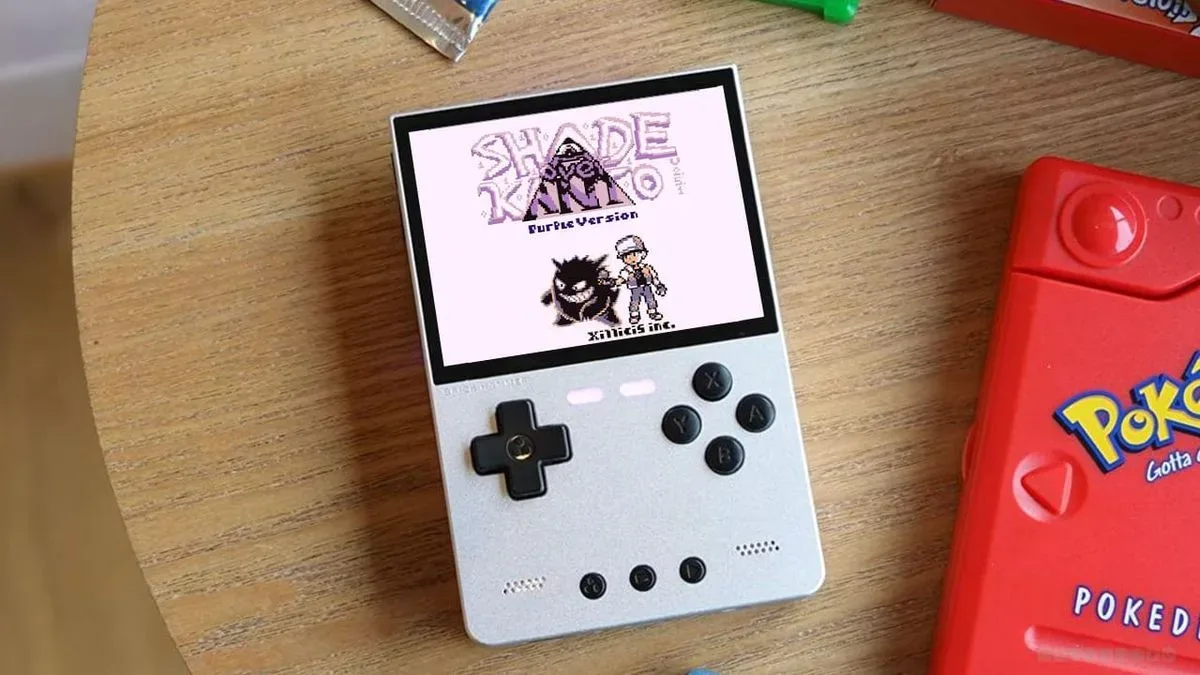
Shade Over Kanto is taking one of the most familiar journeys in gaming and steering it into considerably stranger territory. Built as a ROM hack for Pokémon Blue, the project revisits the original Game Boy version of Kanto with an entirely new narrative, expanded creature roster, additional battle options, challenging Gym Leaders, and a dedicated Nuzlocke mode.
The hack comes from creator xillicis alongside members of the ROM-hacking community, and its timing suits its supernatural premise. Rather than simply retelling the original quest to become Kanto's Champion, Shade Over Kanto sends players across the region to investigate a threat connected to Professor Oak. Oak remains one of the defining figures in Generation I, but the original adventure largely keeps him on the sidelines after he gives the player a starter Pokémon. This time, he is much more central to the mystery.
That setup immediately distinguishes Shade Over Kanto from a standard enhancement hack. It is not just a version of Pokémon Blue with rebalanced encounters or a larger selection of monsters. The intent is to make Kanto feel different while preserving the visual language and hardware-era identity of the Game Boy original.
A less common foundation for a Pokémon ROM hack
Pokémon ROM hacks frequently build from later Game Boy Advance releases such as Pokémon Emerald and Pokémon FireRed. Those games offer a familiar basis for ambitious fan projects, but Shade Over Kanto instead works from Pokémon Blue. That choice places it firmly in the rough-edged, monochrome-adjacent world associated with the earliest Pokémon games.
For useful background on this topic, read Blip Brings a Purpose-Built Dual-Screen Frontend to Android Gaming Handhelds.
There is a particular appeal to seeing a new project use that foundation. Generation I's sprite work, battle presentation, map design, and concise dialogue are instantly recognizable, and the hack leans into that old-school character rather than trying to disguise it. Players can expect a Game Boy-style Kanto adventure even as its content reaches beyond what the original release could offer.
The result is a contrast that should be especially interesting to longtime fans: Pokémon and moves associated with multiple generations appear within a game framed by Generation I graphics. It is a collision of different eras of the series, presented through a format that predates many of the creatures, mechanics, and designs now being brought into Kanto.
More than 100 additional Pokémon and new battle possibilities
Shade Over Kanto includes more than 100 new Pokémon, substantially widening the pool available in a journey that began with just 151 species in Pokémon Blue. The project also adds new Pokémon types and new moves. Together, those changes promise a far less predictable team-building process than the one players may remember from the original Kanto campaign.
Expanded species availability alone can change the feel of a Pokémon playthrough. Familiar routes, towns, caves, and training decisions can take on a different rhythm when the potential encounters are no longer limited to the original Generation I catalogue. Adding moves and types pushes that revision further, potentially giving battles unfamiliar matchups and offering teams that could not have existed in the base game.
Shade Over Kanto's Gym Leaders are also described as an all-star cast of challenging opponents. That wording suggests players should not assume their remembered knowledge of Pokémon Blue's boss battles will carry them through. Even without detailing every leader or roster, the hack's broader list of additions points toward a more demanding progression curve than a casual replay of the original.
For players who enjoy discovering unconventional combinations, the central attraction may be the chance to experiment inside a classic framework. A Game Boy-styled Pokémon adventure with later-generation creatures and attacks has a novelty that is difficult to recreate in a modern official release. It lets Kanto look old while behaving in ways that are new.
Nuzlocke mode raises the stakes
One of Shade Over Kanto's most notable features is its included Nuzlocke mode. Nuzlocke runs have become one of the most popular self-imposed ways to replay Pokémon games, typically built around catching only the first Pokémon encountered in an area and permanently boxing a Pokémon that faints. The precise rules players use can vary, but the broad idea is consistent: every decision matters more.
By offering a mode designed around that style of play, Shade Over Kanto invites a more punishing approach than an ordinary adventure. The combination of unfamiliar Pokémon availability, new moves, new types, and hard Gym Leader battles can make planning especially important. A loss can mean far more in a Nuzlocke than it does in a conventional run, where a trip to a Pokémon Center normally erases the consequences of defeat.
That feature also gives the hack two possible audiences. Players interested primarily in the story and expanded Kanto concept can approach it as a fresh Pokémon Blue campaign, while experienced challenge runners have a mode intended to test their endurance and knowledge. For the latter group, the project's surprises may be part of the appeal. Knowing Kanto's geography is useful, but knowing every original route encounter is no longer enough.
Anyone considering a Nuzlocke should expect setbacks. The format rewards patience, careful party management, and a willingness to adapt when an intended strategy falls apart. Shade Over Kanto appears built to make that pressure part of the experience rather than an optional layer added entirely by the player.
A haunted premise with deliberately crude comedy
The story's threat surrounding Professor Oak gives Shade Over Kanto a darker hook than Pokémon Blue's straightforward coming-of-age adventure. Its atmosphere is described as haunting, making the project a natural fit for players looking for a seasonal Pokémon experience with a Halloween flavor. Kanto has always had room for eerie material, from Lavender Town to Pokémon Tower, but this hack appears to put that unease closer to the center of the journey.
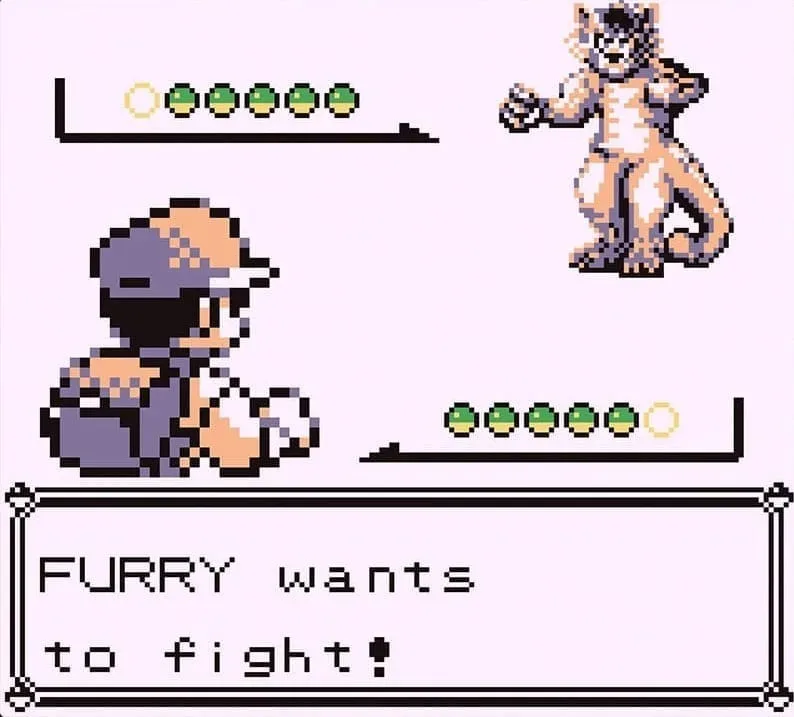
At the same time, it does not present itself as relentlessly serious horror. Shade Over Kanto includes crude humour, adding a deliberately more adult and irreverent tone than players would associate with the official Game Boy release. That tonal choice will likely be a major dividing line: some players may find the unusual jokes part of the hack's identity, while others may prefer a more traditional Pokémon mood.
It is worth noting that this is still a fan-made project using Pokémon Blue as its basis, not an official new entry in the series. Its willingness to take tonal risks is therefore part of what separates it from the carefully controlled presentation of the mainline games. The story can make Professor Oak central to a haunting threat, bring unexpected opponents into the adventure, and use comedy that would be out of place in the original.
An old-school fan project made without AI
Shade Over Kanto also emphasizes its community-made, non-AI development. That matters in a scene where ROM hacks are often valued for the time spent on design, writing, balancing, testing, sprite work, and technical problem-solving. The project is presented as a handmade modification created with and alongside people who care about Pokémon Blue specifically.
That focus on the original game is apparent in the concept itself. Rather than using Kanto merely as a setting for a newer engine, Shade Over Kanto embraces Pokémon Blue's vintage presentation and then layers a new adventure over it. The approach is likely to appeal to fans who want something recognizably retro rather than a remake-style reinterpretation.
Its combination of a supernatural Oak-centered plot, expanded Pokédex, cross-generation moves, new types, challenging Gym Leaders, mature humour, and Nuzlocke mode gives it a notably broad pitch. It is not trying to be the definitive way to play Pokémon Blue. It is trying to make Pokémon Blue surprising again.
How players can approach Shade Over Kanto
Shade Over Kanto is available through Hackdex, where players can obtain the patch needed for use with their own copy of Pokémon Blue. As with ROM-hacking projects generally, players should ensure they are using a legally obtained copy of the original game and follow the patching instructions provided with the project.
For veterans who know every corner of Kanto, the appeal is clear. The region's familiar roads and landmarks remain, but the adventure's context has changed. Oak has a larger role, the Pokémon selection has grown, battle systems have been expanded, and a ruthless challenge option is waiting for anyone who wants to risk a Nuzlocke run.
For newcomers, the Game Boy roots may be the biggest adjustment, but they are also the point. Shade Over Kanto is an intentionally retro remix: a strange, spooky, sometimes crude, and considerably more demanding trip through a version of Kanto that refuses to remain frozen in 1996.
Community
Discussion
Start the conversation.
No comments have been posted yet.