

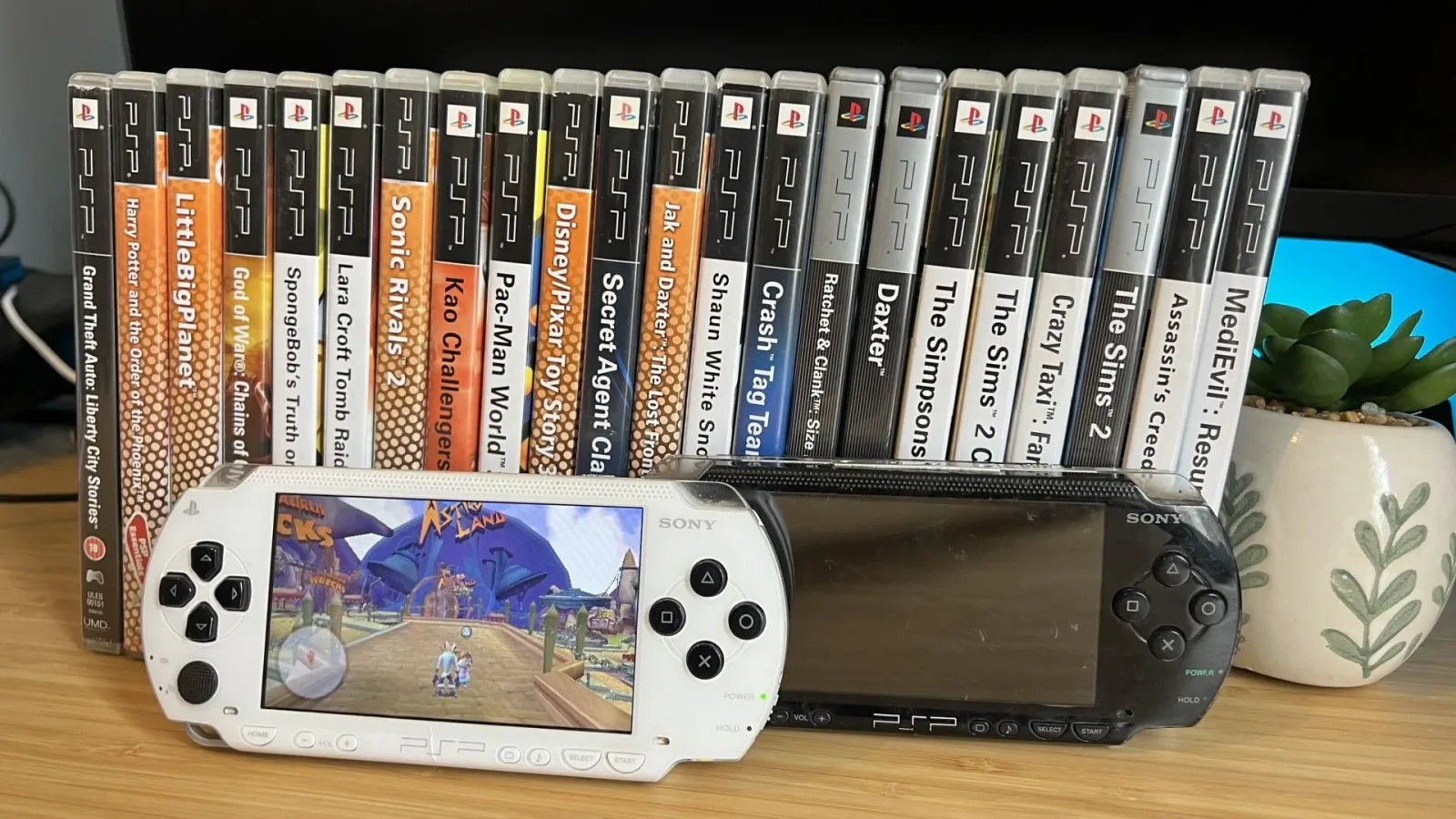
Handheld gaming may be defined today by hybrid hardware, PC portables, digital libraries, and the expectation that major games can travel anywhere, but Sony's first serious attempt to challenge Nintendo remains one of the most consequential portable gambles in the industry. The PlayStation Portable entered a market Nintendo had dominated for years, and its arrival was apparently striking enough to draw an unusually direct response from someone working inside the rival company.
Former PlayStation executive Shawn Layden has recalled the reaction he received after Sony first showed off the PSP. A friend employed by Nintendo sent him a short message: "You bastards." Layden responded in a lighter spirit, saying that it was all fun and games. The exchange is a small anecdote, but it captures how disruptive Sony's handheld ambitions looked at the time.
Nintendo was not merely another participant in portable gaming when the PSP was unveiled. It was the company most closely associated with the category. Game Boy had become a cultural fixture, and the Game Boy Advance continued that momentum. Sony, fresh off the enormous success of the original PlayStation and PlayStation 2, was preparing to bring its own brand of high-end entertainment to a device small enough to carry around.
A risky challenge to Nintendo's portable crown
In retrospect, the Nintendo DS versus PSP battle is often reduced to sales totals: Nintendo's machine became one of the bestselling systems ever made, while the PSP finished well behind it. Yet the situation was far less clear when Sony was beginning its portable push. The PSP was an impressive piece of hardware for its period, with a large screen, multimedia features, and the promise of experiences that looked far closer to home-console games than audiences had previously expected from a handheld.
For useful background on this topic, read GTA: San Andreas' $10 Million Budget Highlights How Far Blockbuster Game Costs Have Climbed.
The DS, meanwhile, represented a radically different direction for Nintendo. Its dual-screen setup and touch controls were initially unconventional enough that there was no guarantee audiences would immediately embrace them. Nintendo had the advantage of deep experience in the portable space, but Sony's entrance still presented a meaningful threat: a powerful new device backed by one of gaming's biggest brands, a large network of studios and partners, and a reputation for delivering technically ambitious games.
Layden's recollection reflects that moment of uncertainty. Sony was not entering an empty field. It was walking into the territory of a company whose handheld products had sold hundreds of millions of units. But the PSP's reveal made clear that Nintendo would no longer have the portable market largely to itself.
Ultimately, Nintendo found remarkable success by expanding the DS audience beyond conventional game buyers. The system's software range, touch-driven design, and appeal to new and casual players helped it become a phenomenon. It sold more than 154 million units over its lifetime. That is a daunting number for any competing platform, but it should not erase the scale of Sony's accomplishment.
The PSP sold roughly 76 million units. Against the DS, that figure can seem modest. Viewed in the broader history of dedicated gaming handhelds, however, it remains extraordinary. No non-Nintendo portable system has matched the PSP's sales performance. Sony's first handheld was not the market leader, but it was a genuine global success and proof that Nintendo's dominance could be challenged.
Piracy complicated the PSP's software business
Hardware sales alone did not tell the entire story. Layden acknowledged that the PSP faced a major commercial problem once its operating system was compromised and the system could be jailbroken with relative ease. Piracy became a serious issue for the platform, making it harder for Sony and publishers to convert the large installed base into consistent legitimate game sales.
This is one of the enduring contradictions of the PSP era. The device was admired for its technology and flexibility, and its enthusiast community was active, but the same openness that attracted many users could also undermine the business model supporting game development. For publishers considering how much to invest in dedicated PSP releases, widespread unauthorized access to software could make the market more difficult to justify.
That challenge did not prevent the handheld from developing landmark software or a devoted audience. Instead, it made certain kinds of games especially valuable. Layden pointed to Monster Hunter as a crucial force for the system, particularly in Japan. The series' cooperative structure gave players a practical reason to persuade friends to buy their own PSP systems and copies of the game. Hunting together was not simply an optional feature; it became a social reason for the hardware to spread.
The importance of Monster Hunter on PSP is difficult to overstate. Its local multiplayer culture helped turn portable gaming into a communal event, with players gathering in person for lengthy hunts. That approach gave Sony something a specifications list could not: a compelling routine that kept people using the system and encouraged further hardware adoption. It was a reminder that the most important feature of a platform is often not its processor, screen, or storage format, but the habits its games create among players.
Why a new Sony handheld would face a different market
Talk of a possible PlayStation 6-era handheld has revived questions around whether Sony might once again pursue a dedicated portable device. Nothing discussed by Layden should be treated as confirmation of future PlayStation hardware. Still, his perspective is notable because it comes from someone who watched Sony navigate the PSP and PlayStation Vita years firsthand.
His central concern is organizational focus. Layden argued that Sony has historically found it difficult to market two platforms at once. He pointed to the PlayStation 3's difficult early period, suggesting that the company's attention and resources can be stretched when multiple major products demand support. The Vita, he said, was doing well before the PS3 reached a better position, underscoring the problem of dividing a limited marketing budget between console, handheld, and software priorities.
Layden suggested that a returning handheld effort might need a separate organization devoted specifically to that business. The reasoning is straightforward: if a portable platform is treated as one more product competing for attention inside a much larger console operation, it may lose the clarity and sustained promotion required to build an audience.
That analysis comes from an era in which handhelds and home consoles were more clearly separate ecosystems. PSP and Vita had distinct game libraries, distinct technical targets, and their own publishing demands. The modern hardware landscape is not identical. Nintendo Switch has made the hybrid model central to its appeal, while PC handhelds such as Steam Deck benefit from existing digital storefronts and libraries. A player can move games between a desktop PC and a portable machine without necessarily buying into an entirely separate software platform.
That difference could make a modern PlayStation portable easier to position, but it would also introduce new questions. Would such a device run games locally, rely on streaming, share purchases with a home console, or aim for a different kind of software catalog? What would distinguish it from remote-play devices, cloud options, phones with controllers, Switch hardware, and increasingly capable PC handhelds? Sony would need answers that go beyond the simple appeal of taking console-style games on the road.
The Vita lesson: portable does not always mean console-sized
Layden also revisited the philosophy behind PlayStation Vita. Sony's goal, as he described it, was to put a console-like experience in players' hands: a substantial game that could be carried anywhere. In theory, it was a persuasive pitch, and Vita remains respected for its screen, controls, features, and catalog. But Layden said that, after reflecting on the platform's performance, he came to believe that many players primarily wanted a strong handheld experience rather than a direct recreation of home-console gaming.
That distinction remains relevant. Portability changes the way games fit into everyday life. A player using a handheld may value quick suspension, readable interfaces, shorter play sessions, lower friction, and a design that feels comfortable in brief bursts. Big open-world adventures and long-form action games can work on portable hardware, but they are not automatically the defining experiences for it.
Modern PC handheld play trends illustrate the point. Major games such as The Witcher 3 and Diablo 4 can be popular on portable PC devices, yet games well suited to repeatable, compact sessions also thrive. Titles such as The Binding of Isaac and Balatro demonstrate the continuing value of games that feel immediately at home in a handheld setting.
For Sony, the PSP legacy offers both encouragement and caution. The company proved that it could build a handheld with global reach, challenge Nintendo's established position, and cultivate a massive audience. It also learned how piracy, fractured attention, software strategy, and internal priorities can limit even a popular machine. Any future return to dedicated portable hardware would not simply be a sequel to PSP or Vita. It would need a sharply defined role in a market that has changed dramatically since Sony first made Nintendo take notice.
Community
Discussion
Start the conversation.
No comments have been posted yet.