

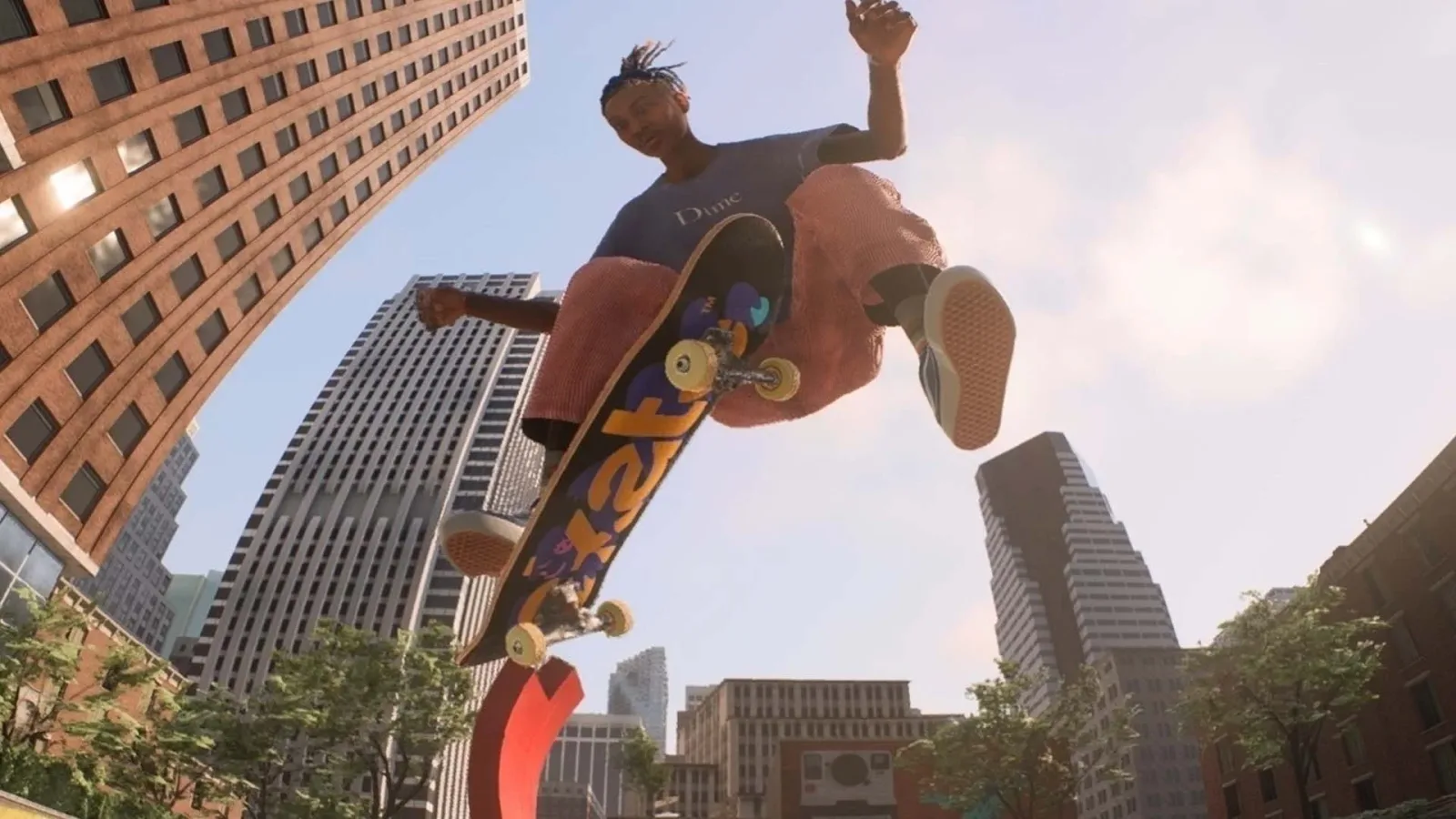
Full Circle has responded publicly to the rapid rise of ReSkate, the unofficial modding platform that has given players new ways to access Skate outside its official always-online structure. The team says it welcomes community creativity and understands why players want expanded tools, custom maps, and community-run spaces. At the same time, it has drawn a firm distinction between creative modifications and software that bypasses systems intended to protect paid cosmetics, content not yet released, and other game assets.
The conversation has become especially heated because ReSkate's most appealing feature for many players is not a costume, map, or visual joke: it is offline play. ReSkate allows people to run the free-to-play skating game without remaining connected to its standard live-service environment, while still interacting with Steam's broader ecosystem. For a game designed around an online-only model, that possibility directly touches on long-running concerns about ownership, preservation, single-player freedom, and what happens if official support changes in the future.
ReSkate has also become a broader community platform. Its tools support community-operated servers, custom locations, and an assortment of player-created character skins. That combination has helped the project spread quickly, with more than 350,000 downloads reported. It can also be played through Steam's Proton compatibility layer, extending its reach to players using that emulation environment.
Embedded X/Twitter post
Full Circle supports creativity, but sets limits
In its statement, Full Circle emphasized that skateboarding culture has always been linked to communal spaces and personal expression. The studio said it does not oppose players being creative, nor does it want to eliminate that creativity. Its concern is focused on mods and tools that circumvent official systems to obtain paid cosmetics, access content that is gated or unreleased, or make money from unauthorized assets.
For useful background on this topic, read Indie Game Roundup: Forever Ago, Echo Weaver and a Packed Showcase Week.
The developer argued that those actions hurt more than the game's commercial model. In its view, bypassing those systems affects the artists, skate brands, creators, and developers involved in bringing real skate culture and licensed material into the game. That framing matters because the dispute is not simply about whether mods exist. It is about where the boundary sits between fan-made customization and tools that can expose content or items intended to be controlled through the official service.
For players, however, the strongest interest in ReSkate appears to be tied to the freedoms the official version currently does not offer. Offline access is a major part of that. Custom servers and maps are another. Together, they provide a more self-directed experience for people who would rather skate in private, shape their own environments, or simply play without depending on an active connection to the game's live infrastructure.
An always-online model meets an old demand
The current situation is rooted in the unusual path Skate has taken. Fans spent more than a decade asking for a new entry in EA's skateboarding series. The demand became a recurring refrain among players who remembered the earlier games fondly and wanted another chance to use the series' distinct board-control style. When a new game finally arrived in 2025, it took a direction markedly different from its predecessors.
For another perspective on this story, read Full Circle Responds as ReSkate Brings Offline Play to Skate.
Skate, also styled as skate., is a free-to-play sandbox rather than a traditional premium sequel built around a conventional solo campaign. It requires players to remain inside an always-online ecosystem. That approach creates opportunities for a shared, evolving world, but it also brings the familiar compromises of a live-service game. Players cannot simply treat it as a self-contained offline skating game, and the experience remains tied to the health and future of the official service.
That tension has been present since the game entered early access. Its freemium structure has generated criticism, while player retention problems reportedly contributed to a studio restructuring in February. ReSkate's arrival therefore lands at an awkward moment for Full Circle: interest in the game has been renewed, but a considerable amount of that renewed attention is focused on a community project that can reduce dependence on the systems underpinning the official business model.
There is an understandable irony here. The same enthusiasm that demonstrates how much people still want to spend time with Skate is also pushing a version of the game that operates further away from the official ecosystem. For Full Circle, that creates an incentive to acknowledge the desires behind ReSkate without endorsing software that could undermine paid content or expose work that was not meant to be publicly accessible.
Official creation tools are planned
Full Circle says it is working on official and secure access tools intended to enable broader and deeper community creation. The statement does not provide a timetable or a detailed feature list, so it remains unclear exactly how closely those future systems will resemble what ReSkate currently offers. Still, the commitment is significant because it recognizes that players are not merely asking for cosmetic novelties. They want meaningful ways to build, share, and shape skating spaces with others.
Official tools could potentially give players a safer and more stable route to custom experiences while allowing Full Circle to protect game systems, assets, and monetized items. But the eventual reception will likely depend on scope. If fans see those tools as offering genuine room for maps, servers, creative expression, and flexible play, they may satisfy at least some of the demand that has propelled ReSkate. If the official options are tightly restricted or arrive too slowly, the unofficial platform may remain attractive precisely because it offers freedoms the main game does not.
Notably, Full Circle has not stated that it intends to shut down ReSkate or block its current access. Instead, the studio's response asks players to stay within the official ecosystem and explains why it considers certain types of bypassing unacceptable. That is a more nuanced position than a blanket condemnation of all player modifications, though it still leaves open the possibility of future action if the project crosses lines the developer considers harmful.
ReSkate creators say the project is about the game
Members of the ReSkate team have said their goal is not to sabotage Full Circle's operations. Co-creator zee_x64 described the project as something made out of affection for the game, while acknowledging that a free-to-play title needs to generate revenue in order for continued development to be possible. That position aligns with the broader complexity of the debate: many users may want offline play and mod support without necessarily wanting to take paid items or prevent the studio from earning money.
The team has also indicated that it would not seek a legal fight if EA's legal representatives contacted it. That does not resolve the questions around ReSkate's future, but it suggests the creators recognize the limits of operating around a major publisher's live-service game and intellectual property. Their stance may also make direct discussion or voluntary changes more plausible than a prolonged public conflict, although neither side has announced such an arrangement.
The mention of AI is another important part of the story. ReSkate has been described as an open-source project made with AI assistance, while the broader mod scene is seeing more rapidly assembled, AI-driven decompilation efforts sometimes labeled as "vibe coded." Such projects can lower the barrier for experimentation, but they can also accelerate the spread of tools before developers have time to establish technical, legal, or ethical boundaries. In a live-service game with cosmetics, licensed brands, and unreleased material, that speed can intensify every dispute around access and control.
What happens next for Skate players
For now, the disagreement is less a simple clash between a studio and its fans than a test of whether an always-online game can make enough room for the creative culture surrounding it. Skateboarding games have long encouraged expression through spots, lines, clothing, clips, and self-imposed challenges. Community maps and privately run spaces are a natural extension of that tradition. Yet Full Circle also has legitimate reasons to protect paid items, partners, and unfinished content in a game that is still in early access.
The key issue will be whether the official tools promised by Full Circle can offer players meaningful autonomy without requiring them to turn to unauthorized software. Offline play remains the most difficult point, because it is not merely a feature request. It is a different philosophy of access from the one at the center of a live-service free-to-play game.
ReSkate's popularity has made that philosophy impossible to ignore. It has shown that a substantial audience wants to skate on its own terms, whether that means playing offline, experimenting with custom environments, or joining a community-run server. Full Circle's response makes clear that it is listening to the creative impulse behind that demand, even as it asks players not to cross the lines that could compromise the game's content and business systems. The next phase will depend on what the studio delivers--and on whether the community believes those official options provide the freedom it has been seeking.
Community
Discussion
Start the conversation.
No comments have been posted yet.