

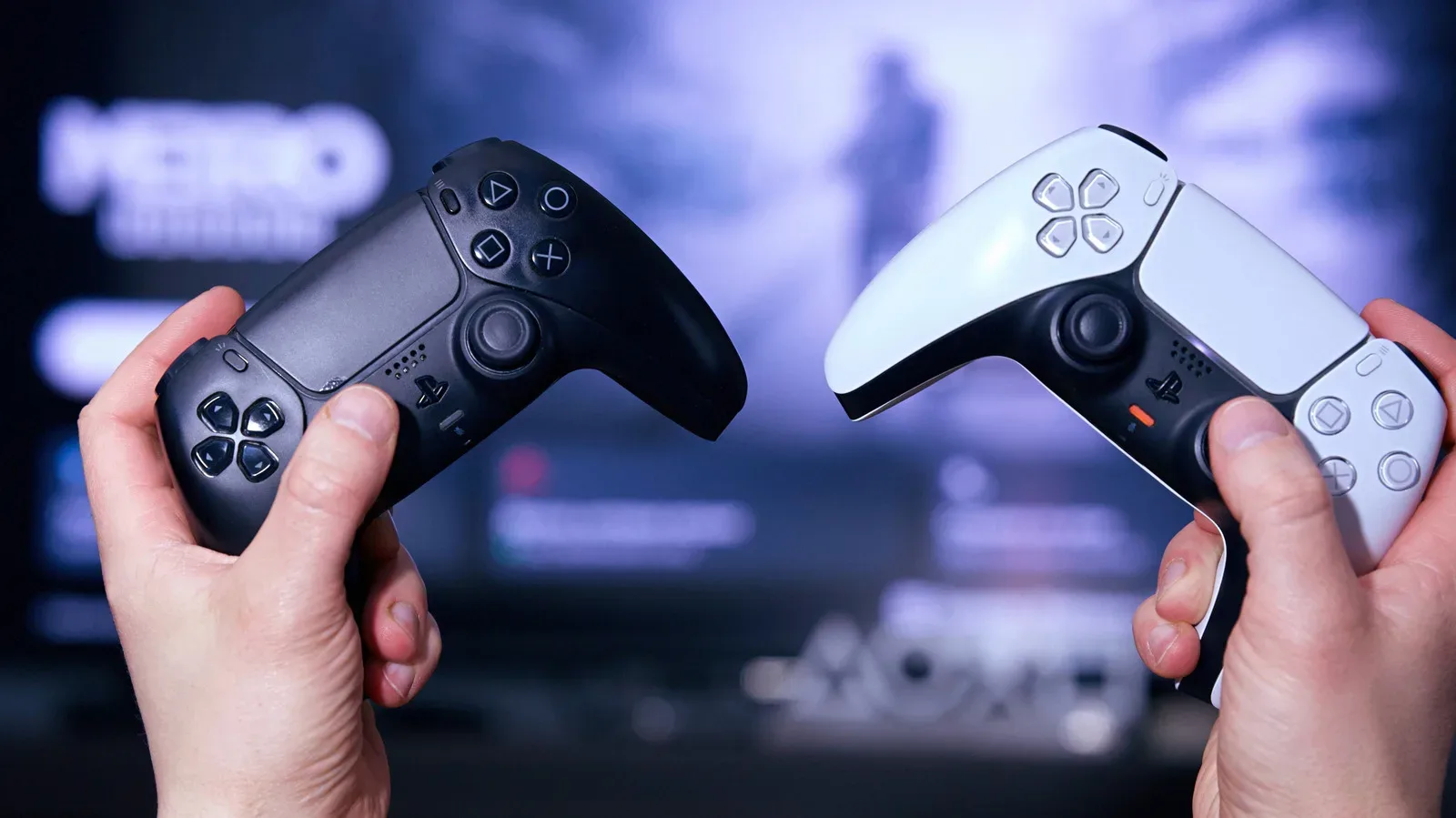
Sony has outlined a possible new way to handle purchases and account information on PlayStation: using the controller as the bridge between a console and a nearby smartphone. A provisional patent filed in 2025, titled Video game controller-driven information transfer, describes a system in which a controller detects a compatible mobile device, receives confirmation from that device, and then passes the relevant information along to the console.
The concept is potentially much broader than putting a payment card reader directly into a DualSense-style controller. Its diagrams and descriptions point toward controller-initiated transfers for payment details, account credentials, gift-card information, and multiplayer-related actions. In practical terms, the underlying idea is simple: rather than painstakingly entering information through a console interface, a player could be prompted to tap or otherwise authenticate with their phone near the controller.
As always with patents, the filing should not be treated as confirmation of a retail product. Companies patent ideas for many reasons, and some never become consumer features. Still, the proposal reflects a recognizable friction point in console gaming: buying something on a TV interface can be slower and more awkward than it should be, especially when passwords, card numbers, or other sensitive details are involved.
How Sony's controller-driven transfer could work
The patent describes a sequence built around proximity between the controller and another device, most notably a phone. When an event takes place at the PlayStation console, the controller could identify a nearby device and send it a signal. The phone would then provide a confirmation, after which the controller would communicate the approved information to the console.
For useful background on this topic, read Grand Theft Auto's 13-Year Gap Shows How Dramatically Game Development Has Changed.
The transfer could use near-field communication, Bluetooth, or a combination of the two. NFC is the short-range technology commonly associated with contactless payments and tap-based interactions on phones, smartwatches, and payment terminals. Bluetooth could give the system another route for device discovery and communication, depending on the hardware and security requirements Sony ultimately chose for any real implementation.
That distinction matters because the controller would not necessarily need to store a player's full card information itself. Instead, it could function as a physical, familiar touchpoint that starts an authentication request on a phone. The phone, which may already have payment credentials or account security tools available, could confirm the request before the console proceeds.
In that model, the controller becomes part of a permission chain rather than a replacement for a phone wallet. A player could see an offer on the PlayStation Store, begin a purchase using the console, tap their phone to the controller, approve the action on the phone, and return immediately to the game or store page. The exact flow remains hypothetical, but that is the kind of experience the patent appears designed to enable.
Checkout is the most obvious use case
Buying a game, expansion, cosmetic item, subscription, or other digital add-on can be easy when a payment method is already saved to an account. It becomes considerably less convenient when a card has expired, an account needs verification, a player is using a different payment option, or someone does not want to store those details on the console account.
Typing card numbers and billing information with a controller is one of the least pleasant tasks on a living-room console. Even virtual keyboards have improved over the years, but moving a cursor between on-screen characters is still slow compared with a phone keyboard, a biometric approval prompt, or a contactless tap. The interruption can be enough for a would-be buyer to postpone a purchase--or simply abandon it.
A controller-driven handoff could reduce that friction. Rather than reaching for a wallet, opening a banking or payment app, and transcribing numbers into a TV screen, a player might authenticate with a device already in hand or nearby. Sony would benefit from a smoother route through checkout, while players would receive a less cumbersome experience at the point where they are ready to buy something.
The patent also references gift-card details as a possible type of information transfer. Gift cards remain a common way to add wallet funds, particularly for younger players, gifts, and households that prefer not to attach a conventional payment card to a gaming account. A tap-oriented system could potentially speed up redemption if a phone can securely provide the appropriate information to the console.
Sign-ins and multiplayer could be just as important
Payment processing may attract the most attention, but the proposed system could have wider implications for how players identify themselves on a PlayStation console. The patent's illustrations suggest that tapping or pairing a phone through the controller might be used for account login as well.
That could be useful in several everyday scenarios. Someone playing on a friend's console may want quick access to their own profile, settings, game library, and saves without staying logged in after they leave. A household with several PlayStation users could potentially make profile switching less of a menu-driven chore. And players who have been logged out could have an alternative to manually entering an email address, password, and additional verification details using a controller.
Passkeys have already made account access simpler for some users, but a controller-based interaction could offer a more direct console-specific flow. The controller is the item a player already expects to use before a game starts. Turning it into the initiating device for a secure phone confirmation could make the process feel more natural than navigating through several sign-in screens.
The patent also points to multiplayer-related events. The available details do not establish every possible application, but the concept could be relevant when joining a session, linking an identity, confirming an invitation, or completing another account-based step. Any feature dealing with identity would need strong safeguards, of course, particularly when consoles are used in shared homes or public social settings.
NFC would not be entirely new to game controllers
NFC hardware in controllers is familiar territory for players who have used Nintendo systems. The Wii U GamePad and Nintendo Switch Pro Controller both support NFC functions for scanning amiibo figures. Those implementations primarily connect physical collectibles to games and system features, rather than moving payment or account information from a phone to a console.
Sony's patent therefore does not introduce the basic notion of an NFC-enabled controller to gaming. What stands out is the proposed emphasis on phone-mediated authentication and information transfer during console events. The controller could become an active part of digital-store transactions and account management, not only an input device or a place to scan a collectible.
There are also meaningful practical differences between reading a figure and dealing with financial or login data. Any consumer version would need to address encryption, confirmation prompts, accidental activations, device compatibility, lost phones, shared controllers, and the possibility of unauthorized attempts to initiate a transaction. The patent describes a framework, but a commercial feature would live or die by the quality of those protections and by how clearly the console explains what is being approved.
A fit for a more digital PlayStation future
The idea arrives amid Sony's stated plan to move fully toward digital formats and end physical disc production by 2028. In a more heavily digital PlayStation ecosystem, the experience of finding, buying, redeeming, and accessing content becomes central to the platform. Store usability is no longer a secondary concern beside disc ownership; it is a core part of how players build and use their libraries.
That context makes a low-friction payment and account-transfer system easier to understand. Digital storefronts thrive when the path from interest to ownership is short and clear. At the same time, consumers increasingly expect phone-based authentication because their phones already handle banking, transit, tickets, passwords, and contactless purchases.
For PlayStation owners, the most appealing version of this concept would be optional, fast, and transparent. Players should still be able to use saved payment methods, standard passkeys, codes, and traditional sign-in tools if they prefer. The controller-and-phone approach would make the most sense as another secure choice: one intended to remove annoying steps without forcing a change in how anyone manages their account.
Patents are clues, not product announcements
Sony's filing offers an interesting glimpse at how future PlayStation hardware and services could connect more closely with smartphones. It also arrives during a period when both Sony and Microsoft have continued to explore new platform ideas through patents, adding to speculation about what the next generation of consoles may prioritize.
However, a patent is not a promise that a feature will appear in a future controller, console, or PlayStation software update. There is no confirmed product, release window, hardware specification, or announcement attached to the controller-driven transfer concept. Sony could develop it further, revise it into a different form, use only parts of it, or never bring it to market at all.
Even so, the proposal identifies a real problem with a plausible modern answer. If PlayStation ultimately lets players approve a purchase or access an account by bringing a phone near the controller, it could make some of the console's most tedious screens disappear behind a simple tap. For a digital-first future, that sort of convenience may be exactly the point.
Community
Discussion
Start the conversation.
No comments have been posted yet.