

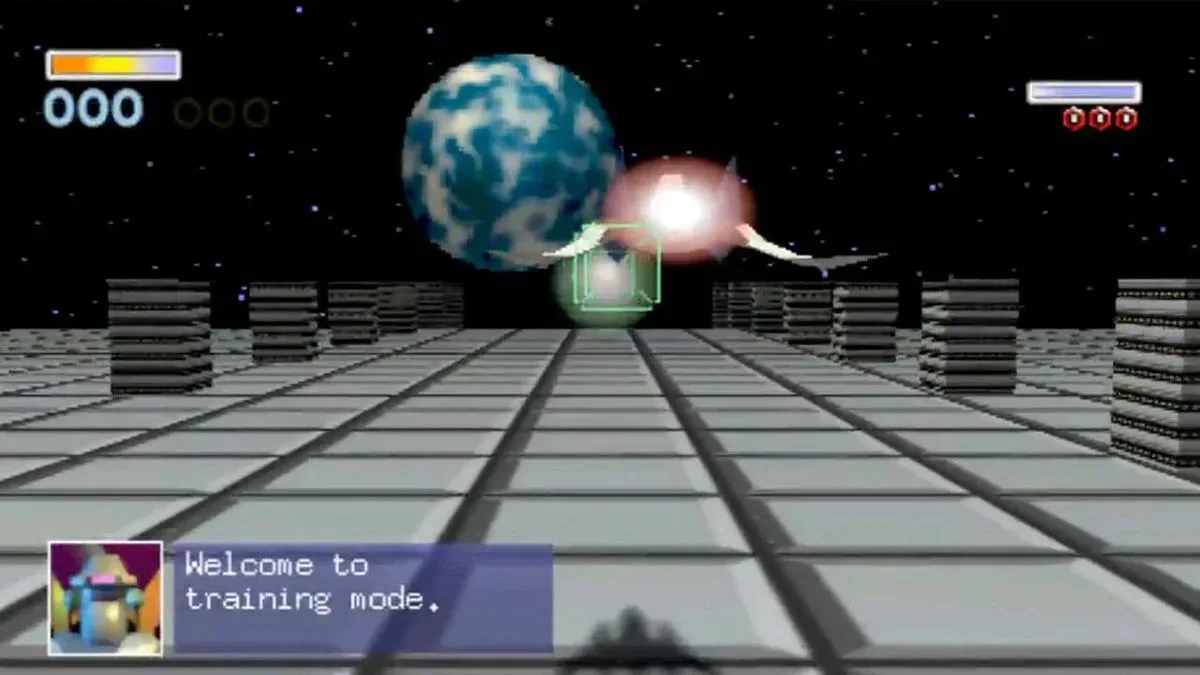
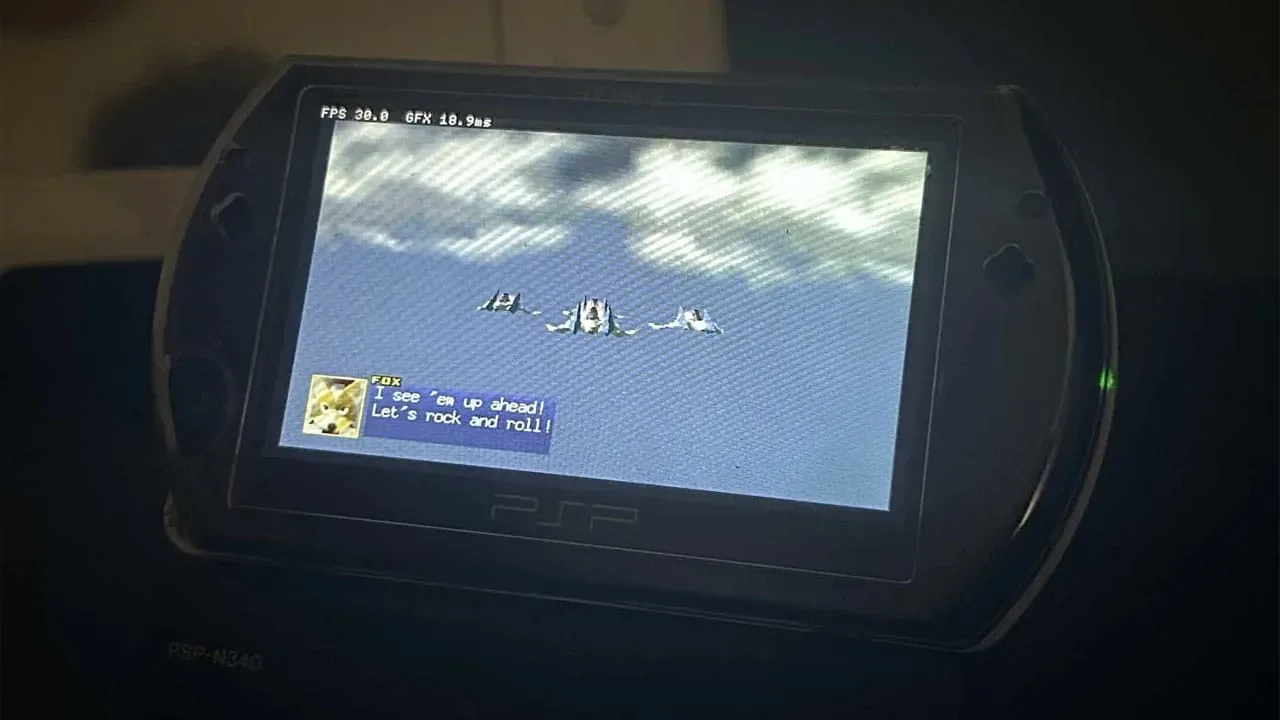
Star Fox 64, known as Lylat Wars in some regions including the UK, has reached an unexpected new destination: the PlayStation Portable. A fan project led by Daniel Welch has successfully brought Fox McCloud's classic Nintendo 64 adventure to Sony's handheld, where it is shown running at 60 frames per second on genuine PSP hardware as well as through the PPSSPP emulator.
The project is still in an early state, and its performance story comes with an important technical qualification. While the visual output is running at 60FPS, the game simulation remains at 30Hz for now. That means the underlying game logic and simulation are not yet operating at a full 60 updates per second. Even so, getting this fast-moving rail shooter working so smoothly on PSP is a notable accomplishment, particularly given the system's major differences from Nintendo 64 hardware.
Welch has been working on the port for roughly four months. Footage shared of the project includes the confident message, "They said it couldn't be done," a fitting summary for an undertaking that asks a mid-2000s handheld to run one of the most recognisable 3D console games of the 1990s. The current build demonstrates that the idea is no longer simply theoretical: it is functioning on an actual PSP, not only in emulation.
Embedded X/Twitter post
A new stop for the Lylat System
Originally released for Nintendo 64, Star Fox 64 remains a defining entry in Nintendo's spacecraft-shooter series. Players take control of Fox McCloud as he leads the Star Fox team against Andross, flying through branching missions across the Lylat System. Its mix of cinematic set pieces, alternate routes, score chasing, radio chatter and the then-novel Nintendo 64 Rumble Pak helped establish the game as a major favourite of its era.
For useful background on this topic, read Nintendo Brings Classic Mii Maker Music to Switch and Switch 2.
It is also a game whose reputation has endured far beyond its original cartridge release. The Nintendo 64 version has been revisited through official services and hardware over the years, while the broader Star Fox catalogue has continued to attract fresh attention. This week alone has seen an update related to the original Star Fox on Nintendo Switch, while Star Fox Adventures has joined Nintendo Switch Online through the GameCube Classics collection.
That makes the PSP project part of a particularly active moment for Fox McCloud, even if it is entirely separate from Nintendo's official releases. The difference is important: this is a fan-made technical port rather than an announced commercial edition, and no official PSP release has been announced. Still, it offers retro enthusiasts another way to appreciate how flexible older games can become when developers and modders apply modern reverse-engineering knowledge and programming techniques.
Why a PSP version is technically interesting
At a glance, moving a Nintendo 64 game to PSP may sound straightforward because both are older systems. In reality, a native port is a challenging task. The Nintendo 64 and PSP were designed with different processors, graphics systems, memory arrangements and development assumptions. Code built around Nintendo 64 behaviour cannot simply be dropped onto PSP hardware and expected to run.
Projects like this require careful work to adapt or recreate a game for a completely different environment. Performance is especially vital for Star Fox 64. The game depends on rapid movement, incoming projectiles, enemy formations, large bosses and scenes that can fill the screen with effects. A slowdown-prone build would fundamentally change the feel of an action game that asks players to react instantly and pursue high scores.
Achieving 60FPS visual output is therefore an encouraging milestone. The PSP's screen has a 480 by 272 resolution, an aspect ratio distinct from the Nintendo 64 game's original presentation, so a handheld version also has to deal with display and interface considerations. The PSP's controls are another obvious point of interest. Unlike the Nintendo 64 controller, it has a single analog nub, different trigger placement and a different button layout. How the final port handles aiming, braking, boosting, bombs and the many subtle control expectations of veteran players will be central to its eventual usability.
The mention of the 30Hz simulation shows why frame-rate claims can need context. A game's displayed frames and its internal simulation speed are related but separate technical concepts. Rendering at 60FPS can produce a smoother-looking image, but a 30Hz simulation means gameplay calculations are still occurring at a lower frequency. Bringing both elements to 60 would be a further step, potentially affecting animation, movement, timing and other systems that may have originally been designed around a 30Hz update rate.
Real hardware support matters
One of the project's most appealing details is that it works on original PSP hardware as well as PPSSPP. Emulators are hugely useful for preservation, testing and convenience, but compatibility in an emulator does not always guarantee the same result on a physical device. A build that performs well on a modern computer may encounter limitations once it is moved onto the original handheld's CPU, memory and graphics hardware.
Running on a real PSP gives the project added credibility as a handheld-focused achievement. The device has long been popular with enthusiasts because it combines a distinctive physical design, a strong library and a sizable homebrew scene. It also has a legacy of hosting unofficial experiments, fan-made applications and retro gaming software. A playable, high-frame-rate take on Star Fox 64 fits naturally into that history.
PPSSPP support remains useful in its own right. It gives users of compatible devices a way to test and experience PSP software without needing an original handheld, and it can make development and troubleshooting easier. At the same time, the fact that Welch's work has been demonstrated on both platforms means the project is not limited to one narrow setup.
Early days for the port
Despite the impressive demonstration, this is not being presented as a finished release. Welch has indicated that the work is still early, with the 30Hz simulation standing out as one area that has yet to reach the project's apparent broader goal. That is a sensible reminder that video footage of an ambitious fan port is not the same thing as a final, fully tested build.
There are several questions that naturally remain for a project at this stage. Full-game stability, compatibility across missions, audio accuracy, controller tuning, save functionality and behaviour during the game's more demanding scenes all matter as much as an eye-catching frame-rate figure. Star Fox 64 is famous for its branching paths, meaning a complete port has to account for more than a single showcase level. Different routes can introduce their own environments, enemies and effects, and every one of them needs reliable performance.
There is also no stated timetable for when the project might be considered complete or broadly ready to play. Fans interested in its progress should therefore treat the current showing as a promising development milestone rather than a confirmed public launch. The work has gained momentum, but the remaining technical tasks may still be significant.
Another example of retro preservation through experimentation
Star Fox 64 has already appeared in multiple forms within the wider retro scene. It has been ported to Dreamcast, and it is a familiar game across many retro handheld setups. Each new technical implementation highlights a different aspect of the game's longevity. Some are about improving access, others about platform experimentation, and others about learning how classic software can be preserved and adapted outside its original ecosystem.
The PSP version stands out because it joins two hardware icons from different gaming eras: Nintendo 64, a landmark machine for early console 3D, and PSP, Sony's ambitious portable multimedia handheld. Seeing Arwings fly across Corneria or other Lylat battlefields on the PSP's compact screen has an obvious novelty, but the significance runs deeper than novelty alone. It demonstrates the dedication of hobbyist developers who continue to investigate what aging hardware can do.
For now, the headline achievement is clear. Star Fox 64 is running on PSP at 60FPS, both on original hardware and in PPSSPP, after around four months of work from Daniel Welch. The simulation is currently still 30Hz, and the port remains unfinished, but the result already represents a compelling new chapter for one of the Nintendo 64's best-known games. Fox McCloud may have started his mission on Nintendo hardware, yet the boundaries of the Lylat System continue to expand in the hands of the retro development community.
Community
Discussion
Start the conversation.
No comments have been posted yet.