

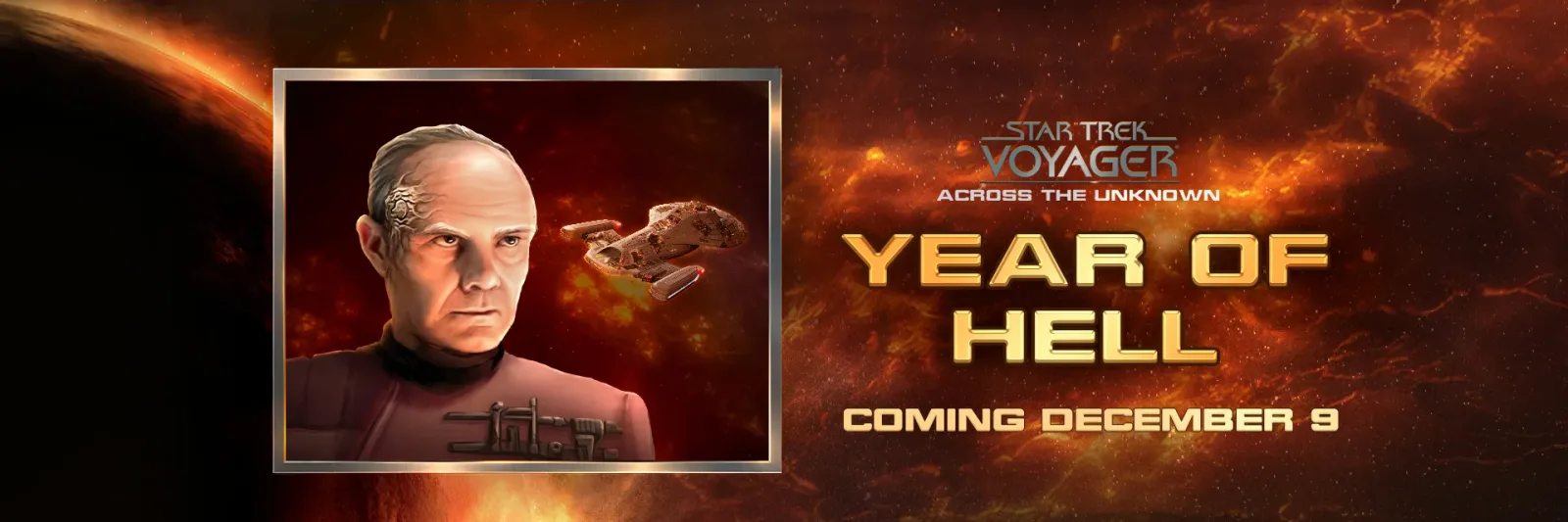
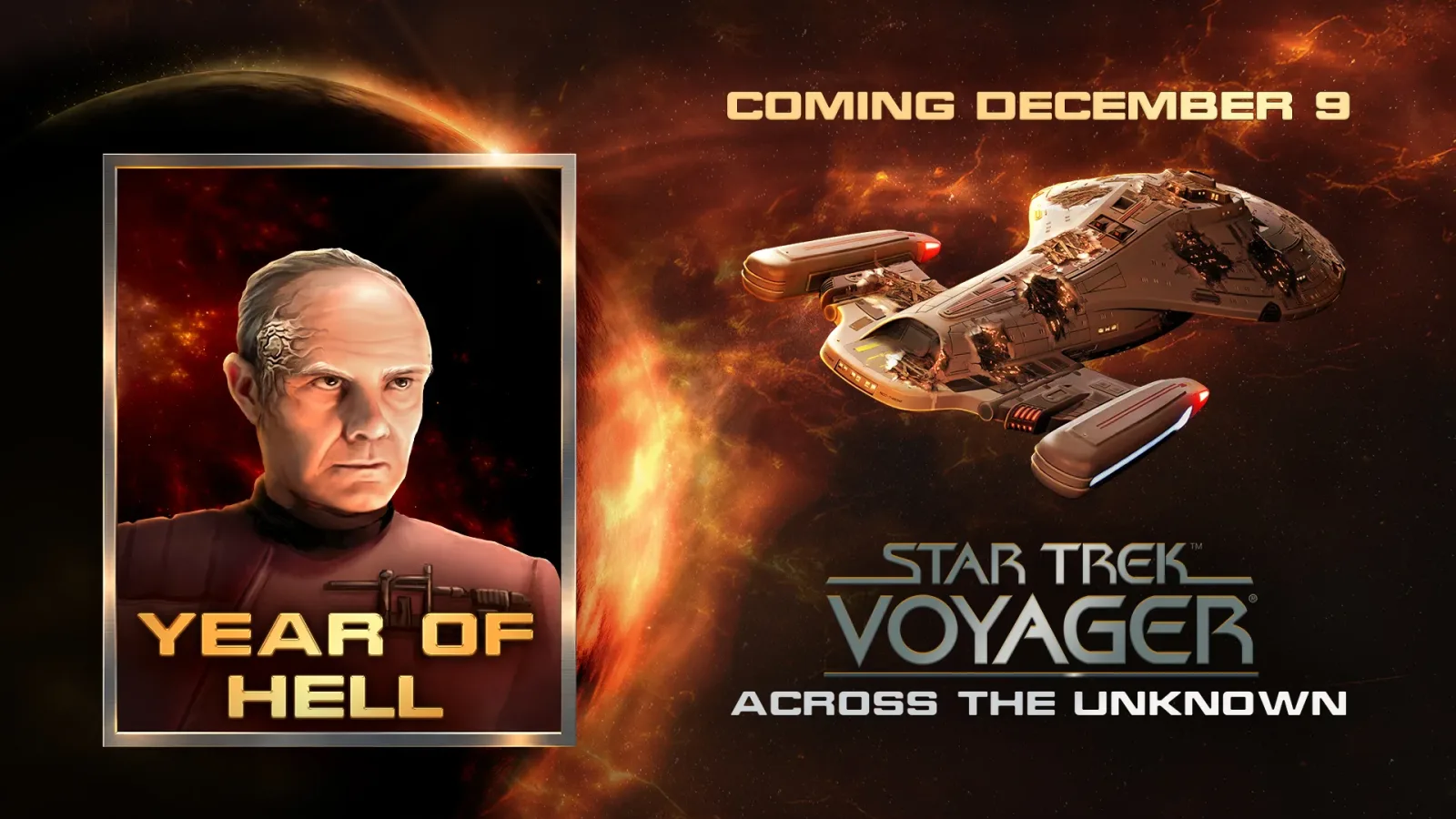
Star Trek: Voyager - Across the Unknown is preparing to enter one of the television series' bleakest and most memorable storylines. Year of Hell, the fourth and final DLC included in the game's Expansion Pass, will launch on December 9 for PC, PlayStation 5, and Xbox Series X|S. A Nintendo Switch 2 edition is scheduled to follow on December 28.
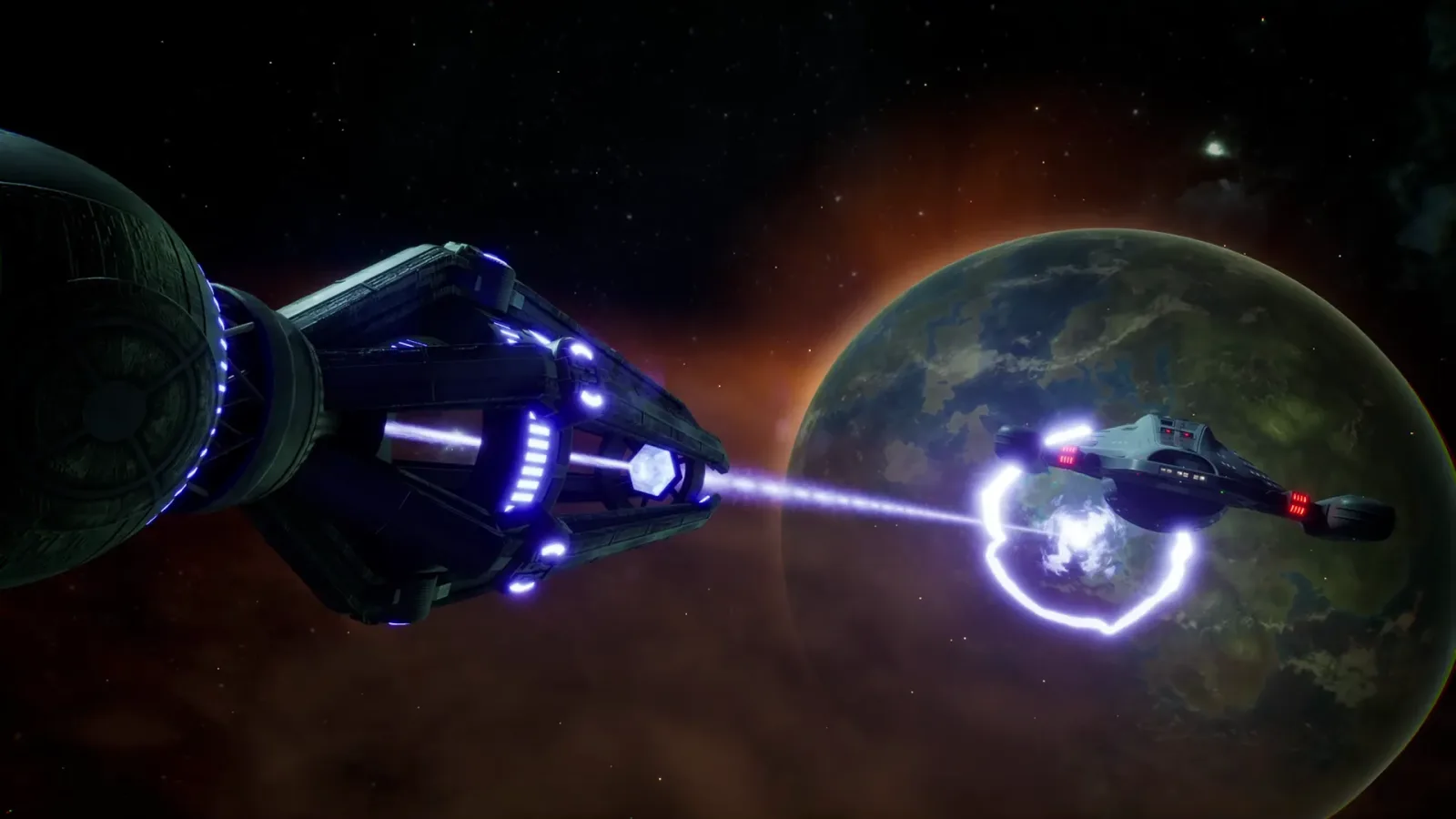
Developed around the premise of Voyager's two-part "Year of Hell" episode, the expansion is a self-contained mini-campaign that puts players through 12 months of mounting losses. Captain Kathryn Janeway and the USS Voyager must withstand Krenim attacks led by Captain Annorax, whose extraordinary timeship can alter history by removing entire civilizations from existence. Rather than presenting that concept as a simple combat backdrop, the DLC places its changing timeline at the center of player choice and long-term survival.
It is also a notably different kind of expansion from one centered on growing a crew, unlocking a wider technology tree, or expanding a ship's potential. In Year of Hell, Voyager begins from a position of comparative strength. The ship already has advanced systems and upgrades available. The challenge is keeping them from being stripped away as the Krenim offensive intensifies and the timeline is rewritten around the crew.
A campaign where progress runs in reverse
Most strategy and management games ask players to turn limited early resources into a more capable operation. Year of Hell intentionally flips that structure. Voyager starts with the kind of established infrastructure that would usually represent a late-campaign advantage, only for the scenario to steadily dismantle those advantages over its year-long timeline.
For useful background on this topic, read Deadstick: Bush Pilot Simulator demo Now Available on Steam.
That reversal fits the story's central pressure. The Krenim are not merely another hostile force trying to overpower Voyager in a fair fight. Annorax's temporal weapon gives the enemy a way to change the conditions of the conflict altogether. As key civilizations are erased, alliances and familiar advantages can disappear with them. A decision that seems secure in one version of events may carry a very different cost once the timeline shifts.
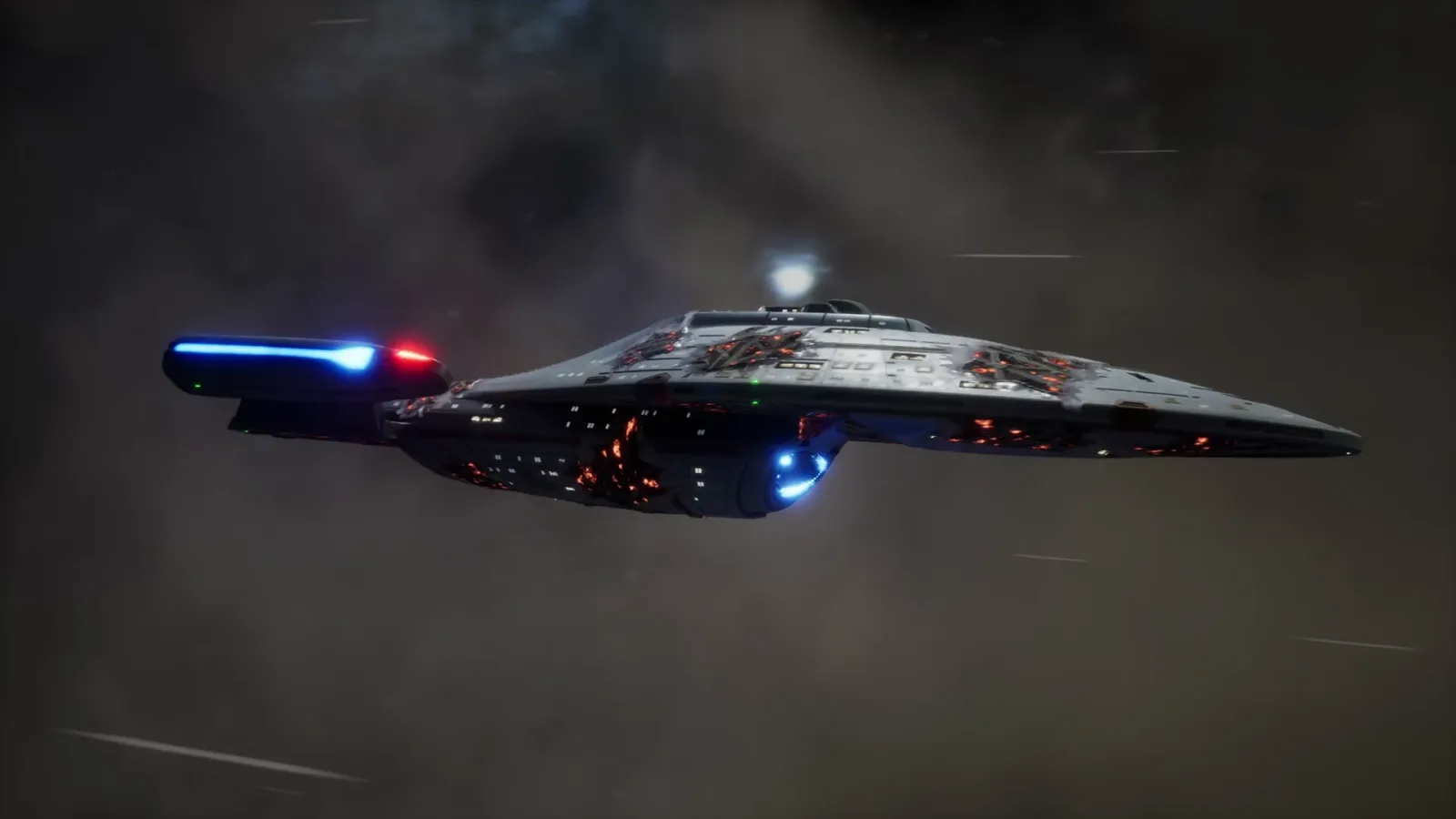
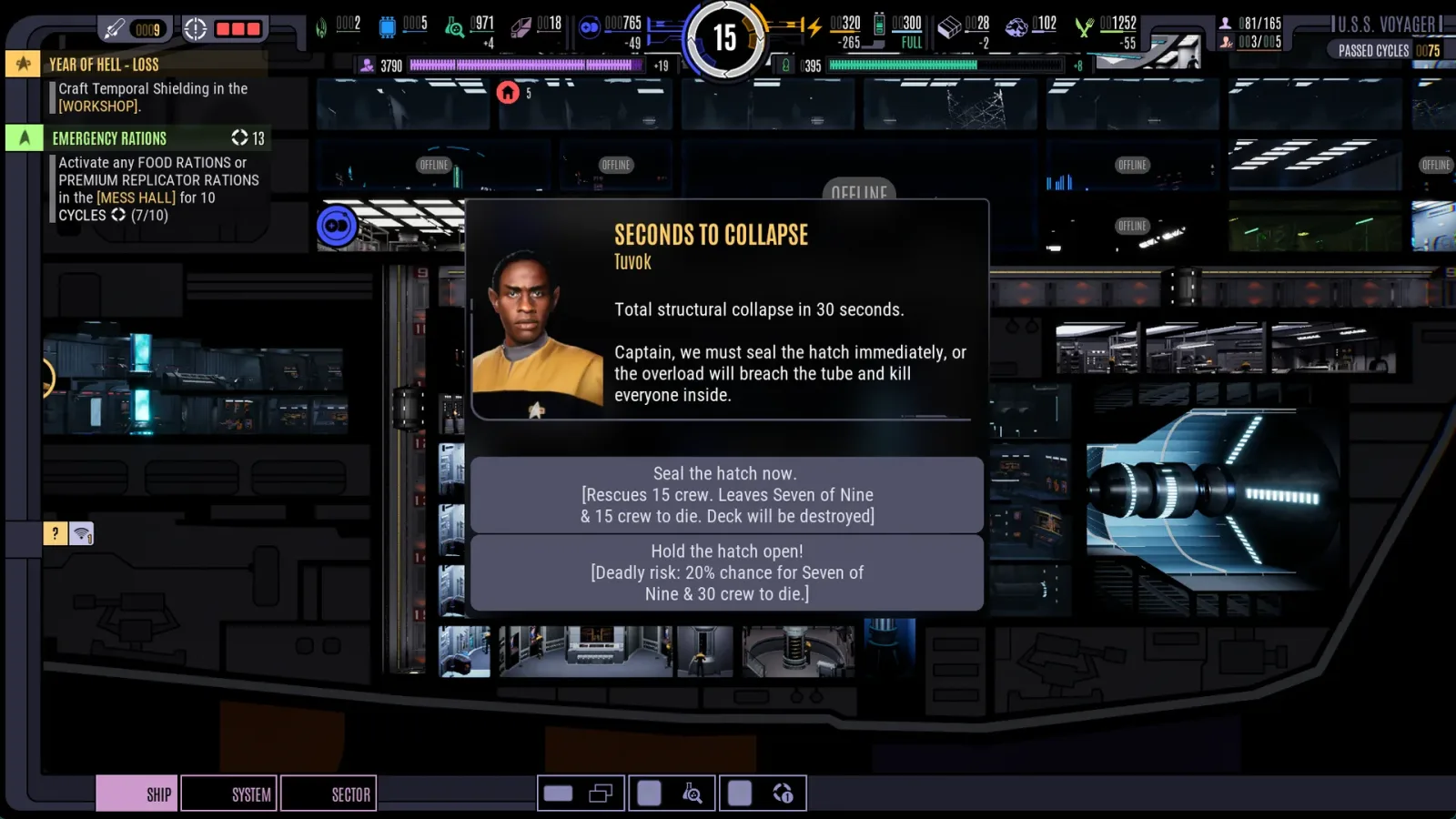
The expansion's survival systems make the consequences tangible aboard the ship. Enemy attacks can destroy rooms, remove entire decks from Voyager, and kill crew members. Every lost section reduces the space available to operate, while damage and deaths restrict the resources a player can devote to keeping vital functions online. The objective is not simply to defeat opponents with the most efficient build. It is to endure the full 12 months with as many people alive as possible.
That framing should make each setback matter beyond a temporary repair bill. A damaged deck is not just a visual indicator of battle wear; it can narrow a player's options for the rest of the campaign. Fewer rooms, fewer crew, and fewer resources turn later decisions into difficult trade-offs. The longer Voyager stays in the fight, the more important it becomes to decide which systems and personnel can still be protected.
For another perspective on this story, read Star Trek: Voyager - Across the Unknown Year of Hell DLC Arrives December 9.
Janeway's choices can reshape the conflict
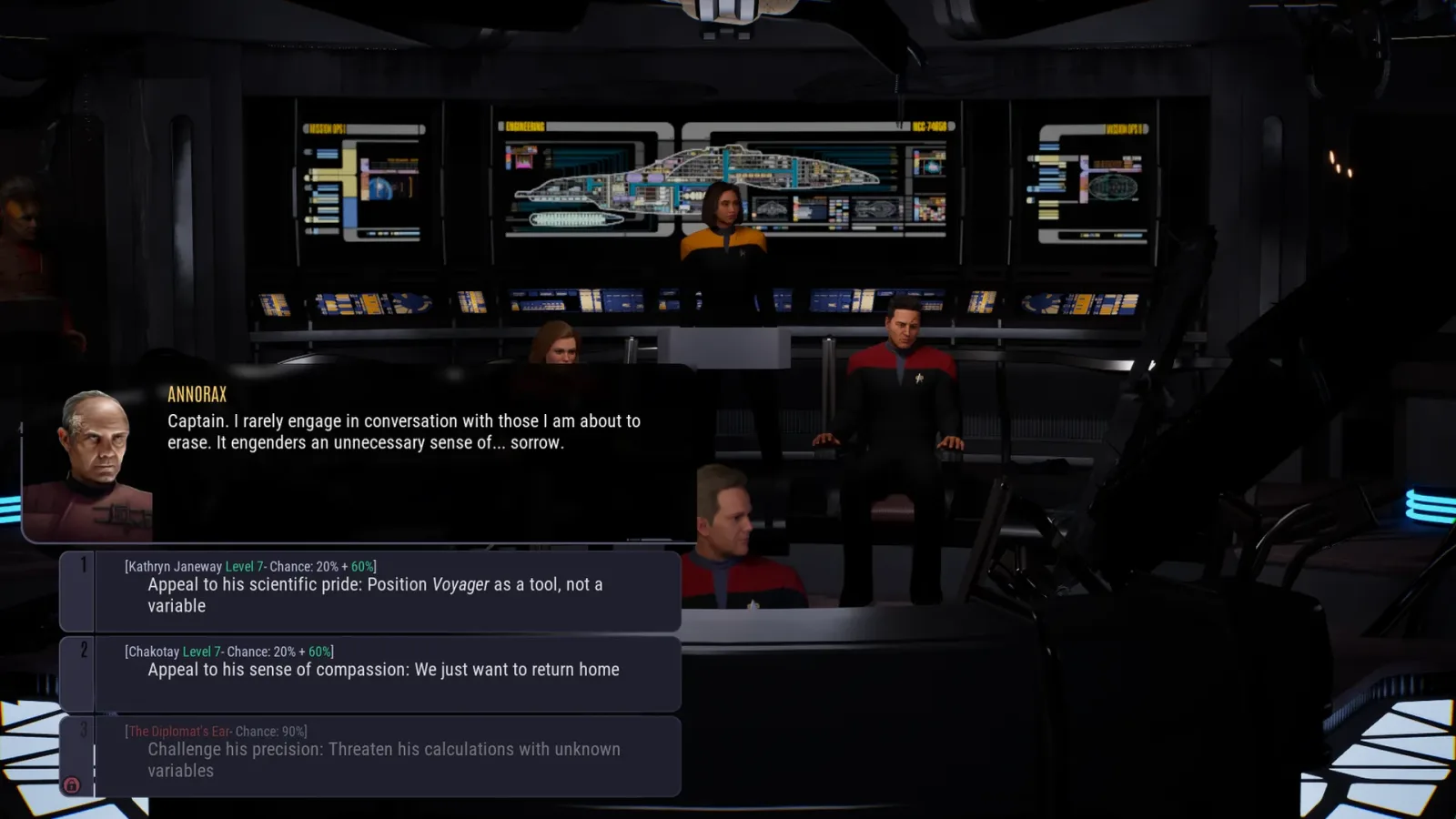
Players will have the opportunity to resist Annorax outright or pursue an alliance that Janeway did not make in the original story. Those decisions affect the responses of Voyager's senior officers and influence how the timeline develops. The premise suggests that the campaign will not treat its alternate path as a cosmetic detour. It is designed to let players test a different answer to a crisis defined by impossible compromises.
The possibility of working with Annorax is especially striking because the Krenim captain's goal is rooted in personal loss and a disastrous effort to restore what he believes time has taken from him. His timeship's power makes every potential agreement dangerous: cooperation might create a short-term route to survival, but the same temporal manipulations can radically alter the people, factions, and circumstances surrounding Voyager.
For the player, that means leadership decisions extend beyond immediate tactical outcomes. Senior officers will react to the course Janeway chooses, and the evolving timeline can change the terms of encounters later in the campaign. The DLC's structure emphasizes the uncertainty that made the televised storyline so effective: there may be no way to preserve everything, and preserving one thing could require accepting the loss of another.
Six ships, including Annorax's formidable timeship
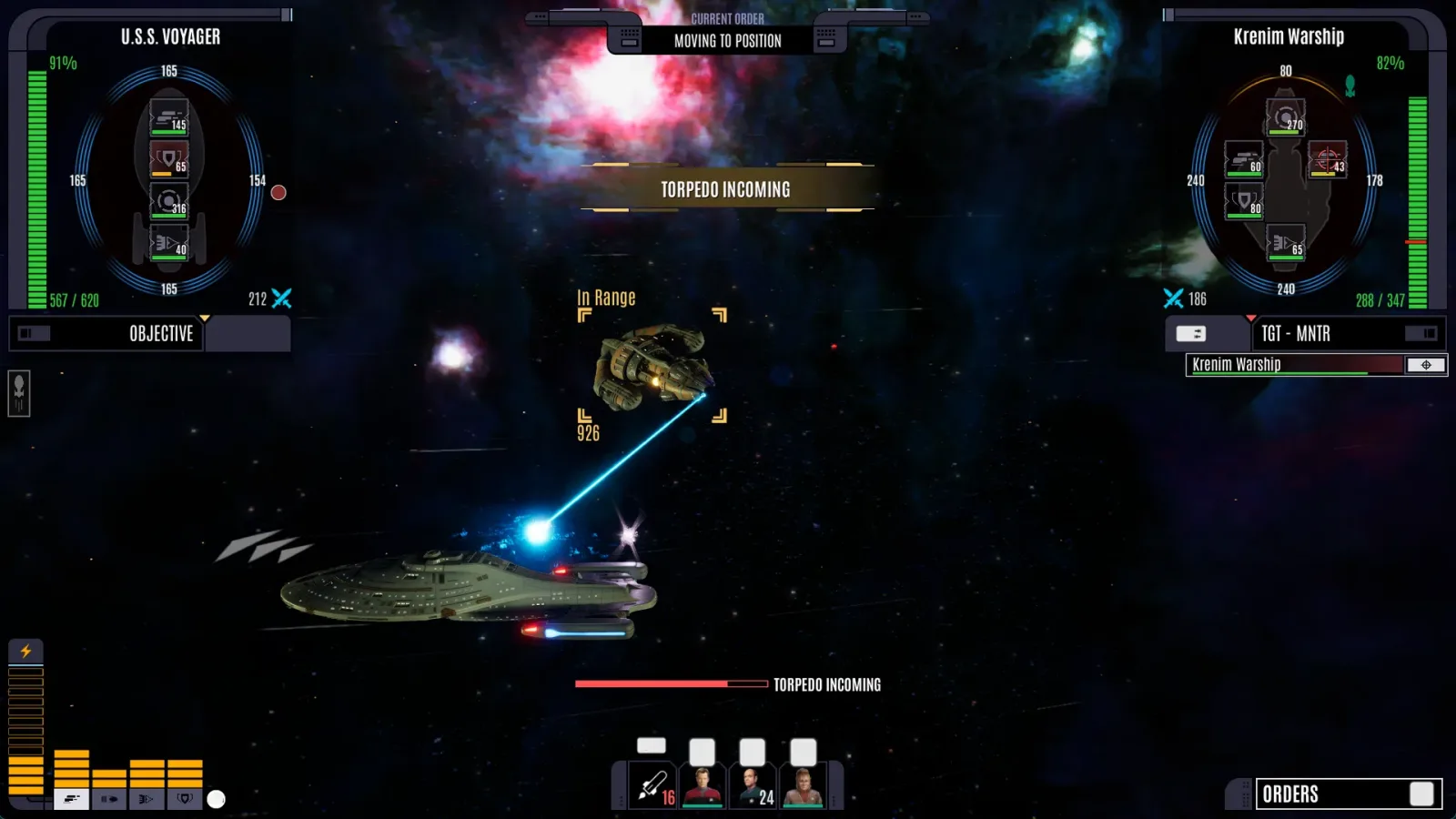
Year of Hell features six ships in total, four of them Krenim vessels. Annorax's timeship is naturally the centerpiece, serving as the source of the enemy's civilization-erasing temporal threat. Its presence gives the campaign a larger strategic scale than a standard ship-to-ship engagement, since the fight is as much about what remains in the timeline as it is about the damage Voyager can physically inflict.
Two other ships, the Mawasi Cruiser and Nihydron Warship, add further uncertainty to the campaign. Depending on the timeline branch, they may become part of the player's forces or turn hostile. That variability reinforces the expansion's focus on history as a moving battlefield. Ships and factions cannot necessarily be treated as fixed assets or predictable enemies when Annorax's actions are changing the wider context of the war.
The result is a scenario built to encourage adaptation. A player cannot assume that a fleet composition, diplomatic approach, or resource plan will remain valid from one branch of the campaign to the next. The pressure comes from balancing what Voyager needs in the moment against the fact that tomorrow's timeline may no longer support the same plan.
A contained story that will not alter the main save
Despite its high-stakes premise, Year of Hell is separate from the main campaign. It follows its own story and does not modify a player's existing main-game save. That separation is important for anyone who wants to explore the expansion's alternate choices and harsh survival conditions without worrying that a disastrous timeline outcome will permanently affect their broader progression.
The self-contained format also makes sense for an adaptation of a storyline where reality itself is unstable. Players can enter the 12-month campaign as a focused challenge, experiment with different choices, and see how their handling of Voyager's decline changes the result. It should be particularly suited to returning players looking for a concentrated scenario rather than another extension of the core game's ongoing structure.
There are clear limits to what the DLC adds. Year of Hell does not introduce new side missions, recruitable heroes, or research technologies. Its additions are directed toward the campaign's narrative branch structure, fleet encounters, and survival-focused pressure instead. Players expecting a broad systems expansion should keep that in mind; this chapter is about making the existing struggle more desperate, not about supplying a new collection of long-term upgrades.
The final Expansion Pass release
As the fourth and final Expansion Pass DLC, Year of Hell closes out the game's planned pass content with a scenario that is thematically suited to a finale. Voyager's battle against Annorax is remembered for the scale of its hardship: the crew is forced to continue operating while their ship, their options, and their hope are steadily reduced. Translating that tension into a campaign where systems can vanish and crew losses carry lasting weight gives the expansion a distinctly survival-driven identity.
Expansion Pass owners will receive the DLC automatically when it launches. The base game is required to play it. PC, PlayStation 5, and Xbox Series X|S players can begin the campaign on December 9, while Nintendo Switch 2 players will receive it later in the month on December 28.
For a game based on a series defined by exploration and resilience, Year of Hell offers a deliberately harsher test of command. Instead of asking whether Voyager can emerge stronger, it asks what a captain is willing to sacrifice when strength is already disappearing--and whether enough of the crew can make it through the year to see a future at all.
Community
Discussion
Start the conversation.
No comments have been posted yet.