

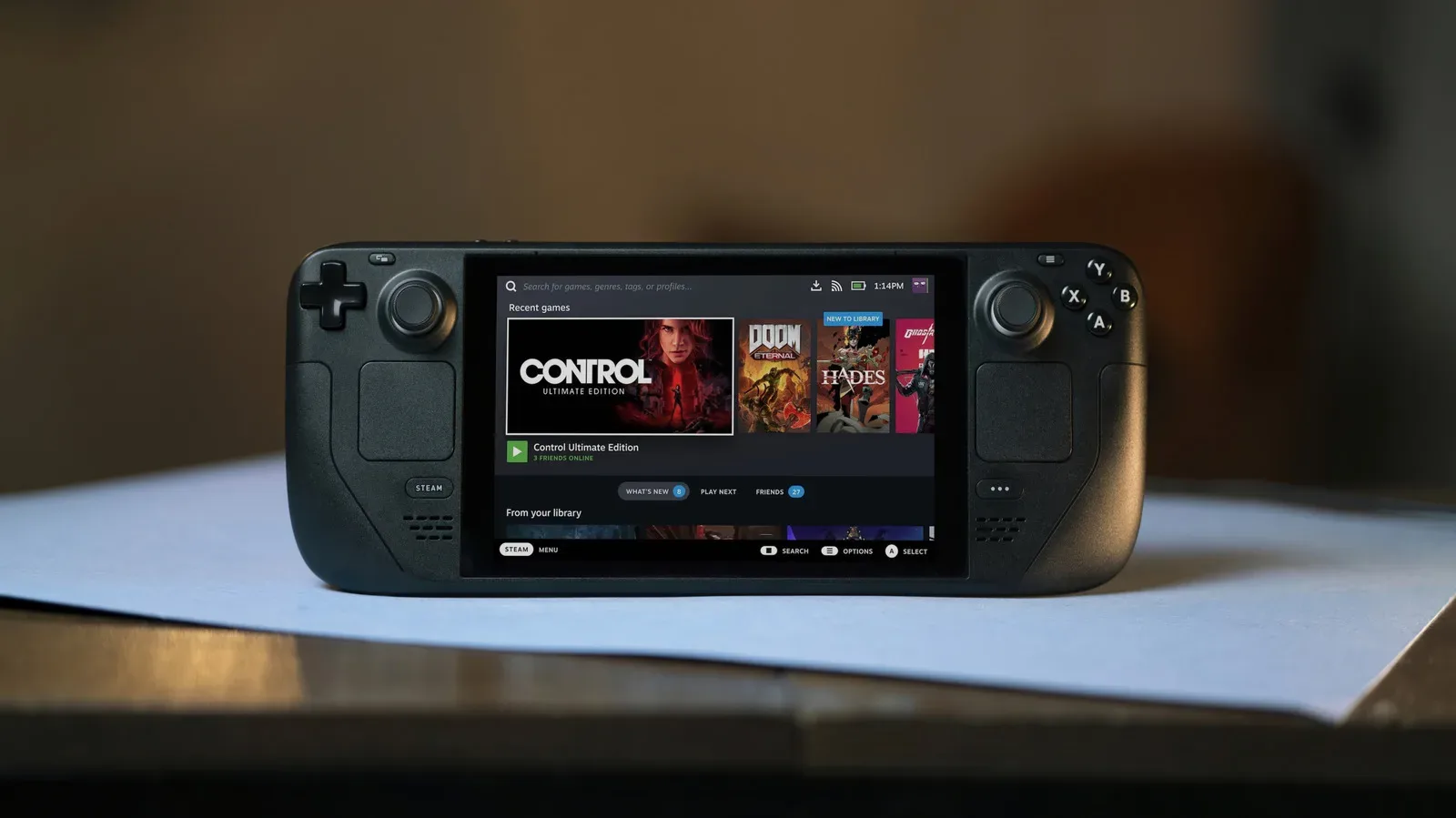
The Steam Deck arrived in February 2022 and quickly became the handheld PC to beat. It was not the first attempt at putting a PC gaming library into a portable form factor, but Valve's device made the idea feel accessible. SteamOS was built around controllers and a living-room-style interface, the hardware was priced aggressively, and the vast Steam catalog gave players an immediate reason to care.
In 2026, the decision is considerably less straightforward. Handheld gaming PCs are no longer a niche field with one obvious leader. Asus has its ROG Xbox Ally family, Lenovo continues to expand the Legion Go range, and Nintendo's Switch 2 provides a separate but very credible portable-console alternative. At the same time, component pressure tied to a broader memory shortage has pushed hardware pricing upward rather than downward. The Steam Deck itself has seen a $300 increase, a dramatic change from the value proposition that helped define it.
So, is the Steam Deck still worth it? Yes, but it is no longer the default answer for every player. The Steam Deck OLED remains one of the most balanced handhelds for people who primarily want Steam games, value a polished operating system, prefer long-term comfort and want meaningful battery life away from a wall outlet. Players pursuing the highest frame rates, broad Windows compatibility or specific Xbox services may find better fits elsewhere.
A more demanding gaming world
Part of the Steam Deck's challenge is simply timing. The device's core performance profile has not received a major uplift since its launch-era hardware. The Steam Deck OLED, released in 2023, improved the display, battery life and overall experience, but it was not a performance-focused revision.
For useful background on this topic, read Valve Deliberately Leaked a Left 4 Dead 2 Trailer After ESRB Dispute, Former Writer Says.
Meanwhile, game development has become increasingly demanding. Unreal Engine 5 launched only months after the original Steam Deck and has enabled developers to build far more complex lighting, geometry and visual effects into their games. Those features can look remarkable on powerful PCs and current consoles, but they raise the baseline strain placed on portable hardware.
That does not mean the Steam Deck cannot play modern games. It often can, particularly with carefully chosen graphics settings, frame-rate caps and upscaling options. But the days of assuming a new, visually ambitious PC release will run smoothly without compromises are gone. Anyone buying a handheld mainly to play the latest demanding blockbuster games should be realistic: image quality, resolution and performance targets may need to come down, and some releases will be better suited to newer, more powerful hardware.
For indie games, older AAA releases, strategy titles, role-playing games, roguelikes, emulation and the enormous middle ground of games that do not demand top-end graphics hardware, the Steam Deck remains highly capable. In many of those cases, the difference between it and a faster rival can be less dramatic than benchmark charts suggest.
How the Steam Deck compares with its biggest rivals
The clearest PC-handheld alternatives in 2026 are the Asus ROG Xbox Ally and Xbox Ally X, alongside Lenovo's Legion Go lineup. In raw performance, these systems generally have an advantage over Valve's handheld. Benchmark testing, including 3DMark Time Spy results, tends to show higher scores across the Asus models and most Lenovo options. The exceptions are Legion Go configurations built around AMD's less powerful Z2 chip, including the Legion Go S and a Legion Go model using that processor.
Raw results are useful, but they do not tell the entire story of handheld play. Depending on the game and chosen power profile, the gap can shrink to only a few frames per second. A handheld that delivers a stable, well-paced frame rate at sensible settings can feel more satisfying than one producing higher numbers while running louder, hotter or draining its battery more rapidly.
The ROG Xbox Ally systems are especially appealing for players invested in Xbox titles and services. That advantage has limits, since not every game supports Xbox Play Anywhere, but the Xbox connection still matters to players whose libraries and habits already lean that direction. Their major compromise is software. Windows offers broad compatibility, including access to programs and games that SteamOS cannot run, but its desktop origins have repeatedly made it a less elegant fit for a small touchscreen and controller-first portable device.
Lenovo's Legion Go family takes a different path. Some models now use SteamOS, avoiding much of the friction associated with Windows on a handheld. The non-S Legion Go devices also offer detachable controllers reminiscent of Joy-Con design. That flexibility can be particularly attractive for docked play or tabletop multiplayer, where separating the controls changes how the device can be used.
However, Lenovo's current lineup is difficult to recommend to buyers whose chief concern is price. The products sit above the Steam Deck OLED in cost when purchased directly, while the Xbox Ally X does as well. Discounts can alter that calculation on occasion, especially for the Legion Go S through retailers, but a sale is not the same as a permanently lower asking price.
SteamOS remains Valve's biggest advantage
Performance is only one part of the handheld equation. A portable gaming machine is handled differently from a desktop PC: it is picked up for short sessions, suspended and resumed repeatedly, used on a sofa or in bed, and navigated almost entirely through buttons, sticks and touch controls. In that context, the operating system has an outsized effect on whether the hardware feels pleasant.
SteamOS is still the Steam Deck's defining strength. It makes the Steam library feel console-like without sacrificing the flexibility expected from PC gaming. The interface is designed for a controller, the quick settings are easy to reach, and managing performance limits is less intimidating than it can be on a Windows handheld. For players who want to turn on a device and get directly into their existing Steam collection, that polish has real value.
There is an important restriction. SteamOS cannot run certain games that rely on particular anti-cheat implementations. Fortnite and Call of Duty: Warzone are notable examples. A player who considers either game an essential portable experience should not buy a Steam Deck expecting native compatibility. Windows-based hardware has a practical edge for games and applications that need the wider compatibility offered by Microsoft's operating system.
That divide makes the purchase question more personal than a specifications sheet can convey. If a player's favorite games are already well supported on SteamOS, the Deck's streamlined experience is a major reason to choose it. If their routine depends on unsupported multiplayer games, PC Game Pass habits or Windows-only software, its simplicity may not outweigh its limitations.
Battery life, weight and the reality of portable play
Battery capacity figures alone do not determine how long a handheld is useful between charges. The Xbox Ally and Legion Go S and Legion Go 2 lines offer larger batteries than the Steam Deck OLED, but they can consume that advantage when pushed beyond lower-power modes. Once their faster chips are allowed to operate near full potential, battery drain rises quickly.
In real use, the Steam Deck OLED often comes out ahead as the safer choice for people who want to play for extended stretches. Its lower performance ceiling becomes an advantage here: Valve's hardware and software are tuned around an efficient, consistent portable target rather than chasing the highest possible output. For a commute, travel day or evening away from a charger, predictable endurance can matter more than a higher benchmark score.
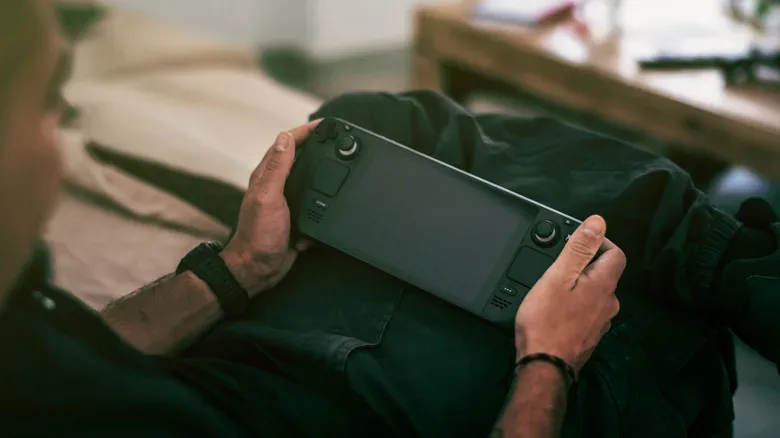
Comfort is similarly easy to overlook until several hours have passed. Outside of the Switch 2, the Steam Deck is the lightest handheld in this comparison. That does not make it tiny, but reduced weight and a familiar integrated-controller shape can make a real difference during long sessions. Players who expect to use a handheld primarily in bed, on the couch or while traveling should consider ergonomics as seriously as display refresh rates and processor names.
Where the Nintendo Switch 2 fits
The Nintendo Switch 2 is not a direct PC handheld replacement. Its library is more limited because it is a dedicated console ecosystem rather than an open PC platform. Yet for players who want Nintendo's games and a simpler console experience, it is a major alternative.
Even after increasing from $450 to $500 in September 2026, the Switch 2 remains markedly cheaper than the Xbox Ally and current Legion Go products. It also stands apart technically: it is the only device in this group with support for Nvidia's DLSS rendering technology, and it joins the Steam Deck as one of the only options here to support HDR.
Its appeal is therefore straightforward. Buy it for Nintendo's software, its console-oriented approach and its lower entry cost relative to premium PC handhelds. Do not buy it expecting the freedom of a Steam library, broad PC storefront access or the flexibility offered by a Windows device.
The buying verdict
The Steam Deck OLED remains worth buying in 2026 for a specific, substantial audience. It is a strong choice for someone who mostly plays Steam games, does not require bleeding-edge visual settings, wants an operating system that feels purpose-built for handheld play, values battery endurance and prefers a lighter device for longer sessions.
It is less convincing for players who prioritize maximum performance in new, graphically demanding games. The ROG Xbox Ally and much of the Legion Go range will generally provide more headroom. It is also not the right fit for anyone whose must-play list includes SteamOS-incompatible anti-cheat games such as Fortnite or Call of Duty: Warzone.
- Choose Steam Deck OLED for SteamOS, a polished portable experience, strong real-world battery behavior and comfortable long sessions.
- Choose ROG Xbox Ally or Ally X for stronger performance, Windows compatibility and a more Xbox-oriented ecosystem.
- Choose Legion Go if detachable controllers, docked flexibility or a SteamOS-equipped Lenovo model best suits your setup, provided the higher price works for your budget.
- Choose Switch 2 for Nintendo's ecosystem, lower hardware cost than premium PC handhelds, DLSS support and a traditional console experience.
In short, the Steam Deck is no longer the unquestioned king of handheld gaming PCs. Its price increase and aging performance target have changed that. But a great handheld is more than the fastest chip available. Valve's device still succeeds because it understands what portable gaming needs to feel convenient: an excellent interface, sensible efficiency, manageable weight and immediate access to a vast Steam library. For the right kind of PC player, those strengths remain more valuable than ever.
Community
Discussion
Start the conversation.
No comments have been posted yet.