

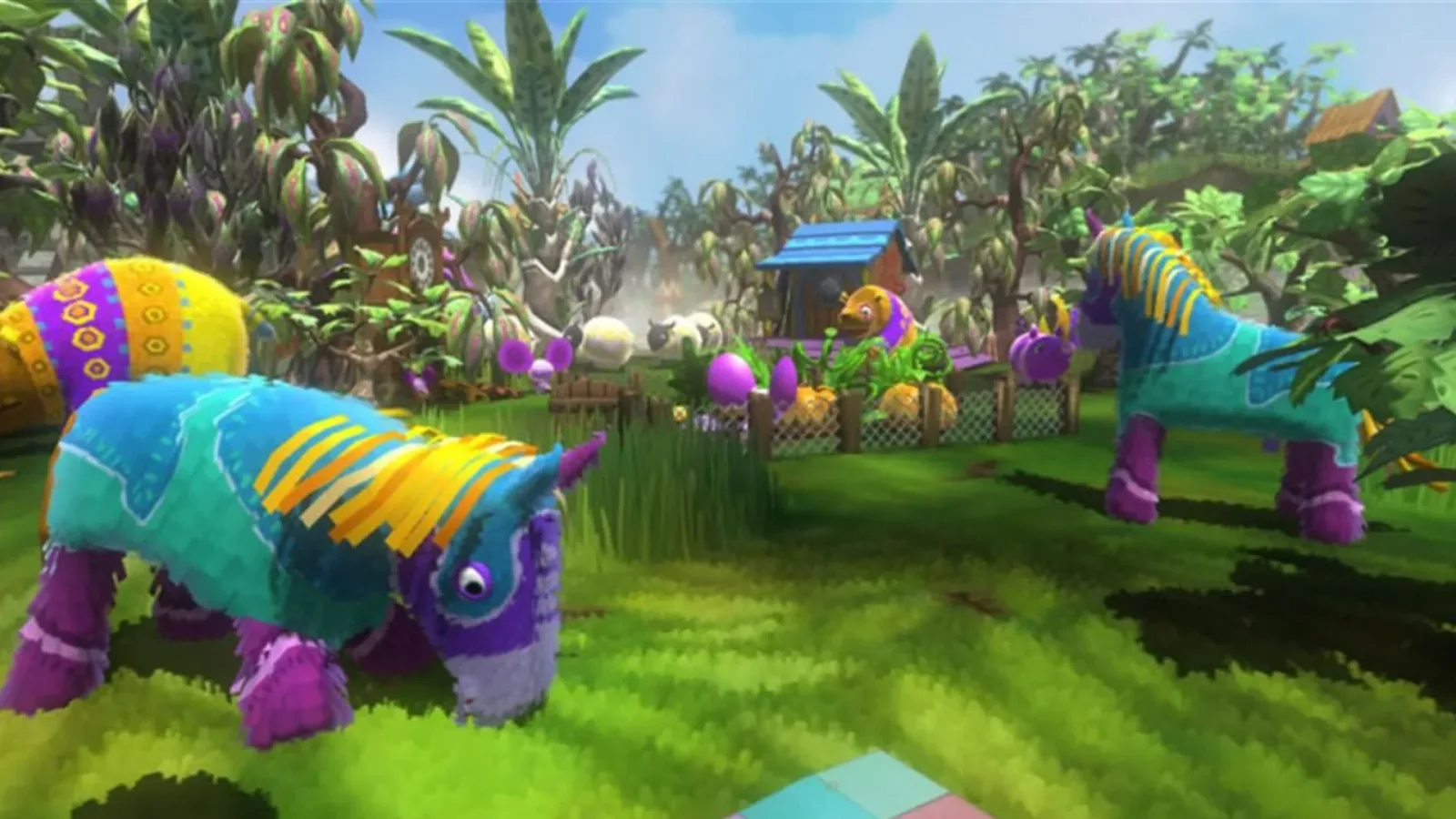
There are plenty of games built around collecting creatures, cultivating a home, and watching a colourful little ecosystem expand. Modern players can find parts of that appeal in monster-catching adventures, farming games, survival sandboxes, and creature-management simulations. Yet Viva Piñata, Rare's 2006 Xbox 360 game, still occupies an unusually specific space. It is a cheerful garden-building game full of living candy animals, but it is also a demanding systems game where a single missed warning can lead to sickness, vandalism, poison, broken habitats, or the loss of a beloved resident.
That clash is precisely why the game remains so memorable. On its surface, Viva Piñata looks like an ideal family-friendly fantasy: players are granted a patch of neglected land and transform it into a garden that attracts increasingly elaborate piñata animals. Underneath the vivid colour, sweet-themed names, and cartoon animation is a game about food chains, resource pressure, imperfect control, and accepting the outcomes of a busy world that does not pause simply because the player is occupied elsewhere.
For Rare, it was also an important release. The studio had spent much of the 1990s closely associated with Nintendo, delivering defining games for the SNES, Game Boy, and Nintendo 64. Donkey Kong Country helped broaden Donkey Kong's cast with characters such as Diddy and Cranky Kong, while Banjo-Kazooie became one of the N64's most successful kid-friendly series. Following Microsoft's acquisition of Rare in 2002, however, the developer faced a difficult transition into its role as a first-party Xbox studio. Its early output in that period did not match the commercial or critical impact of its Nintendo-era landmarks.
Viva Piñata arrived as a statement that Rare's gift for character design, playful worlds, and offbeat humour was still intact. It was positioned for a younger audience and had ambitions beyond the game itself, including an animated television series. It did not become the enormous franchise Microsoft may have hoped for, but it made a strong argument that the studio's distinctive creative instincts had not disappeared.
For useful background on this topic, read Steam Deck in 2026: Is Valve's Handheld Still Worth Buying?.
A garden built around temptation
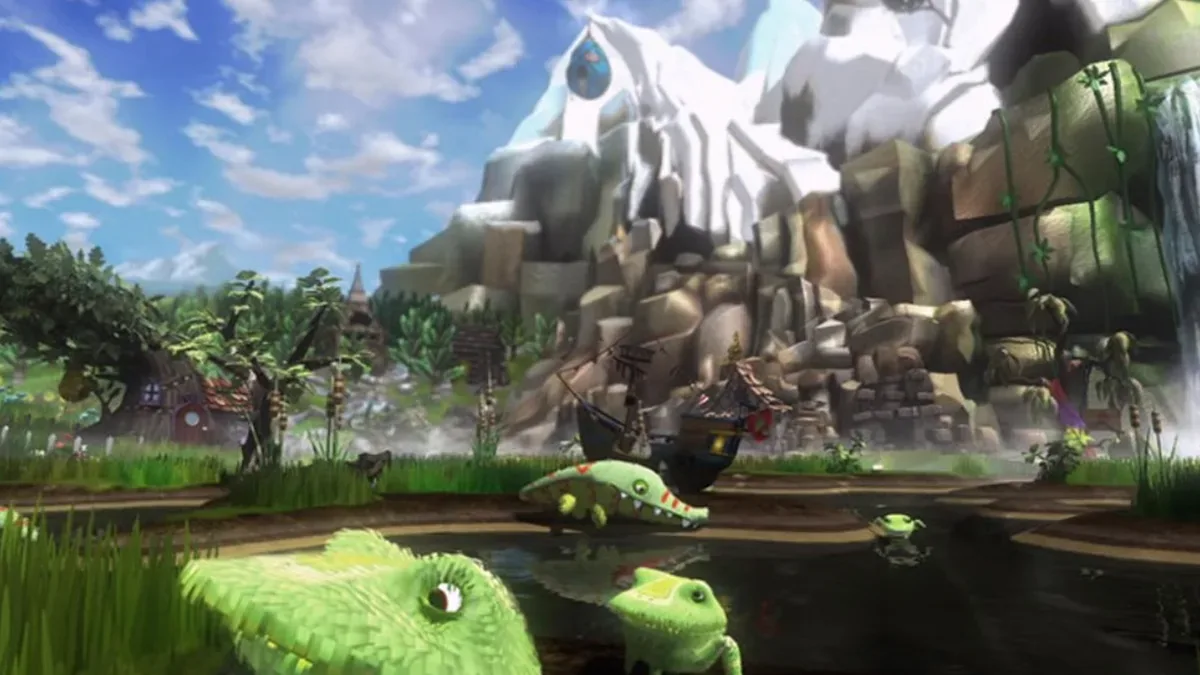
The core loop is elegantly simple. Players place plants, trees, water features, decorations, and buildings around their plot, then use those additions to persuade piñata species to visit and eventually become permanent residents. There are 60 varieties to discover, ranging from Arocknid to Zumbug. Each has a set of residency requirements, asking for particular foods, environmental features, plants, or homes before it will settle down.
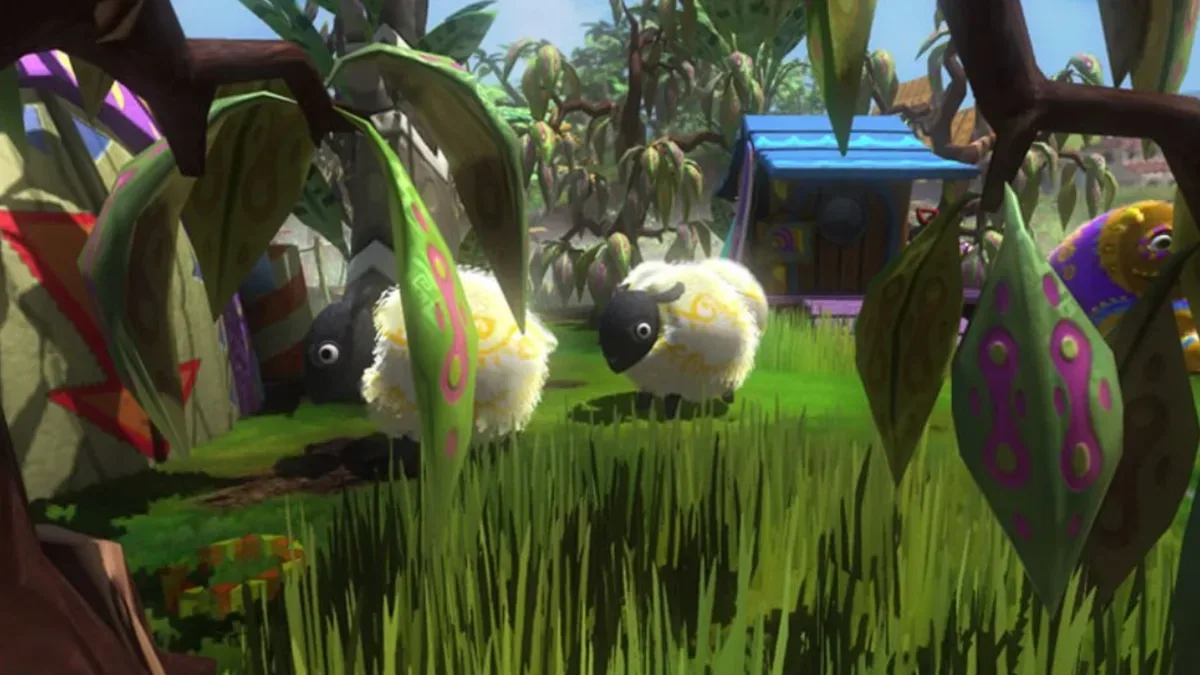
That structure turns every new arrival into a small puzzle. A player might notice an unfamiliar monochrome visitor wandering around the edge of the garden, then examine what it needs to be convinced to stay. Fulfil those conditions and the creature becomes a resident, changing from its muted visiting appearance into a fully coloured inhabitant. The visual transformation is a wonderfully immediate reward: the garden gets brighter, busier, and more personal with every success.
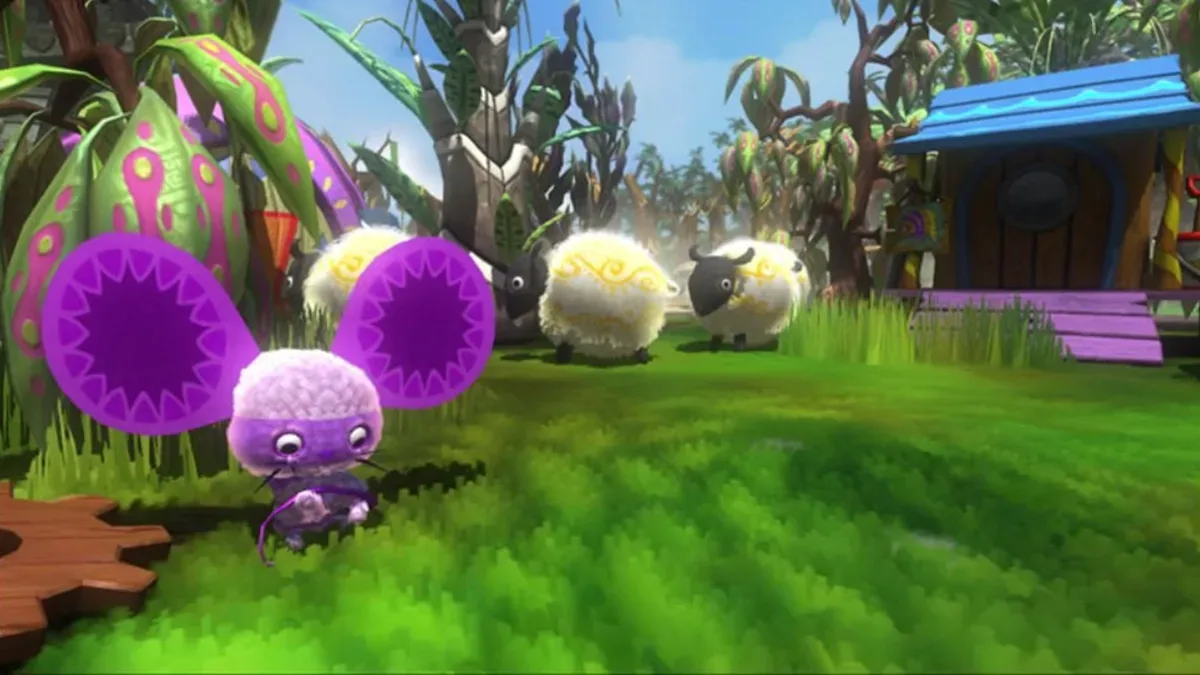
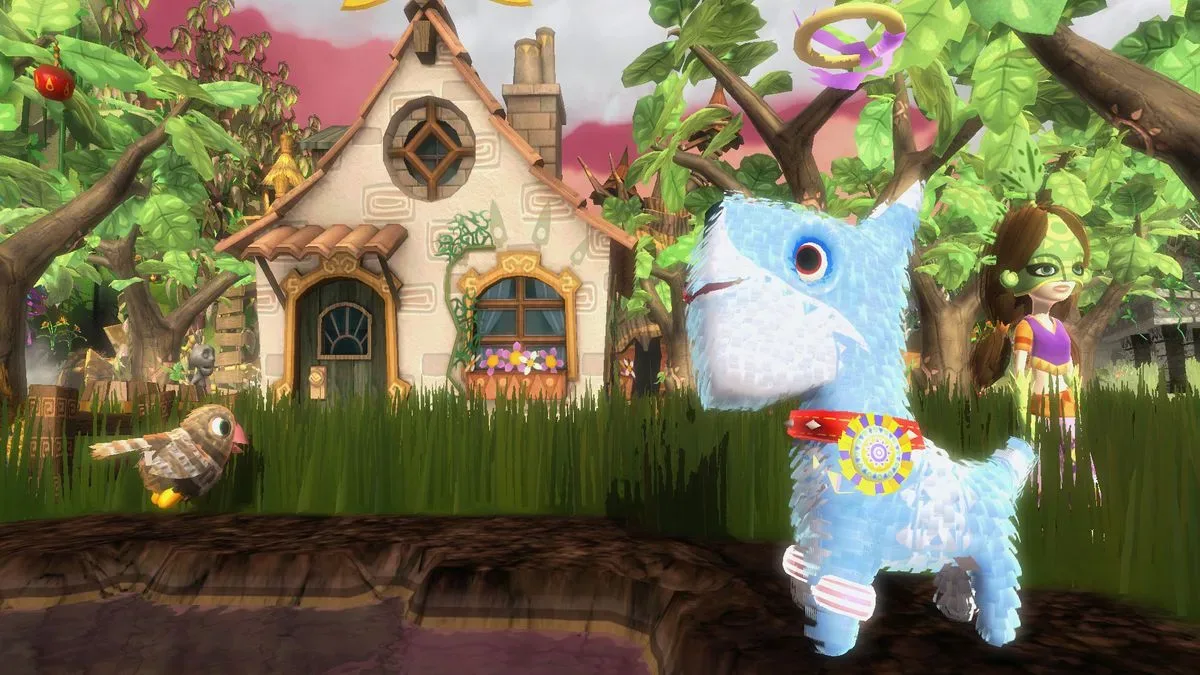
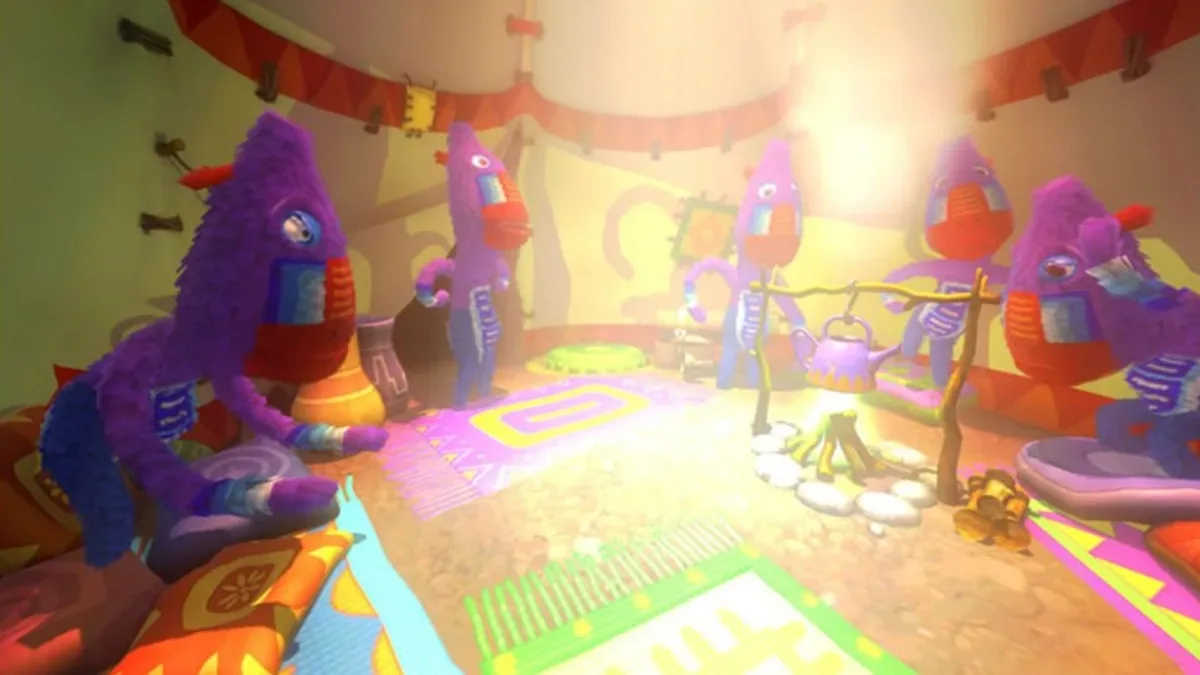
Rare's creature work does much of the heavy lifting. The names combine animal traits with confectionery wordplay, producing species such as Profitamole, Buzzlegum, Mousemallow, Syrupent, Macaracoon, Pretztail, Bunnycomb, Fudgehog, Quackberry, and Cocoadile. Their designs make them instantly legible while still feeling deliberately absurd. The game also gives its inhabitants constant incidental motion and interaction, ensuring that the garden feels inhabited rather than arranged like a static collection.
This warmth is why the project's television potential was easy to understand. Viva Piñata's animals possess the broad appeal of animated mascots, and the game embraces that quality without embarrassment. Cuteness is not treated as a shortcut; it is established through animation, naming, colour, and the steady accumulation of player attention. The result is that the garden's residents can quickly feel like more than simply another set of unlocks.
The food chain changes everything
The early stages are gentle, but Viva Piñata gradually reveals the cost of building a thriving habitat. Some prospective residents are piñatavores, creatures that will only move in after eating another piñata. This creates a confectionery version of the food chain, where attracting one animal may depend on first obtaining a smaller animal, which may itself require particular conditions to enter the garden.
Breeding adds another layer. Players must meet further requirements to encourage animals to romance, and in some cases another species is part of the formula. That produces deliberately uncomfortable decisions. If two Bunnycombs have become familiar fixtures in the garden but a Pretztail needs a Bunnycomb meal, the player may breed an additional Bunnycomb specifically to feed it to the predator. The system is funny in its bluntness, but it also challenges the sentimentality the game has spent hours encouraging.
Rare had experience with both sides of that tonal divide. Its catalogue included brightly approachable games, but it also contained harsher works such as Killer Instinct, GoldenEye 007, Perfect Dark, and Battletoads. Conker's transformation from a cute Diddy Kong Racing character into the foul-mouthed, heavily armed lead of Conker's Bad Fur Day showed how readily the studio could weaponise cartoon imagery for more adult comedy. Viva Piñata is nowhere near that extreme, but its cheerful presentation conceals an unmistakable edge.
When a piñata dies, it breaks apart and spills sweets rather than showing graphic violence. The framing stays firmly PG, even punctuated by children cheering. But the effect can be surprisingly upsetting because the player has been given reasons to care about the creatures beforehand. Naming piñatas is mechanically encouraged early on, which means a generic Horstachio can become a resident named after a childhood pet or someone personally meaningful to the player. The loss then has more weight than the game's candy-coated look suggests.
The aftermath is even more darkly comic. Other piñatas can eat the sweets left behind by the fallen creature. A player can therefore witness a treasured Fudgehog consuming the remains of its former partner. It is the circle of life, filtered through a garden where every animal is a living container of confectionery.
From cosy routine to managed chaos
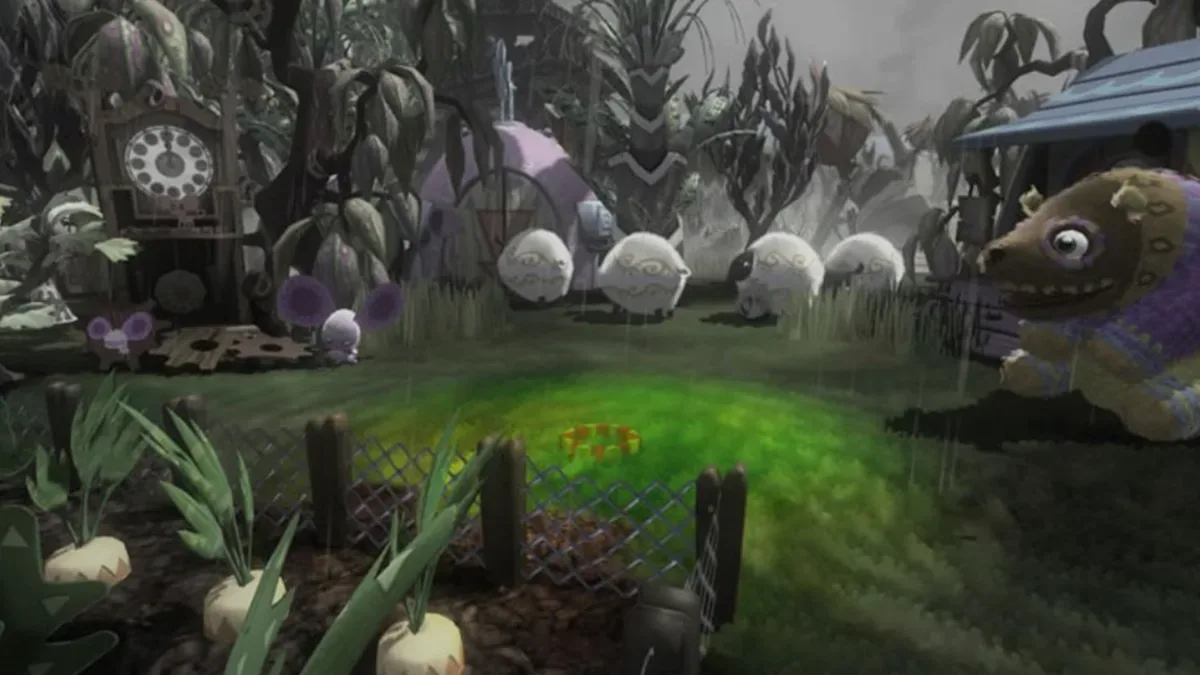
As a garden develops, the dangers multiply. Sour piñatas arrive and leave poisoned sweets that can harm residents. They can also plant troublesome seeds, allowing hazardous weeds to spread. Masked Ruffians appear to wreck property and provoke conflict. Plants need tending, water can become a concern, predators can find access to prey, and fights can break out among creatures.
The most intimidating figure is Dastardos, a floating reaper-like character who approaches sick piñatas. With his rigid Picasso-style mask and ominous presence, he is the game's clearest signal that a problem has advanced beyond routine garden maintenance. His in-game description cheerfully claims he has created a song to calm piñatas while he "fixes" them. The meaning of that fix is much less pleasant: Dastardos destroys them with a large stick.
Viva Piñata turns these moments into tension not just through its threats, but through its interface and controls. The garden runs in real time, while the player's tools can feel a little unwieldy and imprecise. The shovel has tremendous authority when it lands, but the player does not possess the all-seeing awareness usually associated with a god-game. Trouble often becomes visible only after it has already begun.
Notifications provide warnings, but they can also become part of the problem. A player scanning alerts about dry plants may overlook the urgent situation: two favourite piñatas are fighting; a gate separating predator from prey has been left open; a sour piñata has deposited dangerous seeds; poisonous candy is lying unnoticed across the plot. By the time the correct tool is selected and the camera is pointing in the right direction, the damage may already be done.
That sensation gives Viva Piñata a strange kinship with survival-horror design. It does not need monsters in dark corridors. Instead, it creates panic through responsibility and limited attention. The player knows exactly what is at stake because they made the garden, chose its inhabitants, spent resources on its homes and decorations, and watched its relationships form. A disaster is never merely a failed task; it is a failure inside a world the player has carefully curated.
Consequences make the garden matter
The game offers no convenient quick-save or quick-load safety net. While it is not a strict Ironman experience, avoiding a bad outcome generally means quitting during a session and hoping the timing of an autosave is favourable. That temptation says a great deal about how effectively Viva Piñata builds investment. It takes time to get players attached to the garden, then asks them to live with the messy reality of keeping it running.
That design choice may have made the game harder to categorise. It had the approachable visuals and broad charm associated with children's entertainment, but it also asked players to navigate management complexity, predation, loss, and permanent-feeling mistakes. Viva Piñata generated sequels and spin-offs, yet its sales were only a fraction of Rare's largest historic hits. Afterward, Rare became more closely involved with Xbox Live avatars and Kinect projects before later returning to the foreground with Sea of Thieves.
Even so, Viva Piñata endures because its contradictions are strengths rather than flaws. It is gentle until it is stressful, funny until it is cruel, and welcoming until it tests whether the player can keep pace with a rapidly growing web of needs. Plenty of later games offer creature collection or homestead building, but fewer make a flourishing world feel so alive, so demanding, and so vulnerable.
Viva Piñata remains a rare kind of simulation game: one where a garden's beauty is inseparable from its danger. Every colourful new resident represents progress, but it may also become food, a breeding requirement, a victim of poison, or another urgent responsibility demanding attention. That is what makes the game's candy animals far more than mascots. They are the centre of an ecosystem that is adorable, chaotic, and occasionally merciless.
Community
Discussion
Start the conversation.
No comments have been posted yet.