

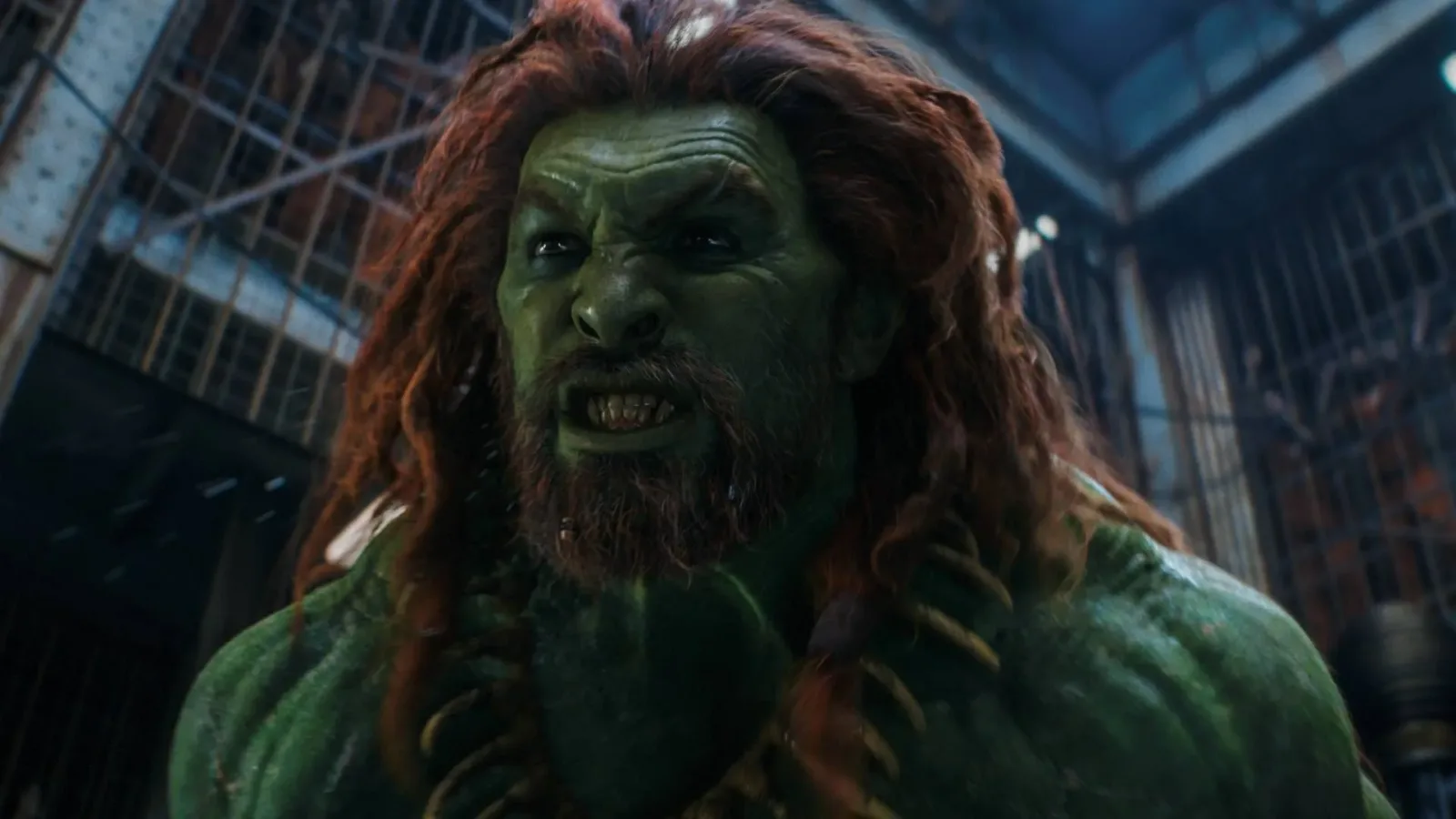
Street Fighter's connection to competitive fighting games is not limited to its characters, stages, special moves, and tournament history. The new live-action movie also makes room for people who helped shape the real-world community around Capcom's long-running series. Director Kitao Sakurai has explained that the appearance of fighting game legend Justin Wong was rooted in a simple creative priority: the movie needed to reach devoted fans in a genuine way before it could hope to win over everyone else.
Wong appears alongside fellow fighting game personalities IFC Yipes and Maximilian Dood during the film's midpoint, when Blanka and Ryu face off. The trio can be spotted among prisoners watching from behind bars, delivering running commentary as the battle plays out below them. It is a brief scene on paper, but one designed with a clear understanding of what these figures mean to viewers who have followed Street Fighter through arcades, local events, streams, major tournaments, and decades of memorable matches.
For Sakurai, including recognizable members of the community was part of a broader effort to avoid treating the game's audience as an afterthought. Video game adaptations have often faced criticism when they borrow familiar names and imagery while failing to capture the culture that made their source material important. Street Fighter, in contrast, has always been more than a collection of fighters. It is a competitive language shared by players, commentators, creators, and spectators, and the cameos acknowledge that history directly.
A cameo with competitive history behind it
Justin Wong's role contains an especially pointed reference for fighting game fans. His character bears a "37" tattoo, a nod to Evo Moment 37, one of the most famous and endlessly revisited moments in competitive gaming.
For useful background on this topic, read The Pre-Show #1 Sets London Game Preview Event for November 2026.
The reference points back to a Street Fighter III: 3rd Strike match between Wong and Daigo Umehara. In the sequence that became known globally as Evo Moment 37, Umehara performed an extraordinary series of parries against Chun-Li's Super Art before turning the round around. Wong had appeared poised to close out the match, only for the momentum to swing dramatically in the final seconds. The moment became a landmark clip not only because of the precision required, but because it captured the tension, crowd energy, and unpredictability that define high-level fighting games.
That history makes the tattoo more than a random easter egg. It is an acknowledgement of a player whose career is deeply entwined with Street Fighter's competitive legacy, while also playfully referencing a defeat that became part of gaming folklore. For a movie audience unfamiliar with the event, it can function as visual character detail. For players who know the context, it signals that the production understands the specific stories the community has carried with it for years.
The same principle applies to the presence of IFC Yipes and Maximilian Dood. Their inclusion does not require the film to pause and explain their significance. Instead, it lets them occupy a setting that feels natural: people reacting to a fight with the kind of intensity and observation associated with a passionate audience. The decision recognizes that commentary, analysis, hype, rivalries, and shared reactions are inseparable from the way Street Fighter has lived beyond the screen.
"Needs to work for fans first"
Sakurai's view is that a Street Fighter movie must place the existing community at the center of its approach. He described a past in which some game adaptations did not communicate with fans or involve the communities built around the games in a sufficiently authentic manner. In his view, newer adaptations have increasingly tried to correct that by directly engaging the people who care most deeply about the material.
That does not mean a movie should be inaccessible to newcomers. Sakurai's point is that the route to a wider audience starts with credibility among longtime fans. A film can still welcome people who have never played a match, do not know tournament terminology, or cannot identify a famous gameplay clip. But it has a stronger foundation if the people who do know those things can see their relationship with the series reflected onscreen.
"Street Fighter, a movie, needs to work for fans first," Sakurai said, while noting that the film also has a broader audience beyond the established community.
That philosophy is particularly meaningful for Street Fighter because of the franchise's unusual endurance. Many game series are remembered largely through sales figures, sequels, or individual characters. Street Fighter certainly has all of those, but its identity has also been preserved by the people playing it competitively and publicly. The games have supported a culture that spans arcade gatherings, international championships, local meetups, tutorial videos, livestreams, match commentary, and rivalries that can remain memorable for decades.
A film trying to represent Street Fighter therefore faces a larger challenge than adapting a plot. It needs to convey why a round can make a crowd erupt, why a parry can become legendary, and why familiar players or commentators can earn a reaction just by entering the frame. The Wong cameo is a compact answer to that challenge: it puts a piece of the competitive scene inside the fictional world rather than treating the scene as separate promotional material.
Why authenticity matters for Street Fighter
Authenticity can be an overused word in game adaptations, especially when it is reduced to a checklist of costumes, catchphrases, and visual references. Those details can matter, but community recognition often comes from something more difficult to replicate: understanding what fans actually value. In Street Fighter's case, that includes respect for the competitive legacy attached to its mechanics and matchups.
Evo Moment 37 remains an ideal example. It is not famous because it reveals a hidden piece of lore or because it was a carefully scripted scene. It became iconic because it was a live display of skill under pressure, with a player making a near-impossible-looking decision in front of an audience that immediately understood the stakes. Referencing that event in the movie recognizes Street Fighter as a living competitive tradition, not simply an archive of old games.
Wong's appearance also carries a sense of good humor. His "37" tattoo transforms one of the most painful losses associated with his competitive career into a badge of recognition. That willingness to embrace the joke is consistent with the way fighting game communities preserve their history. Great victories, shocking upsets, missed opportunities, dramatic comebacks, and unforgettable commentary all become part of a shared memory. The film's cameo draws from that memory rather than ignoring it.
There is also value in allowing fans to discover the reference at their own pace. Some viewers will recognize Wong immediately. Others may first notice the tattoo, then seek out the match behind it. Still others may simply enjoy the scene as a moment of lively audience participation. A well-placed cameo can work on each of those levels without demanding prior knowledge from every member of the audience.
Community figures in the fictional arena
Putting Wong, IFC Yipes, and Maximilian Dood together during the Blanka versus Ryu sequence gives the movie a bridge between fictional combat and the audience culture surrounding fighting games. Their running commentary helps frame the match as an event being experienced by people within the film's world, not merely an action sequence presented to the viewer.
That is an important distinction for Street Fighter. The series is built around one-on-one confrontations, but those confrontations become larger when people watch, react, analyze, and debate them. A matchup is never only about two combatants. It is also about prediction, momentum, adaptation, spectacle, and the sudden possibility that an apparently finished round can change direction. Inviting recognizable community voices into that environment reinforces the social side of the franchise.
The approach may also offer a useful model for future game adaptations. Fan service is at its strongest when it adds texture to the story's world instead of stopping it for a reference. Here, the cameos are tied directly to a fight and to the culture of watching fights. The result is not simply a celebrity spot for viewers to point out afterward; it is a gesture toward the people and traditions that helped Street Fighter remain culturally relevant across generations.
A clear signal to longtime players
Sakurai's comments make the intent behind the cameos clear. Street Fighter is aiming to meet established fans where they are, with references rooted in competitive history and appearances from people who have earned their standing within the scene. The movie still has an interest in attracting a broad audience, but it does not treat that goal as a reason to flatten away the franchise's identity.
Justin Wong's "37" tattoo is the most visible example of that commitment, but it is meaningful because of what it represents. It signals awareness of the highs and lows that have shaped Street Fighter competition, and it recognizes that the community's stories deserve a place beside those of Ryu, Blanka, and the rest of the cast.
For fans, that may be the real value of the scene. The cameos suggest that the film sees Street Fighter not just as a famous game series with recognizable fighters, but as a shared culture built by the players and personalities who kept coming back for one more round.
Community
Discussion
Start the conversation.
No comments have been posted yet.