

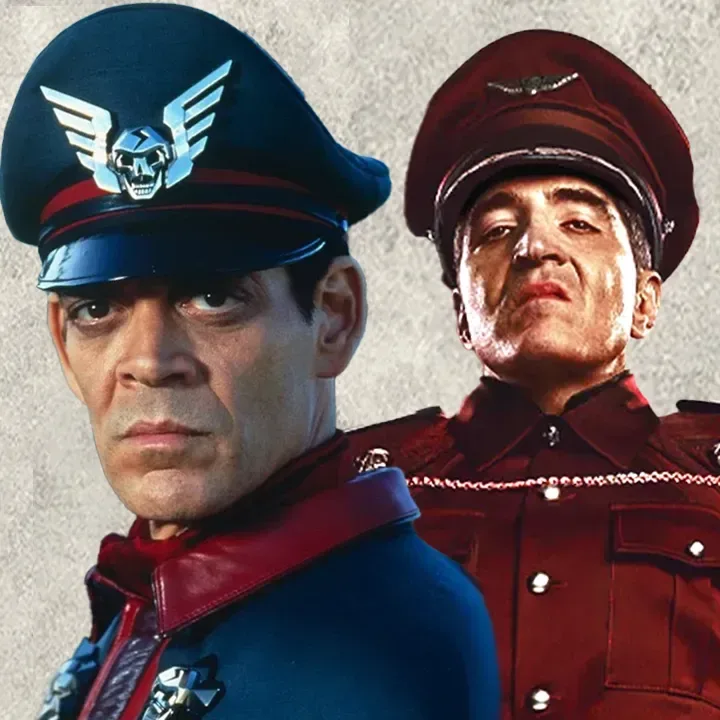
Street Fighter's latest trip to the big screen has reportedly become the highest-grossing film adaptation in the series' history. Legendary's 2026 Street Fighter movie, which opened in theaters on October 16, has now reached an estimated $99.1 million at the worldwide box office. That places the new movie in an extremely tight contest with the 1994 Street Fighter film starring Jean-Claude Van Damme and Raúl Juliá, long the commercial benchmark for Capcom's famous fighting-game franchise on film.
The milestone is an important one for a property with an enormous gaming legacy but a famously uneven history in live-action movies. The 1994 film became a lasting cult favorite despite its critical reputation, while later screen adaptations have struggled to generate the same level of mainstream attention. The new production's performance suggests there is still considerable theatrical interest in the World Warriors when the material is positioned as a large-scale event movie.
There is a small but notable complication in the reported estimates. The 2026 film's worldwide figure is described as approximately $99.1 million, while the 1994 movie is estimated at roughly $99,431,786 globally. On their face, those specific totals would leave the older movie narrowly ahead. Box-office reporting can change as late theatrical receipts are counted and estimates are revised, however, particularly when comparing decades-old data against a film still completing its cinema run. The two movies are close enough that the final confirmed comparison may depend on later accounting updates.
A close worldwide race between two very different Street Fighter movies
The newer Street Fighter has earned an estimated $57.4 million in North America and $41.7 million internationally. The 1994 release is estimated to have taken in $33,423,521 domestically and $66,008,265 overseas.
For useful background on this topic, read PlayStation Plus PC App Set to Close as Sony Narrows Its PC Footprint.
Those regional splits tell an interesting story about the changing audience for the franchise. The 2026 production has been much stronger in North America, where its domestic gross substantially exceeds that of the earlier movie. By contrast, the 1994 film did more of its business internationally. Both films, though, have landed near the $100 million mark worldwide--a striking coincidence considering the 32-year gap between their releases and the radically different theatrical environments they faced.
The original Street Fighter remains a singular piece of video-game movie history. Juliá's performance as M. Bison has endured as one of its most celebrated elements, with the actor bringing theatrical grandeur to the villain in one of his final roles. Van Damme headlined as Guile, while the film assembled a broad roster of recognizable series characters. Its reputation as an enjoyably excessive 1990s action movie has only grown over time, helping it maintain a special place among fighting-game fans.
The 2026 film approaches the brand from a different starting point. Its cast includes Andrew Koji, Callina Liang, and Noah Centineo, alongside wrestlers and music artists. The result is a production built to turn Street Fighter's global cast into a modern ensemble spectacle, rather than simply adapting one rivalry or tournament arc. That kind of wide-ranging approach gives the filmmakers plenty of room to build future installments around characters who received limited time in the first movie.
An $80 million production seeking a long-term future
The new Street Fighter was made on a reported $80 million budget, a number that does not include marketing and distribution expenses. Comparing theatrical gross directly with a production budget does not show how much a studio ultimately receives, since cinemas retain part of ticket sales and promotional costs can be substantial. For that reason, it is too early to draw a complete conclusion about the movie's profitability based on the reported box-office total alone.
Still, reaching roughly $99 million worldwide is a meaningful result for a fighting-game adaptation, especially after a front-loaded theatrical start. The film opened at number one with $51.1 million during its first weekend, immediately proving it could draw an audience beyond the most dedicated Street Fighter players. Its subsequent weeks reportedly saw a considerable drop, but the overall total continued to rise steadily enough to place it around--or potentially just beyond--the 1994 movie's lifetime global performance.
Its next phase will be worth watching. A future streaming release could expose the movie to a wider audience, although streaming viewership does not add to its theatrical box-office total. It may instead strengthen awareness of the cast and characters before a potential follow-up. A 4K Steelbook edition has also been confirmed, with separate hero- and villain-themed cover variants. Physical media remains especially appealing for genre films with passionate fan communities, and Street Fighter's history gives the movie a built-in collector audience.
Sequel hopes have already been built into the cast's plans
The film's ending leaves the door open for more, concluding on a cliffhanger designed to set up a sequel and introduce a significant character absent from this first installment. That decision has sparked discussion among fans over who could arrive next and how a follow-up might broaden the movie's version of the Street Fighter universe.
Olivier Richters, who plays Zangief, has said on social media that the cast signed on for a trilogy. He also addressed concerns from viewers who expected certain characters to have greater prominence, explaining that the larger plan was to develop some of them further over subsequent films. A trilogy agreement is not the same as a studio-confirmed commitment to make all three movies, but it indicates that the actors and filmmakers prepared for a longer story rather than treating the release as a standalone project.
Director Kitao Sakurai has also said that a sequel is already being written. That means creative development is underway, though a finished screenplay alone does not guarantee that cameras will roll. The financial result of the first film remains central to whether the series continues at the same scale. Studios will be weighing ticket revenue alongside home entertainment performance, audience response, production costs, and the broader potential of Street Fighter as an ongoing screen franchise.
Everyone involved appears eager to return. The cast has discussed the prospect of expanding the film universe, and there has even been enthusiasm for the idea of a crossover with Mortal Kombat. Such a project remains only a wish rather than an announced production, and it would involve major rights, studio, and creative considerations. Even so, the conversation reflects how naturally audiences now view fighting-game properties as potential shared cinematic worlds.
Why this result matters for Capcom's fighting icon
Street Fighter is one of the most recognizable names in games, but converting that recognition into film success has never been automatic. The games thrive on player expression, competitive drama, instantly identifiable fighters, and decades of accumulated rivalries. Movies have to find a way to translate those qualities into a focused narrative that works for longtime players and viewers who may not know their Hadouken from their Spinning Bird Kick.
The 2026 movie's reported performance shows the advantage of treating Street Fighter as a broad character universe. Ryu, Ken, Chun-Li, Guile, Zangief, M. Bison, and their many allies and enemies have enough history to sustain an ensemble franchise, while the games continue to give new generations a connection to the brand across PC, PlayStation, Xbox, Nintendo, and handheld ecosystems.
For now, the headline is both impressive and unusually close. The new film is being credited with overtaking the 1994 adaptation, yet the individual worldwide estimates currently cited leave virtually no room between the two--and appear to require further reconciliation before a final all-time ranking is completely settled. Whether it has already edged ahead or is still a few late receipts away, the 2026 Street Fighter has clearly joined the 1994 movie at the top of the franchise's box-office history. Its final theatrical total could determine just how quickly the next round begins.
Community
Discussion
Start the conversation.
No comments have been posted yet.