

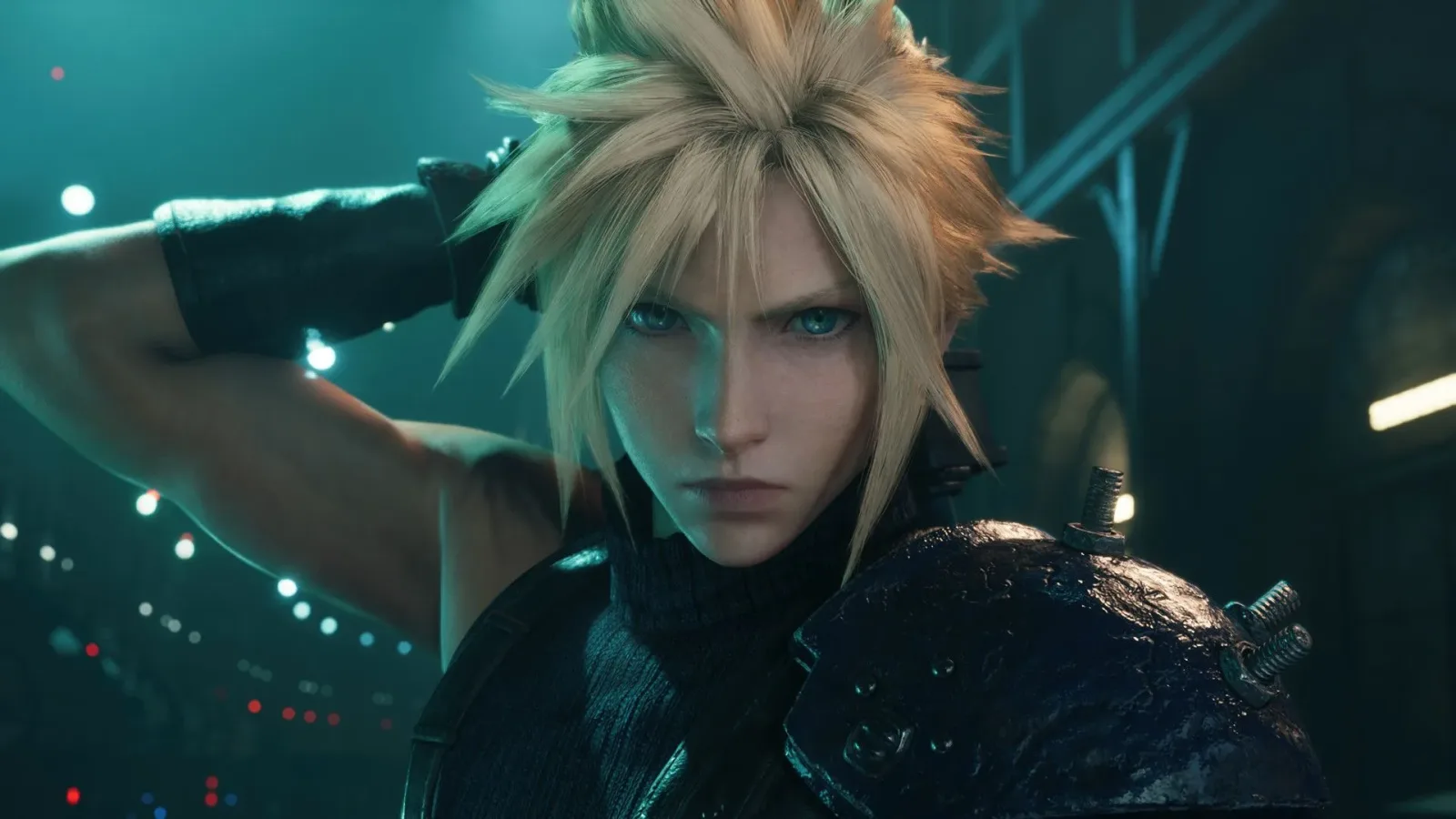
Potential spoilers for Final Fantasy VII Remake and Final Fantasy VII Rebirth follow.
Final Fantasy VII Remake was never designed as a purely one-to-one reconstruction of the 1997 PlayStation landmark. Its expanded Midgar setting, altered story beats, newly prominent characters and dramatic ending all made that clear. Yet the series' willingness to revise the original may have gone further still if original Final Fantasy VII director Yoshinori Kitase had gotten his way.
Speaking at G-CON 2026 in Busan, Kitase discussed a creative divide that emerged during development of the remake project. He said he was open to making much more sweeping changes, believing that a remake could, to a degree, move beyond the constraints of the original. In contrast, Final Fantasy VII Remake series director Naoki Hamaguchi and younger members of the development staff argued that the team needed to protect the qualities and imagery that players most strongly associated with the classic.
One early disagreement centered on an immediately recognizable location: the Mako Reactor seen at the beginning of Final Fantasy VII. Concept art showed a much more extreme interpretation of the facility, turning it into a huge, spiked structure with Mako visibly bursting outward. The version used in Final Fantasy VII Remake ultimately remained considerably closer to the form players remembered from the original game.
For useful background on this topic, read The Witcher 4's Ciri Is Set to Make Player Choices More Personal Than Geralt's.
The discussion offers an unusually clear look at the competing instincts behind a high-profile remake. Kitase, one of the principal creative figures behind the 1997 game, was interested in exploring the freedom offered by revisiting a familiar world decades later. Hamaguchi's team, meanwhile, helped ensure that the remake did not lose sight of why locations such as the Sector 1 reactor, Midgar's plate, Shinra headquarters and the city's industrial skyline had stayed vivid in fans' imaginations.
A remake built on change and recognition
The Final Fantasy VII Remake project occupies a complicated space. It presents itself through recognizable characters, settings and major story milestones, but it also expands the original's material dramatically. The opening Midgar section, which was only one portion of the 1997 release, became a full standalone game. Secondary characters received additional scenes, Avalanche became more fully developed, and the consequences of the party's actions were given far more room to breathe.
At the same time, Remake makes major narrative moves that encourage players to question whether events are unfolding exactly as they did before. Its final stretch introduces revelations and conflicts that recast the project as more than a straightforward retelling. Final Fantasy VII Rebirth continues that approach, revisiting beloved moments while also inviting uncertainty around the fate of the story and its characters.
That balance is why Kitase's comments are especially interesting. The finished games already take substantial risks. They do not simply modernize combat, voice acting and graphics while preserving every plot development in the same arrangement. Yet Kitase indicated that he had considered even bolder departures, with the idea that a remake did not necessarily need to remain closely bound to every aspect of the earlier game.
For a project tied to one of the most celebrated Japanese role-playing games ever made, that is a daring position. Final Fantasy VII is not merely a story remembered in broad strokes. Players retain specific mental images of its places: the dim industrial scale of the reactors, the looming Shinra buildings, the contrast between the upper plate and the slums beneath it, and the first sight of Cloud Strife arriving in Midgar. Altering those landmarks too aggressively can change more than a level's appearance; it can alter the emotional effect of returning to that world.
The Mako Reactor as a key example
The Mako Reactor example neatly captures the challenge. The reactor is among the first major environments players encounter in Final Fantasy VII. It establishes the visual language of Midgar and the central role of Mako energy in the game's world. It is industrial, oppressive and inseparable from the conflict between Avalanche and the Shinra Electric Power Company.
An early design that made the reactor grander, sharper and more visibly explosive may have communicated the dangerous force of Mako in a more overtly modern spectacle-driven way. But it also risked replacing an iconic silhouette with something that, however impressive on its own terms, may not have felt like the place players remembered.
Kitase said the debate led him to recognize an important responsibility for a director handling a remake: respecting the visual impressions that players have retained over many years. In that sense, the final reactor design was not necessarily a refusal to innovate. Instead, it was a decision about where innovation should be applied and where familiarity was vital.
Final Fantasy VII Remake demonstrates this distinction repeatedly. Midgar has a vastly greater level of detail than it did on the original PlayStation, but its broad identity remains intact. The reactors still feel imposing. The sectors still reflect the social divide at the heart of the setting. The city's strange combination of science fiction machinery, corporate architecture and worn-down neighborhoods remains central to its atmosphere.
Younger developers guarding the original's strengths
There is a certain irony in Kitase's account. It might be easy to assume that veteran creators would be the ones most determined to preserve every aspect of a classic project, while newer staff would seek major reinvention. His comments suggest the opposite happened in at least some Final Fantasy VII Remake discussions.
The younger developers, led by Hamaguchi, were the ones making the case for honoring the original game's strongest features. That does not mean they advocated a simple visual upgrade with no reinterpretation. The remake series plainly makes its own decisions. However, they recognized that fan attachment to Final Fantasy VII often rests in specific artistic details as well as in characters and plot.
That perspective is particularly valuable for a long-running game property. Developers who grew up with a title can bring a different kind of reverence to a remake: not only knowledge of what happened in the original, but also an understanding of what it felt like to see its defining images for the first time. Preserving that feeling can matter as much as reproducing any individual asset exactly.
Hamaguchi's role as series director has therefore involved a difficult balancing act. The remake project must be recognizable to longtime fans, approachable for players encountering Final Fantasy VII for the first time, and surprising enough to justify being remade as a major modern series rather than simply archived in new technology.
Why radical remakes divide audiences
Any remake faces a built-in contradiction. If it changes too little, players may wonder why it exists beyond technical modernization. If it changes too much, it may be accused of abandoning the very work that made it worth revisiting. The larger the cultural footprint of the original, the more intense that argument becomes.
Final Fantasy VII is an especially difficult case because it has been revisited across multiple projects and has remained a defining reference point for role-playing games. Expectations surrounding its remake were enormous long before Final Fantasy VII Remake arrived. Some players wanted a faithful recreation of the story and world they knew. Others wanted the original creators to take advantage of the opportunity to explore unused ideas, deepen characters and surprise an audience that already knew the major turns.
The remake series has chosen to live in the tension between those expectations. It preserves recognizable foundations while allowing new mysteries and reinterpretations to take root. That approach will always be controversial, particularly whenever an altered scene touches a character or event with decades of emotional weight behind it.
But Kitase's recollection makes clear that the project's final balance was actively debated rather than accidental. The people making Final Fantasy VII Remake were not simply deciding how much graphical detail to add. They were wrestling with a bigger creative question: whether a remake should reproduce memory, challenge memory, or do both at once.
The value of preserving a player's memory
For Final Fantasy VII Remake, the answer appears to have been selective change. The series can introduce new story ideas, broaden the world and rework how familiar events are framed. Yet when it comes to foundational visual icons, the team has often treated the audience's memory as an essential part of the design process.
The reactor dispute illustrates why that approach matters. A more radical concept might have offered a striking new visual, but the reactor's final design keeps a direct line to the image players carried with them from the original game. It lets the remake feel new without severing the connection that makes a return to Midgar emotionally powerful.
As the Final Fantasy VII remake series continues, the same push and pull will remain at its center. Kitase's appetite for bigger changes and Hamaguchi's emphasis on preserving the original's strengths are not necessarily incompatible philosophies. Together, they describe the challenge of remaking a classic: finding room for a new vision while remembering that some places, shapes and moments have already become part of players' personal histories.
Community
Discussion
Start the conversation.
No comments have been posted yet.