

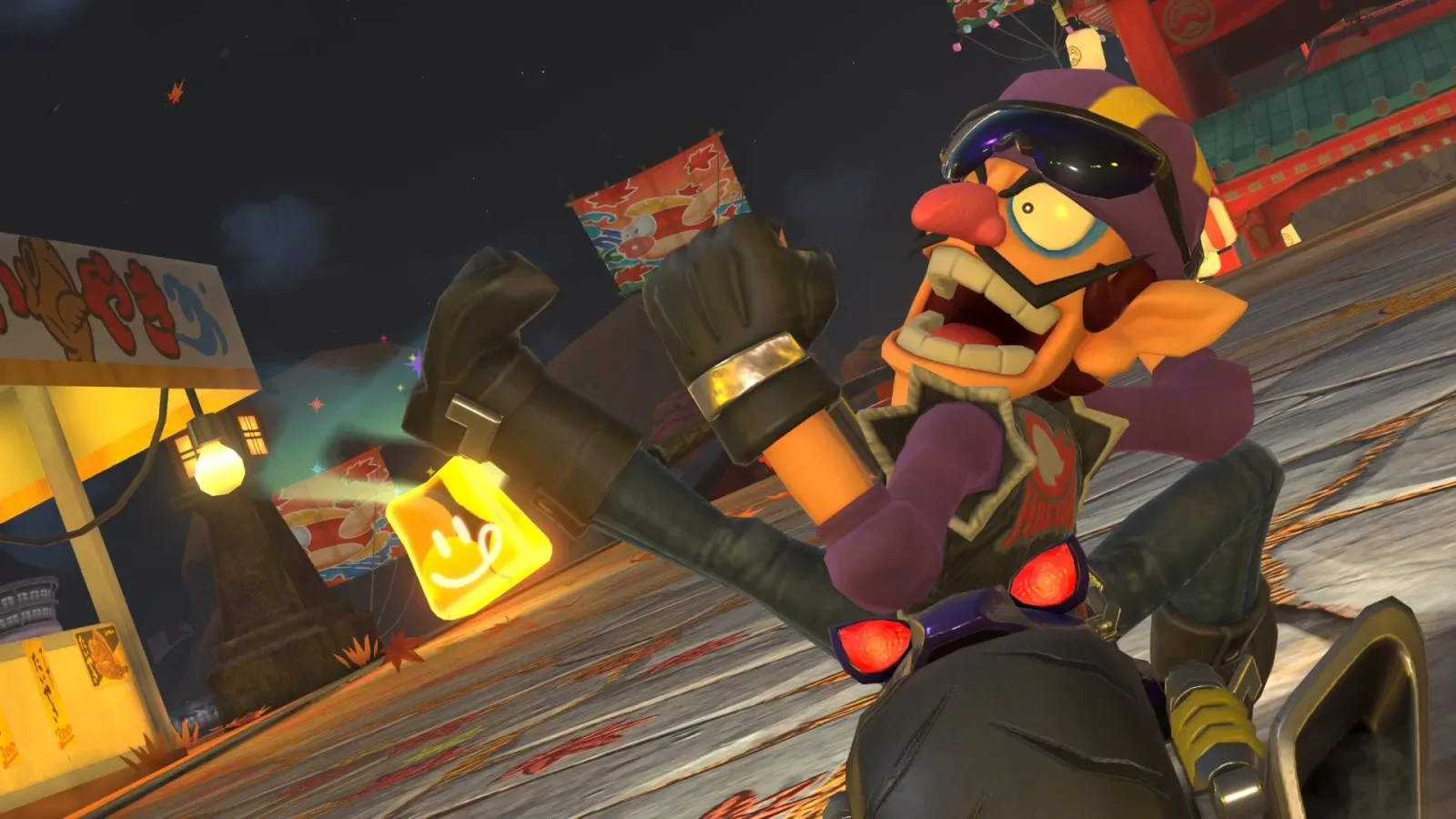
A claim of the first Nintendo Switch 2 jailbreak is making the rounds online, with an anonymous user showing what appears to be a modified version of Mario Kart World running on the console. The reported breakthrough is notable not only because it concerns Nintendo's latest hardware, but because the method allegedly involved assistance from OpenAI alongside SmileBASIC 4, a paid game-creation application available through the Nintendo eShop.
The person behind the claim, who uses the online name pepsipu, shared footage and details indicating that they had gained the ability to alter software on Switch 2 hardware. Their first showcased modifications were deliberately playful: characters including Sanrio's Cinnamoroll, Family Guy's Peter Griffin, and virtual singer Hatsune Miku were reportedly inserted into Mario Kart World. Such crossover mods are a familiar calling card for console hacking communities, but their appearance on Switch 2 would represent an important technical milestone if the claim holds up.
There are major limitations to keep in mind. The described jailbreak is reportedly tethered, meaning it does not persist after the system is powered down. A user would need to repeat the process following a shutdown rather than simply booting into a permanently modified environment. That restriction makes it considerably less convenient than a persistent exploit and reduces its immediate usefulness for ordinary players.
It also means the reported technique is far from a simple, consumer-ready route to running mods. It requires a specific piece of paid software, technical knowledge, and a willingness to take responsibility for the potential consequences. For most Switch 2 owners, the barrier to entry and the uncertainty surrounding the method will likely outweigh the novelty of custom characters in a racing game.
For useful background on this topic, read GuardianSoul Brings a Working PlayStation Core to Analogue Pocket.
A paid eShop application is central to the claim
The most unusual part of the situation is the reported use of SmileBASIC 4. The application costs $25 on the eShop and is designed as a tool for making games and programs through the BASIC programming language. Development-focused software has previously been used by technically inclined communities in unexpected ways, but any exploit that depends on a storefront application faces an obvious weakness: the platform holder can potentially remove, alter, or restrict access to it.
Nintendo has not publicly confirmed the alleged jailbreak or announced any action involving SmileBASIC 4. Still, the possibility of a rapidly changing response is central to the discussion. If an eShop product is being used as a key part of a pathway to unauthorized code execution, its availability may not be dependable. Even if the application itself remains on sale, an update to the system, the software, or online services could affect whether the method continues to function.
That uncertainty is particularly relevant for anyone considering a purchase purely because of the reported jailbreak. Buying an application with the expectation that it will enable console modification carries no guarantee that the capability will remain available. The tool's intended purpose is game creation, not system hacking, and there is no indication that a $25 purchase alone provides a straightforward or lasting modification method.
The AI element has attracted just as much attention as the eShop requirement. The claim suggests that OpenAI assistance was used during the process, though that does not mean AI independently discovered or deployed the exploit. In technical work, generative AI can help users understand programming concepts, organize information, troubleshoot code, or explore approaches. It does not remove the need for expertise, testing, and verification--especially where low-level console security is concerned.
Why "tethered" matters for Switch 2 owners
Console jailbreaks vary widely in what they enable and how practical they are. A tethered jailbreak is among the less convenient forms because it disappears after a shutdown or reboot. Rather than permanently changing a machine's startup behavior, it must be reapplied. This can limit a user's ability to treat a modified console as an everyday system, while also increasing the chance of errors during repeated attempts.
That limitation should not be mistaken for a complete lack of significance. The ability to run unauthorized modifications, even temporarily, can provide researchers and enthusiasts with a foothold for examining a system's security. It can also prompt further work toward more stable methods. At the same time, it gives Nintendo a clear incentive to investigate the reported route and reinforce any affected protections through updates or other measures.
For players, a tethered process is also a reminder that online clips rarely convey the full amount of risk or effort involved. A brief video of a modded race does not show setup time, failed attempts, compatibility problems, possible update conflicts, or the potential impact on a console's normal operation. It likewise does not establish that every Switch 2 model, firmware version, or regional software configuration would behave the same way.
The claim should therefore be treated with appropriate caution. The person sharing it is anonymous, the technique's long-term status is unclear, and public demonstrations of a mod do not necessarily provide enough information to independently assess the full scope of an exploit. Until more technical validation emerges, Switch 2 owners should be wary of anyone presenting the situation as a permanent, easy, or risk-free jailbreak.
Modding excitement meets concerns over creators and leaks
Reaction to the purported jailbreak has been mixed. For some, the appeal is obvious. Modding can produce entertaining character swaps, visual changes, accessibility experiments, fan-made challenges, and other forms of creative expression that official game releases do not offer. Seeing Cinnamoroll, Peter Griffin, and Hatsune Miku appear in Mario Kart World is designed to be absurd, and it demonstrates why custom content attracts enthusiastic audiences.
Others have raised concerns about the effect that a more accessible hacking route could have on game creators. Unauthorized access to a console can be linked in public debate with piracy, cheating, data extraction, and the distribution of unreleased material. Those issues can be especially sensitive for smaller teams whose revenue depends heavily on legitimate purchases and whose projects may be vulnerable to leaks before launch.
Not every modification has the same purpose or impact, and there is a meaningful difference between private cosmetic experimentation and activity that harms online communities or bypasses purchases. Nevertheless, the underlying console-security question reaches beyond novelty mods. A method that opens the door to unauthorized code can lead to concerns about compromised competitive play, stolen game files, fraudulent software, and pressure on developers to devote additional resources to security.
AI has added another layer to that conversation. Critics worry that AI-assisted technical guidance may lower the perceived barrier for people who do not fully understand the systems they are attempting to alter. Supporters may view it as an educational aid. In either case, relying on automated help does not eliminate the risks of following inaccurate guidance, applying incompatible files, or misunderstanding instructions that affect expensive hardware.
Nintendo's likely balancing act
Nintendo has historically taken a firm approach to protecting its hardware, software, and online ecosystem. That context makes a reported Switch 2 jailbreak involving an active eShop app particularly likely to draw scrutiny. The company has several possible avenues if it determines a security issue exists, including console firmware updates, software updates, storefront action, and restrictions designed to protect online services.
No specific response has been announced in connection with this claim, and it would be premature to assume exactly what Nintendo will do. However, Switch 2 users should expect that the present conditions could change quickly. Installing system updates after any security development may affect compatibility with unofficial tools, while avoiding updates can create its own drawbacks, including missing features, patches, and online functionality.
There is also a practical consumer question. A console modification can carry the risk of instability, account penalties, loss of access to network features, or conflicts with future updates. Users should review applicable terms and understand that unofficial software activity may have consequences beyond the immediate experiment. A single novelty mod is not necessarily worth jeopardizing a console library, online account, or access to games that depend on current system software.
An early claim, not an invitation for casual users
The reported Switch 2 jailbreak is interesting because it suggests that determined users are already exploring ways around the console's protections. The use of AI assistance and SmileBASIC 4 gives this particular claim an unusual angle, while the modified Mario Kart World footage offers a clear visual demonstration of what enthusiasts hope to do with access to custom code.
But the current picture is defined by caveats. The method is reportedly tethered, it depends on paid software whose continued availability is uncertain, it is not positioned as an accessible solution for casual users, and its broader technical reliability remains unclear. Nintendo has not publicly outlined a response, but the situation could evolve as more attention reaches it.
For now, the most sensible takeaway is that Switch 2 security research may have reached a new stage, not that every owner should rush to buy an eShop application or attempt an AI-assisted hack. The modded characters may be amusing, but the long-term consequences--for Nintendo, developers, players, and the console's online environment--will matter far more than one unusual race in Mario Kart World.
Community
Discussion
Start the conversation.
No comments have been posted yet.