

Team Ninja is drawing a firm line around how it intends to use artificial intelligence in game development. The studio is already applying AI to quality-assurance work and other verification processes, but producers Kohei Shibata and Masakazu Hirayama say the technology should support development rather than direct the creative work that determines whether a game is actually enjoyable.
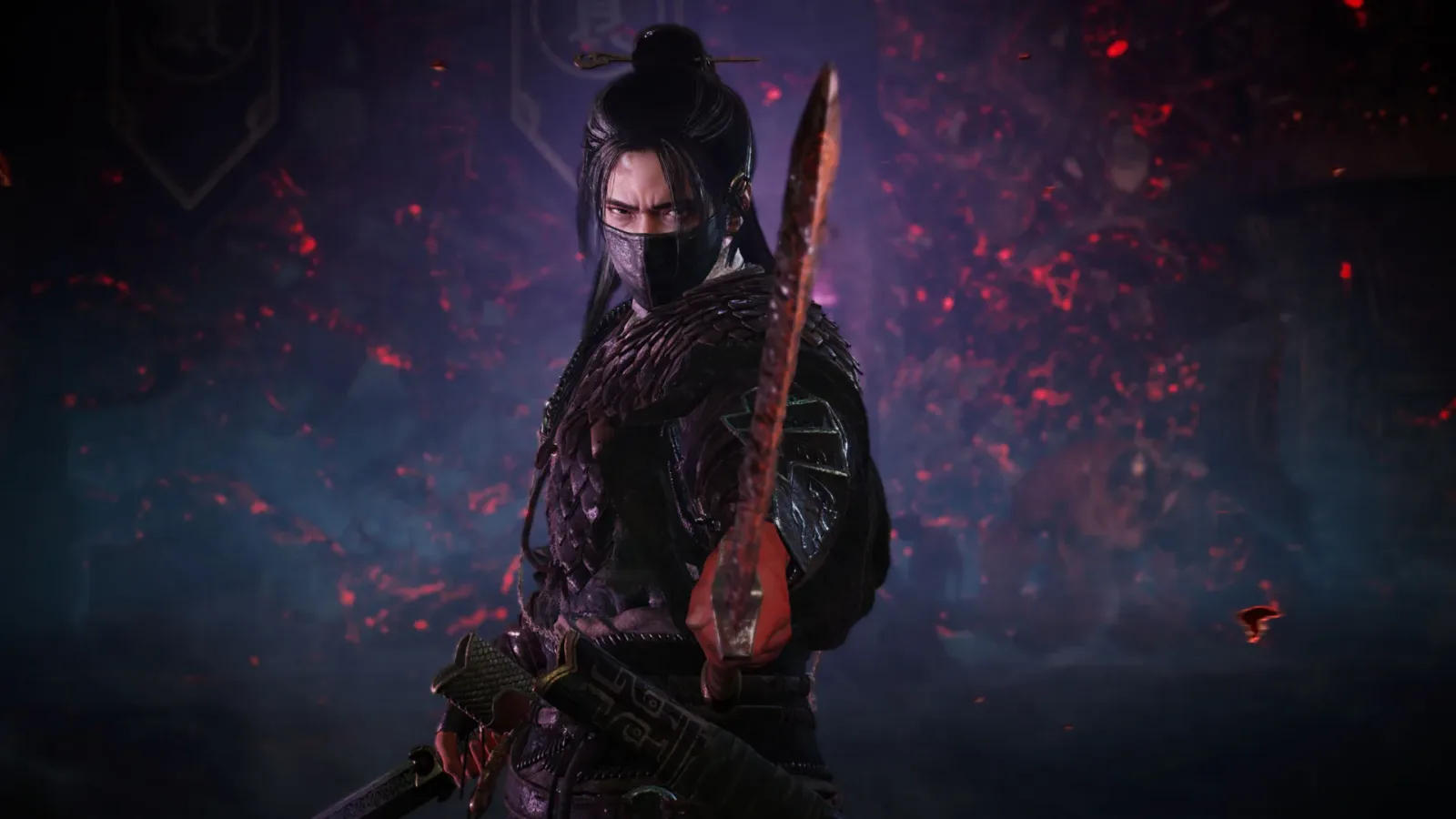
The distinction is particularly notable coming from a developer closely associated with demanding action games. Shibata is known for producing the Nioh series, while Hirayama produced Wo Long. Both games build on the fast, combat-centred traditions associated with Team Ninja's wider catalogue, asking players to study enemies, manage timing, and turn defence into an opportunity to strike. In a conversation held during GCON 2026 in South Korea, the two producers linked that design philosophy to a larger point about development: the game must feel fair, responsive, and intentionally made.
For Team Ninja, AI can potentially help make that process more efficient. It is not being presented as a replacement for the people who decide how combat works, how challenges are tuned, or what emotions a player should feel during a difficult encounter. Instead, it is being positioned as a tool for handling work that is repetitive and measurable, allowing developers to devote more time to refinement.
Automation for testing, not for defining fun
Shibata said Team Ninja currently uses AI in QA and a range of verification tasks to simplify particular workflows. The argument is straightforward: if technology can reduce the time spent on routine checks, that reclaimed time can go back into improving the game itself.
For useful background on this topic, read Xbox Wireless Controller Falls to $43 in Black Friday Deal With USB-C Cable Included.
"What matters fundamentally is that a game becomes fun when crafted by human hands," Shibata said. "Repetitive, simple tasks that anyone must perform can be streamlined using technology. But ultimately, deciding how to craft the game and what makes it enjoyable must be done by humans."
That position does not reject AI outright. Rather, it treats implementation as an ongoing question that needs to be assessed carefully. Shibata described the technology as new enough that Team Ninja is still weighing the most appropriate ways to use it, a consideration he suggested is likely shared across the industry.
The producer's core concern is purpose. AI use should not become a goal on its own simply because the technology is available. A development team still needs to make deliberate decisions, evaluate results, and take responsibility for the finished game. In Shibata's view, the principle that people must think through and complete the work themselves should not disappear.
This is an important distinction in an era when "AI" can describe many very different tools. Automated testing systems and behaviour-driven verification have existed in game development discussions for years, well before the current wave of public debate around generative AI. QA automation may involve repeated inputs, scenario checks, or systems built to identify failures under controlled conditions. That is a different proposition from asking a system to originate characters, art, writing, game mechanics, or creative direction.
The difficult-versus-unfair challenge
Team Ninja's comments about AI arrived alongside a discussion of something central to the studio's identity: the difference between a game that is hard and one that feels unfair. That gap is crucial for action games built around failure, retries, mastery, and high-pressure battles. Players may accept defeat repeatedly when they understand what happened and believe their next attempt can improve. They are far less likely to accept it when the controls fail to communicate their intent or when the rules seem inconsistent.
Shibata characterized Nioh as samurai action, emphasizing the tension between stillness and movement. The player observes an opponent, waits for a moment of vulnerability, and commits to a decisive attack. Hirayama described Wo Long through a different lens: aggressive Chinese martial-arts action in which attack and defence are not separate phases, but actions that feed into one another. Offence matters, yet successful defence must naturally create the opening for the next attack.
Those descriptions underline a shared principle. Whether the player is taking a measured samurai approach or pushing an enemy with more aggressive momentum, combat needs to provide readable information. Enemy attacks must be learned. Timing needs to make sense. A counter or defensive response must feel connected to what the player saw and what they chose to do.
That design goal also makes quality assurance more than a hunt for obvious bugs. A game can technically function and still create unnecessary friction. Inputs might register in an unintuitive way, animation timing may muddy a response, or an encounter can give players too little information to understand why they failed. The details that separate satisfying difficulty from irritation often emerge through constant checking, tuning, and feedback.
Responsiveness is the foundation
Shibata identified control responsiveness as the essential quality of an action game. When a player presses a button, the character needs to respond as intended. If an input is ignored, delayed, or produces a result that does not match expectations, frustration quickly follows. The opposite problem can be just as disruptive: a minor input causing an exaggerated movement can make a character feel difficult to control.
In practice, this means responsiveness has to be both immediate and legible. The player needs to understand the relationship between an input and the on-screen outcome. That may sound basic, but it is the foundation beneath advanced combat systems. Parries, dodges, stance changes, attacks, resource management, and enemy-reading only feel rewarding if the game clearly recognizes what the player attempted to do.
It is here that AI-supported verification could have a useful, limited role. Repetitive testing can consume substantial time, especially when teams need to check interactions across many states and circumstances. Streamlining some of that work could give designers, programmers, testers, and other developers more room to investigate the harder questions: Is a move readable? Does an enemy combo create a fair learning opportunity? Is a failed defensive action the result of a player mistake, or did the game communicate poorly?
Automation can help surface issues. It cannot independently settle every question of feel. The sensation of controlling a character, the satisfaction of narrowly avoiding a blow, and the confidence that a loss was earned all depend on human judgement. They are shaped by intent and taste, not simply by whether a test passes.
A cautious position in a divided industry
Game companies have taken sharply varied approaches to AI. Some are actively exploring its use across production, while others have limited it to infrastructure, optimisation, or operational tasks. Concerns remain widespread around authorship, consent, transparency, reliability, and the potential effect on jobs, particularly in areas already affected by layoffs and contract uncertainty.
Team Ninja's stance falls into the more cautious camp. The studio sees potential value in speeding up routine work, but it does not frame AI as the author of a game's identity. Its producers instead place human creators at the centre of decisions about challenge, responsiveness, and enjoyment.
That does not entirely resolve the broader concerns attached to AI-assisted QA. Even non-generative automation raises questions about how workflows change and whether efficiency gains alter staffing needs. Players may also have different levels of comfort with AI depending on what it is being used for, how openly that use is disclosed, and whether the technology affects the creative material they associate with a game.
For now, Team Ninja's comments offer a relatively clear boundary: use automation to reduce repetitive labour where it can genuinely help, but do not confuse faster processes with creative understanding. The studio's own approach to hard action games illustrates why that boundary matters. A punishing fight is not rewarding merely because it is difficult. It becomes memorable when the player can read it, respond to it, learn from it, and eventually overcome it through their own decisions.
That same human-centred standard is what Shibata and Hirayama are applying behind the scenes. Technology may help test the path to a better game, but Team Ninja believes people must still decide where that path leads.
Community
Discussion
Start the conversation.
No comments have been posted yet.