

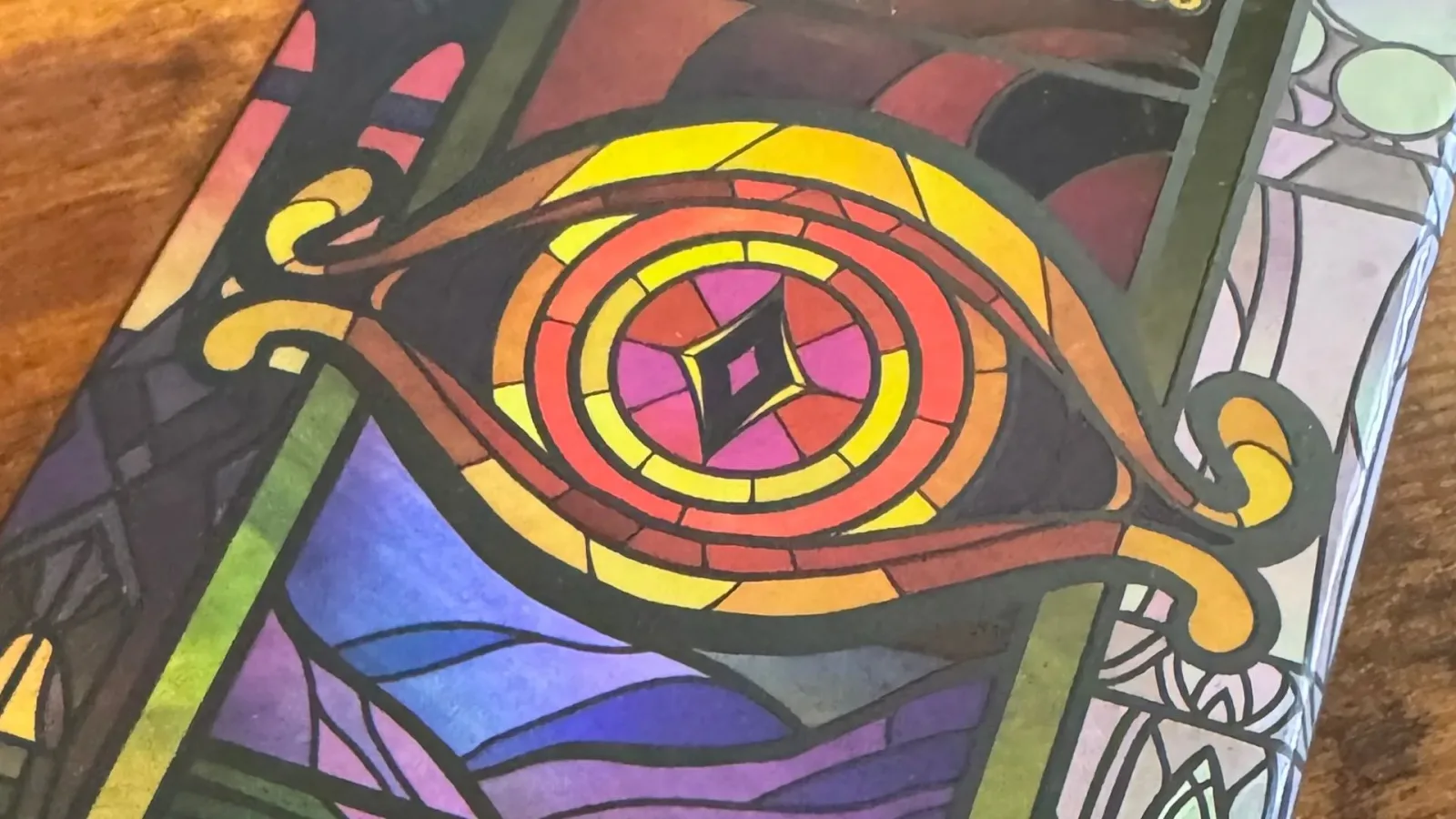
There are countless ways to revisit Middle-earth at the table. Players can command armies, explore sprawling adventure maps, draft heroes, battle through living-card-game scenarios, or simply enjoy a themed party game. That abundance makes it harder for a new adaptation to stand out, especially one built around a card-game mechanism that has existed for generations. Yet The Lord of the Rings Trick-Taking Game series has found an unusually effective answer: take a familiar format, make it cooperative, and let the restrictions on communication create the pressure of a dangerous shared quest.
The first two entries, based on The Fellowship of the Ring and The Two Towers, have earned a notably warm reception among tabletop players. The initial game has also built a strong customer response, with 87% of its Amazon user reviews rated at five stars. That enthusiasm is understandable. These are not card games that merely place Tolkien names and imagery over a generic ruleset. Their central system--players trying to coordinate without freely revealing what is in their hands--creates an atmosphere that fits a fellowship attempting to survive with incomplete information.
A third installment, The Return of the King Trick-Taking Game, is scheduled to launch on January 15, 2027. It is intended to complete the trilogy and is set to introduce additional gameplay changes and strategic choices for both newcomers and players who have worked through the earlier boxes. For anyone wondering why this particular branch of Lord of the Rings tabletop gaming has become so popular, the appeal starts with understanding what trick-taking means in this context.
A traditional card-game idea with a cooperative objective
Trick-taking is one of tabletop gaming's most enduring structures. In broad terms, one player leads a card, other players generally need to follow that card's suit if possible, and the strongest eligible card wins the trick. Many well-known traditional card games use variations of this foundation. The Lord of the Rings games preserve that recognizable rhythm, which makes the core turns easy to grasp, but they change the reason players care about winning.
For useful background on this topic, read Hitman's Jacksepticeye Elusive Target Is Free Until November 25, 2026.
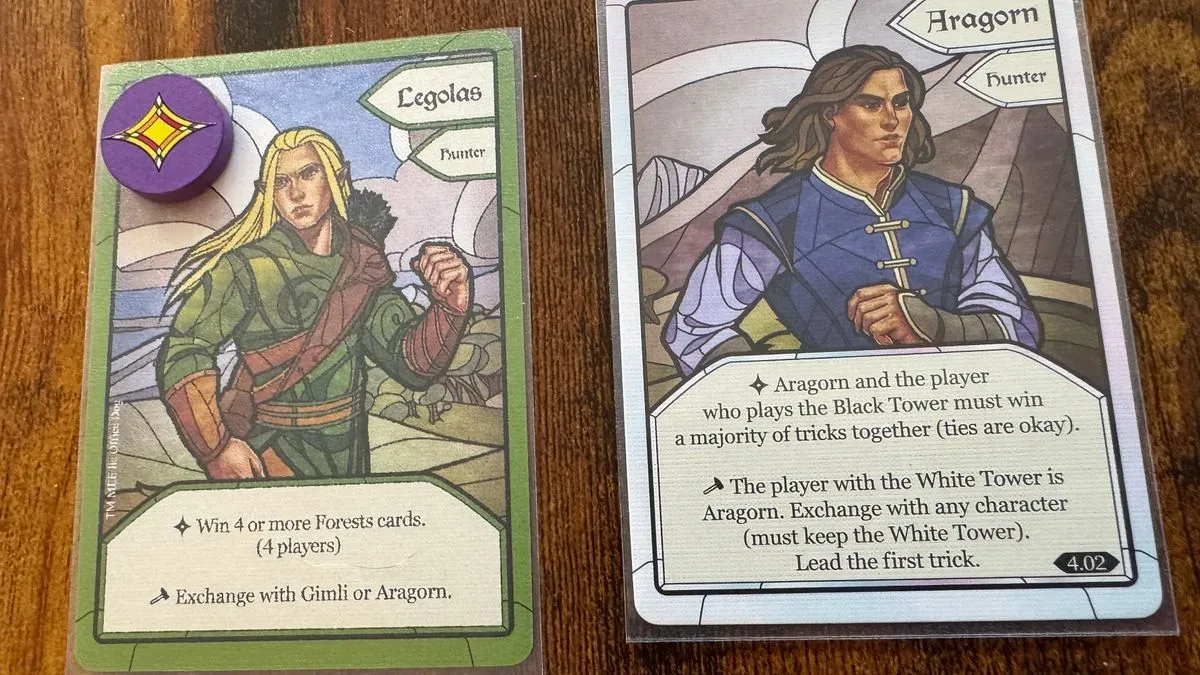
In these games, the suits are themed around Middle-earth: Hills, Mountains, Forests, Shadows, and Rings. A lead player plays a numbered card, then everyone else attempts to follow suit, aiming for the highest applicable value. On the surface, that sounds like a contest to collect tricks and empty a hand. The twist is that the party is not competing against one another. Every player controls a character with a separate requirement, and the chapter succeeds only when all of those character objectives have been fulfilled.
Those goals can pull the group in different directions. One character might need to win very few tricks. Another may have to claim particular Ring cards. A player who looks as though they are making an obviously bad move may actually be protecting the group's route to success, setting up a teammate, or avoiding a trick that would ruin their own requirement. As a result, the question is rarely just, "Can I win this round?" More often, it is, "Who needs this round, who cannot afford it, and what can I safely signal without saying too much?"
That cooperative framework makes every hand feel like a small tactical puzzle. A high card is not automatically powerful if winning with it places a vital trick in the wrong player's pile. A low card is not necessarily weak if it helps someone avoid taking a dangerous suit. The team must continually balance immediate outcomes against personal objectives, the remaining cards that may be in play, and the rules of the current chapter.
Silence is part of the challenge
The defining feature of the Lord of the Rings Trick-Taking games is their limited communication. Players may discuss cards that have already been played or placed during setup, but they cannot openly explain the contents of their hands. They also cannot go beyond sharing the nature of their character goal. That restriction is far more than a novelty rule. It is the mechanism that keeps the game from becoming a solvable group exercise led by one highly experienced player.
Instead of openly mapping out every move, players read intentions through play. If a teammate declines to take a trick when they seemingly could, what are they preserving? If they spend a strong card now, are they trying to ensure that another player wins, or are they preventing themselves from being forced into a future victory? The answers emerge in the sequence of cards, and that makes the group's eventual success feel earned.
It also gives the game a satisfying narrative texture. Middle-earth is full of characters separated by peril, uncertain of one another's circumstances, and forced to act without complete knowledge. The card-game rules naturally produce a smaller-scale version of that tension. Nobody needs to perform dialogue or roleplay a scene for the theme to come through; the uneasy coordination is built directly into the decisions.
Of course, this means the game asks for a particular kind of table etiquette. The fun depends on respecting the communication limits rather than attempting to bypass them with coded language, exaggerated pauses, or accidental revelations. Groups that enjoy reading a situation and adapting to imperfect information are likely to find that constraint exhilarating. Those looking for a fully open cooperative planning game may find it demanding at first. But the restriction is precisely where much of the design's personality lies.
The Fellowship of the Ring is the place to begin
For most players, The Fellowship of the Ring Trick-Taking Game is the natural starting point. It establishes the fundamental rules and introduces the series' unusual cooperative goals without asking players to absorb its later additions immediately. The opening box is therefore useful both for players who are new to trick-taking games and for experienced card players who want to see how the Middle-earth version approaches the format.
Its chapter-based structure is important. Rather than offering one static match repeated the same way every time, the game develops over a series of scenarios. New complications appear as the journey continues, requiring the group to reconsider assumptions that may have worked in earlier chapters. That progression gives the game a campaign-like sense of movement without requiring the massive time commitment, table space, or rules overhead often associated with campaign board games.
The result is a particularly approachable kind of tabletop story. Players can sit down for a compact session, learn through play, fail a chapter, discuss what went wrong without revealing hidden information from that hand, and try again with a better understanding of the group's needs. There is room for cleverness, but the game's tension comes from interacting systems rather than dense exception-heavy rules.
It is also the best entry point because the sequel assumes some familiarity with those foundations. While it is technically possible to begin with The Two Towers, jumping ahead means encountering added ideas before the original communication puzzle and objective structure have had time to settle in.
The Two Towers raises the strategic stakes
The Two Towers Trick-Taking Game continues the concept with more layers to consider. It has received particularly strong critical praise, including a five-star review, and its reputation suggests that the sequel is not merely an expansion of the first game's theme. It builds on the initial design, asking returning players to apply the lessons learned in Fellowship while adapting to fresh constraints.
That distinction matters for a trilogy based on a single epic story. A straightforward reskin for each book would quickly lose its appeal. The trick-taking series instead uses the evolving narrative as a reason to change the shape of its challenges. As the adventure grows more complicated, so do the group's decisions. New situations prevent the experience from becoming routine and preserve the uncertainty that makes hidden-hand card games compelling.
For a group that has completed or thoroughly explored Fellowship, Two Towers offers a chance to see how far the cooperative trick-taking idea can stretch. It is likely to be especially appealing to players who enjoy games where mastery means more than memorizing a fixed optimal strategy. Because hands, objectives, player order, and chapter conditions interact, the group must respond to what is actually happening at the table.
A full trilogy is nearly complete
The final chapter is now close enough to give the series a clear endpoint. The Return of the King Trick-Taking Game is due on January 15, 2027, and is expected to bring new gameplay twists designed to create fresh strategic decisions. Specific details about those systems have not been outlined here, so players should be cautious about assuming exactly how the final box will alter the formula. Still, the series' existing track record gives fans reason to be curious about how it will conclude its tabletop adaptation of Tolkien's central trilogy.
The impending third game also makes the first two more interesting as parts of a larger whole. Beginning with Fellowship now is not simply buying a single themed card game; it is the first step in a linked run of cooperative challenges that follows the broad sweep of the story. Each entry can offer its own game nights, while the trilogy format gives returning groups a satisfying sense of progression.
Why this adaptation stands apart
Lord of the Rings games often face a difficult choice. They can aim for huge thematic scope, with many rules and components, or keep things light enough for a quick evening but risk feeling superficial. The Trick-Taking Game series occupies a useful middle ground. Its basic action is immediately recognizable--play a card, follow suit, resolve the trick--but the shared objectives and restricted information create consequences that feel much larger than the physical footprint of the game.
It is a smart fit for families, regular game groups, and Tolkien fans who may not want to commit to a lengthy miniature battle or an elaborate campaign. The games ask players to pay attention, communicate carefully, and accept that a setback can be part of the story. They also reward repeat sessions, because understanding the rules is only the beginning; learning how a particular group signals intent through legal plays is where the deeper cooperation develops.
For players who love Middle-earth and want a card game that does more than borrow familiar names, Fellowship is the essential first stop. Its blend of old-fashioned trick-taking, cooperative problem-solving, and carefully constrained communication gives the material a fresh tabletop identity. With Two Towers already expanding that idea and Return of the King approaching in 2027, this is shaping up to be one of the most distinctive card-game journeys available in Middle-earth.
Community
Discussion
Start the conversation.
No comments have been posted yet.