

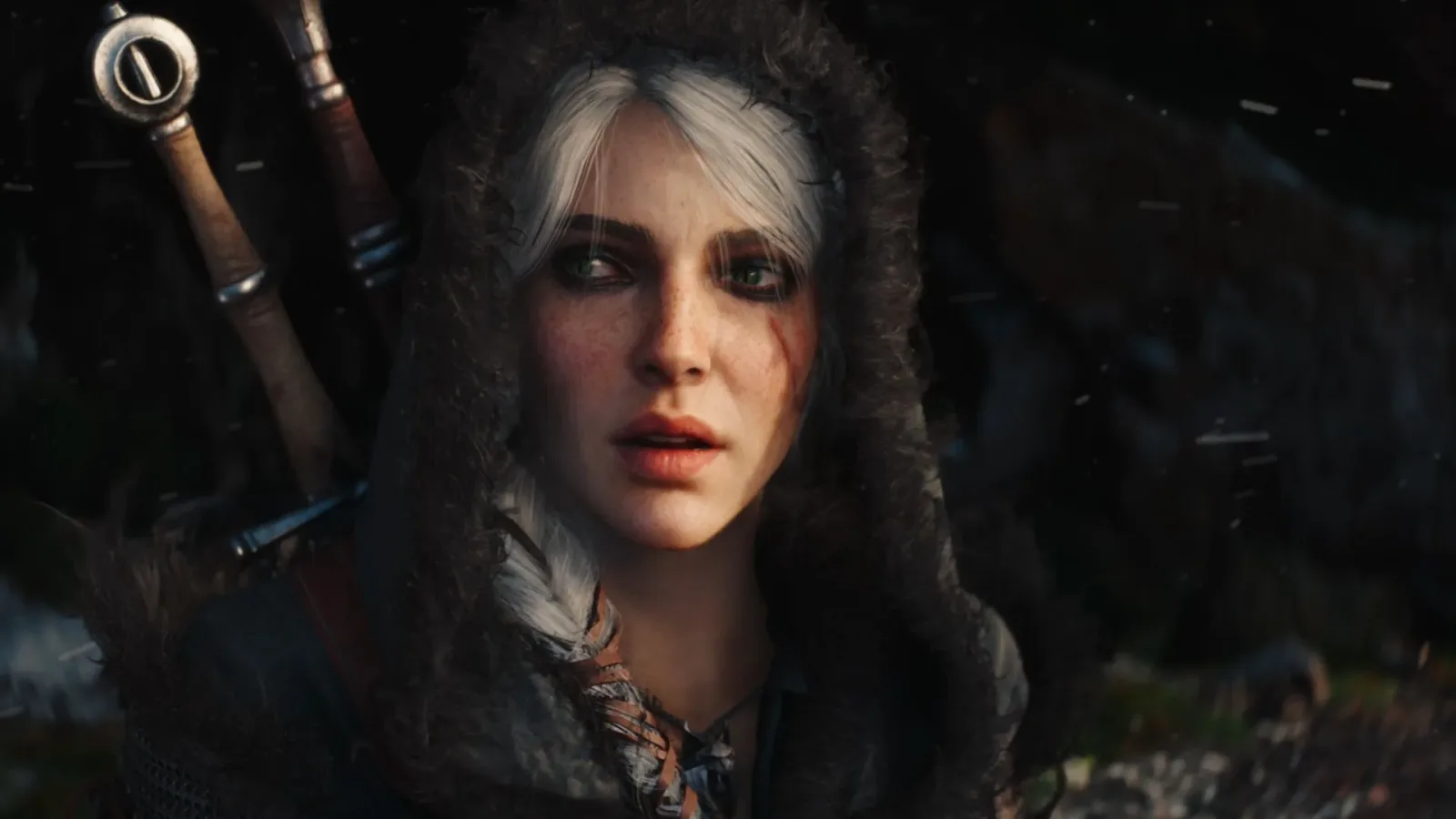
The Witcher 4 will not simply replace Geralt of Rivia with Ciri and continue exactly as before. CD Projekt Red has indicated that moving to a new protagonist will have a major effect on the role-playing game's storytelling, quest construction, and the emotional context behind the choices players make.
After three main games centered on Geralt, Ciri is taking the lead for the next chapter. That is a substantial change for a series built around the famously restrained witcher, whose dry humor, professional detachment, and measured approach to difficult jobs helped define the tone of the earlier games. Ciri, by contrast, is being presented as a more immediately emotional character--one whose personal connection to events could pull players much closer to the heart of each situation.
Marcin Blacha, CD Projekt Red's vice president of story, discussed that distinction in an interview with Inven Global. His comments suggest that Ciri's personality will be more than a narrative detail. It is expected to influence the player's relationship with decisions throughout the game.
Ciri's emotions will change the player's role
Blacha described Ciri as considerably less composed than Geralt. Where Geralt has often kept his feelings guarded--even when confronted with political conflict, personal loss, monsters, or morally grim contracts--Ciri is more likely to show her emotions and act on them. Blacha characterized her as more hot-headed and said that emotion can influence the decisions she makes.
For useful background on this topic, read Hitman's Jacksepticeye Elusive Target Is Free Until November 25, 2026.
That contrast goes directly to the foundation of player choice in a Witcher game. Geralt's position frequently made him an outsider looking in. Even when a conflict became personal, he could approach it as a professional hired to investigate a curse, kill a monster, locate someone, or settle a dispute. Players could weigh the likely consequences and decide which outcome seemed least harmful, most practical, or most consistent with their version of Geralt.
Blacha said players in Geralt's role often functioned like arbiters deciding how a situation should be resolved. The Witcher 4 aims for a different feeling with Ciri. Rather than standing at a distance and judging the competing sides, players may be more deeply embedded in the story through Ciri's own perspective.
That does not necessarily mean that choices will become simple or that Ciri will have only one emotional response available. The Witcher series is known for asking players to make difficult calls without offering perfectly clean outcomes. Instead, the point appears to be that the reasons behind a decision may carry a different kind of weight. It may not be enough to ask which option is morally correct. Players may also have to consider how involved Ciri has become, what she feels responsible for, and what personal cost she is willing to accept.
A new shape for quests
According to Blacha, this protagonist change means quests in The Witcher 4 will take on a different shape from those in The Witcher 3: Wild Hunt. That is one of the clearest indications yet that CD Projekt Red sees Ciri's lead role as a creative shift rather than a cosmetic handoff.
The Witcher 3 excelled at framing local stories through Geralt's work as a witcher. A contract might begin with a monster to track, but grow into a dispute involving grief, poverty, war, prejudice, family, or exploitation. Geralt could become emotionally invested, especially in stories connected to his friends and adopted family, yet the game's structure often began with his practical role: he was there to investigate and solve a problem.
Ciri could naturally produce another starting point. Her history spans multiple worlds, royal bloodlines, traumatic pursuit, supernatural power, and a deeply personal bond with Geralt and Yennefer. She has never been a detached observer of the Continent's turmoil. Her life has been shaped by forces trying to control, weaponize, protect, or define her. A game centered on her can therefore approach conflict from a more immediate and vulnerable angle.
Blacha's remarks suggest that emotional investment will be central to this approach. A quest may still involve the kinds of dilemmas longtime fans expect--conflicting needs, incomplete information, unintended consequences, and choices between imperfect outcomes--but Ciri's connection to the people or events involved could be more direct. The game may ask players not only to determine what is right, but to decide how Ciri should respond when she cannot remain neutral.
Geralt's legacy remains an important contrast
Geralt remains the face most closely associated with the game series, and that makes the move to Ciri especially significant. Across three main installments, he became one of gaming's best-known protagonists: a monster hunter caught between human cruelty and supernatural danger, often trying to preserve his own code in a world that rarely rewards decency.
His stoicism was part of the appeal. Geralt could be compassionate, furious, protective, sarcastic, and deeply loyal, but he often expressed those traits through restraint. Players had room to project their own priorities onto him while still working within a strongly defined character. Whether dealing with kings, sorceresses, villagers, criminals, or monsters, Geralt could project the calm of someone who had seen too much to be easily surprised.
Ciri provides a deliberate contrast. She has been playable before, including in The Witcher 3, but those sections offered only glimpses of her perspective and abilities. Making her the full protagonist gives CD Projekt Red much more room to explore her as a person rather than primarily as the person Geralt is trying to find and protect.
That shift also offers an opportunity to revisit familiar themes from another angle. The Continent has always been filled with political manipulation, inherited power, racial hostility, magical threats, and ordinary people caught in conflicts beyond their control. Geralt generally navigated those conditions as a seasoned professional who preferred not to become a political pawn. Ciri's past and temperament could make it harder for her to keep the same distance.
More than a protagonist swap
Blacha stressed that changing the protagonist is a huge factor, and his comments make clear that the studio views the decision as affecting every level of the game. The difference is not only in dialogue delivery, combat style, or the character model on screen. It extends to the emotional lens through which the player sees the world.
That is a promising direction for a sequel carrying the weight of The Witcher 3's reputation. Repeating Geralt's formula too closely could risk making the next entry feel overly familiar, particularly after Geralt has already had extensive time in the spotlight through the games and additional content for The Witcher 3. Ciri gives the series a chance to move forward while retaining its established setting, lore, and interest in consequential storytelling.
There are obvious challenges as well. Players who spent years shaping their own version of Geralt may have strong expectations for how much freedom a new lead character should allow. A more emotionally defined protagonist can create richer scenes and stronger narrative momentum, but it also requires the game to balance Ciri's established identity with meaningful player agency.
CD Projekt Red's stated approach points toward choices that are still consequential, but more intimately tied to the character making them. Rather than reducing Ciri to a fixed personality, the goal may be to let players inhabit the pressures, loyalties, and emotions that make her unlike Geralt.
What this means for the Continent
For longtime fans, the most intriguing part of Blacha's comments may be the promise of seeing a different side of the Continent. A new protagonist can change which communities, conflicts, and stories feel central. Ciri's experiences and relationships may lead the game into places--and emotional territory--that Geralt's career as a witcher did not emphasize in the same way.
It is too early to know exactly how individual quests will unfold or how Ciri's perspective will translate into specific systems. However, the broad direction is clear: The Witcher 4 intends to build on the series' choice-driven identity without merely recreating the Geralt era.
Geralt's adventures established a powerful model for morally complex fantasy role-playing. Ciri's story has the potential to make those dilemmas feel more immediate, more personal, and perhaps more volatile. If CD Projekt Red can preserve the series' thoughtful ambiguity while fully embracing Ciri's emotional intensity, The Witcher 4 could offer a distinctly different journey through the same unforgiving world.
Community
Discussion
Start the conversation.
No comments have been posted yet.