

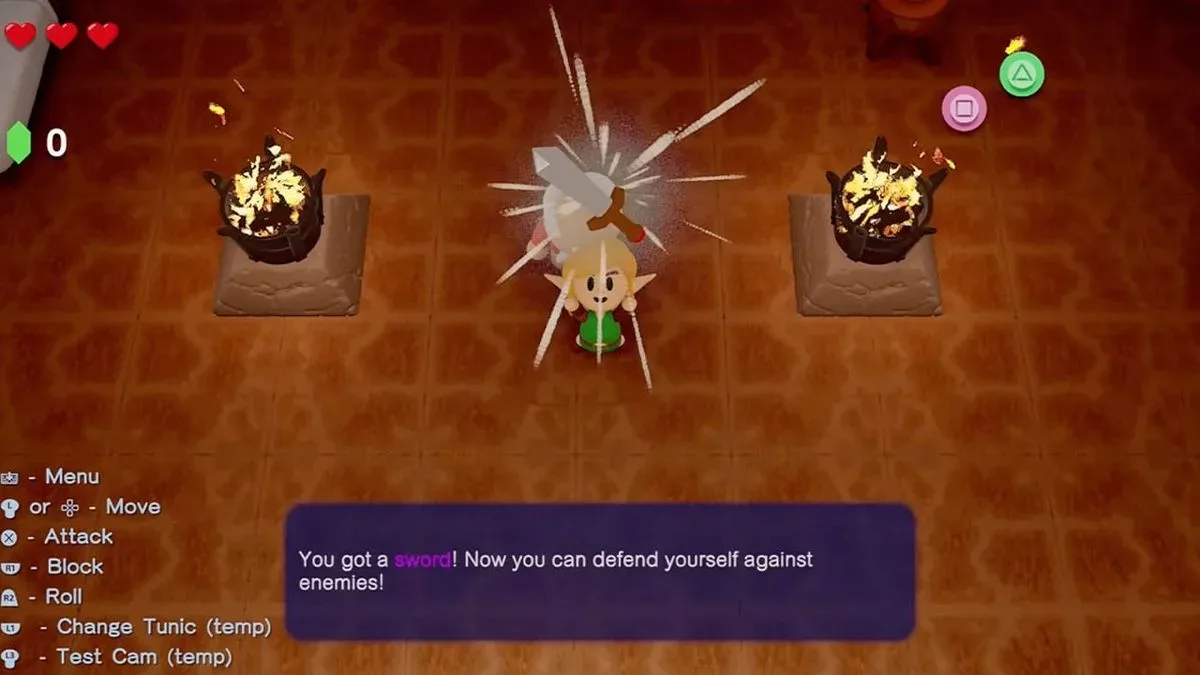
A fan-created reinterpretation of the first The Legend of Zelda has surfaced in Dreams, bringing Nintendo's landmark 1986 adventure to PlayStation in a dramatically different visual form. Built by a creator known as Relevant-ish, the project recreates the original game's quest, overworld, dungeons, combat, and exploration while presenting them through a colorful, handcrafted 3D style.
The result is an unusual crossover of platforms and eras: one of Nintendo's foundational NES games has been reworked inside a PlayStation creation tool. Its presentation evokes the bright, diorama-like look associated with recent Zelda releases such as The Legend of Zelda: Link's Awakening on Switch, though this is a separate fan project rather than an official Nintendo production.
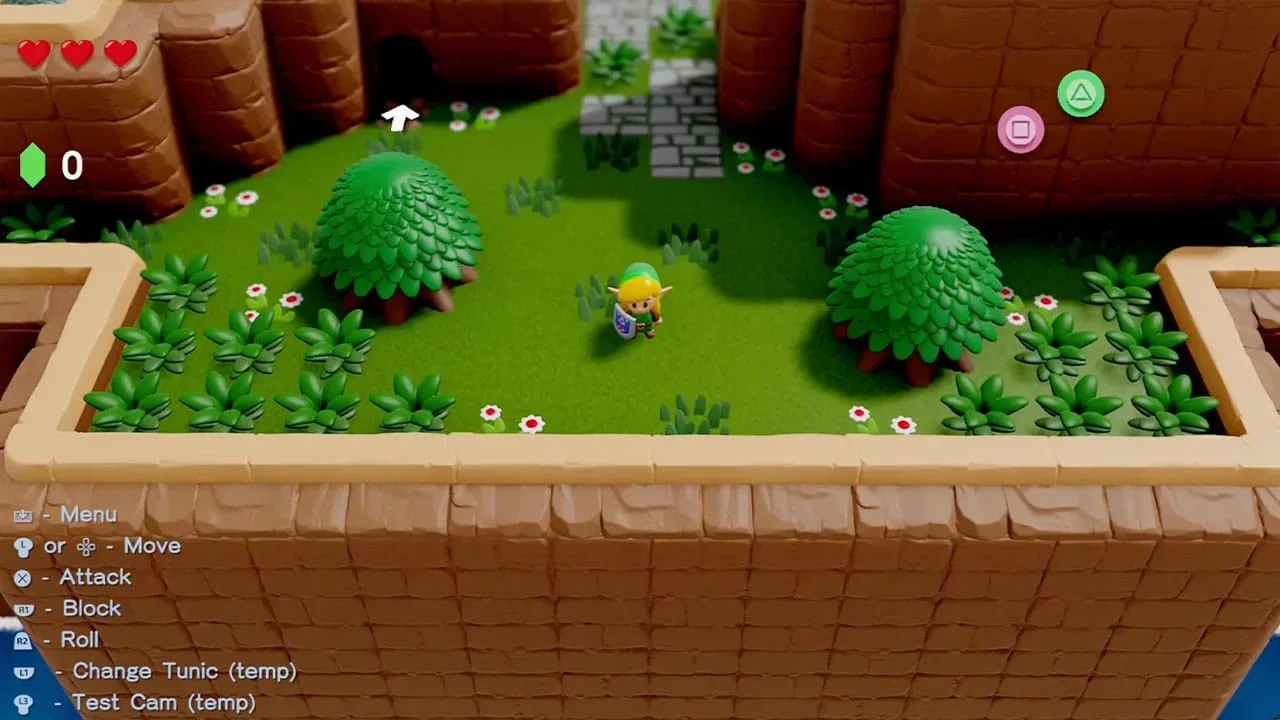
For longtime Zelda fans, the remake offers the appeal of revisiting a familiar map from a fresh angle. The original game's world remains recognizable, but its forests, caves, shoreline, enemy encounters, and labyrinthine dungeons have been given new textures, lighting, animation, and depth. Rather than simply applying higher-resolution artwork to the NES game, Relevant-ish appears to have rebuilt its locations and systems within the toolset provided by Dreams.
A classic Hyrule through a new lens
Released for the Famicom Disk System in Japan in 1986 before reaching the NES in other regions, the original The Legend of Zelda helped establish many of the ideas that would define the series. Players take control of Link as he travels across Hyrule, discovers hidden caves, enters dungeons, collects items, defeats bosses, and searches for the pieces of the Triforce needed to rescue Princess Zelda.
For useful background on this topic, read Fractal Refine 2 Gaming Chair Adds Hybrid Upholstery and Synchro-Tilt Controls.
Its open-ended structure was especially significant at the time. The game asks players to experiment, remember clues, mark secrets, and venture into dangerous territory with limited direction. That sense of discovery remains central to Zelda's identity decades later, even as the series has moved from a top-down 2D design to larger 3D worlds and, more recently, physics-driven sandbox adventures.
The Dreams version retains the broad story and recognizable progression of the NES original. However, its altered perspective and visual finish change how those classic spaces read. The blocky trees, rocks, and water boundaries of the original have been transformed into more tactile environments, with a look that makes Hyrule resemble a miniature fantasy set. Link's movement and swordplay have also been adapted to suit the remake's presentation rather than merely mimicking the animation of the 8-bit release.
Footage of the project shows both overworld exploration and dungeon interiors. One notable element is the inclusion of side-view sections in dungeons, echoing the kinds of perspective shifts Zelda players may associate with later entries in the franchise. These scenes give the remake a little more variety while maintaining the central identity of the first game's dungeon crawling.
What Dreams makes possible
Dreams is Media Molecule's PlayStation creation platform, designed to let players make and share games, music, animation, interactive art, and other projects. Since its launch, it has hosted everything from small experimental pieces to elaborate fan tributes and original games made by hobbyist developers. Its tools allow creators to sculpt objects, animate characters, build levels, program mechanics, and publish creations for other players to experience.
That flexibility has made Dreams a particularly intriguing space for projects that imagine how beloved older games might look with different technology or design sensibilities. Relevant-ish's Zelda remake follows that tradition, using the platform not just to reference the NES adventure but to reinterpret it with a new visual identity and playable structure.
It is also part of a wider pattern of ambitious fan work appearing in Dreams. Players have used the platform to produce tributes to well-known series, prototypes inspired by classic genres, and entirely new games. A fan-made Banjo-Kazooie project called Mumbomania was another recent example of creators using Dreams to revisit the feel of an older console favorite through modern creation tools.
For PlayStation players, the Zelda project is a reminder that Dreams can function as more than a game on its own. It is also a library of community-made experiences, ranging from short curiosities to sizable productions. While the platform's official creation support has changed over time, existing creations can still be an interesting destination for subscribers and owners looking to browse what its community has built.
Not an official Zelda release
The remake should be viewed as an unofficial fan creation. Nintendo owns The Legend of Zelda and its characters, settings, music, and other associated intellectual property. Relevant-ish's project does not represent an officially licensed PlayStation release, nor does it indicate that Nintendo is bringing Zelda games to PlayStation hardware.
That distinction matters, particularly with high-profile fan works based on major game properties. Community projects can sometimes be altered, removed, or otherwise become unavailable when rights holders choose to enforce their intellectual-property rights. There is no claim here about any action being taken against this specific Dreams creation, but players interested in trying it should understand that unofficial fan projects do not have the permanence or guarantees of commercial releases.
The project's existence is nevertheless striking because of the contrast at its heart. Zelda remains one of Nintendo's defining exclusive series, while Dreams is a PlayStation platform. Seeing the first entry recreated there underlines how accessible game-development tools have become for individual creators, even when they are working from inspiration rooted in another company's history.
A fitting way to revisit Zelda's beginnings
The timing gives the remake additional resonance. The original The Legend of Zelda is approaching its 40th anniversary, a milestone that invites renewed attention to the game that began one of the industry's most enduring adventure series. Modern Zelda games can be enormous undertakings, but the first installment remains compelling precisely because its core ideas are so clear: explore an unfamiliar world, find tools that expand your options, overcome hostile dungeons, and uncover secrets hidden just beyond the obvious path.
A project like this can make those ideas feel newly visible. Revisiting the original game with contemporary lighting, modeled environments, and smoother character animation emphasizes how much of its appeal came from the strength of its layout and progression rather than from the technical limits of the NES. Hyrule's screen-by-screen geography and dungeon puzzles still provide a sturdy framework for a new presentation.
It also demonstrates why remakes remain attractive to players and developers alike. A remake can preserve the structure that people remember while changing the emotional texture of the experience. A tree that was once a handful of pixels can become a dense, shaded object in a small 3D scene. A dungeon room can gain atmosphere through torchlight, stonework, and animation. Familiar enemy encounters can feel different when they take place in a world with depth and motion.
Of course, the original's minimalist abstraction has its own special character. Its simple visuals leave room for imagination, and its direct design is part of why it remains a touchstone for game history. The Dreams remake is not a replacement for the NES version. Instead, it is best understood as a creative tribute that asks what the same adventure might feel like if interpreted through a modern, playful visual language.
How to find the fan project
Players with access to Dreams on PlayStation can search the platform's in-game discovery tools and PlayStation Store listing to learn more about the creation and the broader Dreams library. The project is associated with creator Relevant-ish. Because community content can receive updates, change names, or become harder to locate through search over time, using the creator name alongside Zelda-related terms may be the most useful starting point.
The remake is intended for the PlayStation ecosystem through Dreams, rather than Nintendo Switch, PC, Xbox, or mobile platforms. Anyone expecting a conventional standalone Zelda release should keep in mind that this is a community-made experience within Dreams, with all of the limitations and uncertainty that come with user-created content.
Even so, it is an impressive example of fan creativity. Relevant-ish has taken a game that helped shape the action-adventure genre and translated it into an unexpected setting, offering a PlayStation-based way to see the earliest version of Hyrule from a new perspective. For fans who know every secret entrance and dungeon corridor of the NES original, that alone may make the project worth seeking out.
Community
Discussion
Start the conversation.
No comments have been posted yet.