

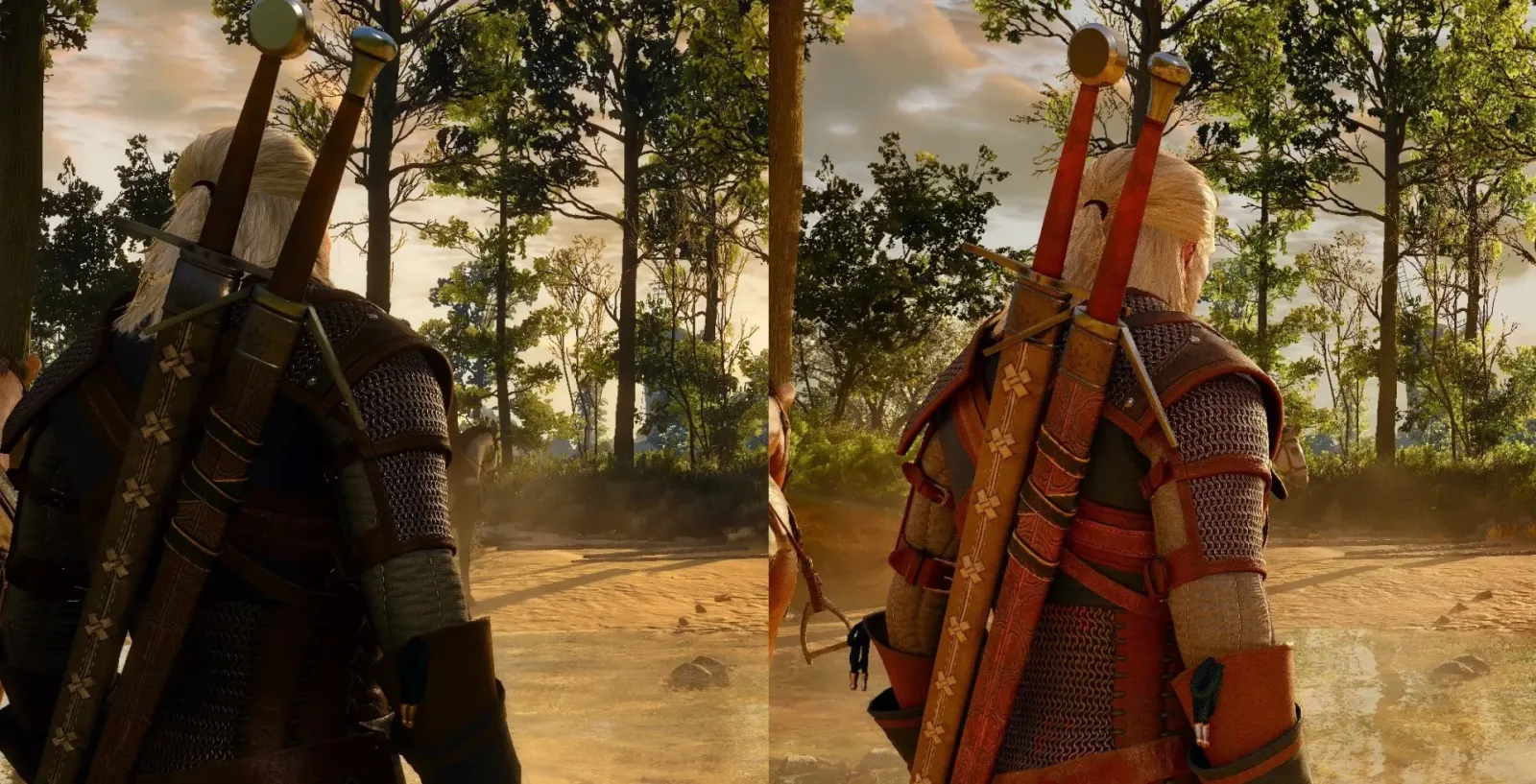
The Witcher 3: Wild Hunt Remastered has only been available for a little over a day, but its visual presentation has already become the subject of an unusually passionate player debate. The refreshed version adds layers of environmental detail and modern lighting technology, including improved ray tracing, but some returning players believe those upgrades come at the cost of the original game's darker and more dramatic identity.
For one group, the remaster represents an impressive technical leap. Landscapes are fuller, surfaces are cleaner, foliage is richer, and certain scenes can look more realistic and immersive than ever. For another, the changes have made portions of Geralt's world feel too bright, too evenly lit, or too softened by bloom. The argument is not simply about whether one version has more pixels or effects. It is about atmosphere, contrast, color grading, and the difficult question of whether a remaster should prioritize modern realism over an older game's distinctive visual mood.
That divide is especially notable because The Witcher 3 has always been more than a technical showcase. Its visual language helped define its grim fantasy setting: muddy villages, dense forests, harsh weather, candlelit interiors, and dangerous wilderness all relied on shadows and color contrast to sell the world's often bleak tone. A graphical overhaul can add detail to every one of those places while still making them feel different.
A sharper image, but a changed atmosphere
Comparison screenshots circulating among players make the contrast between versions easy to understand. In the original or earlier release, scenes are frequently darker, with deeper shadows and more forceful separation between illuminated areas and the surrounding environment. The remastered image is typically clearer and brighter, with more visible material detail and a greater sense of light bouncing around a scene.
For useful background on this topic, read Xbox CEO Says Gaming Business Is "Not for Sale" Amid Restructuring Rumors.
Neither approach is automatically wrong. The older presentation can be moodier and more stylized, while the remaster often provides a more technically advanced rendering of spaces, characters, vegetation, and surfaces. But technical upgrades are not always experienced as visual improvements by every player. The new lighting can reduce the intensity of shadow in some areas, and players who value the original game's dramatic contrast have said that the refreshed color treatment feels flatter than they expected.
Bloom is one recurring point of discussion. With bloom enabled at its default setting, bright portions of the image can appear softer or more washed out to some eyes. Others enjoy the glow and added brightness, particularly when it helps sunlight, reflective water, and outdoor environments feel more natural. The disagreement demonstrates how lighting effects can be deeply subjective: what looks cinematic and realistic on one display may look hazy or overly bright on another.
The core dispute is less about raw detail than about whether the extra light and realism support the game's dark-fantasy tone.
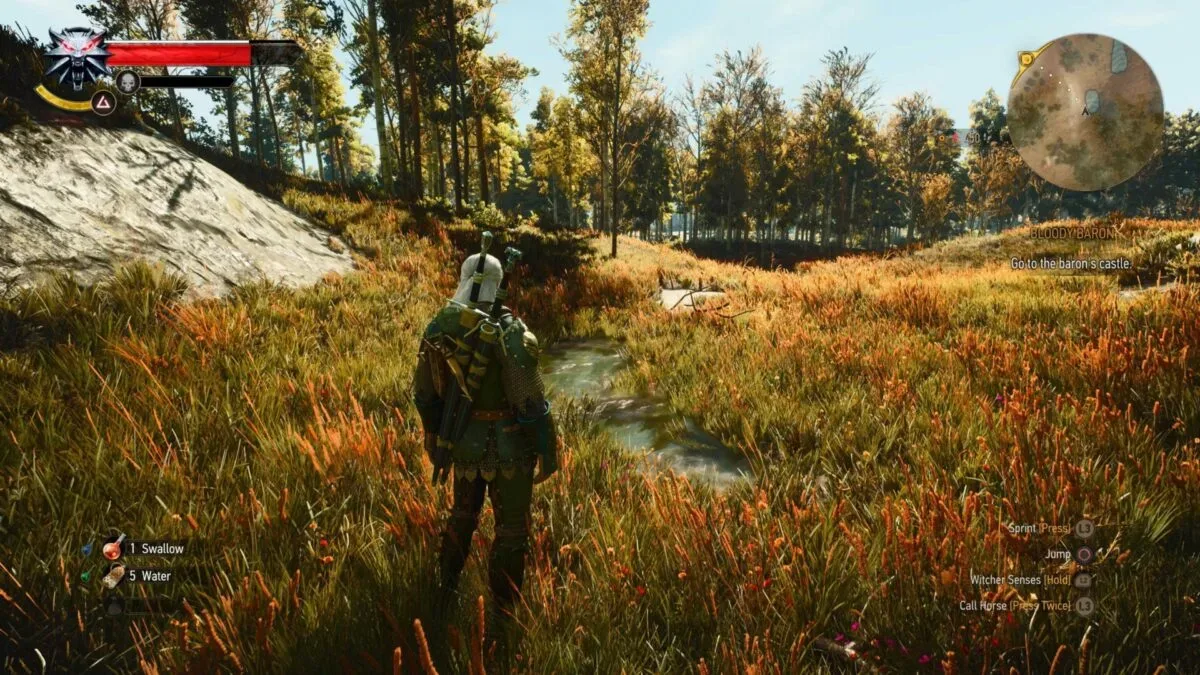
Some players have gone as far as saying the mood feels less threatening or less mysterious than in earlier versions. Others see that criticism as overlooking the many situations where the remaster's richer geometry, vegetation, and improved illumination create a more convincing world. Fields and wilderness locations in Skellige, in particular, have been highlighted as examples of the new version looking striking from a pure fidelity standpoint.
Path tracing and contrast are at the heart of the discussion
Much of the current conversation has centered on path tracing and the broader lighting pipeline. Path tracing can produce more sophisticated behavior for light, reflections, and indirect illumination, helping scenes react in ways that more closely resemble real-world lighting. Yet realism can change artistic intent. A game built around selective darkness and strong visual contrast may take on a different character when more of its spaces are visibly illuminated.
Players comparing the two versions have pointed to scenes where the prior presentation appears bolder despite containing less fine detail. In those comparisons, the original image can pull attention toward a sunlit building, a torch, or the outline of a character because the darker areas around those elements are more pronounced. The remaster may reveal more of the scene as a whole, but that can also make the eye-catching focal points feel less intense.
There are also claims that the revised color grading has weakened highlights and lowered overall contrast. In response, some players believe the remaster compensates with stronger bloom, which can brighten an image while also reducing the crispness of its most dramatic elements. These are the kinds of differences that may not be universally visible in every location, but they can be noticeable to fans who have spent years revisiting Geralt's journey and know its environments by heart.
Not every criticism is directed at path tracing alone. Some players say they have encountered inconsistent lighting even with ray tracing turned off. Others have raised concerns about the state of Nvidia HairWorks, ray-traced effects, and the remaster's tone-mapping choices. These complaints do not mean every scene is affected in the same way, nor do they establish a single issue shared by all configurations. They do, however, show why a broad label such as "better graphics" fails to capture what players are reacting to.
Hardware, HDR, and settings can change the result
Another complication is that The Witcher 3: Wild Hunt Remastered is not being viewed under identical conditions. Display capabilities, HDR support, graphics settings, and platform-specific options can all affect how the updated visuals appear. A high-end PC paired with a capable HDR display may showcase the remaster's lighting in a way that looks excellent. The same effects may translate less favorably on a screen without HDR support or with different calibration.
PC users also have more room to experiment. They can adjust settings, compare ray-traced and rasterized lighting, modify bloom-related choices where available, and potentially find a balance that better matches their taste. On PlayStation 5, the available settings are more limited, which can leave players with less control over the final image. That difference matters when the debate is centered on personal preference rather than an easily measured performance figure.
Captured screenshots and compressed clips add another layer of uncertainty. Social-media posts and short comparison videos can make small color and exposure differences appear more severe, especially after compression. A still image also cannot fully communicate how lighting feels while moving through a space, changing the camera angle, entering an interior, or watching the weather shift. The remaster's visual strengths may be more apparent during regular play than in an isolated screenshot, while some of its tonal differences may be more jarring when two versions are placed side by side.
This does not invalidate comparison images. They are useful for showing altered lighting, higher-detail assets, and different color balance. But they are only one part of the experience. A player might choose the older version in a direct image comparison and still find the remaster compelling in motion because of its environmental density, updated shaders, and overall sense of immersion.
Why visual upgrades can be controversial
The response to the remaster reflects a recurring problem faced by developers updating beloved games. Fans often ask for higher-resolution textures, better draw distances, more complex lighting, and contemporary rendering features. At the same time, they want the game to preserve the exact atmosphere they remember. Those goals can align, but they can also compete.
Older visual techniques are sometimes inseparable from a game's personality. Heavy shadows, selective lighting, darker color palettes, and stylized post-processing may have been technical compromises when a game first launched, but they can become essential parts of its artistic legacy. Replacing them with more physically based lighting can make the game more realistic while making it feel less like the version players formed an attachment to.
That is why the strongest reactions are not necessarily a rejection of modern graphics. Many of the players expressing disappointment acknowledge that the remaster contains substantial improvements to shaders, gameplay systems, and environmental detail. Their concern is that some of those improvements have not been matched by equally careful preservation of the original visual direction.
Conversely, players praising the remaster are not wrong to value its new fidelity. In certain outdoor scenes, especially those with dense foliage, water, or expansive natural vistas, the overhaul can create a more elaborate and convincing image. The difference is that one audience is judging the release through the lens of technological progress, while the other is judging it through the lens of tone and art direction.
PC players still have an older option
For PC players who strongly prefer an earlier iteration, there is at least a straightforward fallback. Steam users can access previous versions of the game through their library rather than remaining on the latest overhaul. That option will be welcome for anyone who wants to retain the older lighting and color balance, whether for nostalgia, performance reasons, mod compatibility, or simple visual preference.
The larger question is whether CD Projekt Red will make further adjustments after the launch response. Some players would like to see additional refinement to lighting, tone mapping, bloom, or other presentation elements. Others may be satisfied if the studio leaves the remaster as it is and allows the settings menu to provide enough flexibility on PC. At this stage, it remains unclear whether any further visual tuning is planned.
For now, the reaction to The Witcher 3: Wild Hunt Remastered is best understood as a split rather than a consensus. Its most impressive moments show why modern rendering tools remain appealing, but its most debated scenes show that graphical fidelity alone does not settle the question of what looks best. For many fans, the ideal version of Geralt's world is not merely the one with the most detail. It is the one that still feels appropriately dangerous, mysterious, and drenched in dark-fantasy atmosphere.
Community
Discussion
Start the conversation.
No comments have been posted yet.