

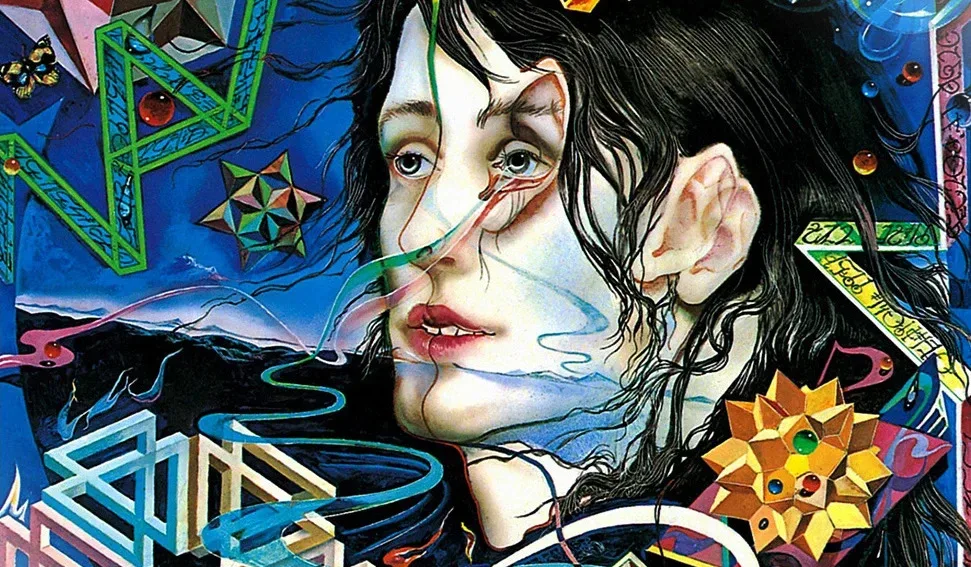
Veteran musician and producer Todd Rundgren has offered a provocative explanation for why many of the world's largest pop stars are women: video games. In a recent career-spanning interview, Rundgren argued that boys in the 1990s began directing money that might once have gone toward records into gaming instead, reshaping the commercial music audience and leaving male rock acts with less cultural and chart power.
Rundgren's remarks connect several enormous shifts in entertainment culture--gaming's mainstream expansion, the changing economics of the music business, the fall of rock's dominance on popular radio, and the rise of female-led pop--but his conclusion has drawn attention precisely because it reduces a complicated set of changes to one particularly familiar target.
"The biggest artists in the world are female artists at this point, and that's because of video games," Rundgren said. "Back in the '90s, boys stopped spending money on music and started spending it on video games."
That assessment also came with a blunt criticism of Taylor Swift. Rundgren said she "doesn't do anything particularly great except grow hair," a dismissal that has inevitably put his wider argument into the middle of an already exhausting debate over pop fandom, gender, rock nostalgia, and the role games play in contemporary culture.
For useful background on this topic, read Minecraft's Sift Has Fans Debating Its Bright New Direction.
A major figure looking back at a changing music business
Rundgren's perspective carries decades of experience in music. He has released his own cult-favorite work since beginning his recording career in 1970, while also building an extensive résumé as a producer. His production credits include albums by XTC, Patti Smith, Hall and Oates, Sparks, the New York Dolls, Bad Religion, and Meat Loaf. The latter connection is especially notable: Meat Loaf's Bat Out of Hell, produced by Rundgren, remains among the best-selling albums ever released.
That history means Rundgren is not simply a musician hostile to successful pop performers as a category. He has worked across styles and eras, and he has spoken positively about Lady Gaga. Yet his new comments clearly frame the current pop landscape as a decline from an earlier period when male rock musicians had a more central role in mainstream radio and record sales.
The 1990s offer plenty of material for that kind of nostalgia. The decade opened with highly visible alternative and industrial-adjacent acts such as Nirvana, Pearl Jam, and Nine Inch Nails, artists whose success made guitars, distortion, and darker aesthetics a major commercial force. By the late 1990s, however, the biggest mainstream acts increasingly included teen pop groups and solo artists, including *NSYNC and the Spice Girls. The transition was not clean or universal, but it did make the pop charts feel very different from the early grunge era.
Rundgren sees games as a decisive part of that shift. In his telling, gaming competed with music for boys' disposable income and attention, which reduced the market for male artists and changed which performers could become the industry's biggest stars.
Gaming did become an enormous 1990s entertainment force
There is no question that video games grew dramatically throughout the 1990s. Console gaming became a bigger part of household entertainment, PC games reached broader audiences, and blockbuster releases increasingly commanded the kind of schoolyard attention once associated with hit singles and MTV premieres. Hardware, cartridges, discs, magazines, accessories, and arcade visits all gave young players new places to spend their money.
Games were also commonly marketed toward boys during much of that period. Advertising often leaned heavily on masculine stereotypes, whether it was extreme sports attitude, combat imagery, competitive sports, or the assumption that a teenage boy was the default player. That marketing history makes it understandable why someone looking back on the decade might remember gaming as a male-coded pastime that competed with guitars, CDs, and band fandom.
But marketing is not the same thing as the full audience. Even in the 1990s, players were never exclusively boys, and the idea that games belonged naturally to one gender began to break down more visibly as the medium expanded. Pokémon became a colossal cross-generational phenomenon, while The Sims became one of the defining PC successes of its era. Both demonstrated the commercial limits of treating the game audience as a narrow demographic.
Those changes mattered because they challenged the premise behind Rundgren's nostalgia. If games were taking attention away from music, they were also bringing a broader range of people into interactive entertainment--not simply pulling boys away from an assumed path toward buying rock records or learning guitar.
The theory leaves out the rest of the media landscape
Attributing the changing pop hierarchy to games alone overlooks how drastically music consumption itself transformed. The 1990s and the decades that followed brought shifts in radio programming, the rise and fragmentation of cable television, consolidation in the record business, changing retail habits, digital distribution, downloading, streaming, social platforms, and algorithm-driven discovery. Each development affected which artists listeners encountered and how artists could turn attention into a sustainable career.
Rock also did not disappear. Its position in the center of mass-market pop changed, but rock scenes continued to produce major artists, touring acts, influential independent labels, and devoted audiences. What diminished was the old expectation that guitar-driven bands would automatically dominate Top 40 radio and the year's most visible commercial spaces. That is a meaningful distinction. A genre can remain creatively active and financially viable without holding the exact cultural position it occupied at an earlier moment.
Likewise, the success of female pop artists does not necessarily require an explanation rooted in the alleged failure of male consumers to purchase music. Women artists have always been fundamental to popular music, though industry gatekeeping, media coverage, radio formats, and promotional systems have affected how that success was recognized. Today's global stars operate in a marketplace where fandom is organized across streaming, social media, live events, merchandise, and online communities, not only around the purchase of a physical album.
Swift is an obvious example of that modern scale. Whether or not one shares Rundgren's opinion of her music, her commercial reach and intensely organized audience cannot be explained by the absence of male rock bands. They reflect songwriting, branding, touring, fan engagement, and an entertainment ecosystem that has changed substantially since Rundgren's own early career.
Pop stars and games increasingly overlap
Rundgren's framing also runs against one of the clearest trends in current culture: major music artists and video games are not separate worlds competing for the same audience in the simple way he describes. Contemporary pop stars regularly discuss their gaming interests, engage with gaming communities, and participate in a broader entertainment environment where music, livestreaming, competitive play, fashion, and social media all overlap.
Lady Gaga, an artist Rundgren has praised, is among the prominent performers who has openly talked about gaming. That alone complicates the idea that games inherently undermine music culture or prevent artists from building major audiences. For many fans, games are another space where musical discovery, social connection, and personal identity happen. Soundtracks introduce players to artists; rhythm games make songs interactive; licensed tracks shape the atmosphere of sports, racing, and action games; and online communities circulate musical tastes alongside game clips and discussion.
There is also a long history of musicians engaging directly with games. The relationship predates today's virtual concerts and in-game collaborations, extending through licensed tie-in appearances, soundtrack work, and games built around musical performance. The late Steve Albini, another famously outspoken figure in rock, even appeared in a video game. The point is not that every musician needs to embrace gaming, but that the worlds have never been as mutually exclusive as Rundgren's argument suggests.
Why the comments have become a flashpoint
Rundgren's comments land at a moment when gaming remains a frequent cultural scapegoat. Arguments about games can quickly become arguments about attention spans, masculinity, isolation, consumer habits, or the supposed decline of another art form. These debates often treat players as a monolithic group and overlook the extraordinary variety of people who play games and the equally varied ways games fit into their lives.
The gender element makes this case especially charged. The claim that female artists rose because boys were distracted by controllers implies that music's success hierarchy should naturally have remained male-dominated absent gaming. It also positions women's pop success as an accidental byproduct of men going elsewhere rather than the work of the artists, their collaborators, and the audiences who support them.
Gaming has certainly claimed time and money that might otherwise have gone to other hobbies. That has always been true of entertainment, whether the alternative is buying albums, going to the movies, reading books, playing sports, or watching television. But games did not single-handedly create the modern pop ecosystem, and female artists' success is not evidence that male musicians were somehow displaced by consoles.
Rundgren's criticism is therefore most revealing as a snapshot of generational frustration. He is responding to a world where the rules that once elevated rock acts have changed and where modern megastars can be built through forms of fandom that look very different from the album-and-radio system of previous decades. Video games are an easy symbol for that transformation. They are unlikely to be its complete explanation.
For players, musicians, and listeners alike, the more interesting story is not a battle between games and music. It is the growing entanglement of both mediums. Gaming did not end popular music, nor did it prevent rock from surviving. It became one of the defining cultural languages of its era--one that, like pop music itself, now reaches far beyond the narrow audience assumptions of the 1990s.
Community
Discussion
Start the conversation.
No comments have been posted yet.