

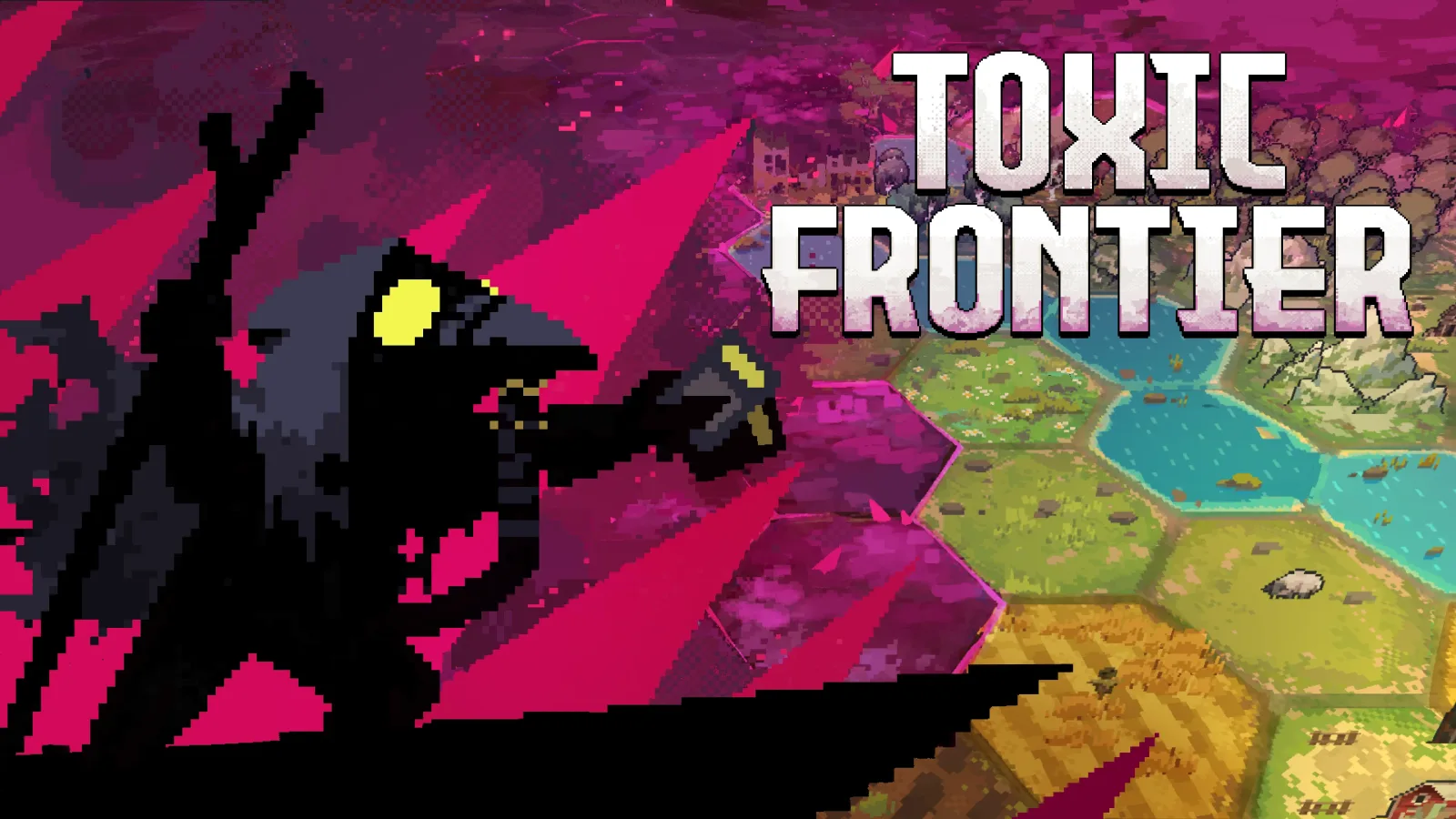
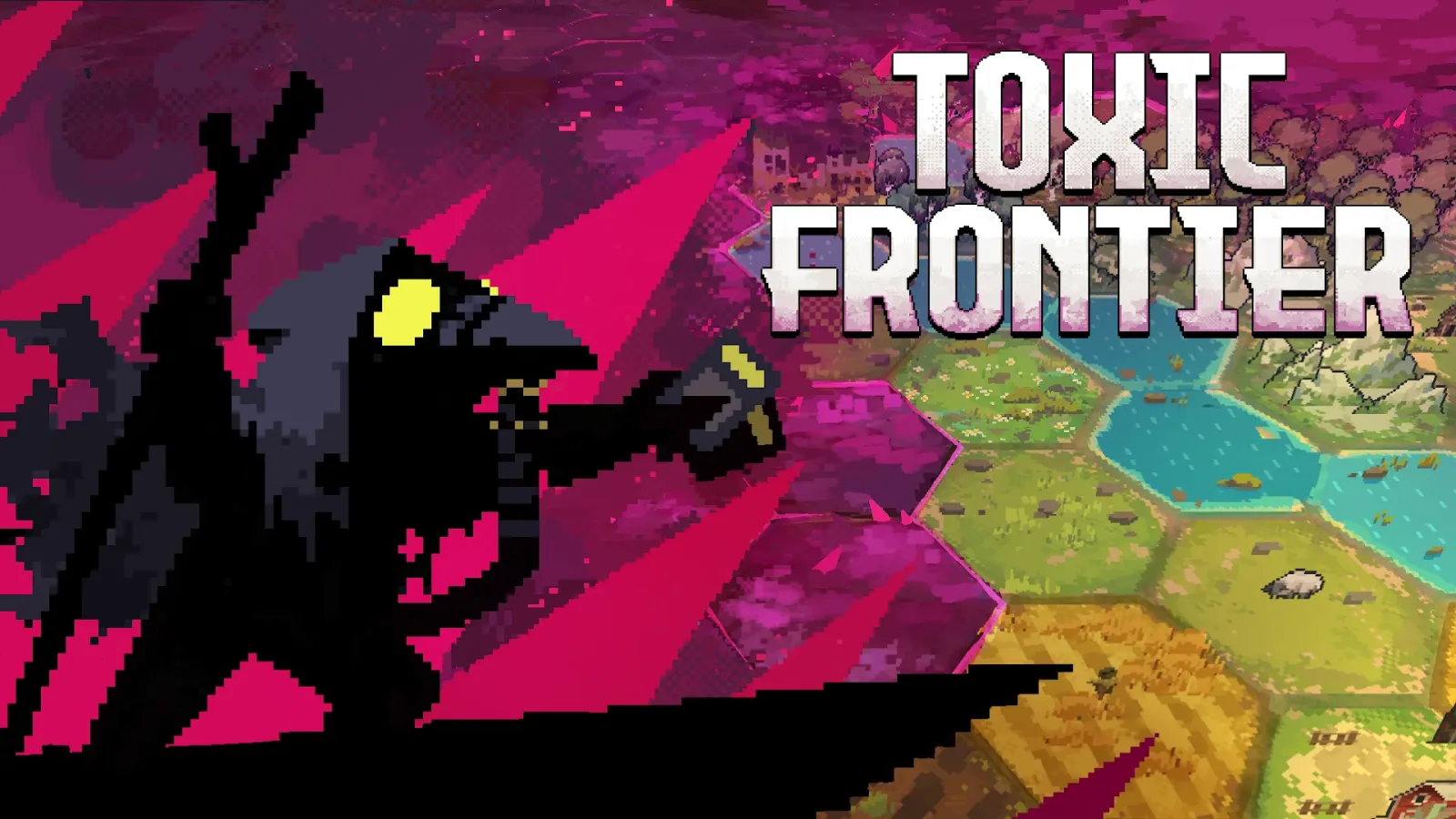
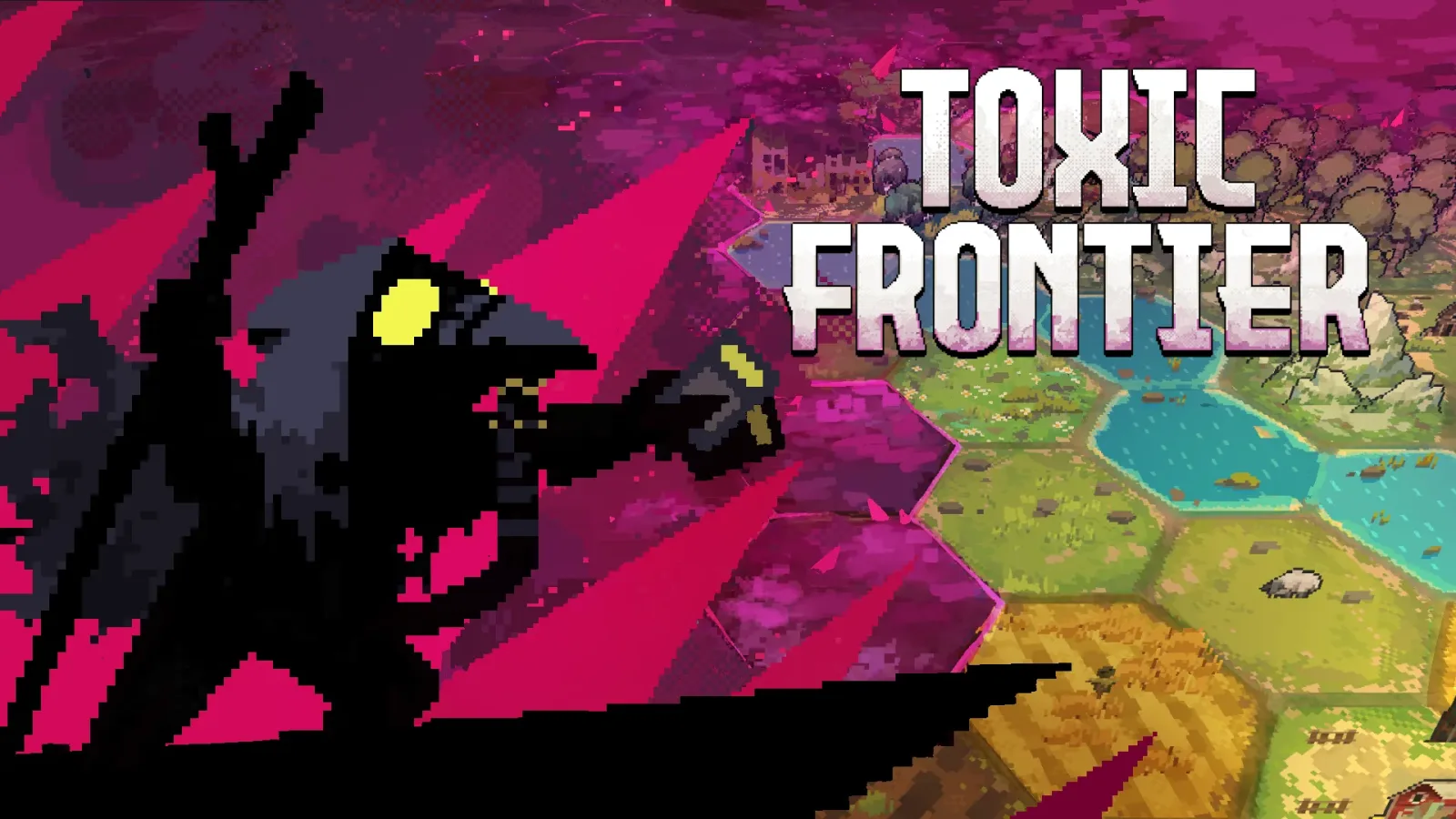
Toxic Frontier, a new card-based survival strategy game from Meteorbyte Studios and Mint Gate Games, has been unveiled during PC Gaming Show Tokyo Direct. Built around a traditional hexagonal grid, the game combines settlement-building decisions with roguelike card mechanics as players attempt to reclaim a dangerous post-nuclear landscape one tile at a time.
The newly announced project is headed to Steam, where it can now be wishlisted, and it will include full Steam Deck support. Its premise places players in a hostile frontier saturated with toxicity, requiring them to develop a community while purifying the terrain and managing the limited resources available during each run.
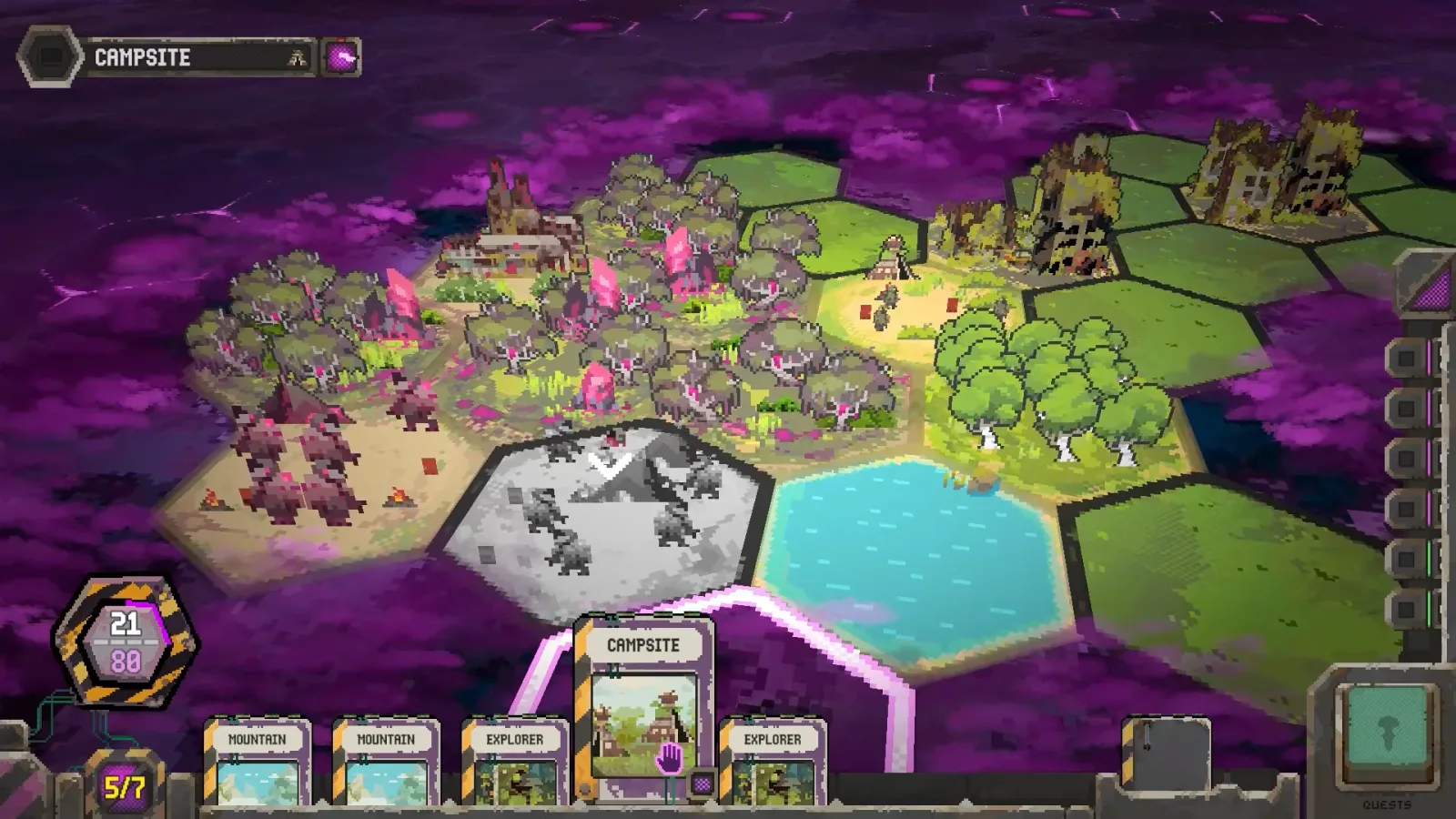
Rather than presenting city-building as a straightforward expansion exercise, Toxic Frontier frames every placement as part of a larger survival puzzle. A run begins with only a single tile. From there, players lay down cards, uncover new parts of the map, and try to establish productive relationships between the cards and the hexes surrounding them. The objective is not simply to occupy as much territory as possible: players must reach a required score on each level before their supply of cards is exhausted.
That condition gives the game's card-driven structure real weight. Placing a card can help purify the landscape and advance a settlement, but an inefficient move may leave too few options to meet the level's target. Runs can end if the player runs out of cards before achieving the needed score, making planning, adaptation, and careful use of available tools central to progress.
For useful background on this topic, read WANE Announced, Bringing Occult Tactical Roguelike Expeditions to PC.
A frontier built one hex at a time
Toxic Frontier uses a hex grid as the foundation for its world and its strategy. The format is familiar to players of tactical and 4X games, but here it is paired directly with a deckbuilding-style framework. Every newly placed tile has the potential to influence what comes next, and adjacency is a major factor in how the board develops.
Exploration can reveal additional tiles and cards, with those discoveries reacting not only to cards the player has already placed but also to nearby terrain. That means a card's value is not fixed in isolation. Its usefulness can depend on where it is deployed, what sits beside it, and which interactions have already been set up across the grid.
The developers describe these relationships as a source of synergies and combos. As a settlement spreads outward from its original tile, the growing layout should become increasingly important. A productive arrangement may create a sequence of effects that pushes a run toward its score requirement, while a poorly considered expansion can consume valuable space or cards without delivering enough return.
This design suggests that Toxic Frontier will ask players to balance immediate survival against future potential. The most tempting placement may not always be the most valuable over several turns, especially when later discoveries can react to the board in unexpected ways. Since exploration reveals further cards and tiles, each run can develop differently based on both the options found and the layout built around them.
Purification, survival, and a difficult moral direction
The toxic environment is more than a visual backdrop. Purifying the landscape is a key part of Toxic Frontier's progression, tying the act of placing cards to the effort to make the frontier livable for a growing community. The game's lurid post-nuclear pixel art establishes an intentionally harsh setting, one where the land itself is an obstacle that must be understood and transformed.
Players will guide their community through three distinct biomes. Each biome is set to introduce its own quests, mechanics, and environmental dangers, ensuring that the challenge does not remain static as a run moves into new territory. The announcement does not detail the individual biomes or hazards, but the structure indicates that players will need to account for changing conditions rather than relying on one board-building approach throughout the entire game.
There is also a narrative dimension to the survival strategy. Toxic Frontier presents a choice between trying to build a haven and choosing to exploit the frontier. That decision leads to two different story endings, giving the game's central tension a broader consequence beyond simply posting a high score or surviving another map.
The distinction is an appropriate fit for a setting centered on scarce resources and poisoned ground. Building a safe place for a community can demand restraint and long-term planning, while exploitation may offer another path through the game's systems. Exactly how those choices are represented in play has not yet been outlined, but the presence of separate endings indicates that the game will connect player direction to its narrative outcome.
More than 40 cards to collect and unlock
Toxic Frontier will feature more than 40 unique cards to unlock and collect. This collection is the heart of the game's replayable strategic layer: cards are used to shape the frontier, affect tiles, and create the combinations needed to clear levels. Because runs begin from a lone hex and evolve through placement and exploration, the available card pool should have a substantial effect on how players approach a given attempt.
The game's roguelike elements are also reflected in the threat of a run ending when cards run dry. This creates an appealing contrast between expansion and conservation. Exploring may open up powerful new interactions, but players still need to make each card count. Meeting the score target is therefore not merely a matter of finding useful items; it is also about converting a limited hand into a functioning, high-value settlement layout.
As players advance, tile synergies are expected to become more complex. That progression could make the early game a relatively direct lesson in placement while later stages require more layered planning around terrain, neighboring cards, and biome-specific complications. The stated focus on emergent interactions is particularly notable, as it points to a system designed to create results from the board's evolving state instead of relying only on pre-scripted solutions.
For strategy players, that approach can make repeated attempts compelling. A familiar card may take on a different role depending on the tiles surrounding it, while a newly uncovered option could completely change the best route through a level. The challenge is likely to come from recognizing those opportunities before the deck is depleted.
Four modes and Steam Deck support
Beyond its main journey across the toxic frontier, the game is planned to offer four game modes. Specific details on how those modes differ have not been announced, though their inclusion alongside two possible story endings suggests that Toxic Frontier is being designed with replayability in mind. Different modes may provide additional ways to test knowledge of the game's card and tile systems after players have become familiar with its core campaign structure.
Full Steam Deck support has also been confirmed. That is a natural match for a game centered on card placement, tile evaluation, and run-based progression, all systems that can lend themselves well to shorter or portable sessions. Steam will be the announced platform for release, with no release date provided at this time.
The reveal positions Toxic Frontier as a distinctive blend of several strategy traditions: the spatial thinking of hex-based builders, the uncertainty and resource pressure of roguelikes, and the combinatorial potential of card games. Its post-nuclear setting gives those systems a clear purpose, turning each board into a struggle to create a viable community from contaminated ground.
With three biomes, more than 40 cards, increasingly intricate interactions, four game modes, and a branching narrative conclusion, the game is aiming to offer more than a simple score chase. The key question will be how successfully it turns its many interconnected systems into satisfying choices from one tile placement to the next. For now, players interested in a pixel-art survival strategy game where every card can reshape the board can add Toxic Frontier to their Steam wishlists.

Community
Discussion
Start the conversation.
No comments have been posted yet.