

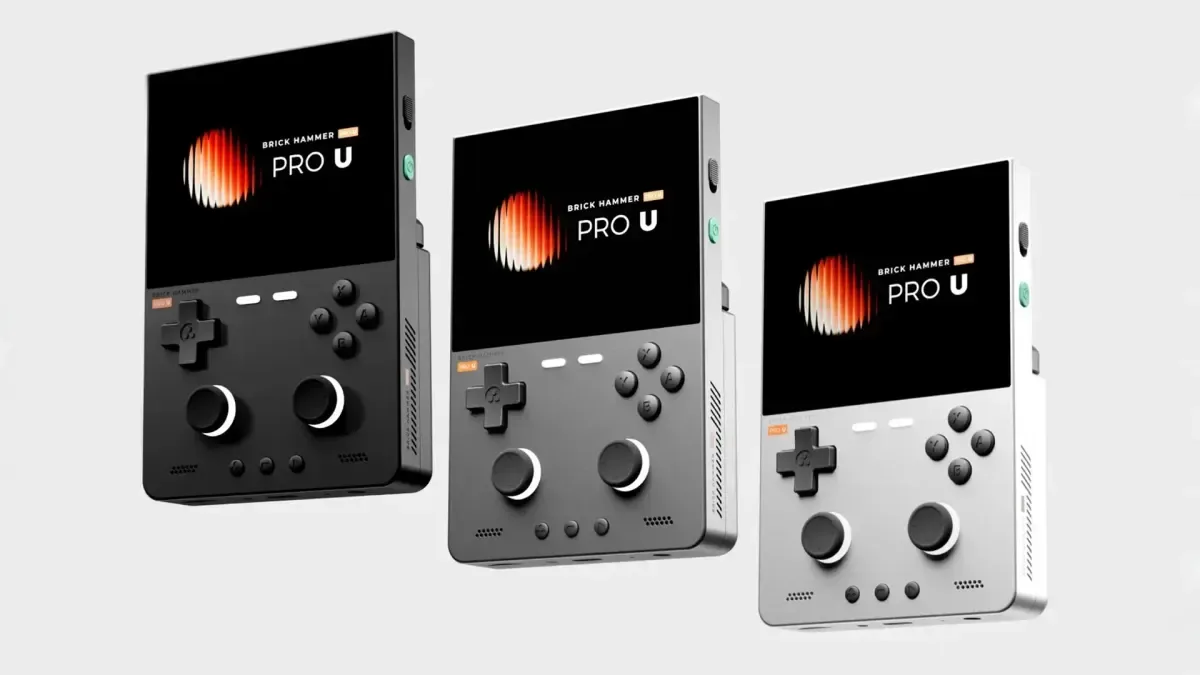
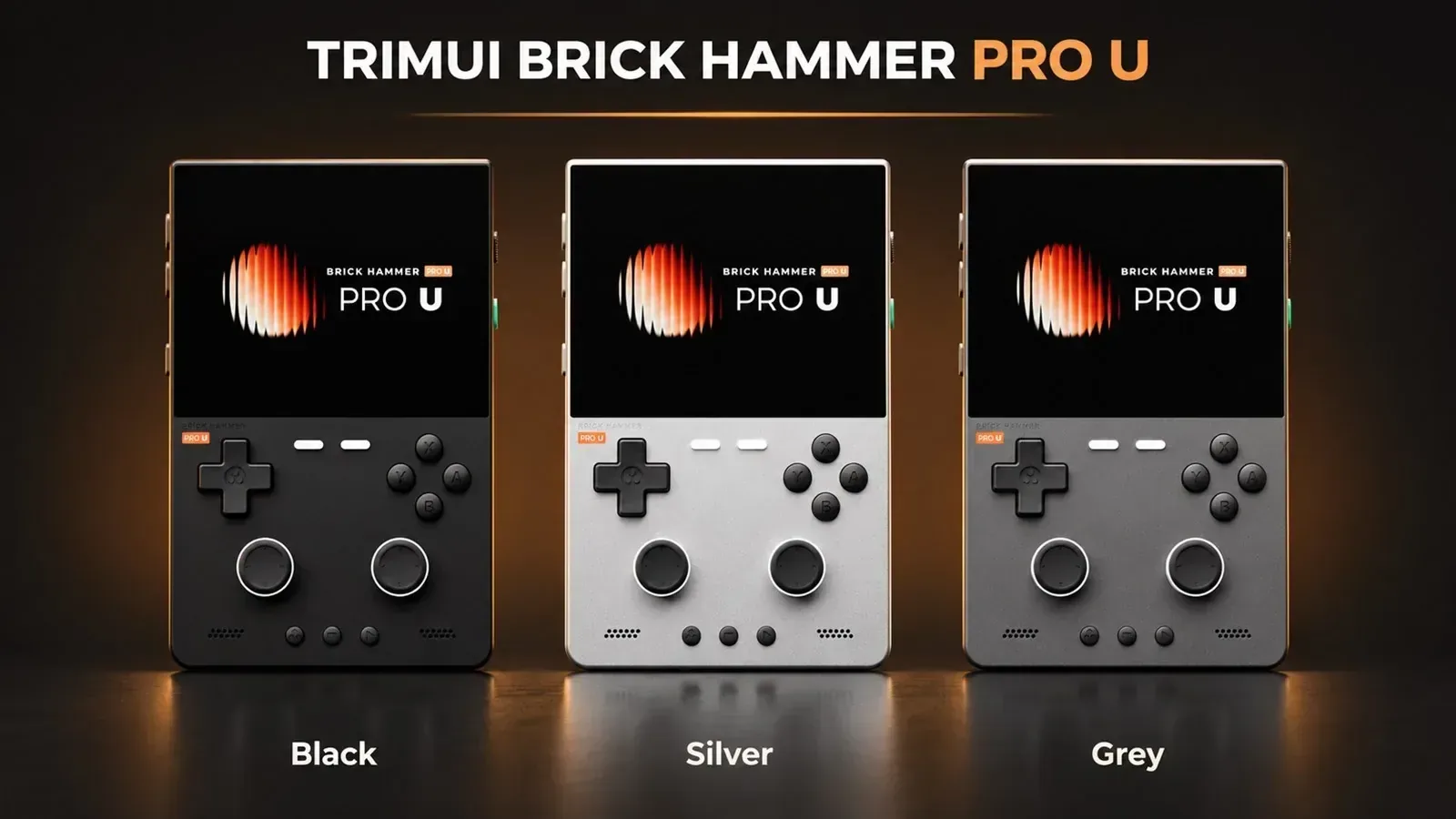
TRIMUI's long-teased premium handheld is now available to buy, bringing a considerably more ambitious specification to the company's compact retro-gaming lineup. Referred to as the TRIMUI Brick Pro Hammer U in the published specifications, the device is positioned as a larger, metal-bodied counterpart to the Brick Pro rather than a simple revision of the existing model.
The headline details are easy to see: a solid metal shell, dual analogue sticks, a 3.95-inch screen, Android 15, 6GB of RAM and Qualcomm Snapdragon G2 Gen 1 hardware. It is a meaningful step up from lower-cost Linux-based handhelds, both in design and in intended performance. That higher-end approach is reflected in its $249.95 price, as well as an initial production batch limited to 3,000 units.
For players who have watched TRIMUI gradually build a reputation in the enthusiast handheld space, this is one of the company's most substantial devices yet. The firm's smaller machines have generally been associated with portable retro gaming, straightforward front ends and approachable prices. The Hammer U aims for a different kind of appeal: a premium-feeling portable built for Android games and increasingly demanding emulation.
A premium version of the Brick concept
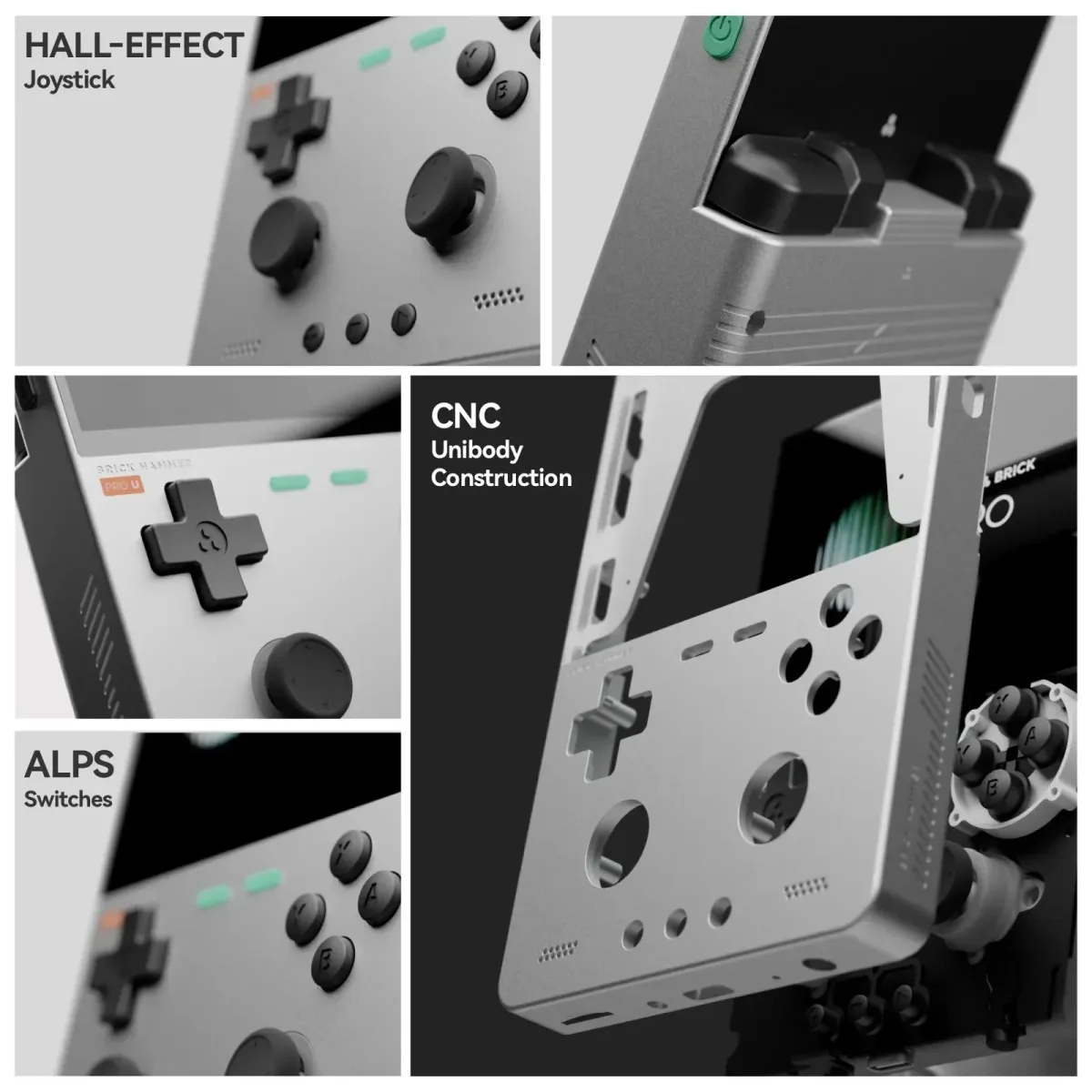
At a glance, the Hammer U keeps the vertical, brick-like identity associated with the Brick family, but expands it into a more feature-rich form. Its metal construction is central to that proposition. Many handheld buyers appreciate metal shells for their rigidity, weight and perceived durability, although those qualities can also make a portable system less forgiving in long play sessions than a lightweight plastic device.
For useful background on this topic, read 11 Gift Ideas for Grand Theft Auto 6 Fans This Holiday Season.
The inclusion of two joysticks is another major change. Dual-stick controls are essential for comfortably approaching systems and games designed around analogue movement and camera control. They also make the hardware more practical for a broad set of Android titles. On a device marketed partly around stronger emulation potential, that decision matters just as much as the processor specification.
The display measures 3.95 inches and uses an IPS panel with a 1024 x 768 resolution, 60Hz refresh rate and 324 pixels per inch. Its 4:3-shaped resolution is a natural fit for a large amount of classic game content, especially older home consoles, arcade releases and handheld systems. At the same time, Android software and games often assume widescreen displays, so the screen format will be one of the practical trade-offs prospective buyers should consider.
A high pixel density can help text, menus and pixel-art games look sharp, while the 1024 x 768 resolution provides more room than the lower-resolution screens common among budget retro handhelds. How well the panel performs in areas such as brightness, color calibration, motion handling and outdoor visibility remains something that will need hands-on testing.
Snapdragon G2 Gen 1 raises the performance target
The biggest technical departure is the move to Qualcomm's Snapdragon G2 Gen 1, identified in the device specification as SG6150. It is paired with an Adreno A21 GPU and 6GB of RAM. These components place the Hammer U well beyond the very low-cost segment, where Linux devices with modest chips are typically focused on older systems.
TRIMUI's published hardware list suggests the handheld is intended to stretch toward platforms such as Dreamcast, PSP, GameCube and selected PlayStation 2 games. That wording is important: expectations around emulation should remain measured until real-world testing establishes how the device behaves across different titles, settings and emulators.
Emulation is not a single benchmark. Performance can vary greatly based on the game, the emulator used, the graphics backend, resolution scaling, shader choices and individual configuration. A handheld may run one PlayStation 2 game smoothly while another requires compromises, has graphical problems or proves unsuitable. GameCube results can be similarly mixed. The potential is promising, but the eventual experience will depend on software support and optimization as much as raw silicon.
Still, the hardware selection gives the Hammer U a clear purpose. It is not merely a stylish machine for 8-bit and 16-bit libraries; it is designed to offer access to more technically demanding generations in a compact vertical body. Players who want a metal device with more capability than entry-level retro systems may find that combination especially appealing.
Android 15 changes the software conversation
Unlike TRIMUI's cheaper and smaller Linux-based handhelds, the Brick Pro Hammer U runs Android 15. That is arguably as significant as the CPU change. Android opens the door to native mobile games, streaming applications, a wider range of emulators and a flexible selection of launcher or frontend software.
It also creates a different setup experience. Linux handhelds can be attractive because their focused operating systems often make them feel console-like once configured. Android offers more freedom, but it may ask more from the owner. Installing applications, organizing game libraries, configuring individual emulators and choosing a frontend can all become part of the process.
That flexibility can be a strength for enthusiasts. The device should be able to support Android emulation frontends such as Socket and DigiBitPlay, offering alternatives for players who want a more curated presentation for their libraries. A clean interface can make a substantial difference on a premium handheld, particularly when it is being used across several systems and game types.
Android compatibility also means the Hammer U is not confined to emulation. Native Android games are part of its appeal, though actual compatibility will vary by title and by how each game handles physical controller input, screen aspect ratio and device-specific requirements. The dual-stick layout should be useful in many cases, but Android gaming remains less standardized than traditional dedicated consoles.
Storage, connectivity and battery details
TRIMUI lists 128GB of internal storage, providing a meaningful starting point for apps, save files and game libraries. Capacity needs will differ sharply depending on what users intend to play. Classic cartridge-era collections can occupy relatively little space, while disc-based libraries from later systems can consume storage quickly. Anyone considering larger collections will want to pay close attention to the final storage expansion options and file-management experience, neither of which is detailed in the published specification list.
Wireless features include Wi-Fi and Bluetooth 5.1. Those capabilities are useful for downloading software, transferring content where supported, connecting wireless headphones or controllers, and potentially using game-streaming services. As with the performance claims, the quality of the wireless experience will need to be assessed in everyday use.
The handheld has a 5,000mAh battery and a 3.5mm headphone jack. Battery capacity alone does not provide a reliable estimate of playtime because consumption changes with emulation workload, screen brightness, wireless use and Android background activity. More demanding GameCube or PlayStation 2 emulation is likely to place a very different burden on the system than older 2D platforms. The wired headphone port, however, remains a welcome inclusion for players who prefer low-latency audio without relying on Bluetooth.
A limited first batch at a premium price
The Brick Pro Hammer U is priced at $249.95, and the first batch consists of only 3,000 units. The limited initial availability may make it particularly appealing to collectors and longtime TRIMUI followers, but it also means interested buyers may need to make a decision before the broader picture is fully established through independent testing.
At this price level, build quality, controls, thermals, software polish and after-sales support will be just as important as the specification sheet. A metal shell and capable processor create a compelling foundation, yet portable hardware is ultimately judged by the details: whether the buttons and sticks feel precise, whether the device stays comfortable, whether Android behaves consistently, and whether demanding games perform as hoped.
TRIMUI's new handheld arrives with enough hardware ambition to stand apart from its less expensive siblings. Its combination of a 3.95-inch 4:3 IPS display, dual analogue controls, Snapdragon G2 Gen 1 platform and Android 15 could make it an attractive option for enthusiasts seeking a more upscale vertical retro machine. The remaining question is whether the real-world experience can match the premium promise. With the first 3,000 units now available, that answer should become clearer once the Hammer U reaches players' hands.
Community
Discussion
Start the conversation.
No comments have been posted yet.