

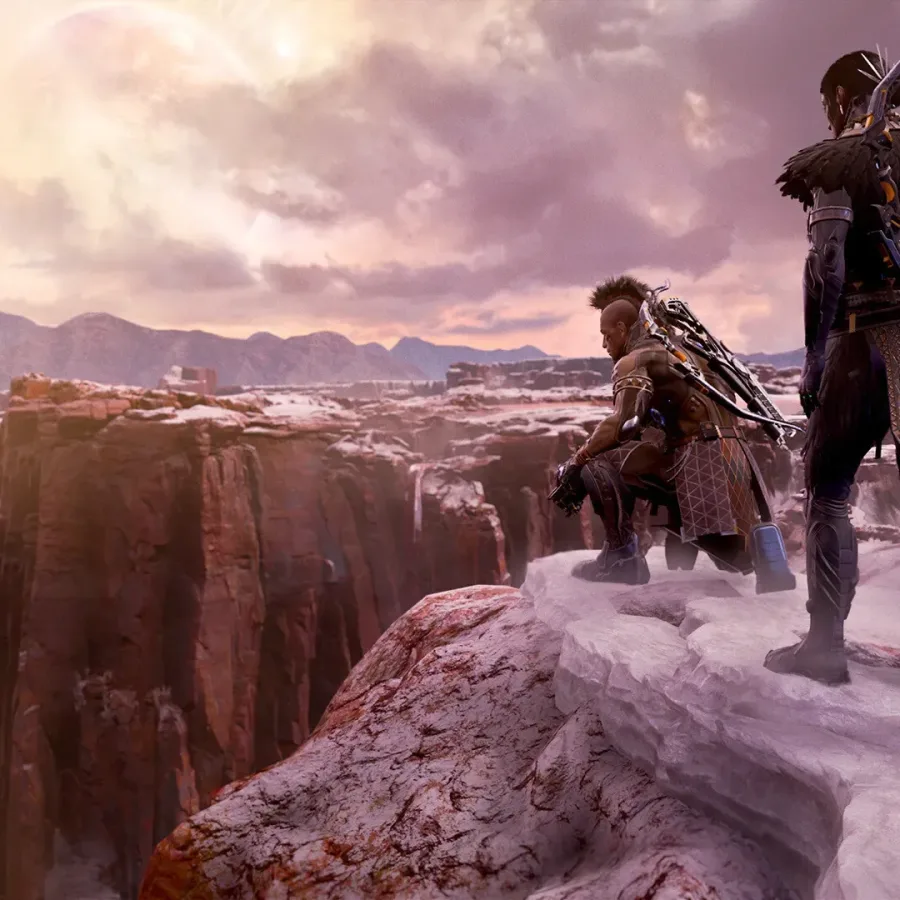
Turok: Origins faces a challenge that is both exciting and unavoidable for any long-dormant game series: how do you make a new entry feel meaningful to people who remember the original while ensuring that players with no connection to the name want to try it?
For many longtime players, Turok immediately brings back memories of the Nintendo 64 era. The series stood as a distinctive first-person shooter at a time when console FPS games were still finding their footing, offering dense environments, dangerous dinosaurs, science-fiction weaponry, and an identity far removed from the military shooters that would later dominate the genre. It was an alternative for players who wanted something stranger, bloodier, and more prehistoric.
But that recognition is not universal anymore. Saber Interactive development chief Tim Willits has acknowledged that even people in their early twenties may never have encountered Turok at all. With Turok: Origins, the studio's plan is not simply to rely on nostalgia. Instead, it is building a modern action game around features that can pull in a newer audience, especially the ability to play through the dinosaur-hunting campaign alone or alongside friends.
Co-op is central to the new Turok strategy
The most notable modern feature in Turok: Origins is its support for teams of up to three players. Saber believes this flexibility matters greatly to contemporary players, many of whom see games not solely as isolated entertainment but as a way to spend time and communicate with friends.
For useful background on this topic, read Sunken Realms Descends Onto Steam After Six Years of Development.
That does not mean solo fans are being pushed aside. The game is designed to be playable independently, with the option to add one or two other people to a group. The intention is to let players choose the experience that suits them: a more traditional solitary hunt through hostile territory, or a collaborative session where a squad can coordinate attacks and survive huge encounters together.
It is a sensible approach in a games landscape where social play has become a major factor in a title's staying power. Multiplayer shooters and battle royales have shown how powerful the appeal of shared moments can be. Players return not just to complete objectives or improve their skills, but to talk, improvise, laugh at mistakes, and create stories with a regular group.
That same demand has extended far beyond competitive shooters. Co-op action games, extraction games, survival sandboxes, and smaller viral PC releases all benefit when players have room to experiment together. A difficult mission becomes more approachable with a friend. A chaotic failure becomes entertaining rather than frustrating. And an intimidating boss can turn into the centerpiece of a memorable night with a full team.
For another perspective on this story, read Turok: Origins Is Betting on Three-Player Co-Op to Bring a N64 Icon to New Players.
Turok: Origins appears to be positioning itself within that broader appetite for co-op without abandoning its own identity. The premise remains fundamentally Turok: players are battling enormous and dangerous dinosaur-like enemies with advanced firearms and abilities. The addition of a three-person group changes the rhythm, though. Instead of merely testing individual reflexes, encounters can ask teams to divide responsibilities, cover one another, and find openings together.
Classic callbacks without making nostalgia a requirement
Saber is also aware that established Turok fans will be looking for recognizable details. Willits described the project as a balancing act between elements older players will appreciate and ideas intended to welcome people arriving for the first time.
One important callback is the Cerebral Bore, one of the franchise's most infamous weapons. Its inclusion signals that the team understands the appeal of Turok's more outrageous arsenal. The series was never just about ordinary rifles used against ordinary targets; it embraced bizarre and brutal science-fiction hardware. Bringing back a fan-favorite tool gives returning players a direct connection to what made earlier games stand apart.
There are other familiar touches as well, even as the new game does not appear to be a simple recreation of the Nintendo 64 formula. Players will be able to choose between first-person and third-person perspectives. That option is particularly revealing because it serves two different audiences at once. First-person play honors the perspective most closely associated with the classic games, while a third-person camera can make the action more readable for players accustomed to contemporary character-action shooters.
Offering both viewpoints also helps reinforce the broader design philosophy. Turok: Origins does not seem interested in telling players there is only one correct way to engage with the series. The goal is to provide enough familiar material for veterans to recognize the franchise while removing barriers that could make it difficult for an entirely new audience to join.
Giant bosses could provide the game's biggest moments
Saber is placing considerable emphasis on large-scale boss encounters. Willits has compared the feeling of these battles to the style associated with so-called boss-run games, where dramatic confrontations with major foes are a key attraction. The description suggests that Turok: Origins wants its dinosaurs and monsters to be more than routine targets scattered through a campaign.
That makes sense for a Turok revival. The series has always had an inherent advantage in spectacle: dinosaurs are immediately recognizable, but the franchise can escalate them through alien technology, size, weaponry, and mutant designs. A giant creature charging a three-player squad is a simple pitch that communicates danger instantly. It also creates a natural setting for cooperation, as one player draws attention while others attack weak points, revive teammates, or deploy special gear.
The bosses may be a crucial bridge between old and new audiences. Veteran players get the oversized creature combat that fits Turok's legacy, while newer players get the kind of high-impact co-op set pieces that are easy to share, stream, and discuss. Spectacle alone will not determine whether the game succeeds, but memorable enemies can give a new franchise entry a clear identity in a crowded action market.
Willits has also highlighted Echoes, collectibles or resources used to unlock Turok powers. Details on the full progression system remain limited, but the concept suggests that combat will not depend only on conventional weapons. Special powers could help distinguish individual playstyles and give co-op squads further ways to combine their capabilities.
Why the original legacy still matters
Even as it pursues younger players, Turok: Origins benefits from the strength of the name it carries. The original Turok: Dinosaur Hunter arrived during the Nintendo 64 generation and became a memorable part of the platform's shooter library. Its mix of exploration, powerful weapons, and prehistoric combat gave it a flavor that was very different from the era's spy thrillers and arcade racers.
Thirty years later, that history has value, but it cannot be the whole plan. Nostalgia can persuade an existing fan to pay attention to a reveal, yet a sustainable return requires an experience that works on its own terms. Players who did not grow up with cartridge shooters are unlikely to be won over by references alone. They need responsive action, attractive visuals, a strong progression loop, and a reason to invite friends.
Saber's approach recognizes this distinction. The Cerebral Bore and first-person option are not being treated as substitutes for modern design. They are pieces of a larger package that includes third-person play, team-based missions, powers unlocked through Echoes, and giant bosses designed to create event-like confrontations.
There is also a practical benefit to this approach. A player who knows Turok may begin with the classic callbacks, then discover a new co-op game worth sticking with. A player unfamiliar with the brand may arrive because a friend wants to form a team, then come away understanding why the franchise held such a special place for an earlier generation. Ideally, each group becomes an entry point for the other.
A spring 2027 release across current platforms
Turok: Origins is scheduled to launch in spring 2027 for PC, PlayStation 5, Xbox Series X|S, and Nintendo Switch 2. The multi-platform release gives Saber a broad potential audience, which is particularly important for a co-op-focused game. Friends need to be able to find one another on the platforms they already own, though cross-platform play has not been confirmed.
Many questions remain, including how the campaign will be structured, how Echoes and powers will function in depth, and whether the game's cooperative systems will support long-term replayability. Saber has not provided a final release date, pricing, or a complete breakdown of every mode and feature.
Still, the core direction is clear. Turok: Origins is not trying to survive solely on the memory of a Nintendo 64 classic. It is aiming to turn Turok into a current action series again by pairing the franchise's dinosaurs, oversized weapons, and bizarre sci-fi character with the social, flexible play styles that matter to a new generation. If Saber can make its boss fights as exciting as promised and give squads satisfying ways to work together, this revival may have a chance to introduce dinosaur hunting to players who missed it the first time around.
Community
Discussion
Start the conversation.
No comments have been posted yet.