

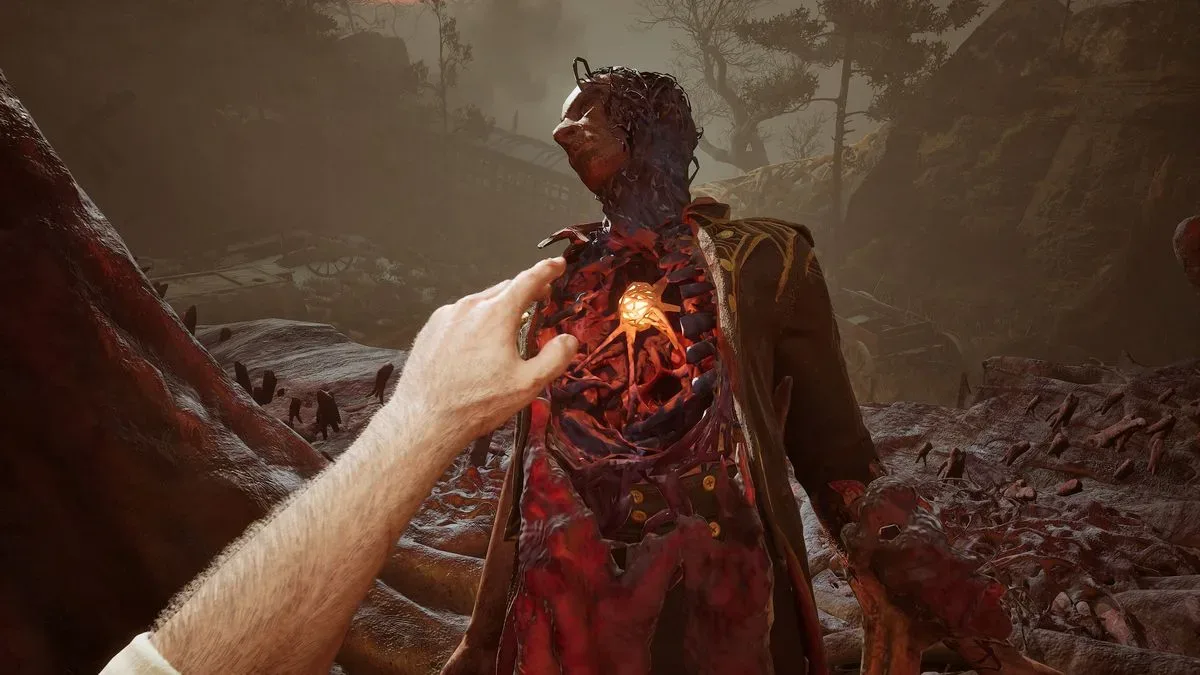
Valor Mortis arrives with an immediately compelling elevator pitch: a first-person Soulslike set in a plague-ravaged, supernatural version of Napoleonic Europe. That alone gives One More Level's action RPG an identity few genre peers can claim. You are not another armored wanderer crossing a medieval fantasy kingdom; you are William, a soldier who dies before the adventure has properly begun, rises again with no clear memory of his fate, and must fight through a Europe that has turned violently, grotesquely wrong.
There is plenty to like in that setup, as well as in Valor Mortis' moment-to-moment combat. Landing a succession of close-range parries through the game's first-person viewpoint can be intensely satisfying, and the world has a welcome streak of pulpy horror. Unfortunately, its strongest concepts sit beside a great many familiar Soulslike conventions, awkwardly restrictive abilities, and parkour sequences that can turn a tense adventure into an exasperating trial-and-error routine. It is a solid foundation with flashes of real personality, but it does not consistently build on those flashes.
A soldier brought back into a nightmare
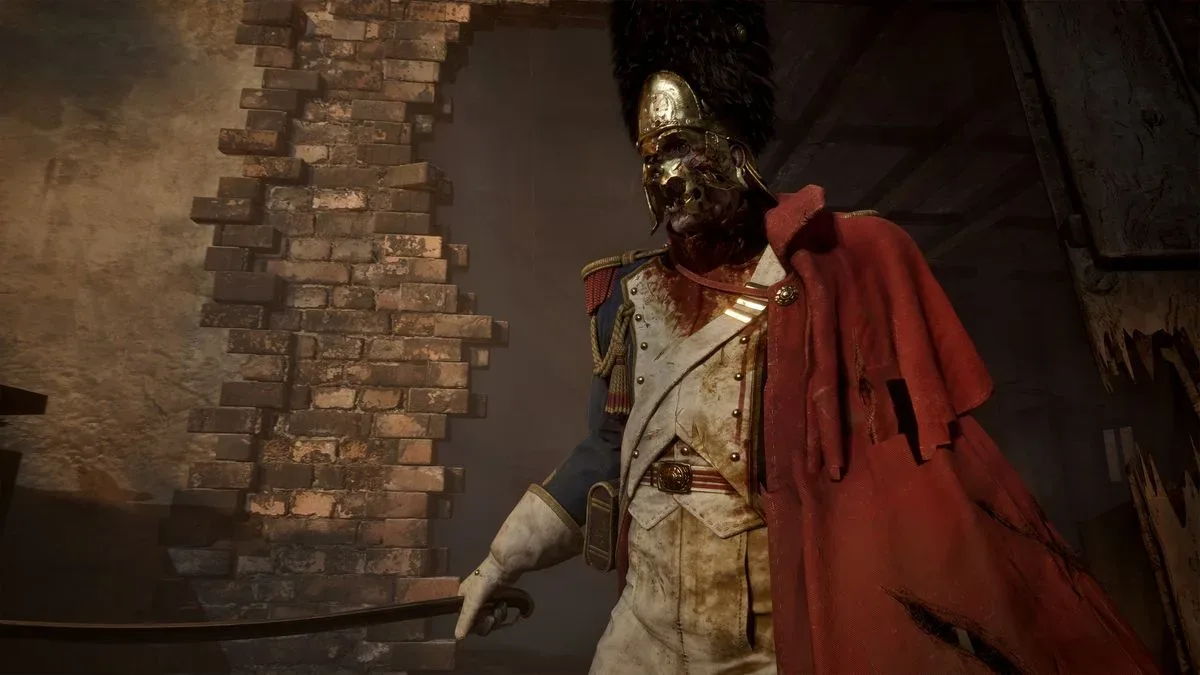
William begins as a loyal member of Napoleon Bonaparte's army, with a battlefield death establishing the game's bleak tone almost immediately. His return from the grave leaves him amnesiac and stranded in a twisted version of Europe where a terrible plague has transformed the populace into murderous threats. The premise gives Valor Mortis an appealingly macabre framework for its hostile villages, ruined routes and monstrous encounters.
Its basic progression will be very recognizable to anyone who has spent time with the genre. Defeated enemies leave behind currency used for character growth. Dying puts that currency at risk, giving the player one opportunity to recover it. Interconnected paths gradually open into shortcuts, while exploration is conducted without the comfort of a conventional map screen. The structure is functional and legible, but it rarely feels like the game is radically rethinking how a Soulslike can work.
For useful background on this topic, read Stupid Never Dies art video Breaks Down Its Neo Pop Punk Visual Identity.
That familiarity is not automatically a fault. A game can make old structures feel new through setting, encounter design, movement, or combat feel. Valor Mortis comes closest to doing so when it asks players to stand their ground and engage directly with an enemy's blade.
Parrying is the heart of the fight
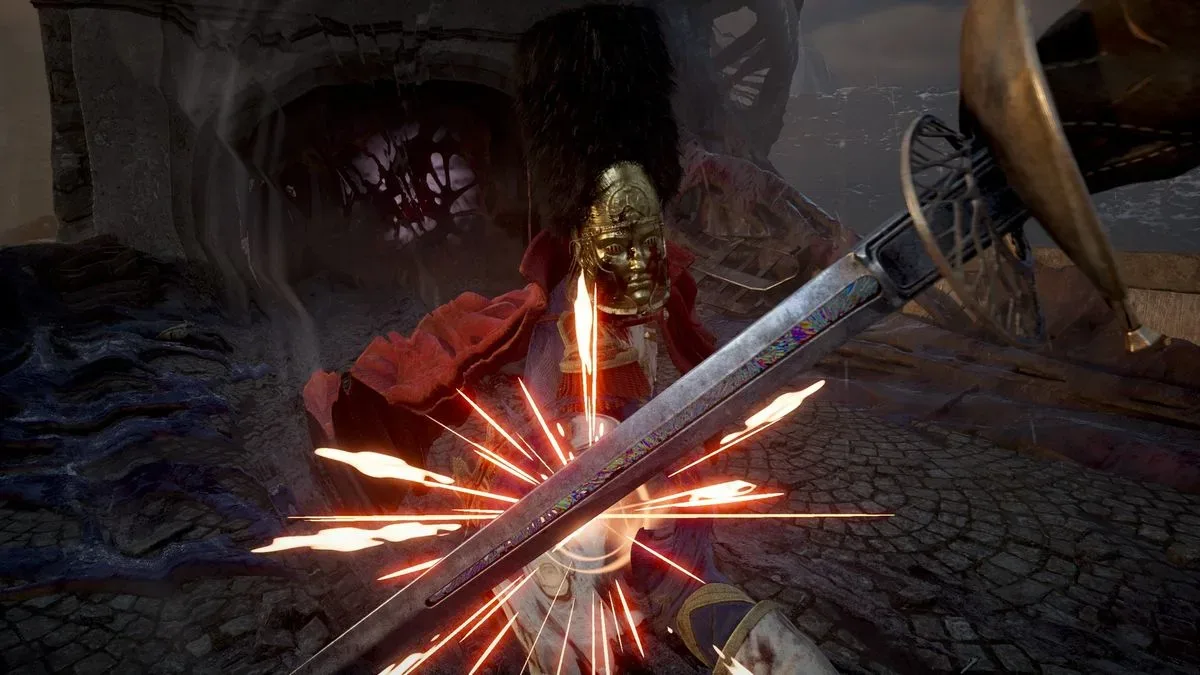
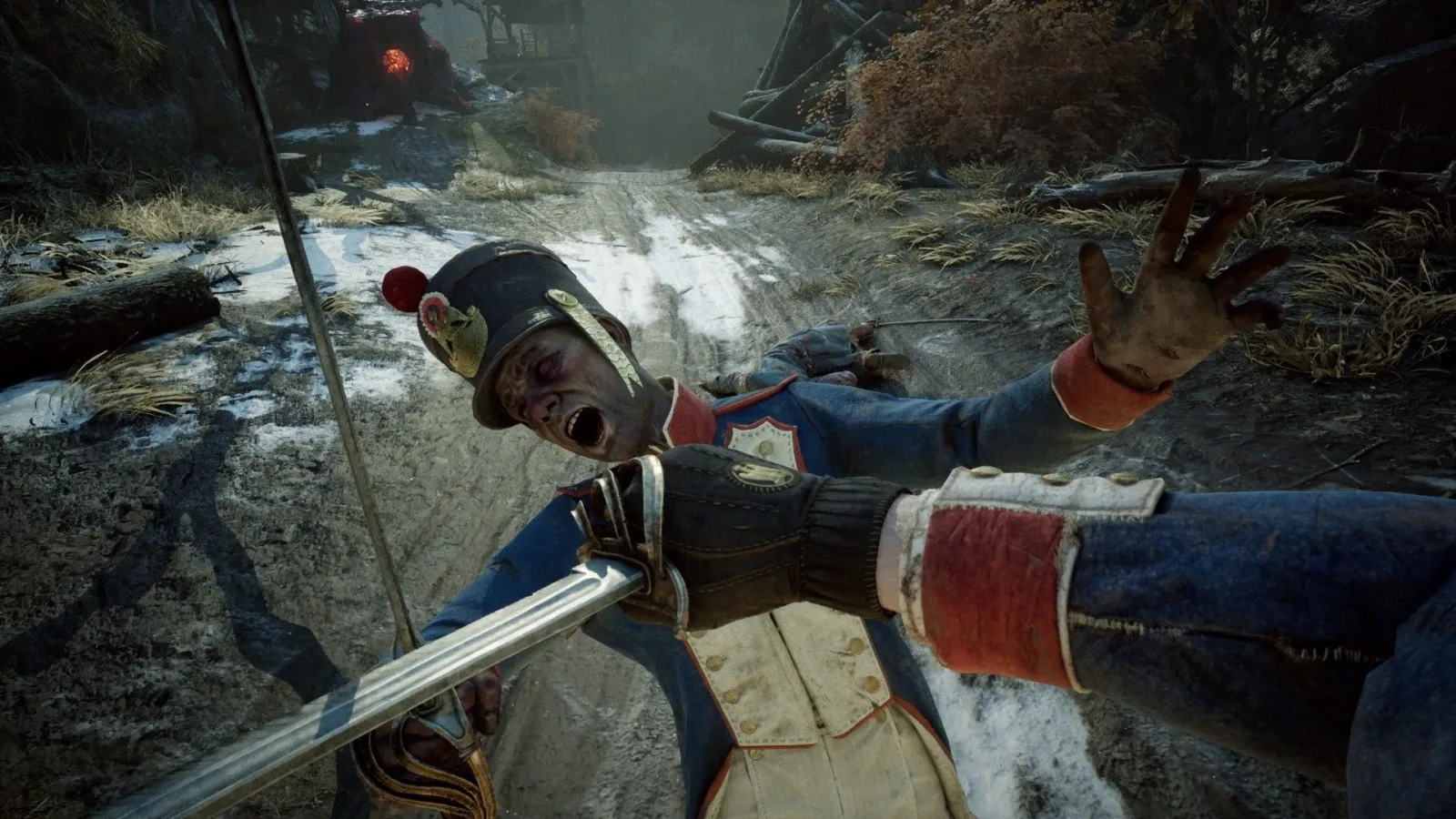
Valor Mortis is unapologetically built around timed defensive play. Even ordinary opponents often demand several correctly timed parries before their guard finally breaks, opening them to decisive retaliation. The game does not treat parrying as an optional flourish for advanced players; it is central to survival from the opening hours onward.
For players who enjoy reading attack rhythms and winning duels through precision, that focus can make combat feel immediate and physical. The first-person perspective adds a valuable sense of proximity. When an enemy weapon is rushing toward William's face, a successful deflection does not merely look stylish from a distance. It feels like a narrow escape. That viewpoint gives every clean exchange a more brutal intensity than many third-person equivalents can offer.
The strongest boss battles capitalize on this. At their best, they become nerve-racking contests in which a handful of small errors can end a run, but careful timing and composure slowly bring a demanding opponent under control. Valor Mortis understands the appeal of turning defense into offense: the joy is not only in avoiding damage, but in decisively interrupting an aggressor and claiming momentum.
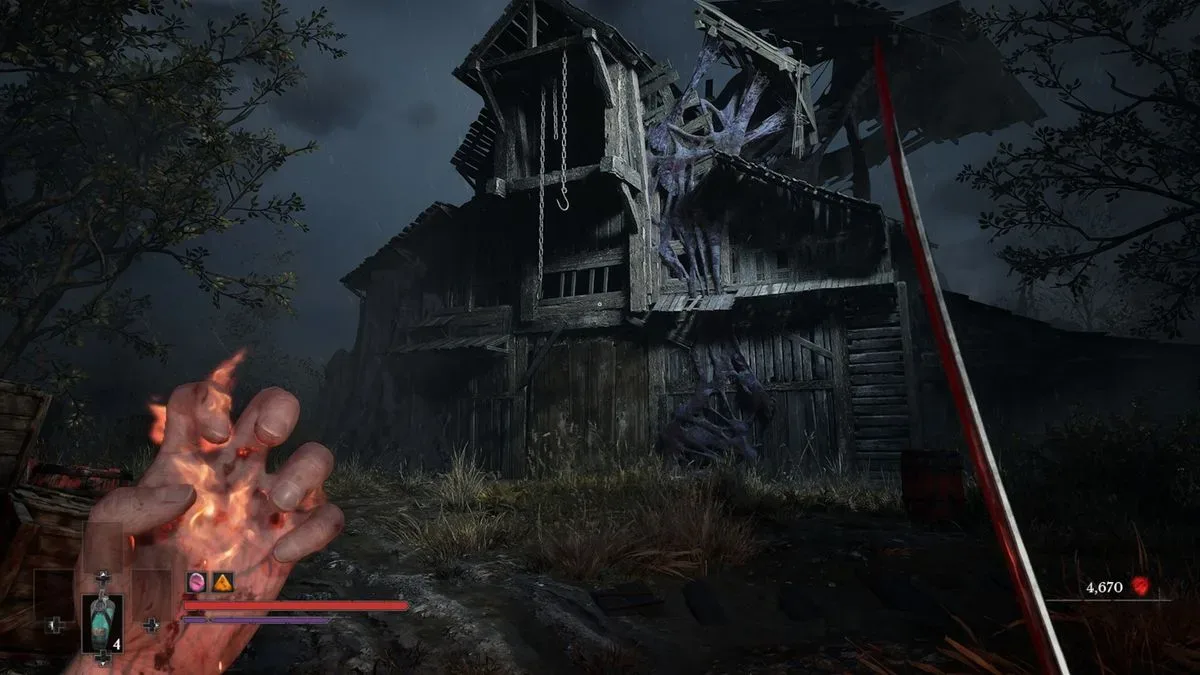
The power curve is less consistent than the combat's fundamentals. The opening boss is notably more troublesome than many later challenges, creating an early hurdle that may not accurately represent the game's wider difficulty. Some boss encounters also do not fully live up to the imagination suggested by their concepts. A fight against a sentient windmill is certainly an idea that sticks in the mind, though its execution can feel finicky rather than triumphant.
Guns and magic help broaden William's options
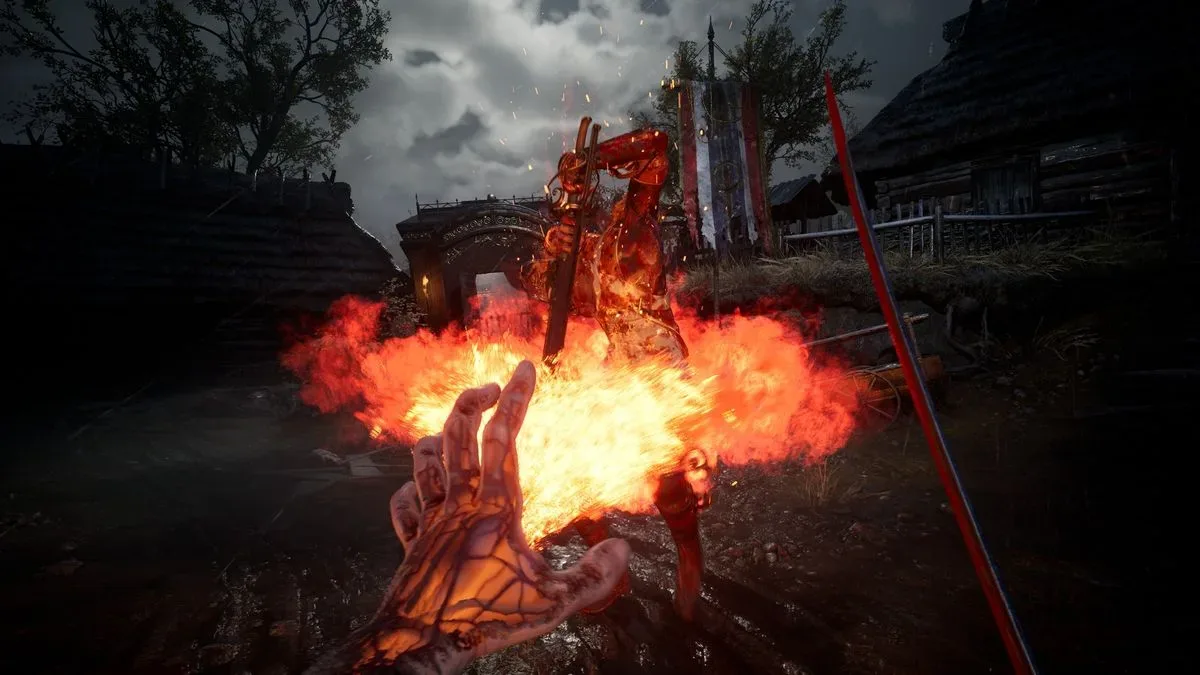
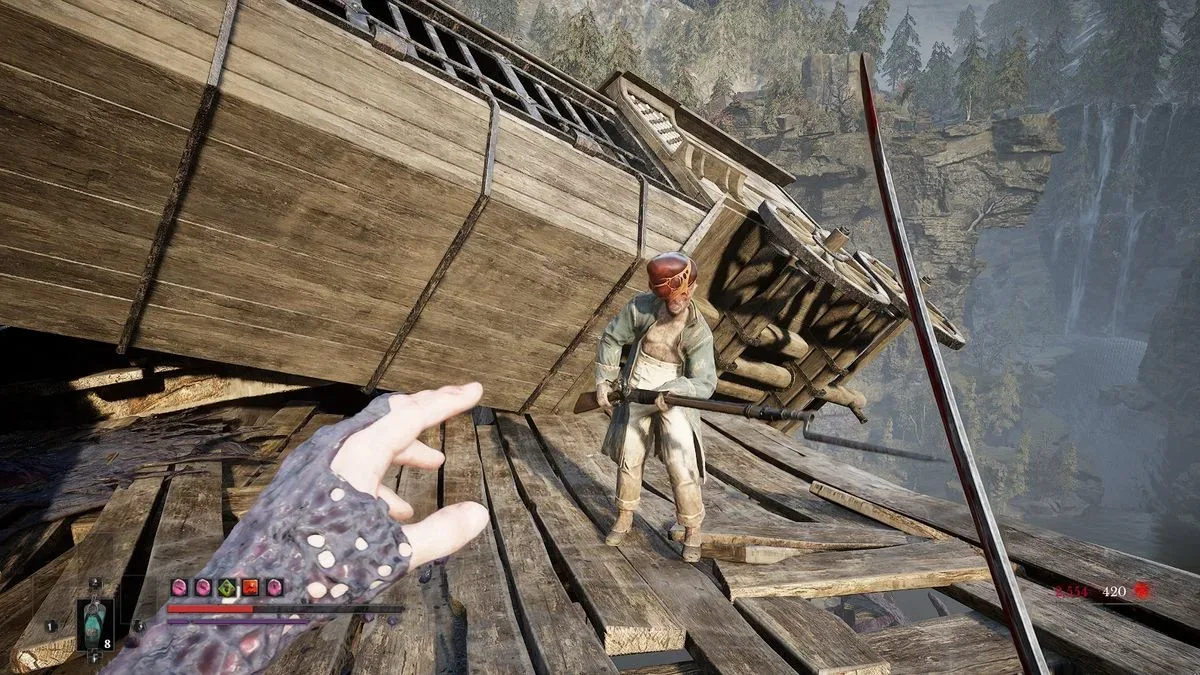
William is not restricted to a sword. He has firearms and supernatural abilities, and Valor Mortis deserves credit for treating those tools as meaningful solutions rather than decorative side options. Setting enemies ablaze can be an effective answer to a difficult early boss, while acquiring a blunderbuss creates an enjoyably direct way to interrupt hostile swordsmen. In a game so concerned with close-quarters exchanges, a well-timed blast offers a satisfying change of tempo.
Those options help prevent the swordplay from becoming too one-note, but the game's larger ability design does not always show the same imagination. Stopping time, for example, is frequently used for familiar environmental challenges such as holding a mechanism in place long enough to pass through a gate. Another ability produces surfaces that William can traverse, yet only within designated sequences. A later shield power can deflect attacks, potentially reducing the importance of the parry system that players have spent so long mastering.
None of these mechanics are inherently bad. The issue is that they often feel prescribed. Valor Mortis gives players powers, but it does not always let those powers create surprising approaches to exploration or combat. Its best systems invite confident improvisation; its weaker ones feel like keys designed for locks the player can already see.
Ghostrunner's movement legacy becomes a problem
One More Level's previous work on Ghostrunner is visible in Valor Mortis' wall-running, pole-swinging, and general acrobatic movement. For a time, that mobility is an invigorating contrast to the usually weighty and grounded feel of Soulslikes. William can move through some spaces with an athletic confidence that makes the world feel more vertical and kinetic.
The trouble begins when the game turns that movement into tightly scripted parkour set pieces. These sequences can demand exact memorization and near-perfect execution, often feeling disconnected from the deliberate rhythm established by combat. Instead of asking players to use movement creatively, they can become tests of whether the player has learned a predetermined route and timing.
There is also a frustrating sense that the game occasionally punishes initiative. Reaching a platform too quickly can result in an instant death if a scripted destruction beat was intended to occur before William arrived. Having a sprint button but being penalized for using it effectively is a particularly awkward contradiction. Precision platforming can absolutely coexist with a Soulslike, but it needs to respect player control and make failure feel understandable. Too often here, the parkour feels like a demand to perform for the game's choreography rather than an extension of the player's own skill.
A strong taste for body horror and strange characters
Despite its uneven mechanical ideas, Valor Mortis regularly finds ways to be memorable. Its most effective horror comes from warped details rather than sheer spectacle. The dog-like enemies are especially disturbing: they are not animals at all, but human soldiers grotesquely twisted into canine shapes. Hearing them bark and then watching them pursue William makes the transformation considerably more unsettling than a standard monster design.
The writing also has a lively pulp sensibility, even if not every character lands equally well. Napoleon's presence in William's mind is a major narrative hook, but his combat guidance often comes across as strangely generic for such a famed historical strategist. The more entertaining material comes from supporting characters and local mysteries. A morally unrestrained scientist dispatches William on dangerous research work, while a village's devotion to a mysterious figure leads to one of the story's more intriguing revelations.
Some of the most charming material comes from unseen children who guide and narrate portions of a destroyed city. Their crude drawings of the monsters William encounters add a disarming bit of personality to an otherwise grim environment. It is a small touch, but one that demonstrates how much Valor Mortis benefits when it leans into its own odd, unsettling voice.
Technical problems blunt the momentum
Valor Mortis was reviewed on PC, where technical instability was a notable concern. Crashes to desktop, inconsistent frame rates, and at least one boss that stopped attacking all interrupted the experience. These issues are especially damaging in a game that asks for split-second timing; a performance hitch or unexpected behavior can undermine a difficult encounter far more than it would in a slower-paced adventure.
A launch-day patch is intended to address many of these problems across PC and console versions. That may substantially improve the experience, but prospective players should pay attention to post-launch performance reports before committing, particularly if they want to approach the game for its demanding parry combat.
Verdict
Valor Mortis is easy to respect even when it is difficult to fully recommend without reservations. Its first-person sword duels have real force, its gun and fire options make combat more flexible, and its alternate Napoleonic horror setting supplies several wonderfully nasty images. When an enemy attack is read correctly and turned aside at the last moment, the game can feel exactly as fierce as its premise promises.
But it too often settles for well-worn Soulslike habits, and its scripted parkour is markedly less compelling than its combat. Technical roughness further damages a game built around precision. Valor Mortis has charm, conviction, and a few excellent ideas, yet its shift to first person is not enough by itself to elevate it beyond the many Soulslikes that have already refined these ideas more successfully.
Valor Mortis releases October 13, 2026 for PC, PlayStation 5, and Xbox Series X.
Community
Discussion
Start the conversation.
No comments have been posted yet.