

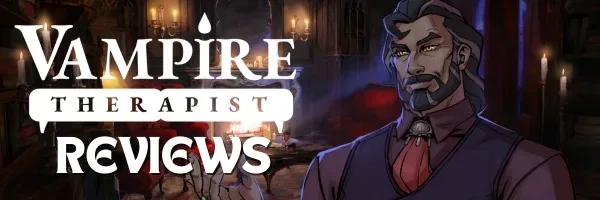
Vampire Therapist, the BAFTA-nominated visual novel centred on counselling immortal clients, is heading to mobile devices on November 24. The game will be released for both iOS and Android, giving players a new way to step into the role of a vampire therapist working through centuries of personal baggage, destructive thought patterns, and complicated emotional lives.
Its premise is unusual even within a genre known for inventive storytelling. Rather than placing the player in the role of a hunter, a powerful ancient vampire, or a survivor of supernatural horror, Vampire Therapist asks them to listen. Players portray an immortal bloodsucker who uses real-world cognitive behavioural therapy, commonly known as CBT, while speaking with a varied group of vampire clients. Each has reached a point where an endless existence is no longer enough to keep their problems at bay.
The mobile announcement confirms that the game's conversational experience will be available on two of the most widely used gaming platforms. For a visual novel driven by dialogue and individual sessions, iOS and Android are a natural fit: the format puts the emphasis on reading, choices, character exchanges, and following the consequences of what is said in the room.
An immortal premise focused on listening
Vampires are often used in games as symbols of power, seduction, danger, or tragedy. Vampire Therapist approaches immortality from a more intimate direction. Its clients have lived long enough for their own issues to become entrenched, and the player's role involves helping them interrogate how they think about themselves and the world around them.
For useful background on this topic, read New PlayStation Portal Model in Japan Adds Internal Storage for Unspecified Future Features.
The game's therapist protagonist applies techniques based on real-world CBT. In broad terms, cognitive behavioural therapy examines the connections between thoughts, feelings, and behaviour. It can involve identifying unhelpful assumptions, challenging distorted thinking, and considering more constructive ways to respond to difficult situations. Within Vampire Therapist, those principles are filtered through the heightened perspective of people who happen to have survived for extraordinarily long periods of time.
That setup creates room for problems that are recognisable in human terms while being shaped by an impossible lifespan. An immortal character may be carrying patterns that have lasted decades or far longer. A belief that might be damaging over a few years can become even more consuming when it is repeatedly reinforced across an unending life. The game's sessions frame those struggles through dialogue rather than combat or conventional role-playing progression.
The result is a visual novel that treats conversation as its central activity. Players are not simply observing troubled characters from a distance; they take the role of the person responsible for guiding a discussion. That makes the questions, responses, and therapeutic framing part of the game's core dramatic tension.
Conversations that address difficult subjects
Vampire Therapist does not limit itself to a single kind of supernatural angst. Its diverse clientele discusses subjects including sexuality, religion, and other deeply personal aspects of life. Those themes are presented in the context of vampires whose lives have begun to unravel despite, or perhaps because of, their immortality.
That thematic range is important to the game's identity. The promise is not merely of gothic characters delivering stylish dialogue; it is of sessions that engage with the beliefs and experiences shaping each client's emotional state. Religion and sexuality can be intensely personal subjects in any story. Placing them in an environment of therapeutic conversation gives the visual novel an opportunity to focus on reflection, vulnerability, and the ways people justify or question the stories they tell themselves.
The vampire setting also offers a useful lens for examining those issues. Immortality exaggerates the passage of time, allowing a character's history, old assumptions, and emotional habits to take on a scale that ordinary life cannot easily provide. A client may have had countless opportunities to change, yet still find themselves stuck. That contradiction sits at the heart of the premise: living forever does not guarantee peace, self-knowledge, or resilience.
For players, the appeal may lie in seeing familiar therapeutic ideas adapted into a narrative format that remains fantastical and character-led. The game can move between humour, discomfort, confession, and self-examination without abandoning its vampire fiction. Its approach positions the supernatural not as an escape from real emotions, but as a way to look at them from a different angle.
Why mobile suits a visual novel
The November 24 release will bring Vampire Therapist's session-based structure to phones and tablets. Visual novels have long worked well on portable devices because their focus on text, portraits, scenes, and decisions can suit shorter or longer play sessions. A player can spend time with one conversation, pause between clients, or return later without needing to commit to a lengthy action sequence.
That is particularly relevant for a game built around therapeutic dialogue. The cadence of a counselling session is different from the pace of a chase, a battle, or a platforming challenge. It invites attention to phrasing, emotional cues, and the meaning behind a response. Mobile availability gives players the option to engage with that kind of story wherever they are, whether they are reading through a brief exchange or settling in for a more substantial narrative stretch.
There is also a clear fit between touchscreen devices and the intimate presentation associated with visual novels. These games often create a direct relationship between the reader and the characters on screen. The player is asked to focus on faces, words, pauses, and choices. In Vampire Therapist, that closeness is reinforced by the premise that the player is participating in one-to-one conversations with people seeking help.
The iOS and Android launch expands the potential audience for the game without changing the fundamental idea that defines it. The focus remains on counselling vampires, applying CBT concepts, and navigating discussions with clients whose problems have become inseparable from the extraordinary length of their lives.
A different kind of vampire story
Games featuring vampires frequently draw on familiar genre expectations: bloodlust, secret societies, ancient feuds, forbidden romance, and the dangers of the night. Vampire Therapist can still use the atmosphere and dramatic potential of those traditions, but it places emotional processing at the centre of the experience. Its title states the twist plainly. The important role is not that of vampire hunter or vampire lord, but therapist.
That change of perspective gives the game a distinctive hook. Instead of asking how players will defeat a supernatural threat, it asks how they will respond to someone who is suffering. Instead of making immortality a prize to be chased, it presents endless life as something that can magnify unresolved pain. And instead of treating a difficult conversation as a brief cutscene before gameplay resumes, it makes the conversation itself the gameplay.
The BAFTA nomination adds further attention to a project that already stands apart through its subject matter. Narrative games often explore identity, relationships, grief, and mental health, but Vampire Therapist combines those concerns with an explicitly therapeutic framework and a cast of immortal clients. Its mobile release means that concept will soon be available to a broader audience of players looking for story-focused experiences on iOS and Android.
What to expect on November 24
When Vampire Therapist arrives on mobile on November 24, players can expect a visual-novel experience rooted in dialogue with a diverse set of vampires. They will take on the role of an immortal therapist and use real-world CBT techniques as clients confront the beliefs, fears, and patterns contributing to their crises.
The game's stories touch on sexuality, religion, and other personal concerns, all while using the premise of an existence that simply does not end. That combination makes it a notable addition to the mobile narrative-game landscape: a supernatural title where the central challenge is not surviving the night, but helping others understand why they are struggling through it.
For anyone interested in character-driven visual novels, unusual takes on vampire fiction, or games that use conversation as more than background flavour, Vampire Therapist's iOS and Android debut is one to watch. The counselling room opens on November 24.

Community
Discussion
Start the conversation.
No comments have been posted yet.