

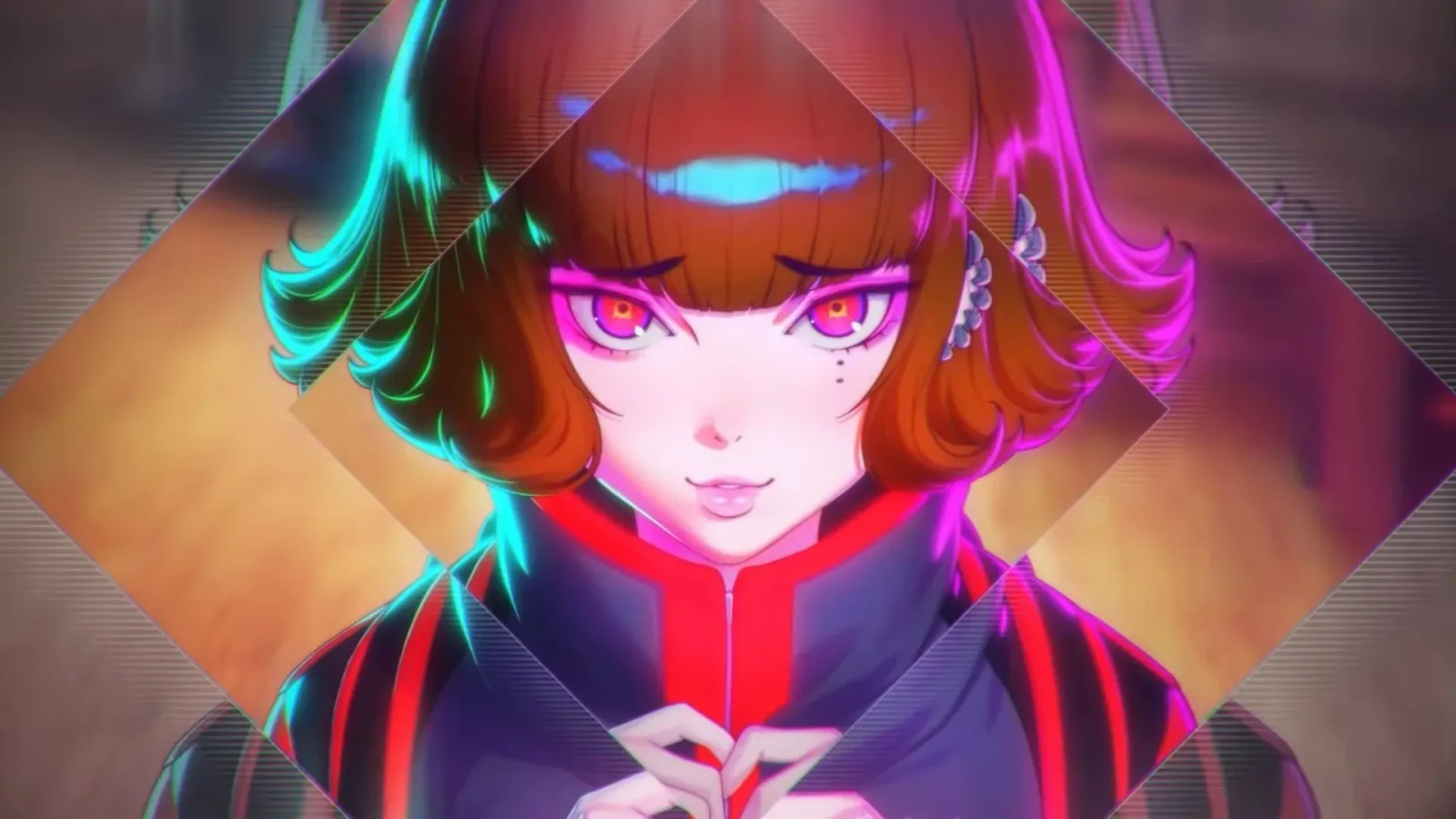
Kouji "Cozy" Okada knows exactly why players may look at Villion:Code and immediately think of Persona. The upcoming RPG is set in a school environment, comes from a creator with deep roots in Atlus history, and puts story, player agency, and unusual ideas at the center of its identity. Those are not superficial similarities when Okada helped shape work connected to both Shin Megami Tensei and Persona over a career stretching back decades.
Even so, Okada has drawn a firm line between acknowledging that history and describing Villion:Code as a Persona successor. He says Persona undeniably informed the new game, but argues that it is only one part of a much larger body of experience. Villion:Code is due to launch on January 26, 2027 for PlayStation 4, PlayStation 5, Nintendo Switch, Nintendo Switch 2, and Steam.
For fans who have watched nearly every school-based Japanese RPG get compared with Persona, the distinction may sound familiar. But Okada's comments are more meaningful than a standard effort to avoid labels. His background includes the original Megami Tensei, Shin Megami Tensei If..., and the first three Persona games. When a developer carries that kind of legacy into a new project, comparisons are inevitable. His position is not that Villion:Code exists outside that legacy, but that it should not be reduced to it.
Persona's influence is part of a much wider career
Okada has said there is "no doubt" Persona influenced Villion:Code. That is a notably direct admission, especially as developers often avoid discussing comparisons before a game reaches players. Yet he also emphasized that the same is true of the many series and standalone projects he has worked on over the years.
For useful background on this topic, read How to Watch the Golden Joystick Awards 2026.
That context matters. Okada's work in role-playing games dates back to the 1980s, well before Persona became one of the best-known names in the genre. His credits and influence reach across the foundational years of Megami Tensei and through the formative era that eventually gave Persona its own identity. He later spent a period focused on mobile game development as well. Villion:Code therefore arrives from someone drawing on a long evolution of ideas rather than attempting to recreate a single past success.
There is an obvious reason Persona remains the most immediate point of reference. The series has become especially recognizable for combining contemporary school life with supernatural danger, character relationships, dungeon exploration, and a stylized approach to daily routines. A new school-set RPG from a Persona veteran is naturally going to invite those parallels long before its full systems and story are available for players to evaluate.
Okada does not appear dismissive of that reaction. Instead, he recognizes Persona's role in helping his earlier work find a broader audience. But he maintains that a shared setting does not mean shared purpose, structure, or design priorities.
Interactivity is at the center of Okada's approach
The clearest explanation for Villion:Code's intended identity comes from how Okada views games as a medium. He places special value on interactivity: the idea that a player's inputs do more than move through a prewritten sequence, instead actively affecting what happens. In his view, this is what separates games from other forms of entertainment.
That philosophy has led him to focus on placing the player in the protagonist's role. Rather than simply presenting a hero whose choices are fixed in advance, he wants the game to repeatedly ask the player, in effect, what they would do in a given situation. The goal is for decisions and actions to help shape the events that follow, while allowing the game to communicate different questions and messages through that participation.
This is not necessarily a confirmation of a particular branching-path system, relationship mechanic, or multiple-ending structure for Villion:Code. Specific details on how far its choices can alter the narrative have not been outlined here. Still, Okada's comments establish that player involvement is more than a background feature of the project. It is part of the design principle he considers essential to games, and something he says has guided both his earlier titles and this new one.
For Villion:Code, that philosophy could be especially important because the game's premise is already built around potentially weighty material. Genome editing is described as being baked into the game's DNA, suggesting that scientific intervention, identity, or human alteration may be central themes. A school setting can make such subjects feel immediate and personal, particularly if players are asked to make decisions from the perspective of a young protagonist rather than watching those ideas unfold from a distance.
Why the game returns to a school setting
Okada explained that the school setting was selected because the team wanted an intimate world that would be familiar and relatable. In other words, the choice was driven by clarity and accessibility rather than by a desire to replicate Persona's formula.
That rationale also aligns with Villion:Code's apparent audience goals. Okada wants longtime players familiar with his past work to enjoy the game, but he has also highlighted a desire for younger players to experience it. A school offers a setting that many players can quickly understand: classrooms, peers, routines, social pressures, and the feeling of being at a moment of transition. It can provide a grounded starting point before a story introduces stranger or more speculative concepts.
There is a practical storytelling advantage, too. High-concept themes such as genome editing can become difficult to connect with if they are presented only through technical language or a distant future society. Placing those ideas around students and a recognizable daily environment may give Villion:Code a direct way to explore its themes through characters whose concerns are more immediate.
That does not mean the game will be lighthearted, nor does it reveal exactly how its story will address genome editing. It does, however, suggest that the school is meant to serve Villion:Code's themes rather than operate as a borrowed visual shorthand. Okada has been explicit that the setting was chosen because it best communicated this particular world.
Action combat and distinctive dungeons separate Villion:Code
Beyond its premise and setting, Villion:Code already has several features that set it apart from the usual Persona comparison. Most notably, it uses an action combat system. That immediately distinguishes it from Persona's traditionally turn-based battles, where exploiting weaknesses and managing party turns are core to the flow of combat.
The game's dungeon spaces also have a striking visual identity. They have been described as tubular and almost vein-like, a look that fits neatly alongside the genome-editing concept. Rather than relying on ordinary school corridors, city streets, or conventionally supernatural labyrinths, Villion:Code appears to lean into environments that evoke biological structures. If that presentation carries into exploration and gameplay, it could give the RPG a more organic and unsettling atmosphere than its school backdrop initially suggests.
These elements are important because they point to a game with its own mechanical and aesthetic vocabulary. The school setting may be the first thing people notice, especially given Okada's past, but action-focused battles and biological dungeon imagery signal a different experience. The strongest answer to comparisons will ultimately come from how those systems feel in players' hands, how choices are implemented, and how the story develops its central ideas.
A separate work in a familiar creative lineage
Okada's core message is straightforward: Villion:Code can be influenced by Persona without being designed as "a different version of Persona." He regards the two as fundamentally separate works, even while accepting that players will form their own impressions.
That framing is useful for setting expectations ahead of release. Villion:Code should not be approached as a replacement for another Persona game or as a promise of a familiar set of social, combat, and calendar systems. At the same time, fans of Okada's earlier work may find value in seeing how his longstanding interest in player-driven experiences is being applied to a new setting and a new set of themes.
Meanwhile, Persona itself continues to move forward under Atlus, with Persona 6 positioned to follow Persona 4 Revival. Villion:Code is not trying to occupy that series' place. Instead, it is shaping up as an opportunity for one of the major figures from Persona's history to explore a different kind of RPG built around interactivity, a contemporary school environment, action combat, and the unsettling possibilities of genome editing.
Players will get their first chance to judge that distinction for themselves when Villion:Code arrives on January 26, 2027.
Community
Discussion
Start the conversation.
No comments have been posted yet.