

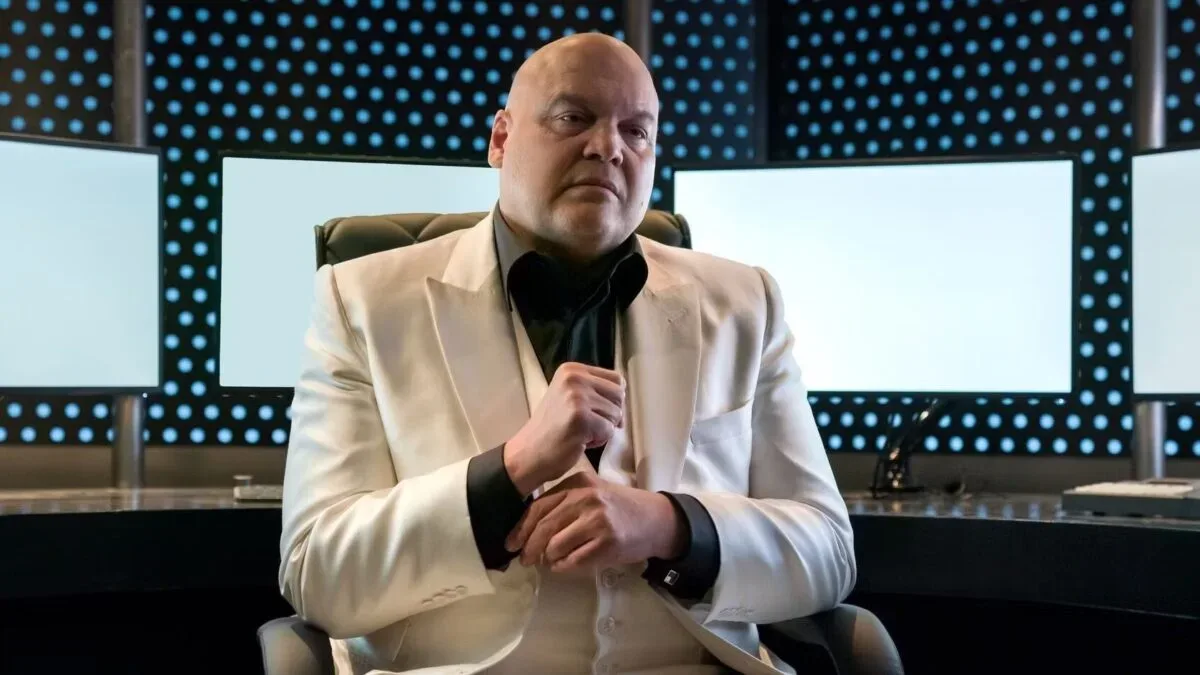
Vincent D'Onofrio has stepped into an online argument surrounding God of War: Laufey, offering a direct defense of actor Deborah Ann Woll after a social-media account called for players to boycott the upcoming game over complaints about the appearance of its female lead.
D'Onofrio, widely known to gaming and television audiences for playing Wilson Fisk/Kingpin in Marvel's Daredevil, co-stars with Woll in that series. Woll is set to play Faye in the new God of War project from Sony's Santa Monica Studio. When criticism aimed at the character and the studio crossed his feed, D'Onofrio made clear that he did not agree with the campaign or its framing.
"Not that you asked, but... In no way do i agree with you," D'Onofrio wrote in response to the post. He went on to praise Woll personally and professionally, describing her as beautiful, extremely talented, very smart, kind, and a complete nerd. D'Onofrio also said he is a fan of God of War and cannot wait to play the new game with his son.
The exchange is brief, but it has drawn attention because it neatly captures a larger, recurring argument around character design, casting, and the way online fan communities react to games before players have had a chance to see the finished work.
For useful background on this topic, read European Commission Targets Major Game Companies Over Virtual Currency Practices.
The complaint centered on Faye's appearance
The initial post came from an X account using the name Geralt of Goonia. It argued that Santa Monica Studio had supposedly chosen "feminism" over making female characters attractive, then urged followers to boycott God of War: Laufey. The message positioned the game's character design as evidence of an ideological conflict rather than a creative decision made by the developers and performers involved.
That kind of rhetoric has become familiar across major game announcements. A small but highly visible group of social-media users regularly treats the appearance of female characters as a culture-war test, often leveling accusations at developers long before a game's full story, art direction, or final context is available. Those debates can move quickly from criticism of a specific design to attacks on actors, artists, studios, and fans.
In this instance, the conversation focused on Woll, whose character is Faye. Faye has an especially important place in the modern God of War story: she is the wife of Kratos and the mother of Atreus. The title Laufey is itself closely associated with Faye, giving the project a clear connection to her role in the series' Norse era.
There is room for players to discuss a game's visual direction, performances, writing, and character designs. But D'Onofrio's response pushed back on the leap from personal preference to a call for a boycott built around hostility toward Woll and broad conspiratorial claims about the studio's motives.
A co-star's uncomplicated support
What makes D'Onofrio's reply stand out is how little interest he showed in turning the situation into a prolonged debate. Rather than litigating every claim in the thread, he spoke about the person he knows. His message was a straightforward endorsement of Woll's abilities and character, alongside excitement for the game itself.
That is a meaningful contrast to the tone of the initial boycott post. It reduced a performer and a creative team to an argument about whether a character meets a narrow online standard of attractiveness. D'Onofrio instead highlighted Woll as a talented actor, an intelligent and enthusiastic genre fan, and a friend.
Woll has long been associated with genre work and tabletop gaming in addition to her screen roles. Her work in Daredevil brought her together with D'Onofrio, whose Kingpin was one of the series' defining antagonists. Their shared history helps explain why his comments carried extra weight for viewers familiar with Marvel's Netflix-era cast and its subsequent returns.
The response also avoided speaking on behalf of Santa Monica Studio or attempting to reveal details about God of War: Laufey. D'Onofrio did not make claims about the game's development, its release plans, or its broader story. He simply expressed support for Woll and said he looks forward to experiencing the game.
The attempt to extend the argument went nowhere
After D'Onofrio replied, the account behind the boycott call attempted to broaden the discussion with claims about the #MeToo movement and the Dead or Alive franchise. The response included a screenshot presented as support for an unsubstantiated theory.
D'Onofrio did not continue the exchange. That choice kept his original point intact: he disagreed with the attack, respects Woll, and remains enthusiastic about the game. In a social-media environment designed to reward escalation, refusing to endlessly argue can be the clearest possible conclusion.
Other users in the thread supplied the more comedic version of that conclusion, joking that the account had been "bodied by Kingpin." The line naturally plays on D'Onofrio's imposing portrayal of Fisk, a character not known for losing verbal or physical confrontations. It also reflects why the exchange traveled beyond the immediate God of War conversation: fans of both actors recognized the unusual pleasure of seeing Kingpin's performer show up to defend his co-star.
God of War: Laufey is already facing intense scrutiny
Major franchises rarely arrive without baggage, and God of War is one of PlayStation's most closely watched series. Santa Monica Studio's 2018 reinvention reshaped the long-running action series around Kratos' relationship with Atreus, while God of War Ragnarök expanded the Norse saga and gave supporting characters--including Faye's legacy--a greater emotional presence.
A project named Laufey therefore invites close attention even before fans know the complete picture. It suggests an opportunity to explore a side of the setting and its characters that has mostly been understood through memories, stories, and the consequences of past events. For some players, that premise alone will create questions about perspective, tone, combat, mythology, and how the game connects to Kratos and Atreus.
Those are the kinds of questions a new entry should eventually answer through official information and, ultimately, through the game itself. They are substantially different from declaring that a studio has failed because an actor or character does not align with one particular corner of the internet's expectations.
It is also worth separating a character from the performer portraying them. Woll's casting and performance are part of the creative identity of the project, but online hostility over appearance can easily become personal. D'Onofrio's comments drew attention back to the human being at the center of the discussion.
A familiar pattern around games and online outrage
Social platforms have made it easier than ever for game communities to celebrate trailers, exchange theories, and share criticism. They have also made it easier for a loud minority to amplify outrage. Posts that present ordinary creative choices as existential betrayals frequently gain visibility precisely because they are confrontational.
The result is a distorted sense of consensus. A boycott slogan or a viral complaint may look enormous in a feed, yet that does not mean it represents the broader audience for a game. D'Onofrio's reply is notable partly because it refuses to treat that framing as normal or authoritative.
His endorsement does not settle every possible conversation around God of War: Laufey, nor should it. Fans will have plenty to discuss as more is known about the project. But it does establish a simple baseline: disagreement about a game does not require demeaning an actor, inventing motives for a development team, or turning character design into a personal attack.
For now, D'Onofrio has offered a very public vote of confidence in Woll and in the next chapter connected to Santa Monica Studio's acclaimed franchise. He is looking forward to playing it with his son. And when faced with an invitation to keep feeding an online conspiracy argument, he left his initial defense to speak for itself.
Community
Discussion
Start the conversation.
No comments have been posted yet.