

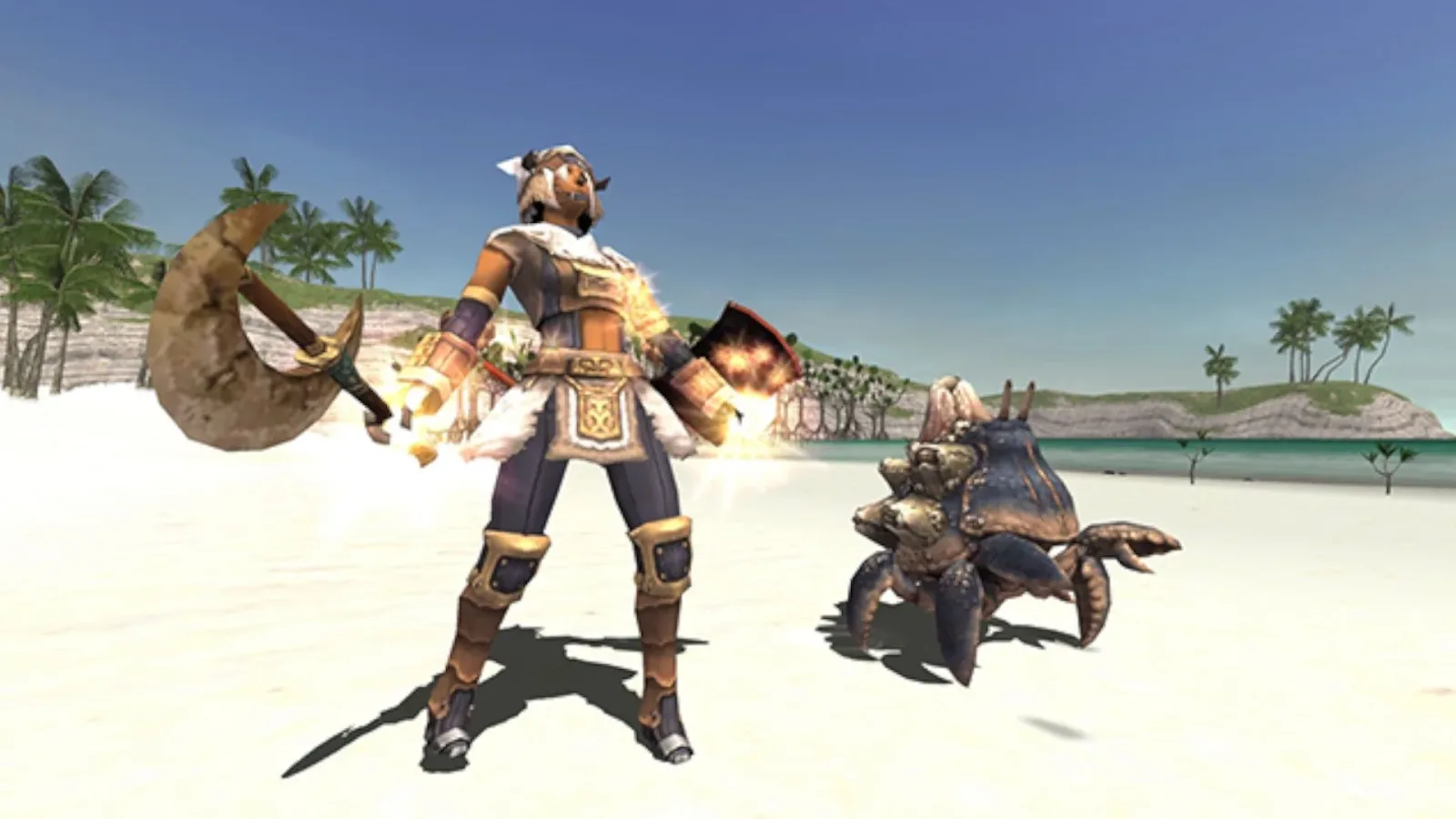
Final Fantasy 11 has substantially expanded its free trial, removing the previous two-week limit and raising its level cap from 50 to 75. The changes, which had been announced earlier in the year, are now live. New players can therefore spend as much time as they need with the MMORPG's base game rather than facing a countdown that can end before they have found their footing in Vana'diel.
It is a meaningful shift for Square Enix's long-running online role-playing game. Final Fantasy 11 is now 24 years old, and its appeal has always rested less on quick accessibility than on depth, discovery, cooperation, and systems that can initially feel intimidating. An unrestricted amount of trial time gives curious players a better opportunity to learn those systems at their own pace, experiment with jobs, and decide whether the older MMO's distinct style suits them.
The trial is not a complete version of Final Fantasy 11, and it still includes restrictions intended to limit abuse. It provides access to the base game only, without expansion content. Trial accounts also cannot use the auction house, trade directly with other players, hold more than 100,000 gil, or create parties. They can, however, join parties formed by players who own the full game.
A much larger first step into Vana'diel
For a game as layered as Final Fantasy 11, eliminating the clock may be more important than simply adding extra levels. The old two-week trial created pressure to make rapid progress in a game that is not especially interested in rushing newcomers through its fundamentals. Players need time to understand its unusual rhythms, build familiarity with its world, and work out what they actually want from their character.
For useful background on this topic, read End of Abyss Review: Atmosphere Undone by Avoidable Frustration.
Raising the cap to level 75 also greatly expands what trial players can experience. The increase is substantial compared with the former level 50 ceiling, and it makes the trial feel more like a genuine introduction to the base game rather than a brief sample. It gives prospective subscribers a broader stretch of character development in which to learn jobs, engage with the game's combat and progression, and explore its many areas.
That said, level access should not be confused with unrestricted access to every part of the game. The absence of expansion content remains a major boundary. Final Fantasy 11 has accumulated a long history over more than two decades, and expansions are an important part of that larger experience. The revised trial is best understood as a deeper route through the original foundation of the game, not as a free path through all of its later additions.
Social and economic limits remain in place
Square Enix has retained several limits that will be familiar to players of modern MMO trials. Trial users cannot access the auction house or trade items and currency with other players. Their gil is capped at 100,000, and they cannot start a party themselves.
Those restrictions particularly affect the economic and social side of an MMO. Without the auction house and player-to-player trading, trial participants will not be able to engage with the player economy in the same way as subscribers. The gil cap and trading limits also appear designed to reduce opportunities for gold farming and other forms of abuse that can affect persistent online worlds.
Party limitations may matter just as much in practical terms. Final Fantasy 11 has historically placed significant value on cooperation, and its reputation as a more deliberate, community-driven MMORPG remains central to its identity. A trial player cannot take the lead by creating a group, but they can still accept an invitation to a party started by a full-game owner. That means newcomers who have friends already playing, or who meet helpful veterans, can still take part in group activity.
For anyone considering the trial, playing alongside an experienced subscriber could be especially useful. A veteran can form the party, explain unfamiliar mechanics, and help orient a new player in a game whose conventions differ from many current online RPGs. The arrangement does not remove every trial limitation, but it can make the initial learning process less daunting.
Why the missing time limit matters
Free trials are often a key way for an online game to attract players years after launch. They lower the initial barrier to entry, but their structure matters. A short deadline may work for games that deliver an immediate, guided opening, yet it can be a poor fit for an MMO built around slower learning, open-ended exploration, and player knowledge.
Final Fantasy 11 falls firmly into that latter category. Its gameplay is often described as denser and more player-driven than many newer genre peers. Rather than presenting a streamlined path with a straightforward activity loop, it asks players to engage with more esoteric systems and discover how the world works. That can be rewarding for people who want an MMO with a strong sense of place and a greater need for planning, but it also means the opening hours can be difficult to evaluate under a strict two-week deadline.
With no time restriction, prospective players can approach the game without feeling that every session must be optimized. They can take breaks, consult guides, test different approaches, and gradually absorb the structure of Vana'diel. Crucially, they can decide whether its older-school design is compelling before they are asked to commit financially.
The new model also makes it easier for returning players or longtime Final Fantasy fans to revisit the game out of curiosity. Final Fantasy 11 has endured for decades because it maintains a dedicated community, including players who appreciate the particular kind of adventure it offers. But its age and complexity can make it difficult for outsiders to understand why that loyalty has lasted. A no-time-limit trial is a more inviting way to find out.
A different proposition from Final Fantasy 14
Comparisons with Final Fantasy 14 are inevitable. The newer MMORPG is well known for a generous trial and has helped establish the idea that an extensive free introduction can be one of the strongest recruitment tools available to a subscription-based online game. Final Fantasy 11 now adopts one of the most important parts of that approach: players are no longer cut off simply because a short period has expired.
However, the two games are not interchangeable. Final Fantasy 14 is broadly structured as a modern, story-forward MMO, with accessible systems and a more guided progression experience. Final Fantasy 11 comes from an earlier period of online RPG design. It is more demanding, less immediately transparent, and often more dependent on players setting their own goals, learning from others, and finding their own reasons to continue exploring.
That distinction makes the expanded Final Fantasy 11 trial particularly worthwhile. It is not merely offering a free alternative to another Final Fantasy MMO; it is offering access to a different philosophy of the genre. Players who want a carefully paced main narrative and a smoother onboarding process may still prefer Final Fantasy 14. Those interested in a tougher, more exploratory game with older mechanics and a greater emphasis on self-directed discovery may find Final Fantasy 11 uniquely appealing.
What new players should expect
Newcomers should enter the trial with realistic expectations. This is not a fully unrestricted account, and some of the limitations will become noticeable quickly, especially for players who want to use the economy or organize groups themselves. Expansion content is also unavailable until players move beyond the trial.
Even so, the removal of the time limit changes the equation. There is now room to be patient, and patience is likely the best way to approach Final Fantasy 11. Rather than treating it as a game to speed through, players can use the free trial to learn at a comfortable pace and see whether its mix of challenge, community, and exploration resonates.
Final Fantasy 11's revised trial offers unlimited playtime through level 75 in the base game, while retaining restrictions on expansions, trading, the auction house, gil holdings, and party creation. For a venerable MMORPG that asks a lot of its players, that extra time may be the most valuable feature of all.
Community
Discussion
Start the conversation.
No comments have been posted yet.