

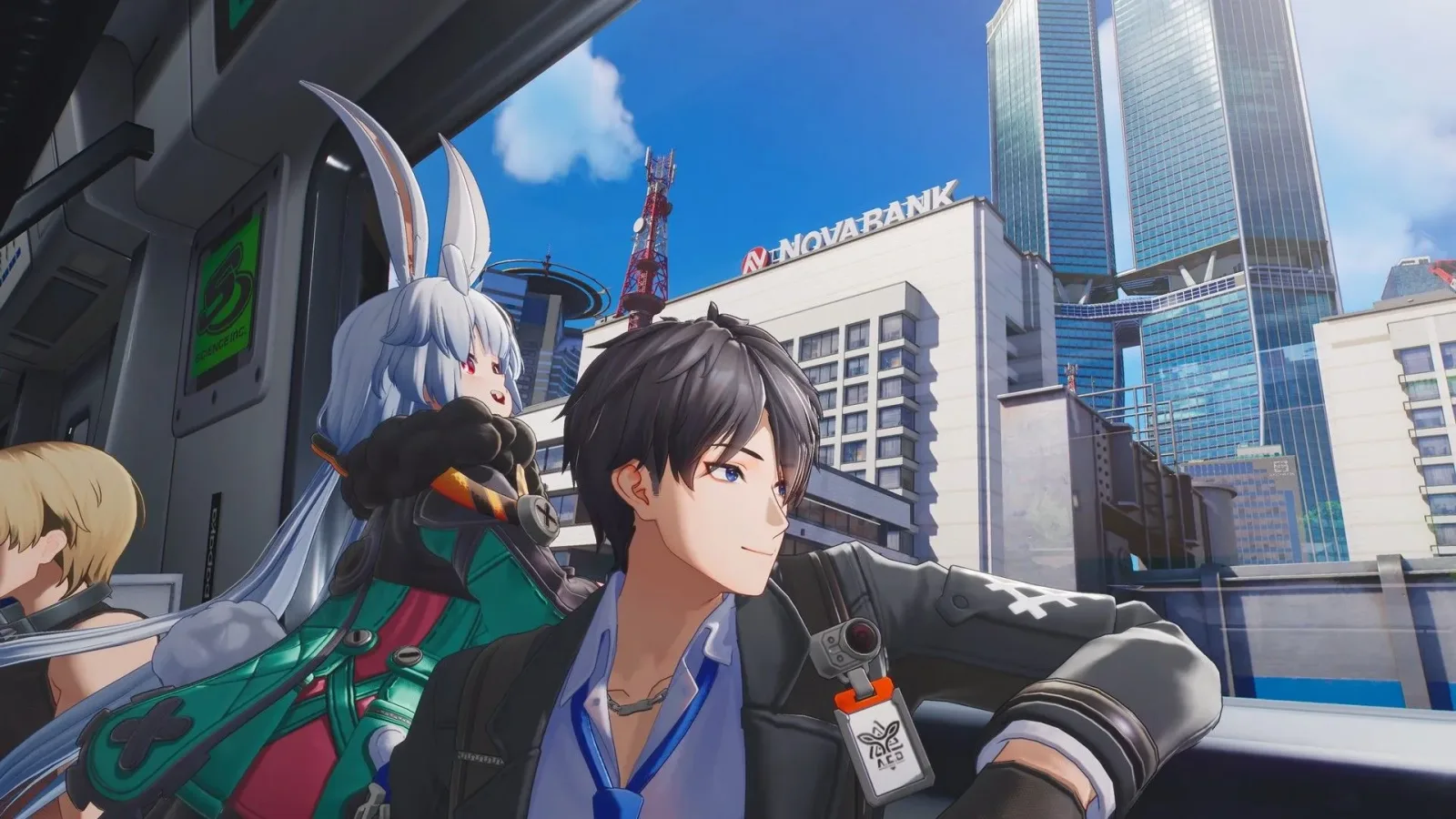
Ananta is an enormous-looking proposition. Marketed as an open-world RPG and planned as a free-to-play release, Naked Rain and NetEase Games' upcoming adventure appears to pack an extraordinary range of activities into its anime-styled world: close-quarters combat, superhero-like traversal, vehicle chases, shooting, character switching, police interactions, shops, social spaces, stealth missions, and separate urban and rural environments.
That breadth is immediately impressive in a hands-on demo, especially for a game due to launch on PC, PlayStation 5, and mobile on January 15, 2027. Yet the same quality that makes Ananta so easy to describe in a breathless list also creates its largest concern. After roughly an hour of play, its individual pieces often feel polished enough to function, but they do not always feel connected by a clear creative purpose. Ananta can be spectacularly busy. The question is whether all that activity will become a cohesive world players want to inhabit over time.
A game built from familiar building blocks
Ananta entered Gamescom with substantial momentum, finishing as the show's third most-wishlisted game behind Warlock and The Witcher 3. The enthusiasm is understandable. Its early footage and playable material promise the kind of densely packed, modern open-world experience that is normally associated with huge premium releases rather than a free-to-play game.
The opening of the demo puts players in control of an impeccably dressed anime protagonist hiding a dark, tentacle-like power beneath his suit. The visual immediately suggests comic-book spectacle, and the ensuing fight commits to that tone. Players can grab and throw objects such as manhole covers, batter groups of enemies at close range, and perform acrobatic finishers that carry the character over opponents.
For useful background on this topic, read Steam Deck in 2026: Is Valve's Handheld Still Worth Buying?.
The combat is accessible almost immediately, partly because its controls and rhythms will be recognizable to anyone familiar with recent blockbuster action games. Dodges, counters, launchers, environmental attacks, and cinematic finishing moves create a slick first impression. There is nothing inherently wrong with drawing from proven action design, of course. The issue is that Ananta repeatedly invites comparison to the games that inspired its mechanics without yet putting a distinctive enough spin on them.
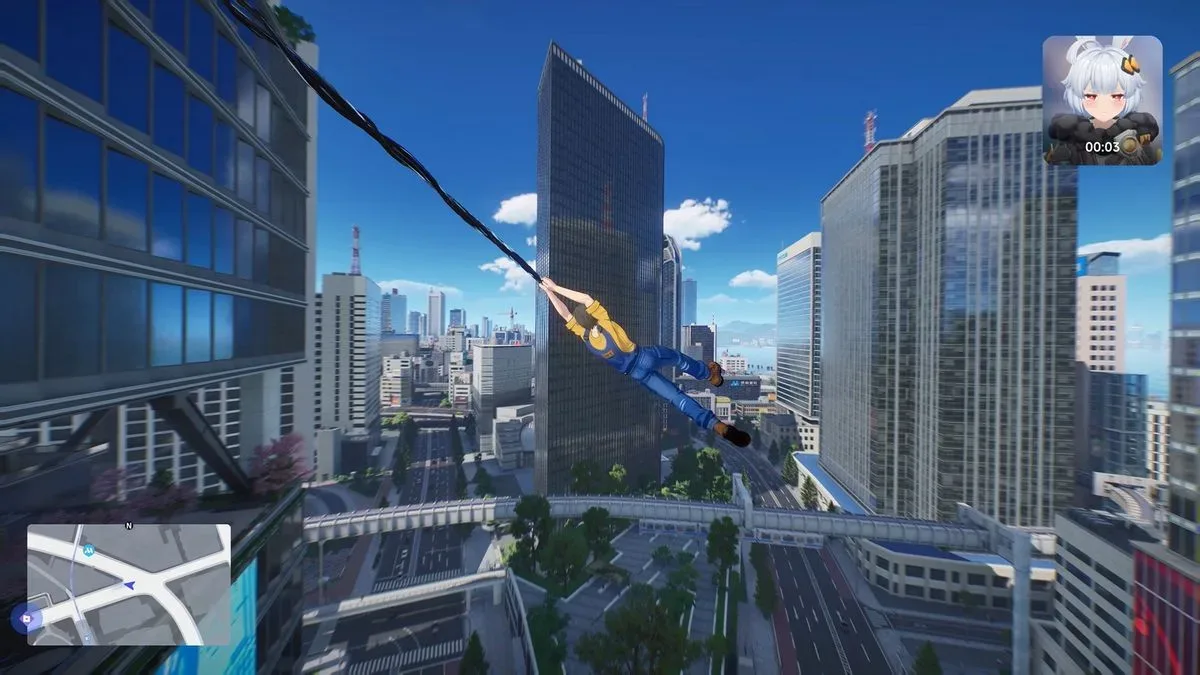
That same tension appears in traversal. The protagonist can propel himself around the city by firing his arms outward and slingshotting from buildings, essentially turning the skyline into a rapid route network. It is fast, readable, and immediately enjoyable. Swinging through a dense city remains one of the most satisfying forms of open-world movement, and Ananta clearly understands that appeal. But its execution feels so close to familiar superhero game conventions that the game's own personality can fade behind the reference points.
Driving, gunfire, and an unexpectedly competent chase
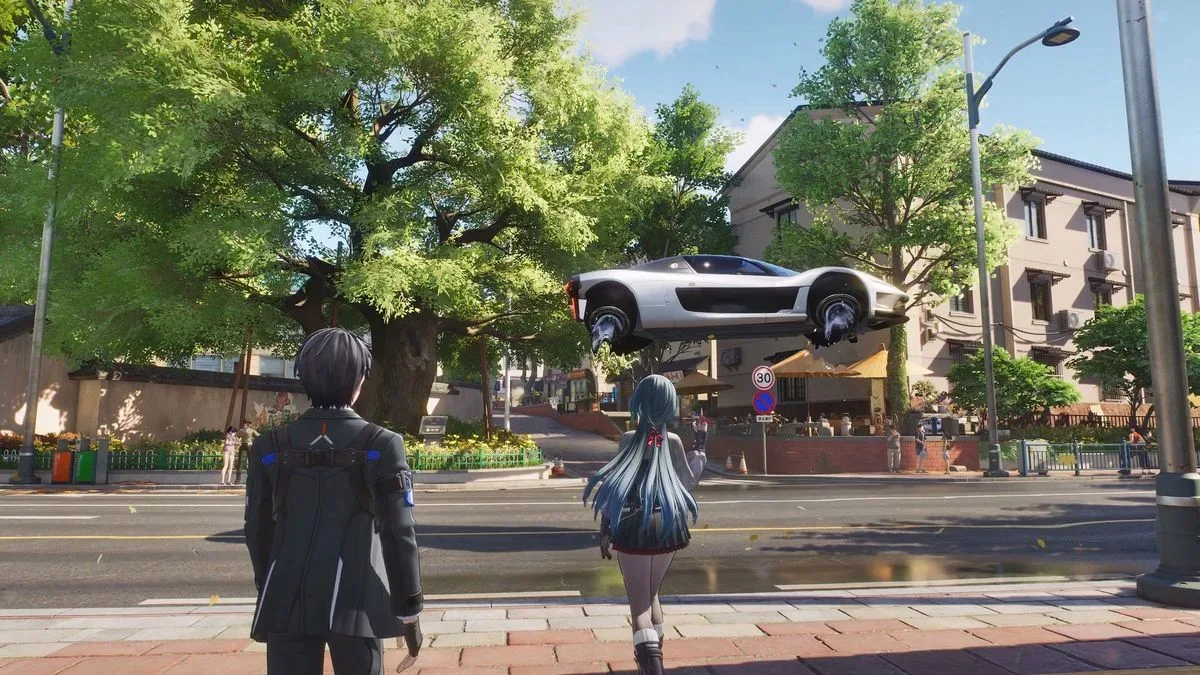
Where Ananta starts to show a little more range is its major car chase. The sequence alternates between shooting at pursuing vehicles from the passenger side and taking control of the car itself. While hanging out of the window, the player fires on hostile jeeps, targeting tires and occupants until the vehicles crash into traffic or veer off the roadway. Once behind the wheel, the chase routes players through increasingly narrow side streets, construction areas, and implausibly convenient shortcuts.
In a project attempting this many gameplay disciplines, driving and shooting are often the systems most likely to feel compromised. Here, both were described as solid. That does not necessarily establish whether Ananta can sustain satisfying driving across a full map or support deep firearm combat, but it is encouraging that the chase does not apparently collapse under the weight of its own ambition.
The sequence also introduces a second playable character. After a dramatic rescue maneuver, she becomes available for free-roam character swapping. The transition uses a camera zoom-out-and-in effect that helps sell the notion that several protagonists inhabit the same city at once. It is another familiar open-world device, but one that could work well if Ananta gives its cast truly different roles beyond combat animations and traversal tricks.
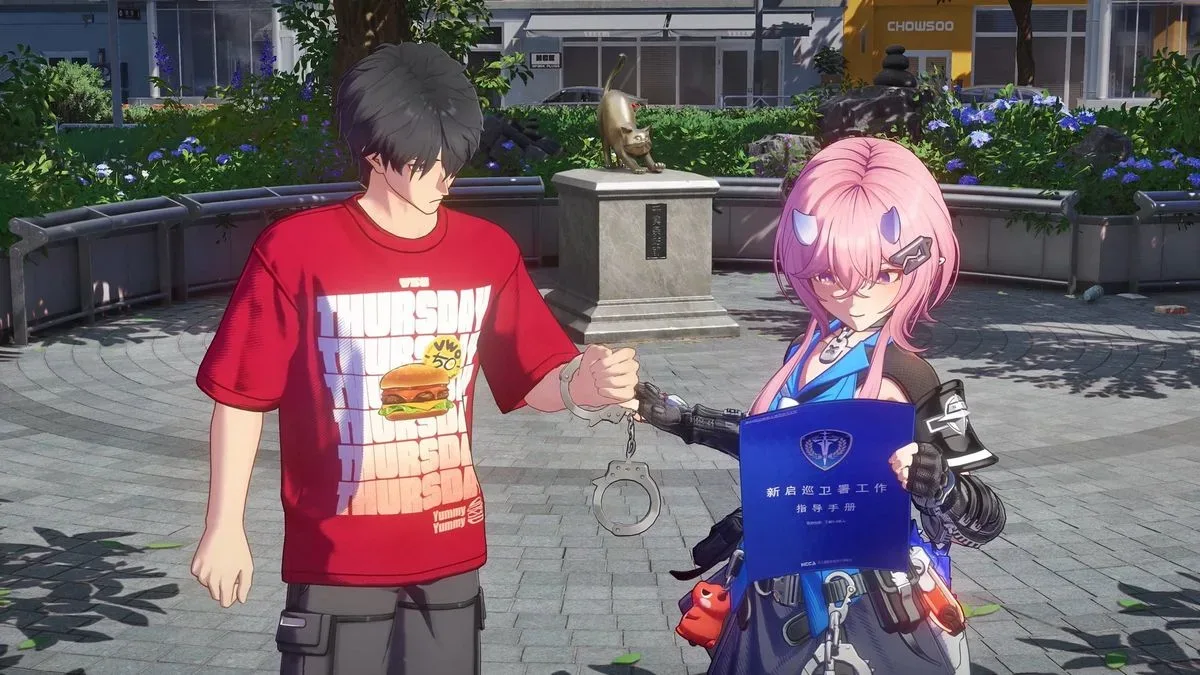
This second character is a police officer, and she has an unusual open-world ability: she can question and detain random pedestrians. In one example, an innocent office worker who passed a breathalyzer test ran away in alarm after the player attempted to arrest him anyway. It is a small, comedic moment, but it hints at how Ananta may approach systemic city life. Rather than simply filling streets with decoration, the game could potentially allow players to disrupt, investigate, and interact with residents in surprising ways.
A city worth exploring, if the systems come together
The game's urban setting draws inspiration from China's vast conurbations. During the demo, it comes across as one of Ananta's most intriguing strengths: a crowded, energetic place where flashy action is surrounded by everyday destinations. Beyond random enemy encounters, players can spot gyms, cinemas, and shops. Those locations suggest ambitions beyond a map built solely for missions and collectibles.
It is easy to imagine the appeal of an open world where a player can swing across rooftops to stop a fight, jump into a car for a high-speed pursuit, and then spend time engaging with quieter activities across commercial districts. The free-to-play structure makes the scale even more surprising. Building multiple detailed environments, supporting several playable characters, and creating enough repeatable activities to sustain a long-running audience is a massive undertaking.
However, the hands-on session offers limited time to test those possibilities. Gyms, cinemas, and shops are visible promises rather than fully understood systems. They could become meaningful parts of a lived-in city, or they could amount to minor diversions scattered across an impressive map. That uncertainty is central to Ananta's pitch. There is an abundance of content on display, but the long-term depth of that content remains difficult to judge.
A sharp detour into stealth and countryside life
Just as the urban scenario begins to establish a rhythm, the demo abruptly moves somewhere completely different. A new section introduces two young sisters and swaps open combat and sprawling city movement for stealth. The setting is a rural temple, and the objective involves escaping while avoiding kidnappers wearing animal masks and sharp suits.
The contrast is striking. The earlier city action features rust-punk criminals, leather outfits, and rough vehicles with a post-apocalyptic edge. The temple segment has a more controlled, eerie atmosphere, with a different threat and a different approach to play. After escaping, the sisters enter another part of the wider open world: a peaceful Japanese countryside town where fairground attractions and market stalls replace the city's gyms and cinemas.
On its own, this quieter location sounds appealing. Its visual variety could make Ananta's world feel much larger than a single metropolitan sandbox. The problem is the apparent lack of connective tissue in the demonstrated material. The urban action story, the police activities, the tentacle-powered traversal, the temple escape, and the countryside market each seem as though they could belong to separate games with separate themes.
That variety may be intentional. Ananta appears to be chasing the idea of an "everything game," one that changes pace and genre before players have a chance to tire of any one system. There is a real audience for that approach, particularly when anime presentation allows the game to move between heightened action, comedy, crime drama, supernatural powers, and slice-of-life locations. But constant novelty is not a replacement for identity. Players still need a reason that these elements coexist beyond the fact that the developers were able to include them.
Ambition is not the same as cohesion
Ananta's demo leaves behind two strongly competing impressions. On one hand, it is staggering to see a free-to-play project offer this many apparently functional systems across such different settings. The game has flashy fights, satisfying movement, credible driving, a sizable city, alternate protagonists, social activities, and a second map with an entirely different atmosphere. It has the visual polish and immediate accessibility needed to attract a large audience.
On the other hand, many of its best ideas arrive carrying the shadow of more established games. The action, swinging, character switching, and broader crime-sandbox structure are recognizable almost before they are explained. Anime art direction makes the package visually distinct, but it cannot alone transform familiar mechanics into a new identity.
The eventual test for Ananta will be how it ties its systems, cast, and locations together. If its urban and rural spaces support meaningful stories, if each character changes how players understand the world, and if its many activities feed into a satisfying progression loop, its scale could become a major advantage. If not, the game risks feeling like a lavish collection of attractions that are individually entertaining but difficult to remember as a whole.
For now, Ananta is one of the more ambitious open-world games on the horizon. Its PC, PS5, and mobile launch plans make that ambition especially notable. The hands-on demo proves that the project has more than enough spectacle to command attention. What it has not fully proven is that its many borrowed-looking parts can form something with a voice unmistakably its own.
Community
Discussion
Start the conversation.
No comments have been posted yet.