

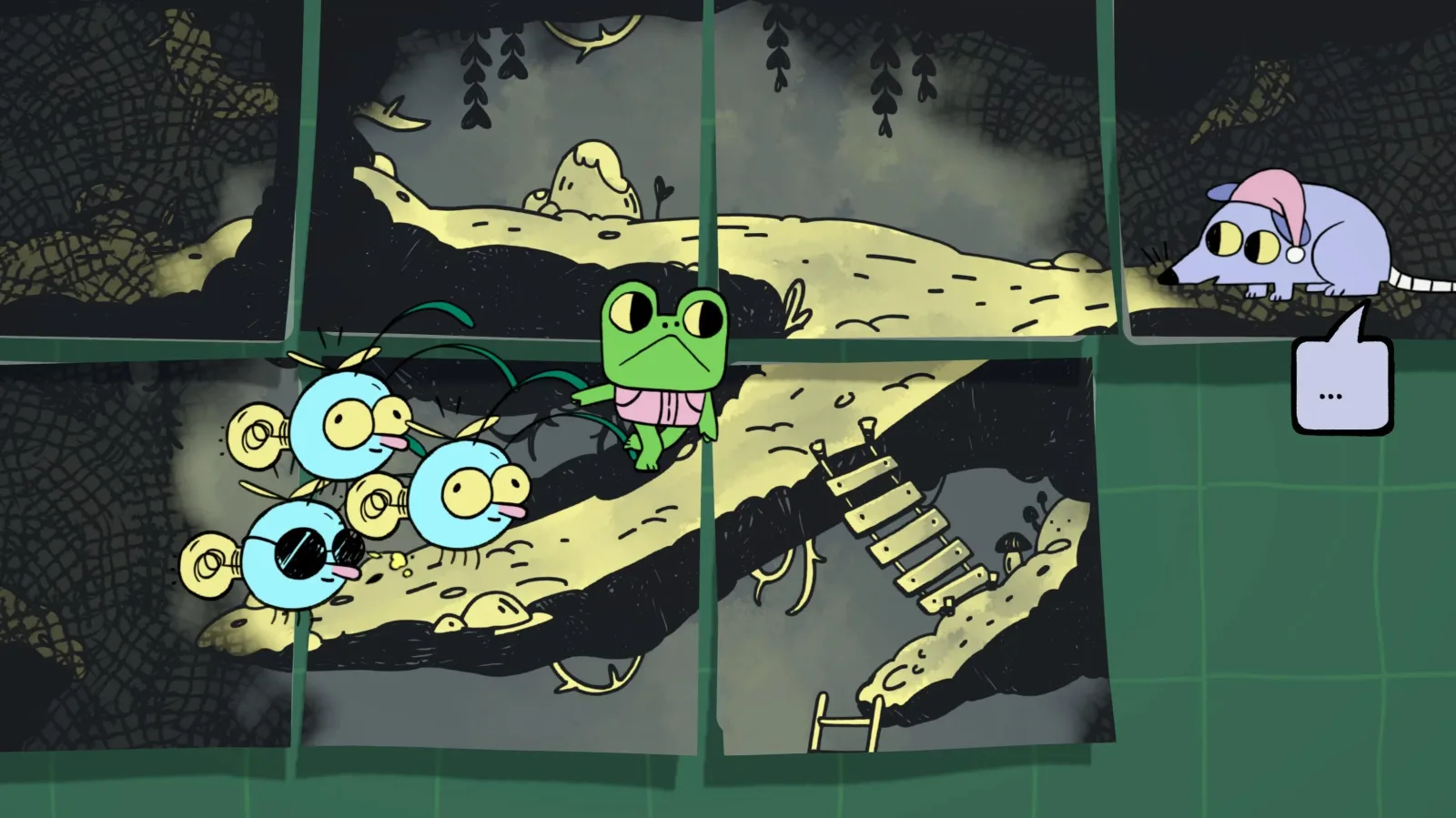
Walk The Frog, a hand-drawn puzzle adventure from German indie developer Walk The Frog in partnership with Bright Gambit, has launched for Nintendo Switch, iOS, and Android on October 14, 2026. The release brings the gentle, portable-friendly journey of Froggo to console and mobile players, following the game's earlier appearance on PC.
At the center of the adventure is Froggo, a small frog with an important destination in mind. He is trying to make it back to his friend Buddy in time for Froggapalooza, a festival that sets the story's warm, celebratory backdrop. Getting there is not simply a matter of walking from one screen to the next, however. Players must build Froggo's route themselves by manipulating the illustrated notes that make up each puzzle scene.
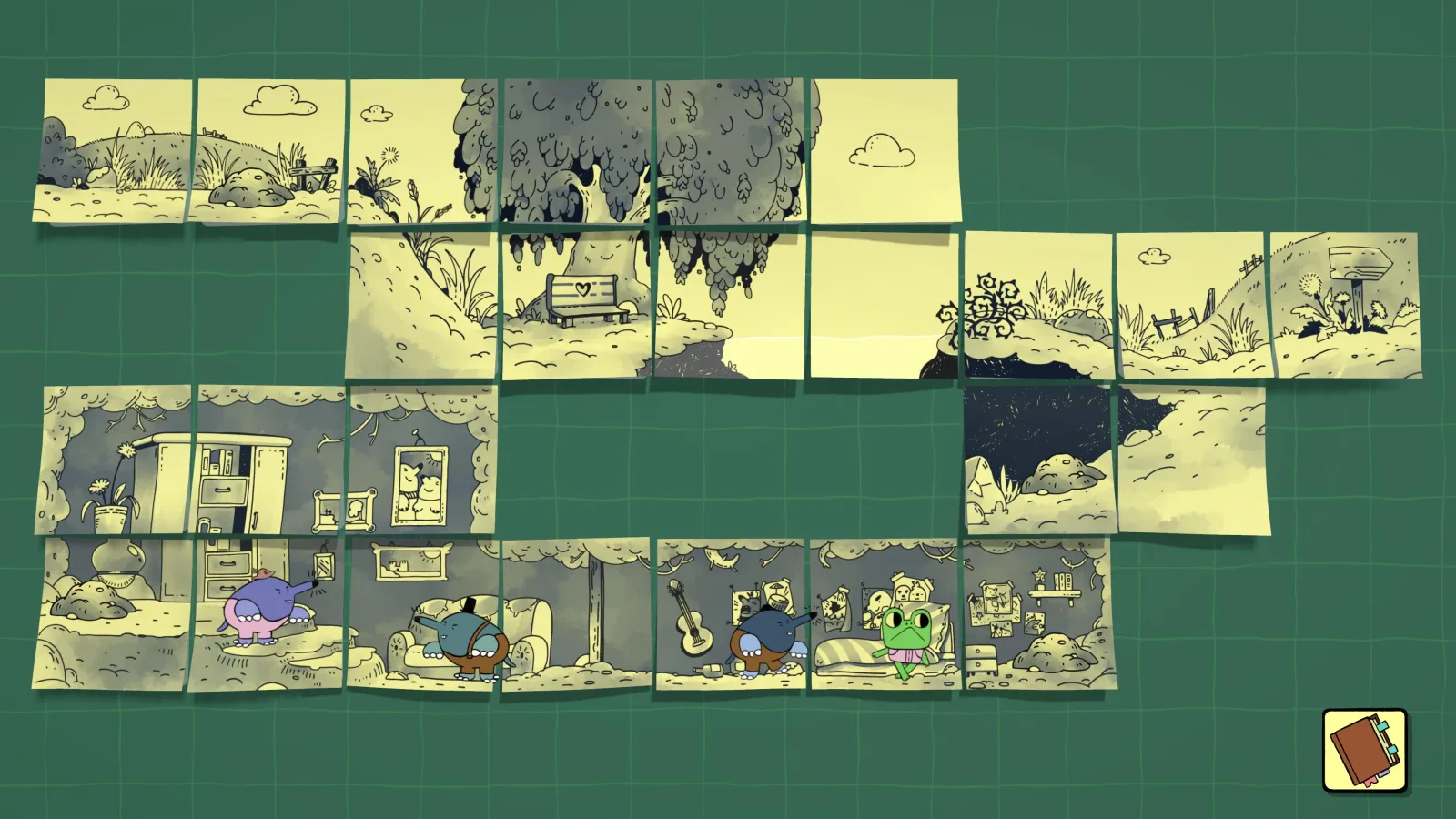
The core idea is deliberately tactile: drag, drop, and rearrange sticky-note-like pieces to create a way forward. Those notes can form paths, help Froggo negotiate obstacles, and alter the immediate layout of a level. Rather than asking players to react quickly or master complex button inputs, Walk The Frog puts the focus on observing a scene, understanding the available pieces, and experimenting with how they fit together.
A puzzle journey built around rearranging the world
Walk The Frog's puzzle design is based on a straightforward interaction that can lead to more considered solutions. Each illustrated note is part of the environment, making the act of moving a puzzle piece feel connected to the game's hand-drawn world rather than separate from it. Players are not merely selecting a route from a menu or moving Froggo across a fixed map; they are actively reshaping the route he will take.
For useful background on this topic, read Richard Garriott Says AI Has Taken Shroud of the Avatar's Bug Count to "Zero".
That structure gives the journey a playful, approachable identity. A solution may depend on noticing where a path should go, determining which obstacle needs to be addressed first, or placing a piece in a position that allows the next part of the scene to work. The aim is clear--guide Froggo onward--but the process invites a little experimentation. The game's presentation frames those challenges as small, self-contained storybook puzzles instead of high-pressure tests.
There are no timers pushing players to finish before a countdown expires. That no-timers approach is an important part of the experience described for Walk The Frog, especially for a game designed around cozy, low-pressure play. Players can take time to inspect a level, move pieces around, reconsider an idea, and continue when they have found a workable route. It is a format suited to people who want a puzzle game that values thoughtfulness and discovery over speed.
For the Nintendo Switch, iOS, and Android editions, the drag-and-drop mechanics have been positioned as a natural fit for touch and handheld play. Mobile devices in particular make the premise immediately legible: players can use direct touch controls to shift the illustrated notes around a scene. On Switch, the portable format similarly complements the game's compact puzzle structure and relaxed pace.
For another perspective on this story, read Walk The Frog Hops to Switch, iOS and Android.
Froggo's route to Froggapalooza
The adventure contains 18 levels spread across three chapters. Over the course of those chapters, Froggo travels through several distinct settings on the way to Buddy and the Froggapalooza festival. The locations include lush forests, a bustling city populated by insects, and open fields and meadows.
These areas give Walk The Frog more than one visual mood while retaining its handmade, illustrated look. Forest environments provide a natural starting point for a frog's journey, while the insect city promises a busier setting filled with tiny-scale activity. The fields and meadows, meanwhile, continue the game's emphasis on colorful outdoor spaces. Across them all, the presentation is intended to feel like a storybook brought to life, with each setting serving as both a location in Froggo's journey and a puzzle board to be examined.
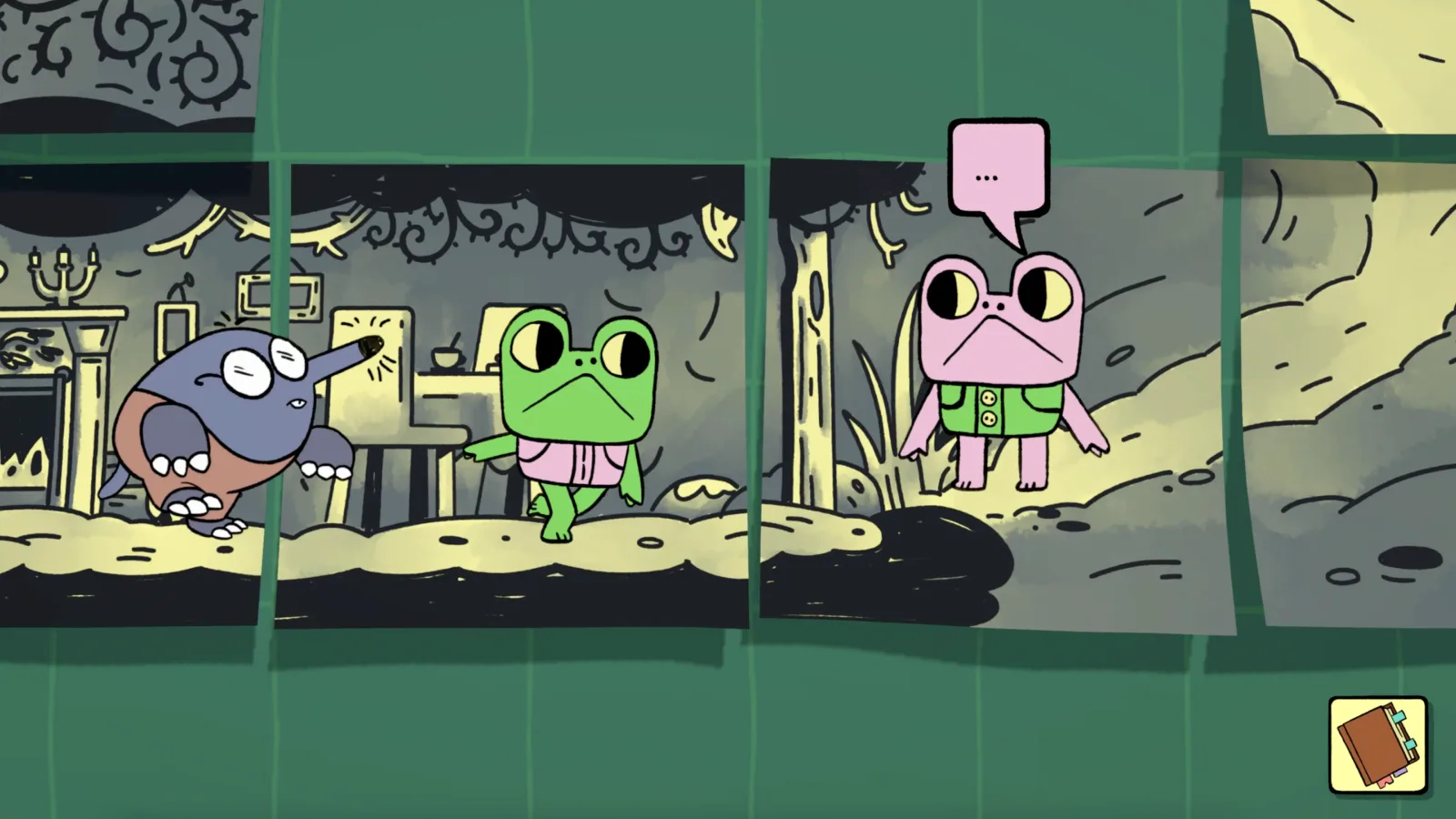
The route is also populated by quirky animal characters and small feel-good moments. That detail matters because the game is not framed solely as a sequence of abstract spatial challenges. Froggo's trip has a narrative purpose, and its animal-filled environments are designed to give players reasons to linger over the illustrations. The journey home is tied to friendship and a festival, giving the adventure an optimistic foundation without requiring an urgent, stressful tone.
Froggapalooza is the destination, but Buddy is the personal reason Froggo needs to get there. This simple setup makes the protagonist's objective easy to understand from the outset. It also allows the game to keep its storytelling accessible: Froggo is small, the world around him presents obstacles, and players help him reorganize that world one note at a time so he can reach his friend.
Designed for a break or a longer sitting
Walk The Frog's new versions are presented as suitable for both short play sessions and longer stretches. That is a useful match for the 18-level structure. A player can work through an individual puzzle when they have a few minutes available, or continue across a chapter when they want a more extended, unhurried session. Because there are no timers, stopping and returning later does not conflict with the game's overall design.
This flexibility is especially relevant on iOS and Android, where puzzle adventures often need to accommodate a wide range of routines. A level can function as a small diversion without reducing the game to a disposable experience. The same applies to Nintendo Switch in handheld mode: the game's controls and visual concept are tailored to a format that can move from a quick portable session to a more settled evening of play.
The release also broadens access to the game beyond its earlier PC presence. Players who prefer a controller-adjacent handheld environment, a touchscreen, or a device they already carry can now take on Froggo's journey in the format that best suits them. The underlying experience remains centered on the same hand-drawn art, puzzle construction, and cozy tone.
A deliberately gentle puzzle proposition
There is a broad audience for puzzle games that do not treat difficulty and pressure as the same thing. Walk The Frog is aimed squarely at that space. Its obstacles are there to be solved, but the game's identity is built around accessible controls and a calm atmosphere. The challenge comes from arranging the right pieces and finding a path through the scene, not from beating a clock or enduring constant failure states.
That makes its sticky-note concept particularly fitting. Notes are familiar, movable objects, and the visual language communicates the player's role immediately: take the pieces in front of you and put the picture together in a different way. Combining that readable interaction with a frog traveling through hand-drawn environments gives the game a distinct personality without making the premise difficult to grasp.
The small surprises and character moments scattered through the adventure should help make progression feel rewarding even between major story beats. Rather than presenting each completed level as only another item checked off a list, Walk The Frog uses its art and setting to support a more personable journey. The forest, insect city, and meadow locations are all parts of Froggo's trip, while the residents encountered along the way help establish the world around him.
Walk The Frog is available now
Walk The Frog is available on Nintendo Switch, iOS, and Android as of October 14, 2026. Its arrival on those platforms offers a portable home for an adventure defined by direct manipulation, illustrated puzzles, and an intentionally welcoming pace.
For players looking for a puzzle game with a soft storybook presentation, touch-oriented interactions, and a clear sense of forward motion, Froggo's race to meet Buddy at Froggapalooza provides a compact but charming premise. With 18 levels across three chapters, a cast of quirky animal characters, and no countdowns demanding perfection, the game is built to let players solve its paths at their own speed.
Community
Discussion
Start the conversation.
No comments have been posted yet.