

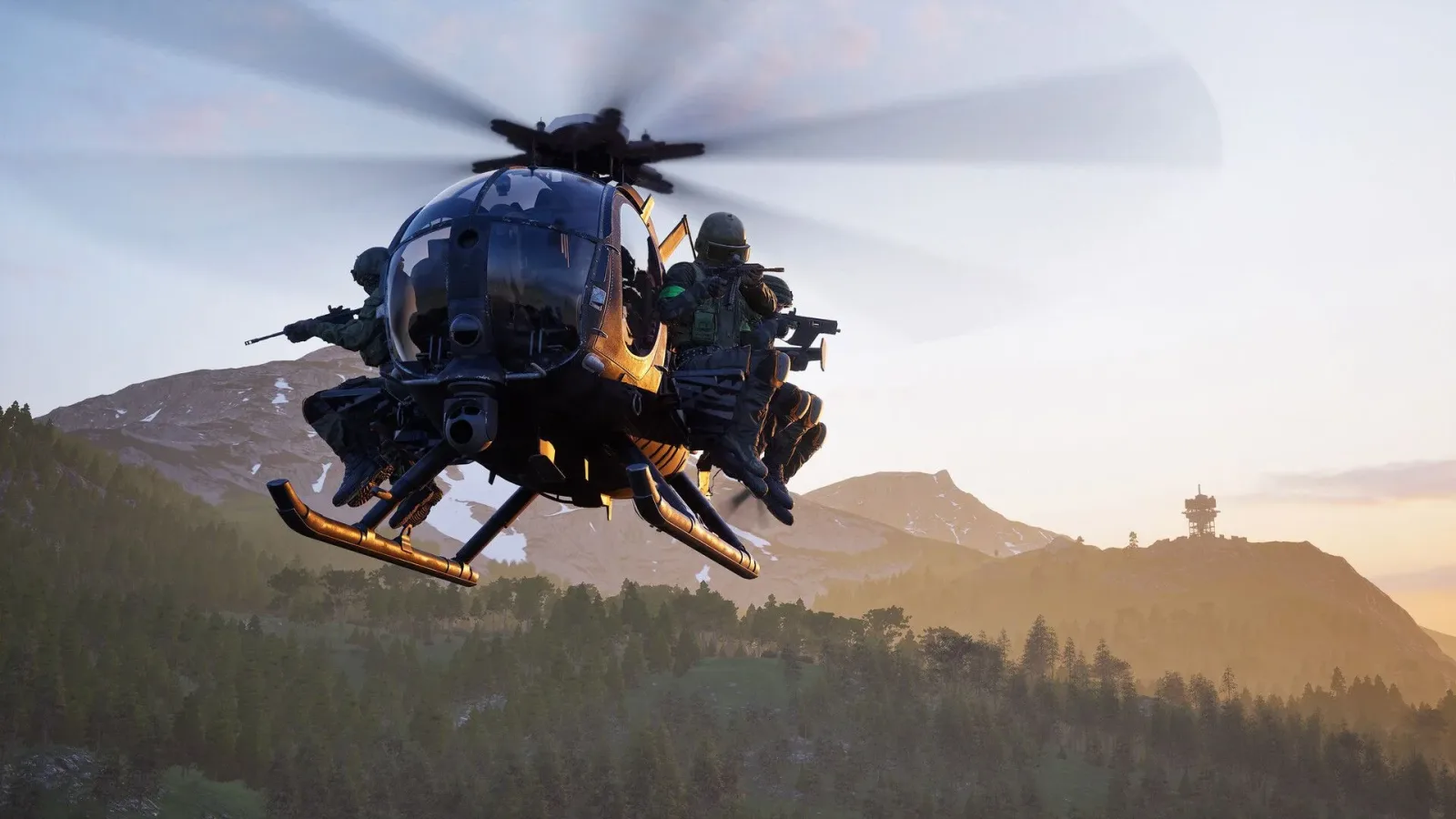
Wardogs is still early in its life, and its leadership is setting expectations that the tactical FPS will not suddenly reach perfect competitive balance when its second season arrives. Joe Brammer has described balancing as an ongoing process built around informed guesses, player behavior, adjustments, and longer-term planning rather than a problem a development team can solve once and leave behind.
The comments come amid continued discussion about progression, armor, high-level players, and the overall feel of matches as Wardogs grows. The game has sold three million copies within a few weeks, giving the team a huge amount of real-world player data to assess--but also ensuring that every powerful strategy, frustrating encounter, and perceived imbalance is being examined by a large and vocal community.
Brammer has openly said that Wardogs has a balance problem. But he also pushed back on the idea that balance itself is the team's primary failure. In his view, it is something that constantly changes as a live game develops, especially once a large audience begins discovering the most effective builds, combinations, tactics, and ways to exploit a game's systems.
Embedded X/Twitter post
Season 2 is not being positioned as a magic fix
Responding to a player who said the early portion of Wardogs is more enjoyable because there are fewer heavily armored, high-level Juggernaut-style opponents, Brammer acknowledged the concern behind that sentiment. The player said they were looking forward to the planned progress wipe, while Brammer suggested that the short season was intentional while the team works through balance issues.
For useful background on this topic, read Chicken Farm Codes for September 2026: All Active Cash, Egg Boost, and Lucky Block Rewards.
However, he was clear that the next season should not be treated as the point at which every balance concern disappears. "The big failure, was not balancing," Brammer said, explaining that balance is "always best guess and evolves with time." He added that the team will not have everything right by Season 2, either.
That is a notably direct message for a game that has quickly attracted a substantial player base. Rather than promising a complete solution on a fixed timetable, Brammer is framing Wardogs as a game that will need repeated tuning. Some equipment may be weakened, some options may be strengthened, and the team's understanding of how progression affects match quality will continue to change as more people play.
For players, that distinction matters. A balance patch can address a clearly overperforming weapon, item, armor configuration, or progression advantage. Yet the broader question of whether a game remains fun across its entire level range can be much more complicated. It involves matchmaking conditions, server rules, player population, the availability of specialized modes, and the difference between the experience of a new player and that of a veteran with extensive unlocks.
The server issue Brammer identifies
While Brammer does not consider the mere existence of balancing challenges to be Wardogs' biggest misstep, he did name a more specific problem: community servers arrived without the team also hosting official infantry-focused and level-cap servers.
That omission is important because it leaves fewer structured places for players seeking a particular version of the Wardogs experience. An infantry-focused environment can limit the influence of systems that may distract from the core gunplay for some players. Likewise, a level-cap server can create a narrower progression range, potentially reducing the gap between new or lower-level competitors and players who have already accumulated the most powerful gear or defensive options.
Neither approach eliminates the need for balance work. Players will still find dominant tactics, and any restricted ruleset develops its own preferred loadouts and strategies. But official options can give the community clearer choices. Those who want the full progression-driven experience can pursue it, while those who prefer more constrained combat can play under rules designed for that purpose.
It also matters that these servers would be official. Community-run spaces can be valuable, but their availability, settings, moderation, and population can vary. Official servers establish a reliable destination and signal that the developer recognizes a particular playstyle or concern as part of the game's supported ecosystem.
Why early-game balance feels different
The conversation around armored Juggernauts highlights a common tension in multiplayer games with progression. At the beginning of a season, many players occupy a similar power band. Their gear access is comparatively limited, experimentation is widespread, and encounters can feel more grounded in immediate mechanical skill, positioning, teamwork, and tactical decision-making.
As a season continues, the population naturally separates. Some players advance quickly, learn the systems deeply, and acquire stronger or more specialized options. Others play more casually or arrive later. If the advantages that come with progression are too pronounced, the result can be a sense that a match has stopped being an even contest before the firefight begins.
That does not mean every player wants progression removed. Unlocks, long-term goals, and the ability to build toward a preferred role are major attractions in many tactical shooters. The difficult design task is ensuring that advancement feels rewarding without making lower-level players feel irrelevant, or making the opening phase of every season seem like the only time the game is at its best.
A progress wipe can temporarily reset that gap, but it is not a complete answer on its own. If the underlying structure allows top-end armor or other high-level options to become too defining later in the cycle, the same discussion may return as players rebuild their inventories and advance again. That is why Brammer's emphasis on continued iteration is more meaningful than a simple promise of a reset.
Live player behavior changes the equation
Development testing can catch a great deal, but it cannot fully replicate what happens when millions of people begin playing a competitive game at scale. A large live audience tests every system continuously. It discovers efficient routes through progression, unexpected synergies between mechanics, equipment combinations that are stronger in practice than on paper, and tactics that may not have emerged in internal sessions.
This is particularly true in games that combine tactical combat with leveling and broader progression. A choice that appears fair in isolated testing may create a very different result once it is paired with a specific team composition, map situation, high-level loadout, or community-developed strategy. The wider the variety of player approaches, the more difficult it becomes to predict every consequence before launch.
Brammer's comments recognize that reality without dismissing player complaints. He has not argued that the community is wrong to notice the issue. Instead, he has said the team is "learning, adapting, improving, nerfing, buffing" while keeping a long-term plan in view.
"It's an evolving situation, we're learning, adapting, improving, nerfing, buffing.. but all with the long term plan in mind."
That approach suggests the Wardogs team is looking beyond a single emergency adjustment. The challenge will be to make changes quickly enough that players feel heard, while avoiding short-term reactions that simply shift frustration from one item, class, or playstyle to another.
What players can reasonably watch for
The immediate points to follow are the incoming progress wipe, the transition into Season 2, and whether official infantry and level-cap server options materialize. Those changes could have a major effect on how players experience the game even before individual balance adjustments are considered.
Players will also be watching how the team handles the gap between early-season and late-season combat. If Wardogs can preserve the tension and accessibility that some players associate with the opening stages of progression while still giving dedicated players meaningful rewards, it will be in a stronger position for the long term.
Brammer's message is not that balance concerns will be ignored until some distant update. It is that the work will be continual, and that no season should be viewed as the final answer. For a fast-growing tactical FPS, that may be the most realistic position possible: acknowledge the problem, identify missing support for players who want restricted rulesets, make changes, and remain prepared to revise those decisions as the community reveals what Wardogs becomes in practice.
Community
Discussion
Start the conversation.
No comments have been posted yet.