

Warhammer Tone Pro has been presented as a major new tool for miniature-painting veterans, but its most important audience may ultimately be people holding a brush for the first time. The name implies a premium, advanced range built for painters who already understand layering, blending and colour theory. Yet the features being highlighted for the new paints could remove several of the frustrating technical hurdles that make a newcomer's first miniatures feel far more difficult than they need to be.
Revealed during the Big Autumn Warhammer Preview 2026, Warhammer Tone Pro is a new paint line built around improved pigment strength, smoother flow and more dependable coverage. The central promise is an appealing one: where painters often expect to apply two thin coats for a clean, consistent finish, Tone Pro is designed to produce strong coverage in one layer. That is a noteworthy change for experienced hobbyists looking to speed up their workflow, but it could be even more valuable for beginners still learning why thin paint matters in the first place.
The range is due to go up for pre-order through the Warhammer Store on Saturday, October 10. It is also expected to reach independent hobby retailers, including Miniature Market and UK retailer Wayland Games, around the same period. Pricing has not been confirmed here, and the range may cost more than conventional miniature paints given the technology and finish being described. That unknown will be a major factor in determining how widely approachable Tone Pro really is.
A forgiving answer to a classic miniature-painting mistake
Many miniature painters remember their earliest models with a mixture of affection and embarrassment. New hobbyists are regularly told to thin their paints, avoid overloading their brush and build colour in careful coats. These are useful lessons, but they can be hard to put into practice when someone is concentrating on staying inside armour panels, picking out a weapon or simply getting paint from a pot onto a tiny figure.
For useful background on this topic, read Ken Kutaragi Envisions an AI Future Beyond Traditional Video Games.
Too much paint has traditionally been one of the fastest ways to spoil a miniature. Thick paint can pool in recesses, create uneven blobs and, worst of all, fill in the fine sculpted detail that makes Warhammer miniatures distinctive. Faces lose definition, insignia becomes soft, and armour-panel lines can disappear beneath an overly heavy application. A wet palette is often recommended as a solution because it helps keep paint usable and makes thinning easier to control. It remains an extremely useful hobby accessory at every skill level.
However, Warhammer Tone Pro appears designed to be more tolerant when that careful process is not followed perfectly. Its self-levelling qualities mean that paint applied generously is said to settle into a more even coat rather than drying in conspicuous lumps. That does not mean every painting rule has suddenly ceased to matter, and controlled brushwork will still reward players with cleaner models. But the possibility that a paint can recover from a heavy-handed application rather than permanently preserving it is a significant advantage for learners.
That forgiveness may be Tone Pro's most beginner-friendly feature. New painters do not just need paint that looks good under ideal circumstances. They need paint that continues to look respectable when their hands are unsteady, their brush is overloaded, or they have not yet developed a feel for dilution and consistency. Reducing the punishment for common errors gives people more freedom to experiment, complete their miniatures and build confidence.
One-coat coverage could make the hobby less daunting
The phrase "two thin coats" is one of the best-known pieces of advice in the miniature-painting world. It exists for a reason: applying several thin layers generally avoids brush marks and preserves sharp detail better than a single thick one. But it also adds time. For a new Warhammer player assembling their first Combat Patrol, squad or army, the prospect of repeating each colour across dozens of models can be discouraging.
Tone Pro's claimed coverage addresses that workload directly. A paint that reaches a vibrant, uniform colour after one layer could cut down the slowest part of basecoating. For established painters, that can mean faster army projects and more time reserved for detail work. For newcomers, it may mean the difference between finishing the first five miniatures and leaving the remainder in a box because the task seemed too large.
Greater pigment concentration also matters for visual impact. First miniatures are often painted with a limited selection of colours and a limited range of techniques. If those core colours already look rich and clear on the model, the painter receives a satisfying result before moving on to advanced steps such as edge highlights, glazing or elaborate weathering. That immediate payoff is important in a hobby where practice is essential and enthusiasm can be the deciding factor in whether someone keeps going.
Warhammer Tone Pro is therefore not necessarily replacing technique with a shortcut. Instead, it appears to make the fundamental stages more reliable. A painter can still take the time to work slowly and precisely, but they may not be forced to do so merely to achieve a tidy base layer.
The numbered colours simplify highlighting and layering
Another potentially transformative detail is the range's numbering system. Tone Pro colours progress from dark to light on a scale of 1 to 5. On paper, that is simple. In practice, it can make one of miniature painting's more confusing concepts much easier to understand.
Traditional Warhammer paints have colourful, lore-driven names that are full of character. They are a memorable part of the range's identity, but those names do not always tell a beginner how shades relate to each other. Someone may know that they want to paint blue armour, yet still need to work out which paint should serve as a shadow, which is the midtone, and which one can be used as a highlight. Without seeing bottles side by side, building a smooth progression can feel unnecessarily complicated.
With Tone Pro, the intended order is built into the label. A player using a particular colour family can begin with the darkest tone, numbered 1, and progress upward toward the lighter options. That does not eliminate artistic choice; painters can still skip stages, mix paints or use a different family for contrast. But it supplies an intuitive path for anyone who wants a straightforward answer to the question, "What colour comes next?"
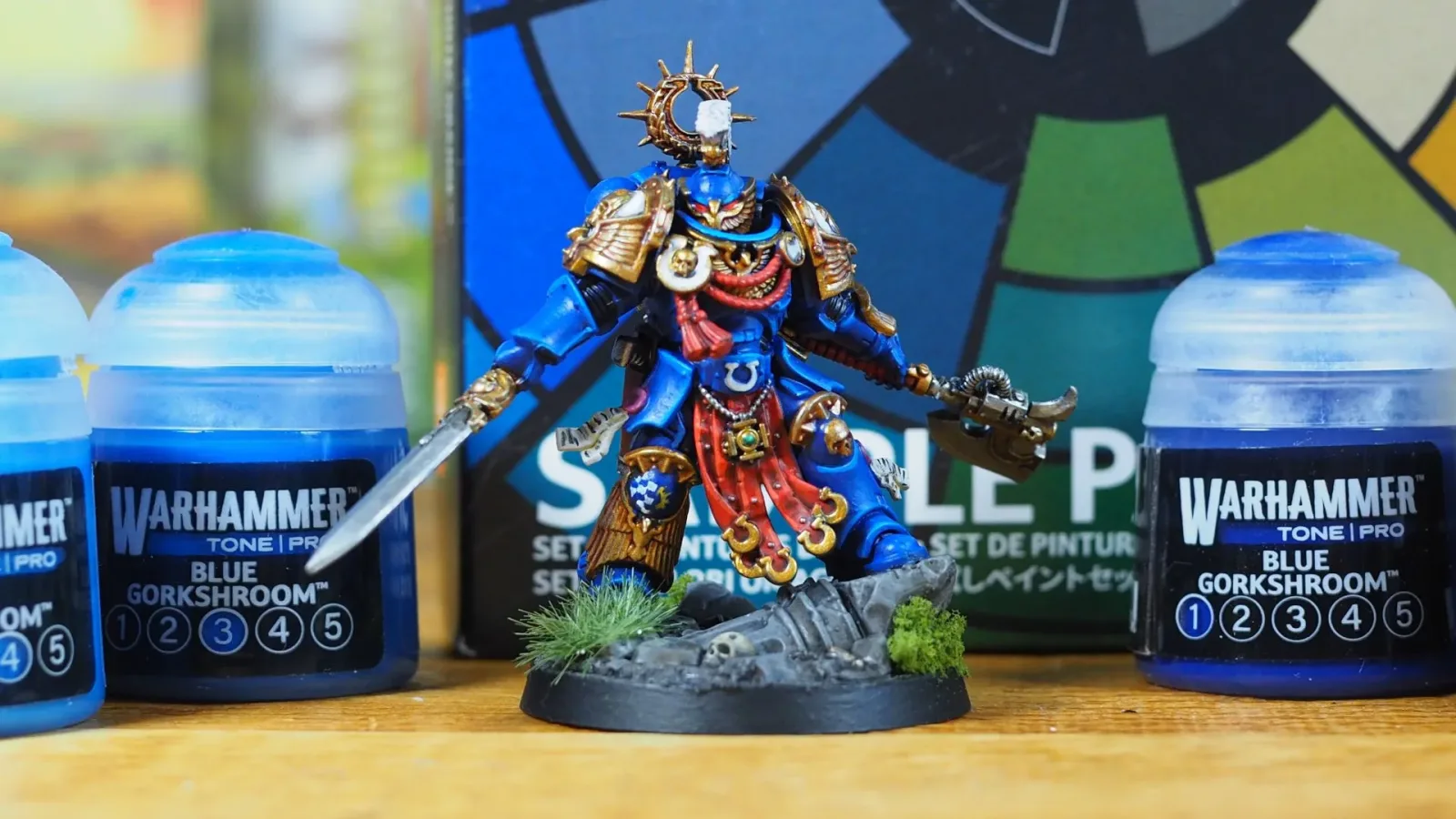
The system has already shown its practical value on Ultramarine Kais Konorius, one of the new Warhammer 40,000 Space Marines. His recognisable blue power armour was painted using Tone Pro where possible, beginning with Blue Gorkshroom 1 and moving through the range to Blue Gorkshroom 4 for the highlights. The process made the transition through the tones easy to follow and produced an especially strong Ultramarine result.
For a beginner, that kind of clear roadmap can make highlighting feel approachable rather than mystical. Instead of guessing at which separate paint pot will create a natural transition, they can follow a dark-to-light sequence and concentrate on placing colour on raised edges and surfaces. The result may not immediately match the work of competition-level painters, but it provides a dependable foundation for learning.
How Tone Pro fits alongside Contrast and Speedpaint options
Warhammer Tone Pro is not the only path to quickly painted miniatures. Warhammer Contrast Paint and Army Painter Speedpaint remain compelling alternatives, especially for players who want a fast route from undercoated miniature to tabletop-ready force. Applied over a suitable spray undercoat, these paints stain the surface while naturally settling darker colour into recessed areas. In one pass, they can create colour, shadow and highlight effects that would otherwise require several stages.
That makes Contrast and Speedpaint particularly useful for large projects, rank-and-file troops and hobbyists who value speed above detailed control. They can help a new player finish many miniatures quickly, which is no small benefit when a new army has just arrived on the desk.
Tone Pro seems aimed at a different, though overlapping, need. Rather than handling shadows and highlights automatically, it seeks to make conventional opaque painting more consistent and less punishing. It may be the better fit for someone who wants to learn the fundamentals of basecoating and layering without wrestling with inconsistent coverage or accidentally obscuring detail. It can also sit beside speed-focused paints rather than replacing them entirely: a painter might use fast shading paints for some units and Tone Pro for armour, characters or focal details.
The cost question remains important
All of these advantages will be weighed against price. If Tone Pro is substantially more expensive than existing paint ranges, newcomers may reasonably choose a smaller, cheaper collection of conventional paints or a starter-oriented set. Miniature painting already involves costs for brushes, primer, models and optional tools, so an expensive range can be difficult to recommend as a universal entry point.
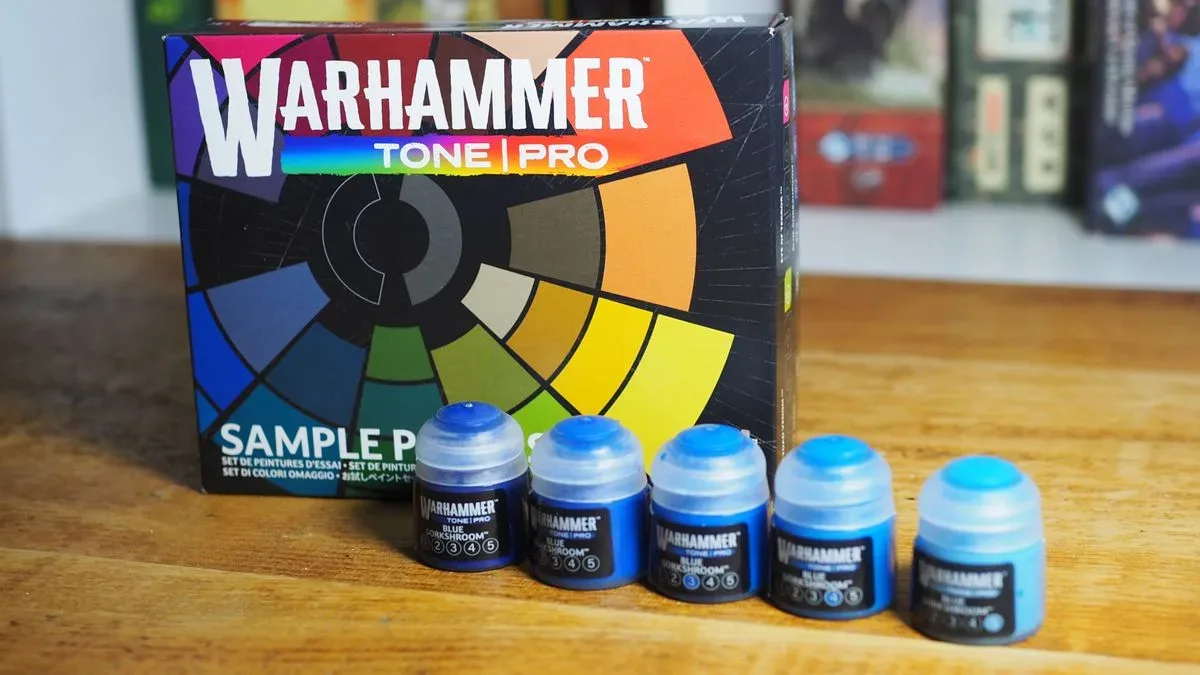
There is a middle ground, though. Players do not necessarily need to replace every pot they own. Someone building Ultramarines, for example, could consider buying only the Blue Gorkshroom 1 through 5 sequence to make the army's central armour colour easier to paint. A focused purchase like that could deliver the practical benefits of the range while avoiding the cost of a full collection.
A starter box would be an especially sensible next step. A press sample set has demonstrated how useful a curated Tone Pro selection could be, and a retail starter bundle with a basic set of colour families would make the concept far more accessible. For now, that remains a hope rather than a confirmed product.
Warhammer Tone Pro may indeed offer enough quality and control to impress veteran painters. But its greater promise is that it could lower the barrier between buying a miniature and feeling proud of the finished result. Better coverage, self-levelling behaviour and a plainly structured highlight system all tackle the small frustrations that can make the first stages of the hobby feel overwhelming. If the price is reasonable enough for new painters to try it, the range could prove that "Pro" does not have to mean "not for beginners."
Community
Discussion
Start the conversation.
No comments have been posted yet.