

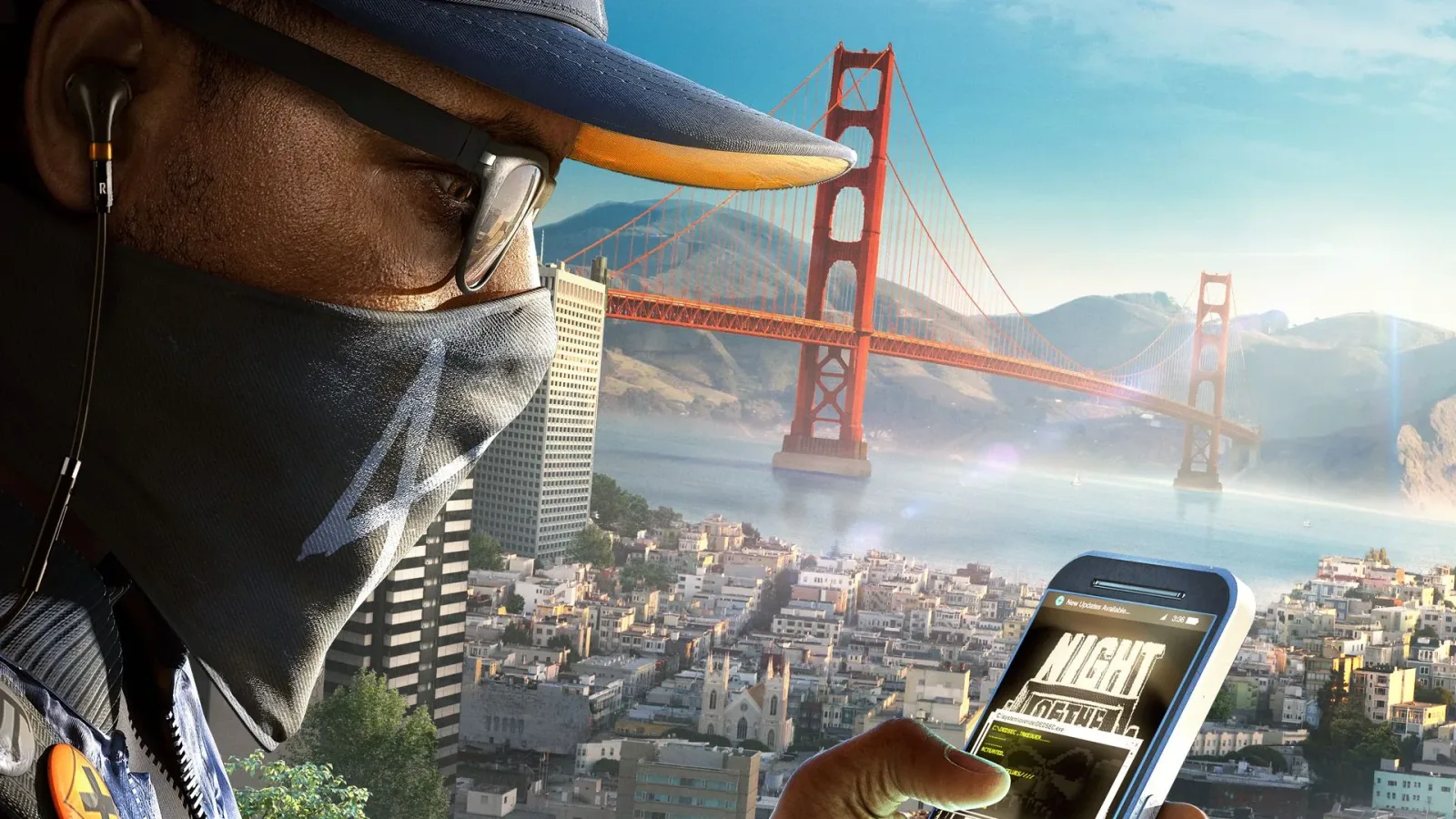
There are open-world games that ask players to save a nation, avenge a family, or become an unstoppable criminal legend. Watch Dogs 2, Ubisoft's 2016 sequel, is often at its best when it asks for something much less solemn: put on a great song, climb onto a remotely controlled car, and cause a completely unnecessary public spectacle in San Francisco.
That spirit was not merely a funny diversion from the main plot. It was the creative decision that gave Watch Dogs 2 its identity. The original Watch Dogs had arrived in 2014 under immense expectations, following an early showcase that became synonymous with debates about visual downgrades. Once players got their hands on the finished game, the conversation expanded beyond graphics. Its rain-soaked Chicago, surveillance-heavy premise, and revenge-driven protagonist Aiden Pearce created a world that was intentionally grim, but often felt stifling.
Watch Dogs 2 responded by making an unusually dramatic tonal pivot. It retained the series' core concern with data collection, corporate power, law enforcement, and ubiquitous connected technology. But it approached those subjects through color, humor, music, youthful energy, and an open willingness to be ridiculous. The result is a sequel that understood an important truth about its own fantasy: hacking the systems around you is more appealing when it feels inventive, communal, and fun.
From paranoid Chicago to a living San Francisco
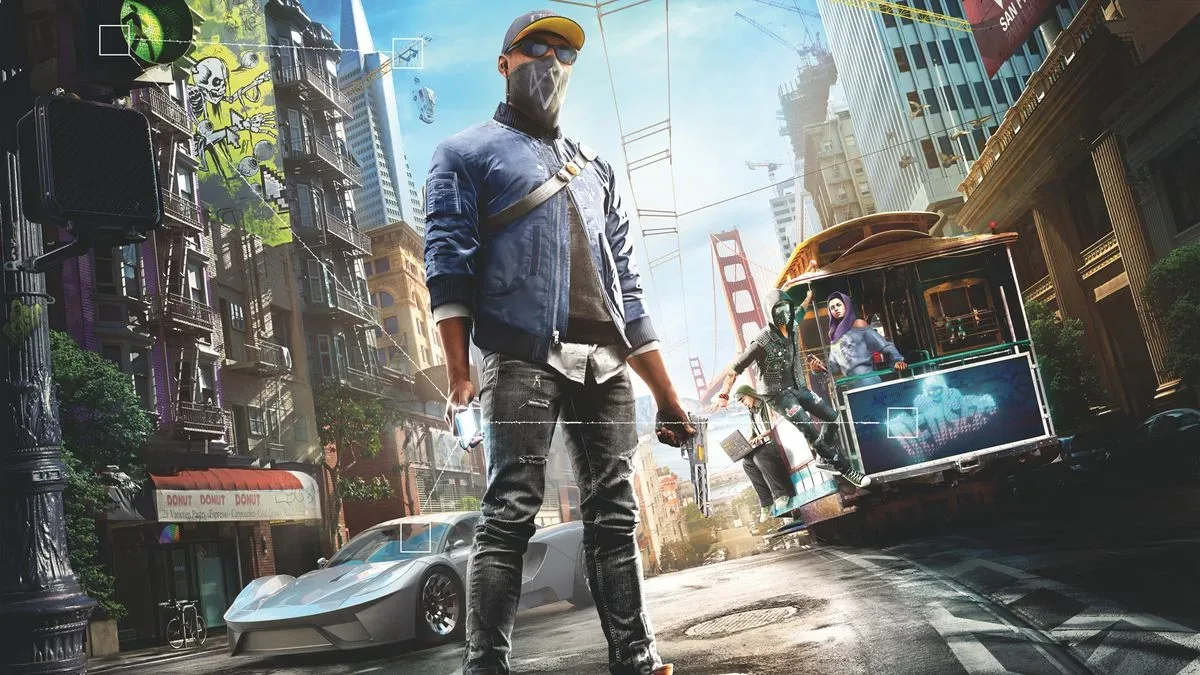
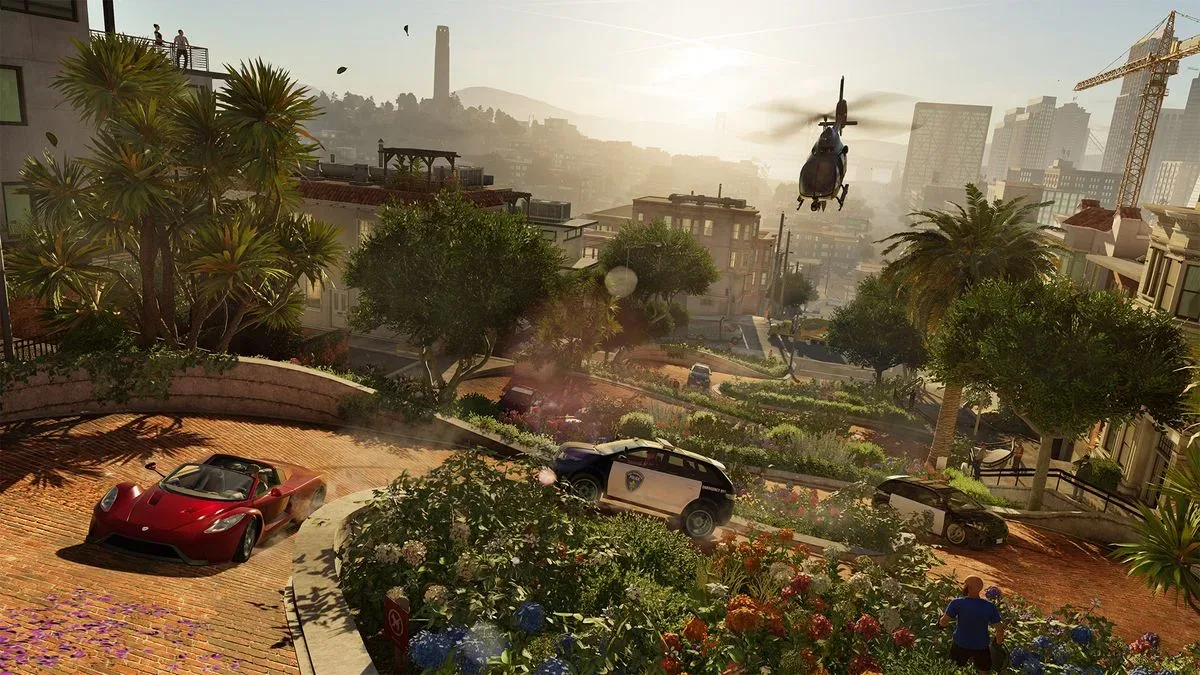
The contrast is immediate. Where the first game framed its setting through darkness and suspicion, Watch Dogs 2 presents the Bay Area as a bright, noisy collision of tech wealth, creative culture, tourist landmarks, and glaring inequality. Glass corporate campuses stand near Victorian houses. Startup optimism and conspicuous privilege share space with people pushed to the margins of the city they call home.
For useful background on this topic, read Deadlock's Solomon Reloads Recreate Landmark Chess Positions.
It is still a heightened version of San Francisco, of course. The game's pedestrians, vehicles, dialogue, and radio selections regularly lean into broad caricature. Yet that exaggeration is part of why the location works. The tech world can be strange, self-important, and absurd in ways that are difficult to convey through a relentlessly dour thriller. Watch Dogs 2 recognizes that the most effective satire is sometimes loud enough to make players laugh before it makes them uncomfortable.
Its virtual tourism also has genuine mechanical value. The ScoutX application encourages Marcus Holloway to visit and photograph landmarks across the city, boosting DedSec's presence online. The feature is a clear acknowledgement that players do not only enter these large Ubisoft worlds to chase mission markers. They also want to wander, look around, and occupy a digital interpretation of a famous place.
SongSneak, a music-identification app within the game, develops that same idea in a smaller but more evocative way. Tracks heard near bars, radios, boomboxes, and other sources around the map can be added to Marcus' playlists. Rather than treating music as a disconnected collectible handed out for completing unrelated activities, the system makes players discover it in a place. A song becomes tied to the street, mission, ride, or accidental chaos surrounding the first time they hear it.
Marcus Holloway changes the series' center of gravity
The sequel's biggest improvement may be Marcus himself. Aiden Pearce was designed as a hardened vigilante, but his severe demeanor left little room for warmth or spontaneity. Marcus is a young Black hacker who understands that he has been targeted by a system built to categorize and control people. Crucially, he also sees that his experience is part of a wider structure rather than an isolated injustice.
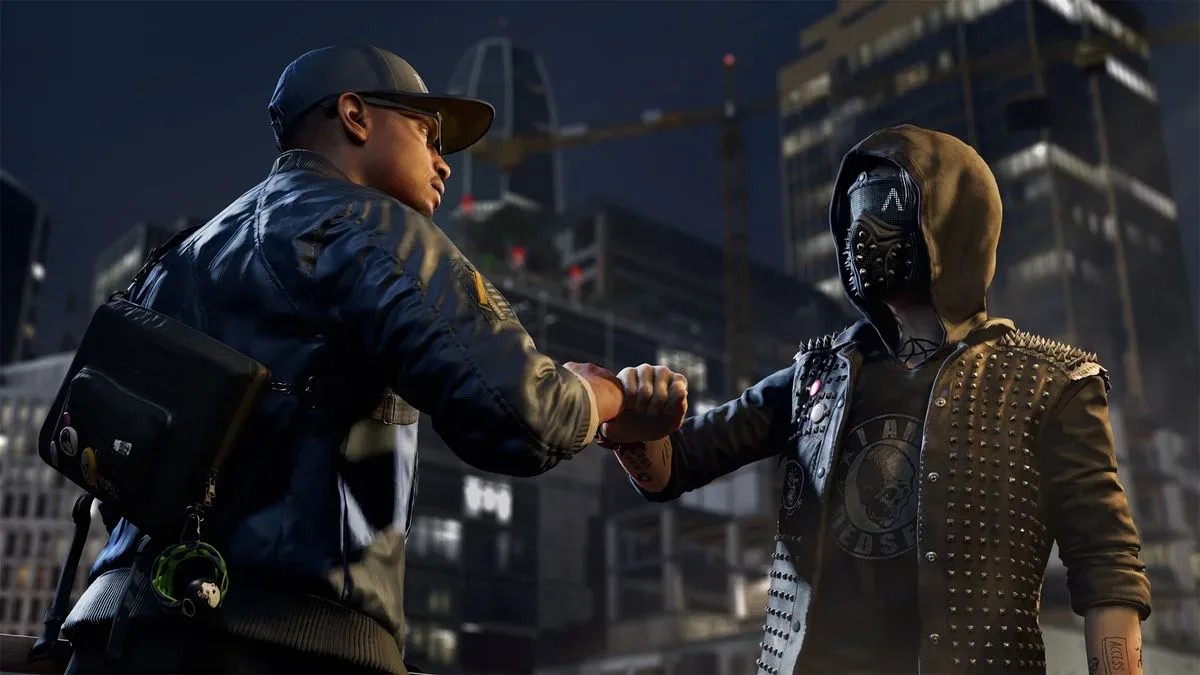
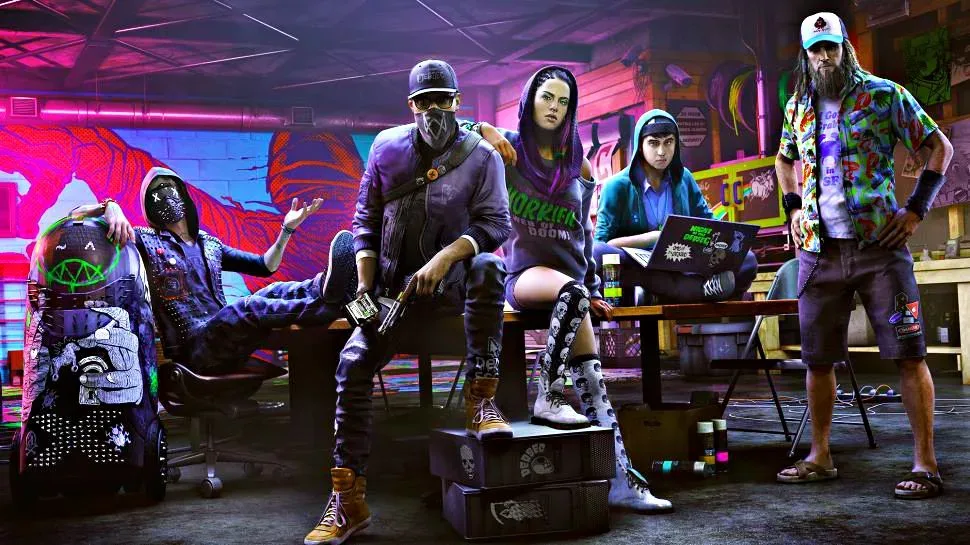
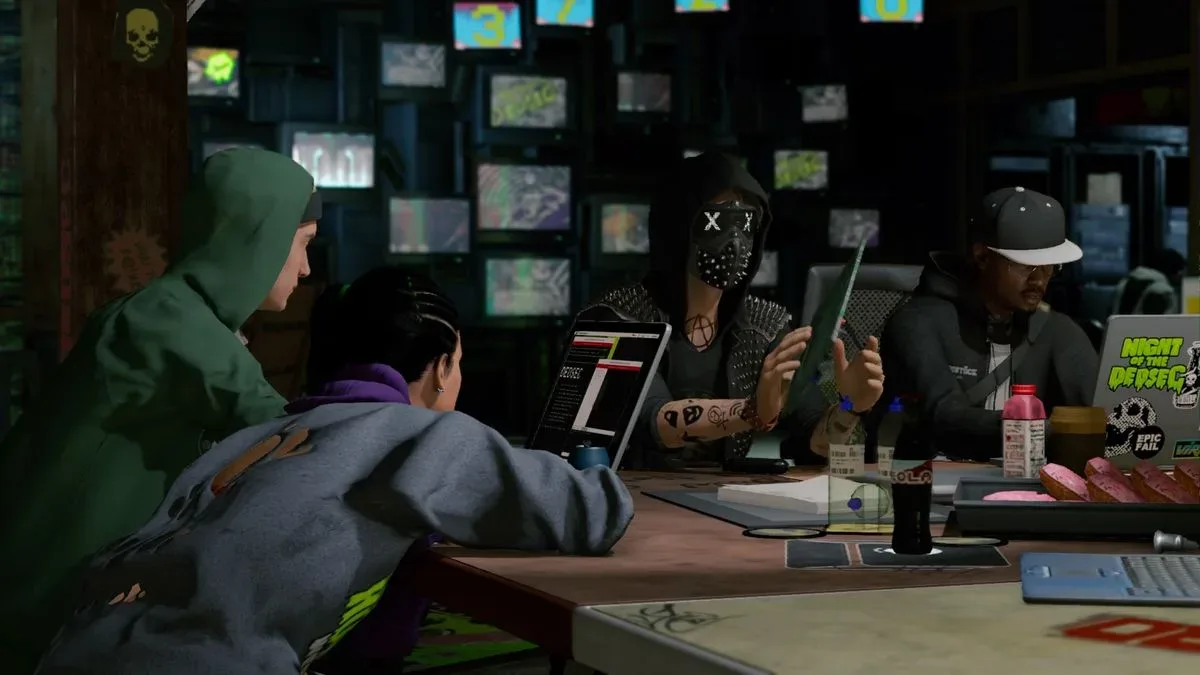
That perspective shapes the game's version of DedSec. The group can be corny, and its LED masks, meme references, and slang unmistakably reflect a particular mid-2010s internet sensibility. Not every joke has aged gracefully. Still, the crew's enthusiasm serves a purpose. They are angry at powerful institutions, but they are not defined solely by anger. They make jokes, make art, create stunts, and turn public exposure into a form of performance.
That makes the central conflict easier to invest in. Watch Dogs 2 is not arguing that a single gifted loner can fix society with a phone and a gun. Its fiction instead points toward visibility, solidarity, and collective action. The game turns social-media followers into a progression resource, earned through missions, photos, and public-facing exploits. It is a simplified system, but it gives the campaign a consistent thematic direction: DedSec becomes more capable by convincing more people that its cause matters.
The final stretch reinforces this idea by letting players take control of the core team rather than leaving every decisive moment to Marcus alone. The message is direct, but it is much more effective because the group has been allowed to establish distinct personalities throughout the game.
Systems built for mischief
Watch Dogs 2's tone would not have worked if its mechanics still pushed players toward cold, methodical violence. Instead, its tools encourage improvised troublemaking. Marcus can use a drone and a remote-controlled jumper to infiltrate restricted spaces, manipulate environmental devices, distract guards, trigger hazards, steal information, and drive vehicles from a distance.
The possibilities are often more entertaining than they are elegant. The game's artificial intelligence can become confused when its intersecting systems collide, but that weakness frequently turns into a strength. An intended distraction can become a chaotic multi-car pileup. A bystander might overreact to a minor incident, drawing authorities into an escalating mess. These moments make the city feel responsive even when the response is plainly ridiculous.
In a more realistic game, that instability could be immersion-breaking. In Watch Dogs 2, it is almost a form of comedy. This is a world where a personal argument can spiral out of control and where social performance is inseparable from public life. When a carefully planned infiltration devolves into remote-driving a vehicle through obstacles while pedestrians watch in disbelief, the game feels like it is delivering exactly what it promised.
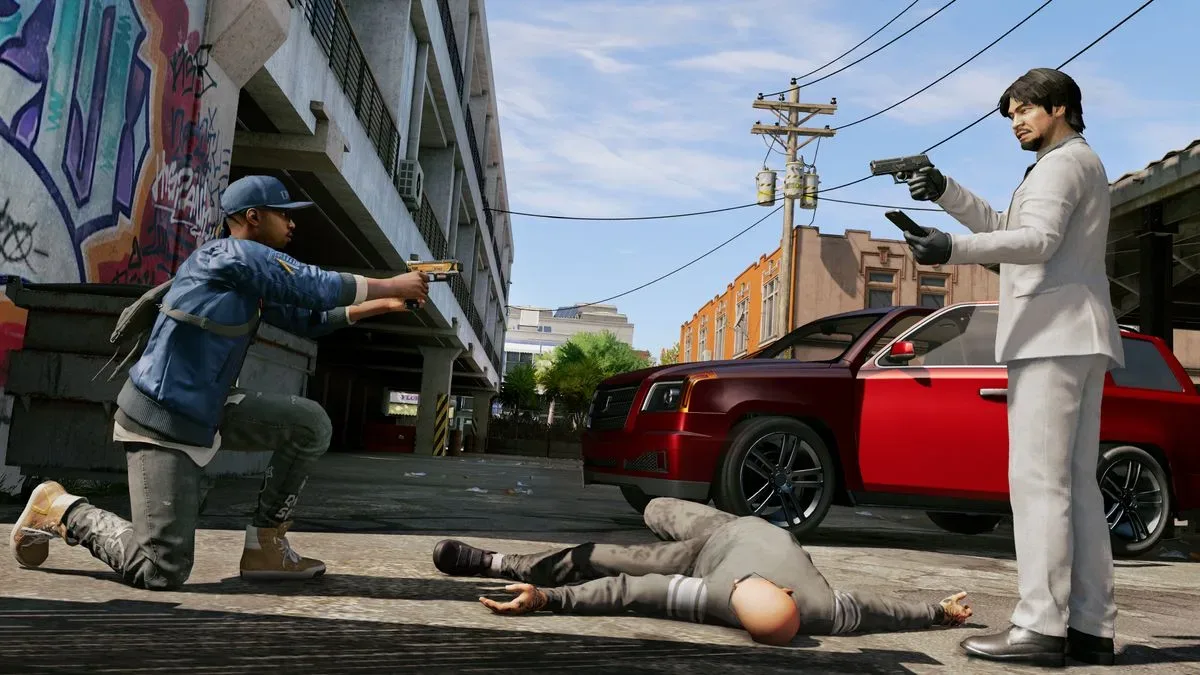
Its non-lethal options matter as well. Marcus can use stun weapons and improvised gadgets that keep the emphasis on disruption rather than execution. The distinction is not perfect, and the game's playful presentation can occasionally clash with the impact of its actions, but the overall direction is clear. Players are encouraged to embarrass and outsmart entrenched power, not simply eliminate everyone standing nearby.
Music turns play into memory
Marcus' earbuds are one of the sequel's deceptively important details. Players can activate music while exploring or tackling missions, pulling from an eclectic soundtrack that includes artists such as Dizzee Rascal, Anti-Flag, KC & The Sunshine Band, Run The Jewels, Judas Priest, and Mac Dre. That flexibility lets players make their own tone from one moment to the next.
A tense infiltration can become a music video. A routine drive can turn into a favorite memory because the right track happened to be playing. Classical music over a ludicrous theft, punk during an escape, or Bay Area rap while performing an outrageous vehicle stunt all create combinations that no scripted cutscene could fully reproduce.
Mac Dre's "Get Stupid" is especially fitting for the game's attitude. Its energy captures the sequel's willingness to embrace foolishness as a kind of freedom. Watch Dogs 2 does not confuse being silly with having nothing to say. Instead, it uses silliness to make its anti-corporate anger more approachable and its world more distinctive.
The Cyberdriver mission explains the whole game
One early mission serves as a near-perfect statement of intent. Marcus and DedSec set out to steal a talking, self-driving movie car inspired by the kind of exaggerated automotive fantasy associated with Knight Rider. Their complaint is that a film called Cyberdriver makes hacker culture look childish. Their answer is not a carefully reasoned media critique. They steal the vehicle, guide it through a pyrotechnic citywide stunt sequence to Judas Priest's "Turbo Lover," and smash it through promotional material.
It is petty. It is spectacular. It is knowingly immature. And it is unforgettable.
The mission works because it shows that the game understands the difference between a movement's ideals and its public presentation. DedSec needs to reach people, and that means creating moments that are impossible to ignore. Watch Dogs 2 treats visibility as both a joke and a tool of political pressure. The crew's stunts may be outrageous, but they are part of a larger campaign against institutions that prefer to operate without scrutiny.
Why Legion struggled to repeat the trick
Watch Dogs: Legion later attempted to expand the collective-rebellion idea through its system allowing players to recruit and control nearly anyone in London. It was an ambitious concept, but it exposed what Watch Dogs 2 had done so well. In trying to make every resident playable, Legion could not give most of them the specific personality, history, and relationships that made Marcus and his friends memorable.
A movement can be made up of ordinary people, but stories still need individuals whom players can understand. Watch Dogs 2's DedSec succeeds because its members feel like a group with different voices, even when their humor is occasionally overdone. Legion's procedural characters offered variety in abilities and descriptions, yet often lacked that emotional anchor.
The later game's more lethal combat options also altered the mood. Watch Dogs 2's best moments feel like rebellious pranks with serious targets. When the primary solution becomes lethal force, the same brand of anarchic spectacle can feel less like mischievous resistance and more like violence for its own sake.
A sequel that chose personality over posturing
Watch Dogs 2 is not flawless. Its satire can be broad, its dated internet references can induce a wince, and its systemic city can be messy in ways that reveal the seams. But those rough edges are inseparable from its charm. The game is willing to be earnest, awkward, noisy, and exuberant, all while retaining a clear concern about who controls information and how ordinary people can challenge concentrated power.
Most importantly, it gave its hacker fantasy a human face. Marcus is not a grim instrument of revenge. He is a person who wants agency, connection, and a better world, and who discovers that those things require more than individual brilliance. They require other people showing up.
That is why Watch Dogs 2 remains the series' most compelling entry for many players. It learned that rebellion does not have to wear a permanent scowl to be meaningful. Sometimes it can arrive with a phone in one hand, a drone in the air, a ridiculous stunt underway, and the perfect song playing in your ears.
Community
Discussion
Start the conversation.
No comments have been posted yet.