

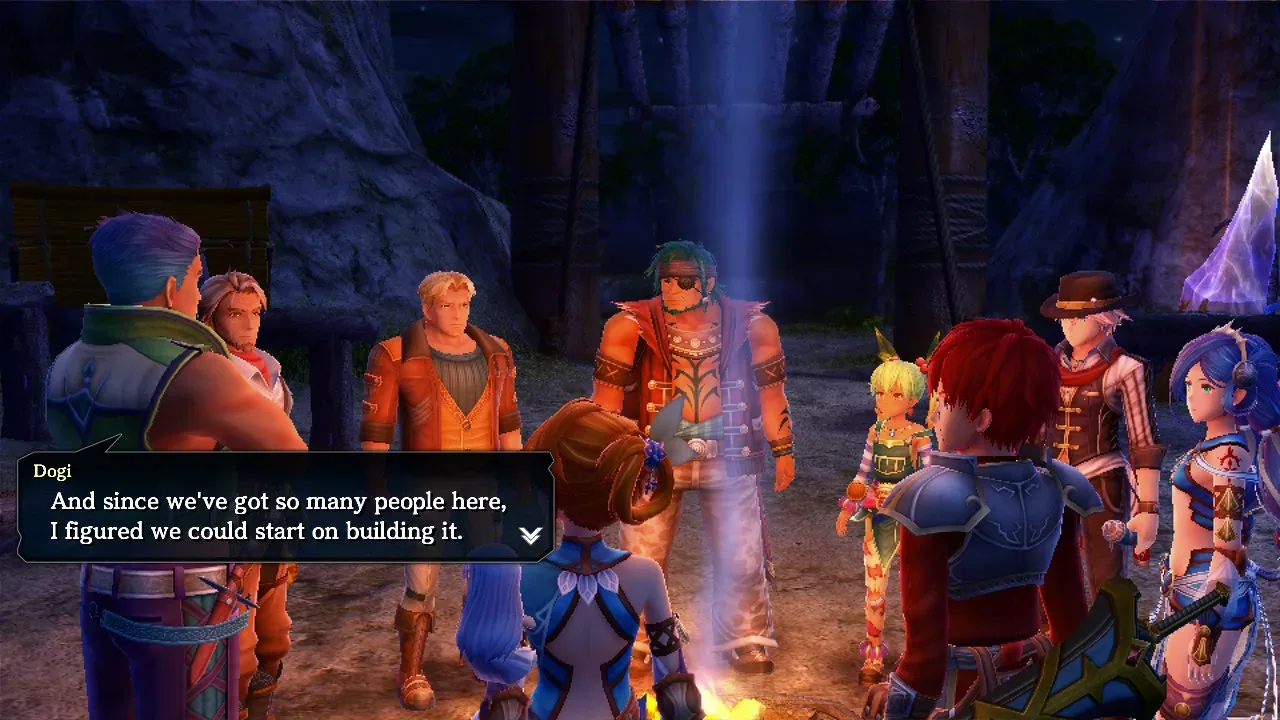
Ys VIII: Lacrimosa of Dana arrived in 2016, but it remains one of the most distinctive action RPGs of its era. It is easy to understand the immediate appeal: Nihon Falcom built a fast, responsive combat system around party swapping, evasive movement, precision defensive maneuvers, and a constant flow of new skills. Fighting through Seiren Island's jungles, cliffs, ruins, and monster-filled plains has an energy that many larger-budget RPGs still struggle to match.
But Ys VIII is remembered for more than the sensation of cutting through enemies at speed. Its real strength is how it makes an enormous, cosmic story of extinction feel intimate. The game starts as a survival adventure about shipwrecked strangers building a home, then gradually transforms into a tragedy about a woman who knows her civilization is dying. That shift could have overwhelmed the earlier material. Instead, the human scale of Castaway Village gives the later apocalypse its emotional weight.
The result is an RPG where gathering supplies, helping neighbors, tracking down missing passengers, and returning to a growing settlement matter just as much as uncovering the ancient truth beneath the island.
A shipwreck story with a living center
Series protagonist Adol Christin begins Ys VIII stranded after the passenger ship Lombardia is attacked and destroyed near the mysterious Seiren Island. His first goal is straightforward: locate other survivors and establish a safe place for them to live. As more castaways are rescued, a small settlement takes shape, with villagers contributing skills, services, and requests of their own.
For useful background on this topic, read Total War: Warhammer 40K Confirms Traitor Guard Presence at Launch.
This structure is not unusual on paper. RPGs frequently use a base that expands alongside the player's progress. Ys VIII succeeds because its village is not merely a menu hub or an upgrade dispenser. It is a community built from people who were frightened, separated from their families, and abruptly forced to depend on one another.
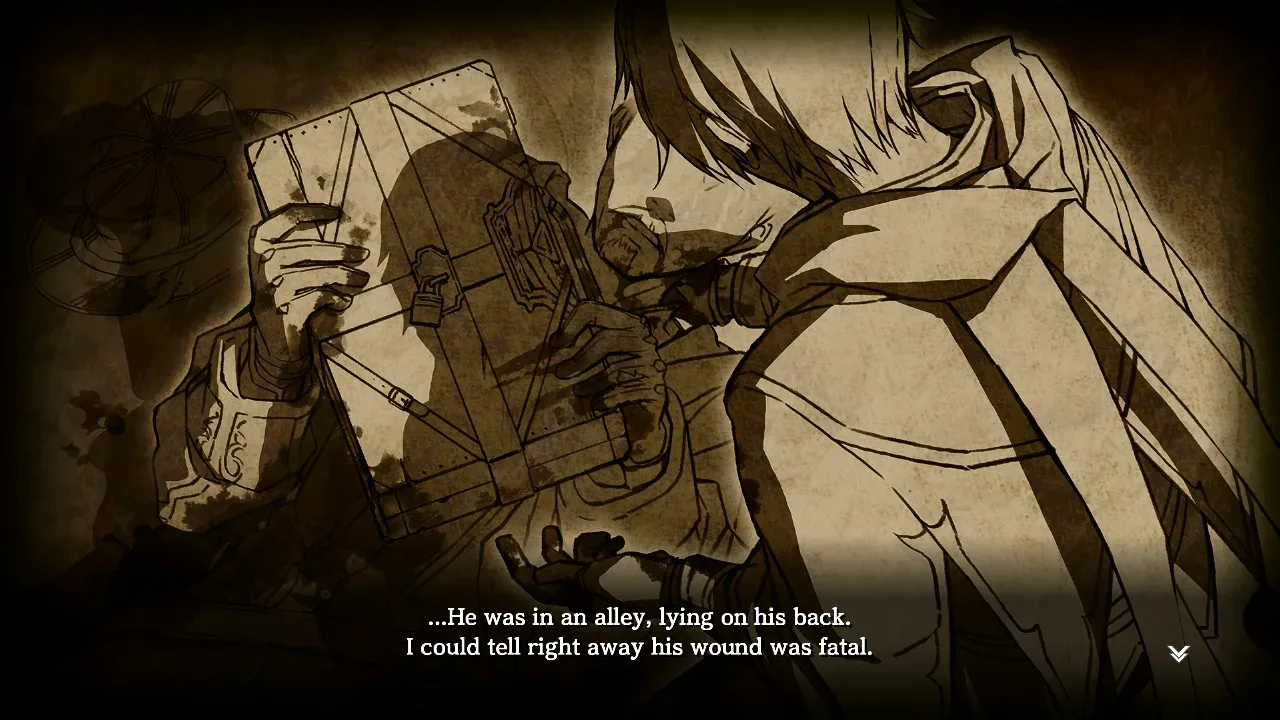
Conversations and optional quests provide the castaways with history beyond their role in the main plot. The transporter Hummel initially presents himself as detached and practical, but his personal story reveals a complicated family legacy and a more compassionate motivation than his reserved demeanor suggests. His past involves a father, dangerous work, and medical supplies intended for people ignored by respectable society. It reframes his distance without magically changing who he is.
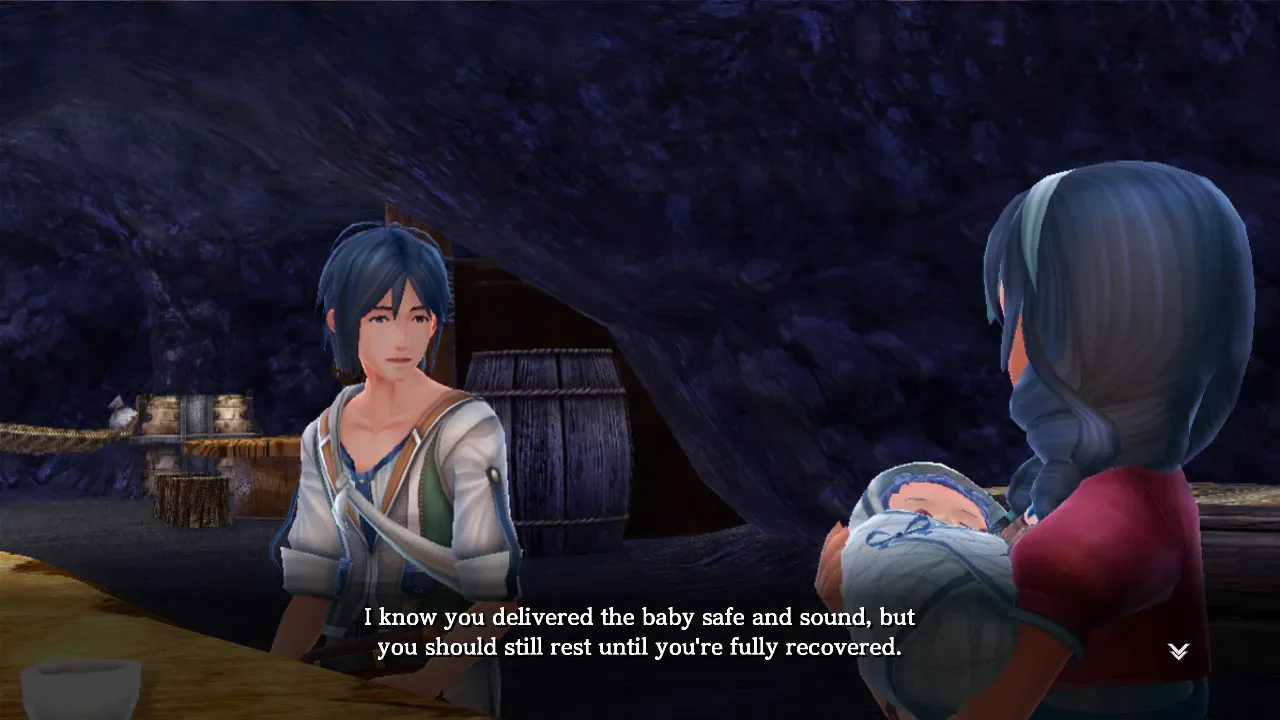
Other stories are gentler. Alison, a seamstress hiding a difficult pregnancy, worries for her missing husband Ed. The effort to find a flower that reminds her of home becomes part of a larger reunion, followed by the birth of their child. Later, Ed's search for a ruby to make his wife a ring gives their relationship an ordinary tenderness that feels especially powerful in the middle of a monster-infested island.
For another perspective on this story, read Why Ys VIII: Lacrimosa of Dana Still Makes Its Apocalypse Feel Personal.
These are not world-saving quests. That is why they work. Ys VIII treats the mundane hopes of its survivors as worthy of attention. By the time the story reaches its largest revelations, players have spent dozens of hours seeing what it means for people to endure: they work, mourn, argue, start families, and try to make an unfamiliar place feel less hostile.
Grief remains present instead of becoming a plot checkpoint
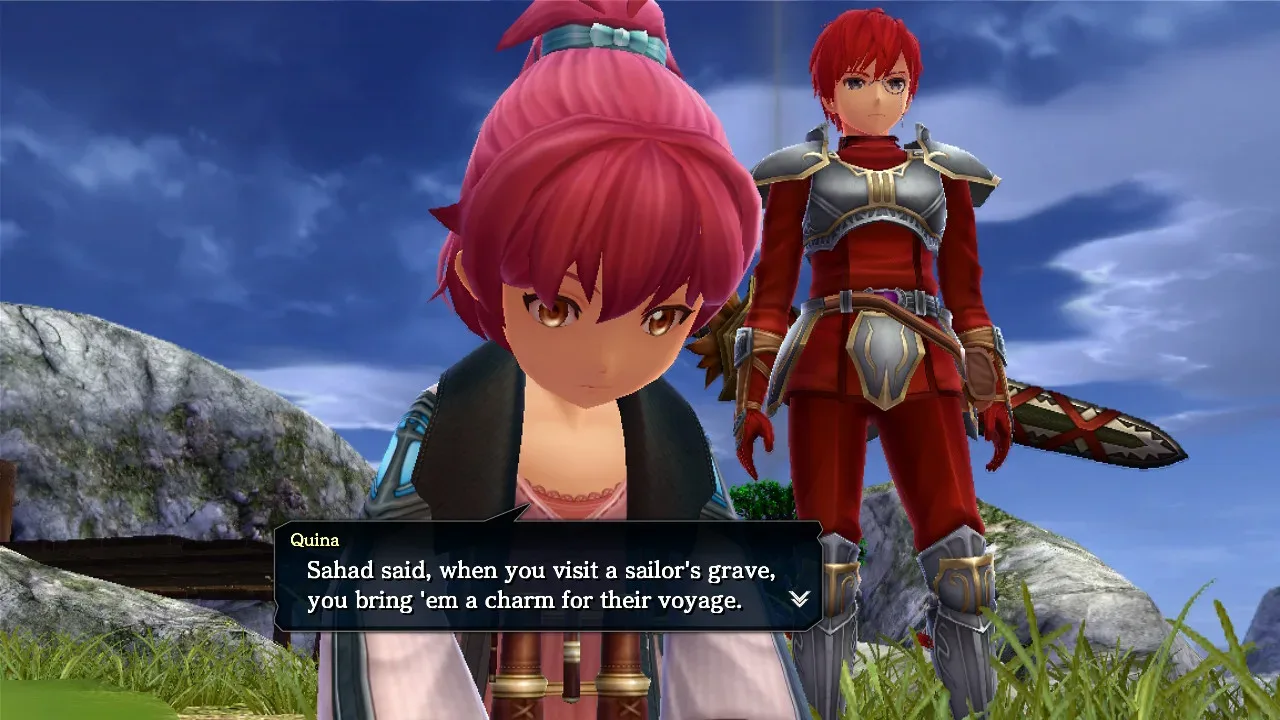
The game is also unusually good at remembering loss. Captain Barbaros dies during the castaways' struggle to survive, yet his death is not quickly discarded so the adventure can move to its next spectacle. People in the village continue to mention him. Katthew seeks materials for a ritual honoring the captain, while Quina wants to create a tribute for the person who saved her life.
That ongoing presence is important. Games often acknowledge death in a dramatic scene, then allow the dead character to fade from the world entirely. In Ys VIII, the survivors carry Captain Barbaros forward in different ways. Their grief is not identical, and it does not resolve on a convenient schedule. The village becomes more believable because it remembers who is missing.
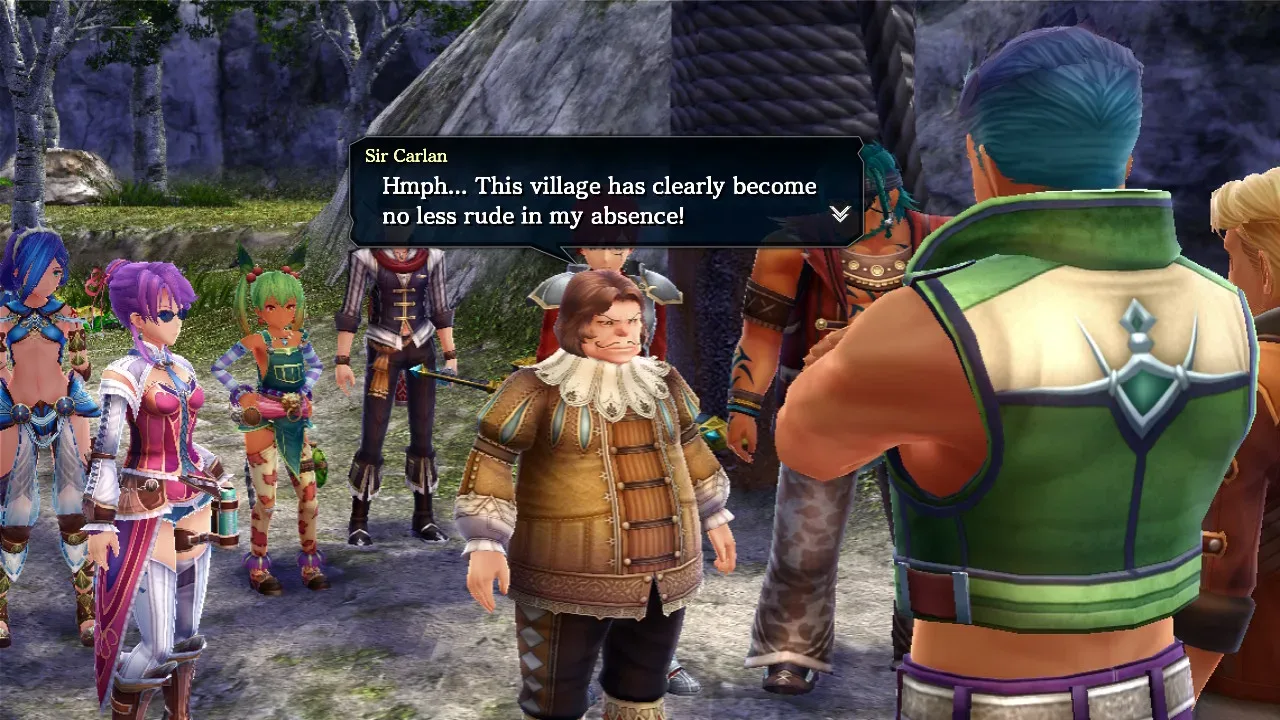
Not every castaway is meant to inspire affection, of course. Sir Carlan is deliberately abrasive: an aristocrat who refuses to share in the work, spreads fear, and acts in self-interest when the settlement most needs cooperation. His continued presence can be frustrating, particularly because later progression asks players to recruit and retain the full cast. Yet even that irritation serves the survival premise. A community is not made solely from ideal companions.
Combat carries the journey between revelations
None of this would land as effectively if traveling around Seiren Island felt like a chore. Fortunately, Ys VIII is one of the strongest action RPGs in the Ys series when it comes to moment-to-moment play. The party system encourages switching among character damage types, while Flash Move and Flash Guard reward well-timed dodges and blocks. Battles are brisk and aggressive, and the game gives players plenty of reasons to keep experimenting with skills and equipment.
The island's gradual opening is equally satisfying. New paths often lead to materials, survivors, formidable monsters, or areas that recontextualize earlier parts of the map. Resource collection and village development are woven into exploration rather than separated from it. A trip out of camp can advance several goals at once.
Optional challenges push that loop further. The Silent Tower, for example, offers rare pure orichalcum needed for top-level equipment and for advancing Adol's bond with blacksmith Kathleen. It also contains Mephorashmoo, a boss that can feel more punishing than the game's final confrontation. Surviving its assaults requires smart use of the arena's barriers rather than simple damage output. These side activities make Seiren feel dense without stripping it of its mystery.
Dana changes the scale of the story
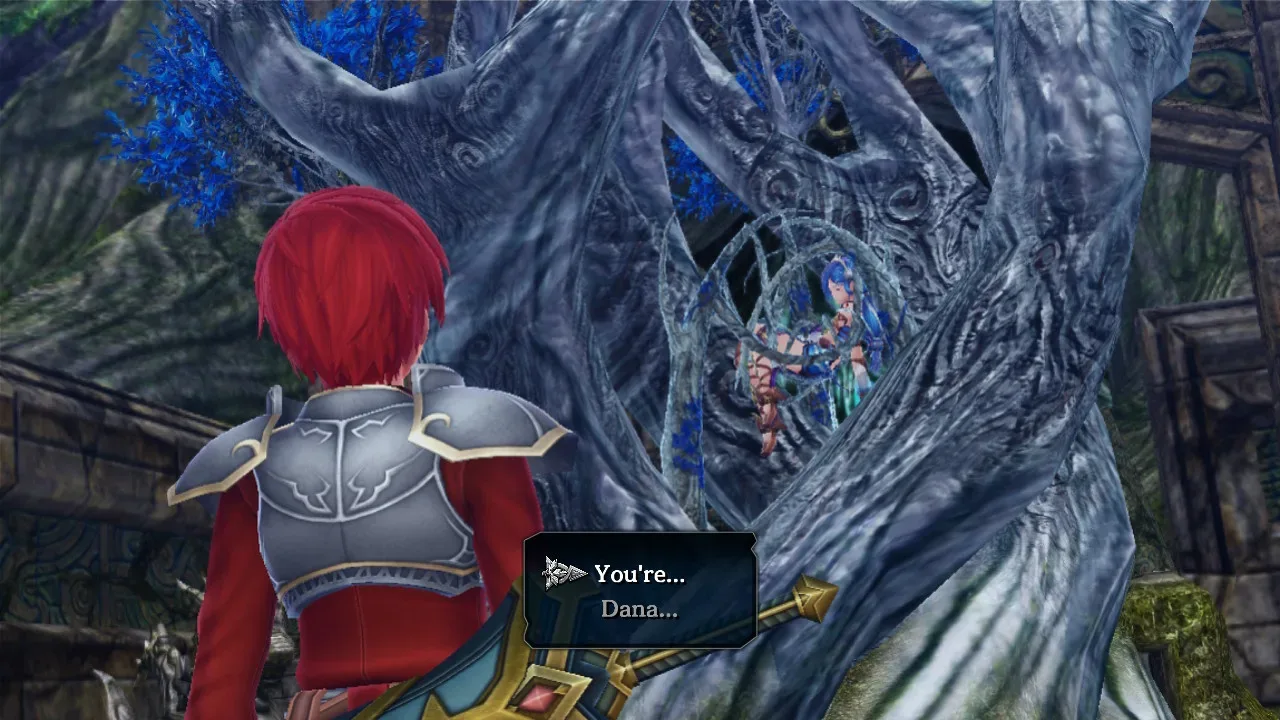
For much of the adventure, Adol experiences strange visions of a woman named Dana. The eventual answer is not merely a twist about an ancient civilization. At a crucial point, Ys VIII lets players inhabit Dana's past directly, exploring Eternia before it became the ruin Adol's party knows.
This is where the game becomes something more than a particularly good island adventure. Dana is the Maiden of the Great Tree and has been given the painful ability to glimpse what is ahead. Her foresight does not make her all-powerful. It burdens her with knowledge she cannot reliably use, echoing the ancient tragedy of Cassandra: seeing disaster is not the same as being able to stop it.
Her mother gives her a necklace that suppresses those visions, granting Dana some relief but introducing a different kind of pain. A future she might have foreseen, including the fire that kills her mother, becomes unbearable precisely because it may have been preventable. Dana's story is defined by that tension between responsibility and helplessness.
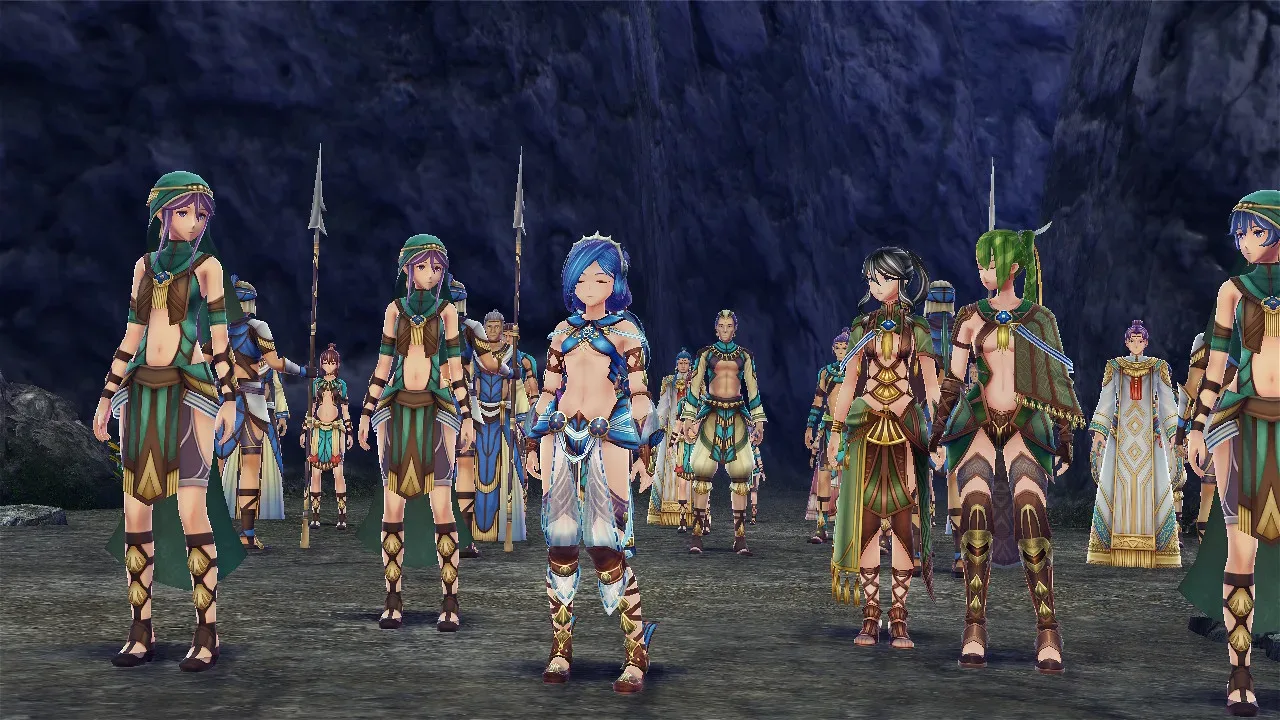
The past sections allow Eternia to become a real society before its destruction. Dana speaks with citizens, solves everyday problems, and moves through a city full of routines and beliefs. Consequently, the fall of the Eternians is not just lore about a vanished people. Players have seen the people who will be lost.
An extinction cycle with no easy moral distance
Dana eventually learns that her people are part of a brutal recurring process connected to the Great Tree of Origins. Civilizations and species are swept aside so new life can emerge. Other Wardens have survived the destruction of their own peoples and now exist in a state of exhausted detachment. Their compassion has eroded after being forced to witness the same pattern again and again.
It is a bleak concept, but Ys VIII makes it more unsettling by refusing to keep it confined to ancient history. Adol and the castaways spend much of their own journey fighting Primordials, the saurian creatures roaming Seiren Island. Many of these beings are dangerous, and the party needs to defend itself. Still, the larger pattern is uncomfortable: humans arrive, harvest resources, push deeper into the creatures' territory, and eventually provoke increasingly desperate resistance.
The castaways are sympathetic survivors, not cartoonish conquerors. That ambiguity is what gives the island's ecology weight. The party's victories can be exhilarating while still inviting players to consider what their progress costs. In trying to resist one form of extinction, they become participants in another.
A bittersweet ending worthy of the journey
Ys VIII has multiple endings, with the stronger conclusion tied to reaching 200 reputation points. The normal ending can feel abrupt and leaves significant emotional questions unresolved. The more complete ending provides greater closure, but it does not turn Dana's ordeal into uncomplicated triumph.
Dana's final sacrifice erases her from the reality shared by Adol and his companions. Although Maia later restores their memories and Dana ultimately reaches a divine status, that outcome remains uneasy. She is honored, but she is still separated from the people and life she tried so desperately to save. Godhood does not erase loneliness.
That lingering sadness is fitting. When the Lombardia II finally carries the survivors away from Seiren, players can speak to the villagers one last time. It is a small farewell sequence, yet it captures the achievement of the entire game. These are no longer anonymous NPCs rescued from a beach. They are people whose losses, hopes, habits, and future plans have become part of the journey.
Ys VIII: Lacrimosa of Dana endures because it understands that an apocalypse is not compelling solely because the stakes are universal. It becomes compelling when the player has seen the lives that continue underneath it: a grieving child, a worried parent, a reluctant friend, a couple trying to build a future, and a woman carrying the memory of an entire world. Its combat may get players onto the island, but its people make it difficult to leave.
Community
Discussion
Start the conversation.
No comments have been posted yet.