

World End Syndrome has the ingredients for an absorbing supernatural mystery: a sleepy seaside setting, a protagonist escaping a painful past, legends of the dead returning to life, and a group of students whose seemingly familiar anime archetypes gradually reveal deeper wounds. Its strongest moments are intimate rather than apocalyptic. Mihate may be threatened by the recurring phenomenon of the Yomibito, but the game's real interest lies in identity, grief, harassment, family history, and the way trauma can reshape a person's entire world.
That makes it especially frustrating that the visual novel places such a large obstacle between players and its most important story material. The central mystery is worth uncovering, and several romantic routes are thoughtfully written. Yet World End Syndrome's progression system turns a narrative game into an exercise in repeated saving, loading, and trial-and-error navigation. The result is a game with a genuinely effective destination that too often makes the journey feel unnecessarily laborious.
A rural mystery with larger stakes
The premise initially suggests something grandiose. Every century, legends say, the Yomibito rise again and bring catastrophe with them. These undead figures are tied to the town of Mihate and its hidden history, establishing a supernatural threat that hangs over the whole experience. But rather than immediately leaning into a world-ending spectacle, World End Syndrome spends most of its time on a smaller and more personal story.
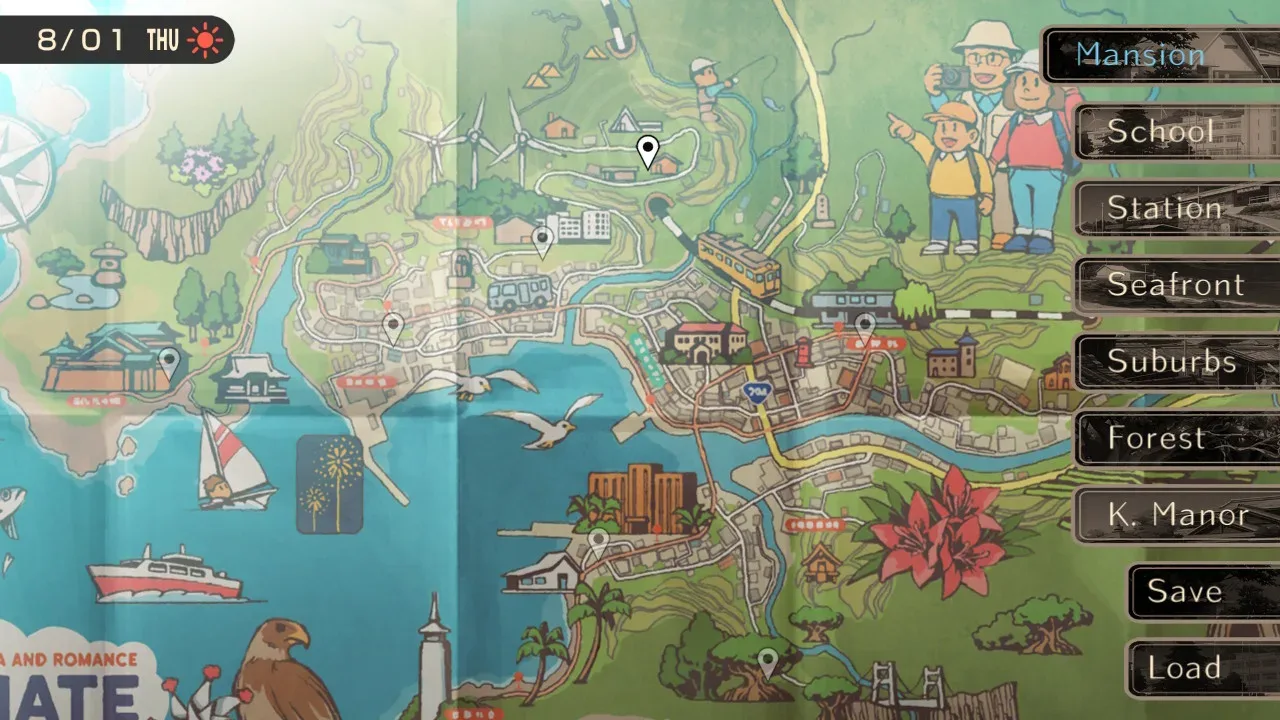
The protagonist arrives in rural Mihate after leaving behind his former life. Around him are schools, suburban streets, a café frequented by local students, and a seafront district with a hotel and lighthouse. It is an environment that suits the genre well: familiar enough to support everyday school-life scenes, yet isolated enough that secrets, old legends, and uneasy encounters can feel close at hand.
For useful background on this topic, read Rockstar Once Worried a Single Red Dead Redemption 2 Hero Would Feel Limiting After GTA 5.
The writing's best quality is its willingness to look past first impressions. There are five students the protagonist can date, although only three routes are initially available. On the surface, several characters appear to be conventional types. The important difference is that their storylines do not simply leave them at that level. As players spend time with them, the game develops their vulnerabilities, family circumstances, fears, and relationships to the larger mystery.
The translation is also generally effective, helping the dialogue carry both lighter interactions and more emotionally difficult scenes. When World End Syndrome is focused on a character's pain or on the unsettling mythology beneath Mihate, it can be genuinely compelling. The Yomibito lore provides a strong hook, while the individual routes give that lore human consequences.
Choice without enough information
The problem begins once Mihate opens for exploration after the lengthy prologue. Players choose which location to visit at different points in the day, hoping to encounter the character whose storyline they want to pursue. In theory, this resembles a dating-focused choose-your-own-adventure structure. In practice, the game does not initially tell players where characters are located.
Choosing a destination advances time whether or not the desired person is there. Since the story is constrained by the August calendar, wasted visits can become a serious issue. A player trying to build affinity with one character may instead repeatedly find someone else, or find no useful interaction at all, while precious days disappear.
World End Syndrome does eventually offer a partial solution, but only through its save-and-load expectations. After players revisit a save file or begin another playthrough, icons can appear beside locations to indicate who was previously found there. This means the game effectively asks players to create frequent saves, test locations, reload, and use the resulting information to plan a more efficient route.
That approach is difficult to justify in a story-driven game. It does not create meaningful suspense or ask players to make a difficult moral decision with limited information. Instead, it withholds basic scheduling information and treats experimentation as the intended route-management tool. A system that simply showed who was available at each destination, or one that did not consume time after an unproductive visit, would have preserved player choice without turning progress into administrative work.
The structure becomes more disappointing because the game's routes are not equal in their relationship to the overall plot. Players can invest in a character, experience a romantic storyline, and reach an ending that is emotionally complete on its own terms, only to learn that the larger truth still remains out of reach. The narrative is designed around replaying the game and clearing multiple routes, but the route system makes that repetition feel more compulsory than rewarding.
Saya's route shows what the game does well
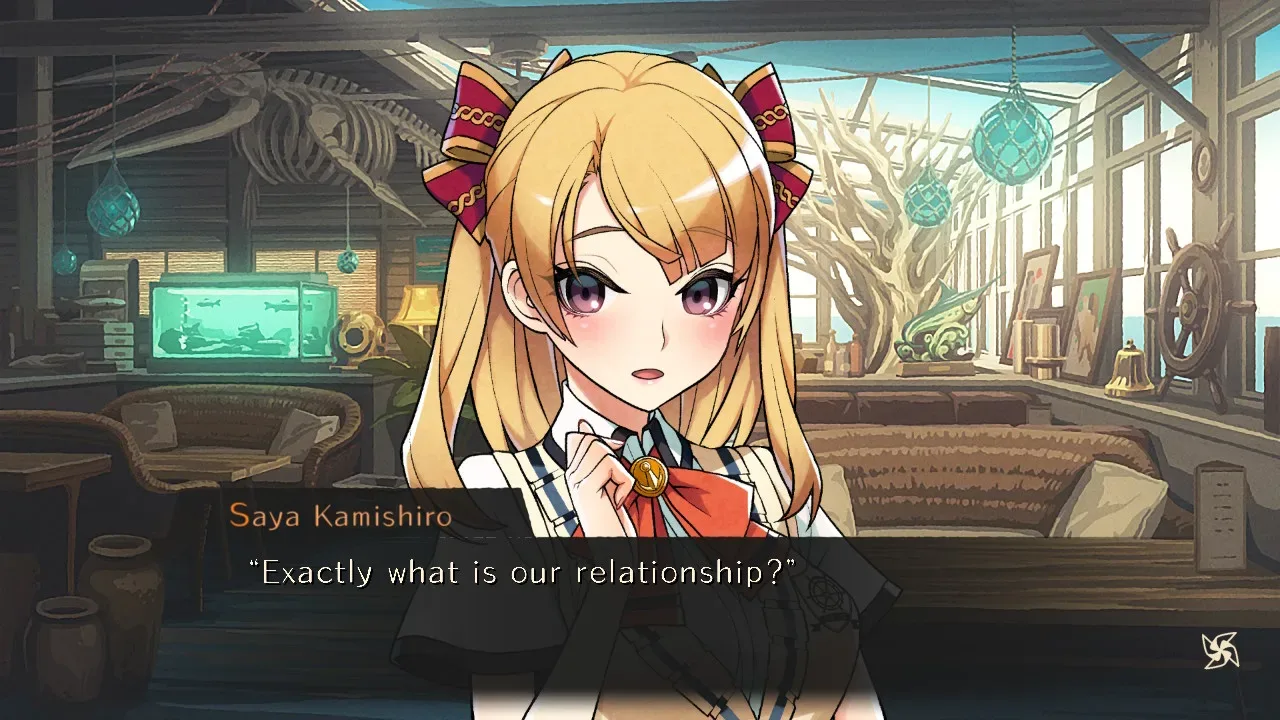
Saya Kamashiro is one of the clearest examples of World End Syndrome's strengths. She initially comes across as aloof and arrogant, a wealthy girl from the influential Kamashiro family who hires the protagonist as her assistant. Early encounters can feel brief and inconsequential, particularly during roughly the first half of the month. However, the route gradually adds context to her behavior and makes her pride feel less like a stock personality trait than an emotional defense.
Saya's storyline involves a stalker and the growing fear that someone is watching and threatening her. The eventual revelation that the stalker is her biological father, rather than a member of the aristocratic family that raised her, forces her to confront questions about legitimacy and self-worth. She has suspected the truth, and her confidence masks insecurity over whether her origins change who she is or where she belongs.
The route's romantic scenes are effective because they emerge from that emotional foundation. Saya is also skilled with a naginata, but the character works best not as a collection of visual-novel traits but as someone trying to hold onto an identity that suddenly feels unstable. The game handles that conflict with more elegance than its early presentation might suggest.
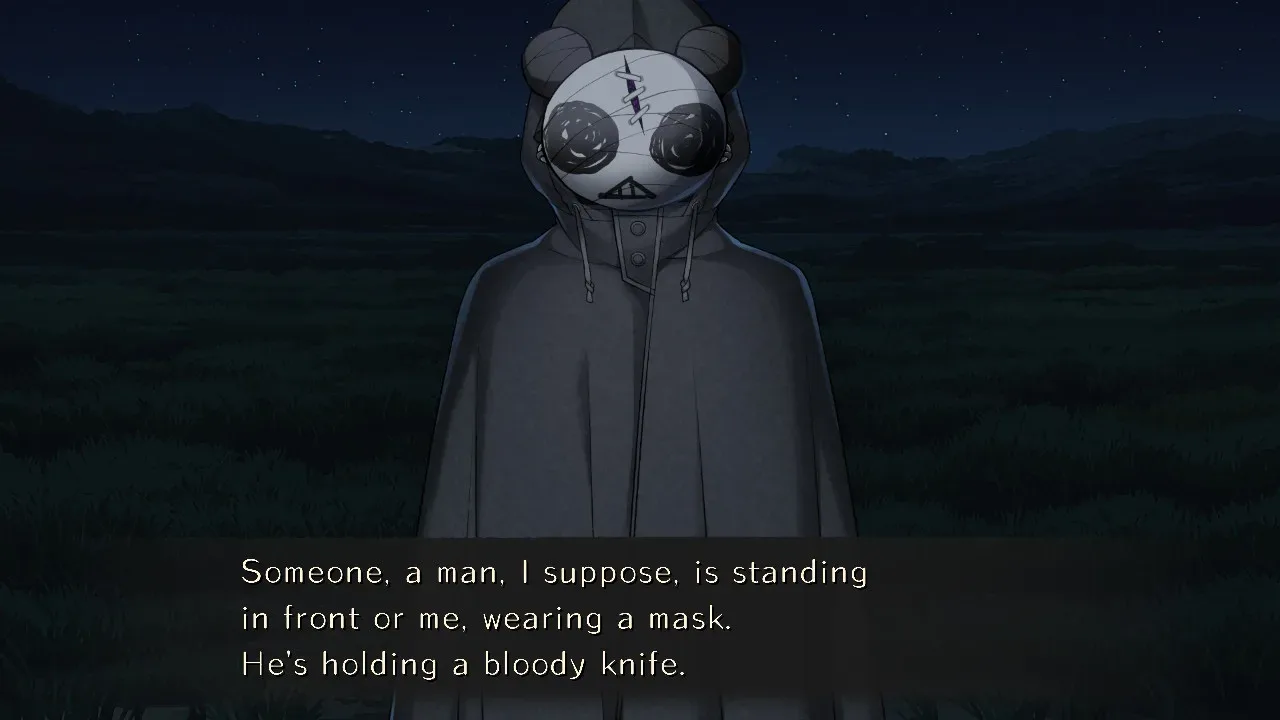
Then the route ends in tragedy when a Yomibito kills the protagonist and Saya. That outcome can initially feel like a punishment for making wrong choices, prompting players to search older saves for a better result. But there is no way to save them within that route. The outcome is fixed.
There is nothing inherently wrong with a tragic route, especially in a supernatural mystery. The issue is what the fixed ending reveals about the game's larger design. The player may choose a romance, but only one path is positioned as the route that truly resolves the story. The other relationships matter as character studies and as pieces of the wider puzzle, yet they also become required steps toward the predetermined answer.
Miu and the path to the truth
That answer is tied to Miu, whose relationship is unavailable until the other four storylines have been completed. Her route contains the most crucial revelations about Mihate, the Yomibito curse, and the protagonist himself. From a plot perspective, it is the game's most important storyline and the one that most fully connects its intimate drama to its supernatural framework.
Miu's family legacy is deeply bound to the curse. She possesses Hawk's Eye, an ability that lets her sense people's auras. Because the undead lack those auras, she can identify the Yomibito for what they are. It is a smart supernatural device: it gives Miu a distinct role in the investigation while also making the threat more immediate and difficult to ignore.
The Truth ending delivers revelations that are both tragic and startling. The protagonist's situation gains new meaning, and the identity of the actual Yomibito is constructed to catch players off guard. This is where World End Syndrome's patient lore-building pays off. The game earns much of its final impact through details and emotional threads laid across the earlier routes.
Still, that payoff is complicated by the knowledge that the game requires players to complete every other romance first. Replaying visual novels can be enjoyable when different branches reveal radically different perspectives or when choices feel expressive. Here, the requirement can instead undermine agency. The player is permitted to choose, but the game has already decided which choice ultimately counts as the true path forward.
An ill-fitting source of comic relief
World End Syndrome also has a major tonal problem in Kensuke, the character positioned as comic relief. Lighthearted side characters can be valuable in stories about death, guilt, and trauma; they can make a cast feel more natural and provide necessary breathing room. Kensuke, however, repeatedly crosses lines that make his presence difficult to accept.
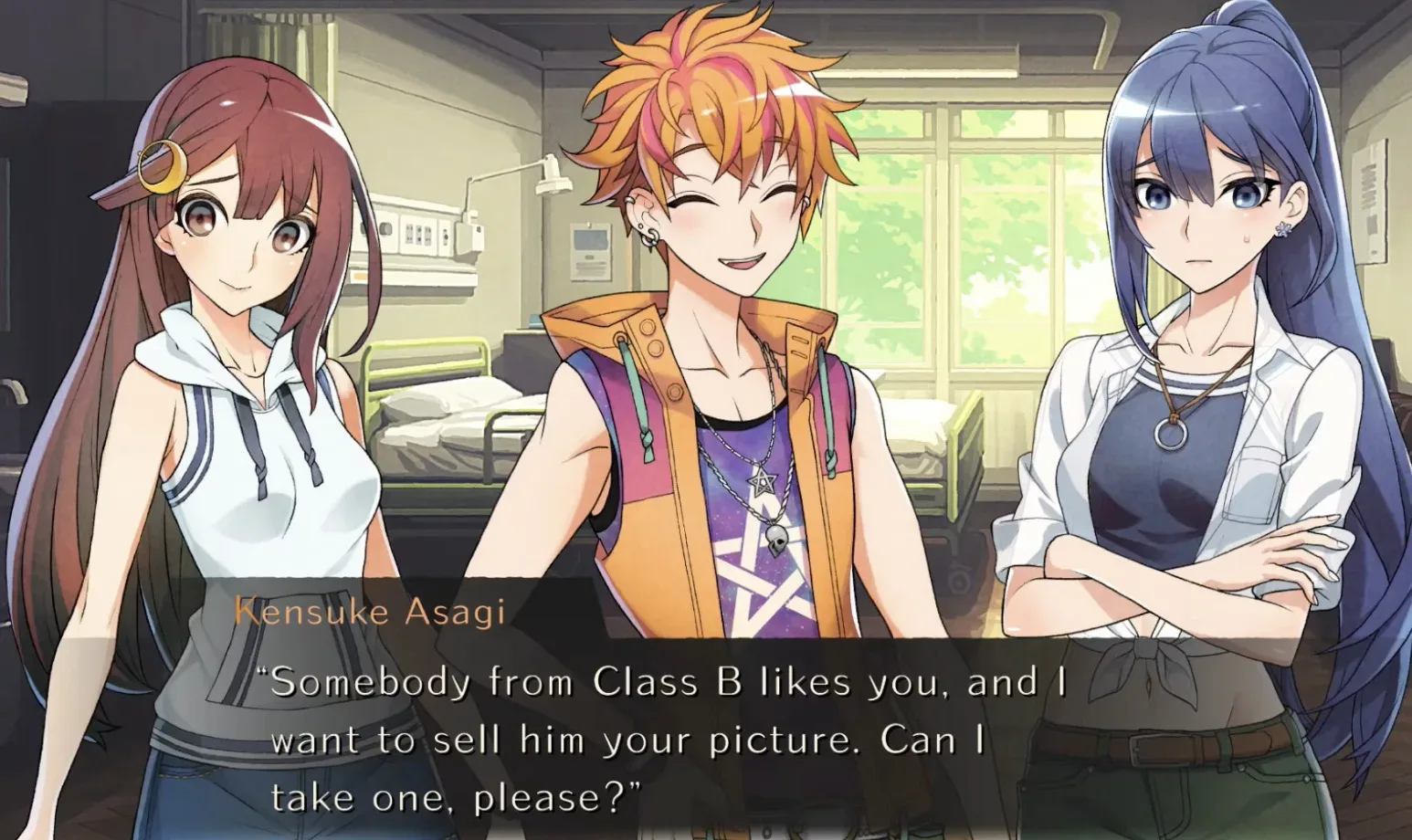
During a field trip, he tries to take compromising photographs of female students playing tennis so he can sell the images online. In another disturbing moment, he asks to photograph Miu while she is in a hospital bed after an attack, again with the intention of selling the picture to someone interested in her. These actions are not merely awkward jokes that have aged poorly. They make him feel exploitative, and the story does not provide enough meaningful reckoning to offset that behavior.
Because Kensuke joins the mystery club through the protagonist, his inclusion can make the protagonist seem complicit in behavior that should disqualify him from a trusted friend group. He also regularly intrudes on serious investigative conversations with weak jokes and self-centered comments. Rather than relieving tension, he often breaks the atmosphere at exactly the wrong moment.
This matters beyond simple annoyance because his presence clashes directly with the game's themes. The protagonist carries guilt over his sister's death and has been subjected to cruel online blame and bullying. His move to Mihate is tied to an attempt to escape that damage and live under a new identity. World End Syndrome's broader idea of an "end" is not only literal destruction; it is the personal devastation that follows an event that shatters someone's sense of reality.
Its more thoughtful scenes suggest that compassion, understanding, and genuine friendship can help people endure that kind of trauma. Kensuke's recurring willingness to exploit others for laughs weakens that message. He is not simply a tonal mismatch. He embodies a casual cruelty that the rest of the game often treats as deeply harmful.
A rewarding story hidden behind frustrating design
World End Syndrome is easy to recommend with qualifications and difficult to recommend without them. Players who can tolerate route planning, frequent reloads, locked progression, and an especially grating supporting character will find a visual novel with a strong setting, substantial emotional material, and a mystery that delivers real surprises by the end.
The game's best writing understands that supernatural horror becomes more powerful when it is attached to ordinary human fears: losing one's identity, being judged by others, carrying grief, and questioning whether a past event can ever be escaped. Mihate's undead legend is intriguing, but the people caught in its shadow are what make the story memorable.
Unfortunately, the mechanics often work against the narrative rather than supporting it. A visual novel built around relationships should make pursuing those relationships engaging, not opaque. And a story so interested in empathy should be more careful about how it uses cruelty as comedy. World End Syndrome ultimately has a fascinating tale to tell. Getting to its truth simply asks far more patience than its strongest scenes deserve.

Community
Discussion
Start the conversation.
No comments have been posted yet.