

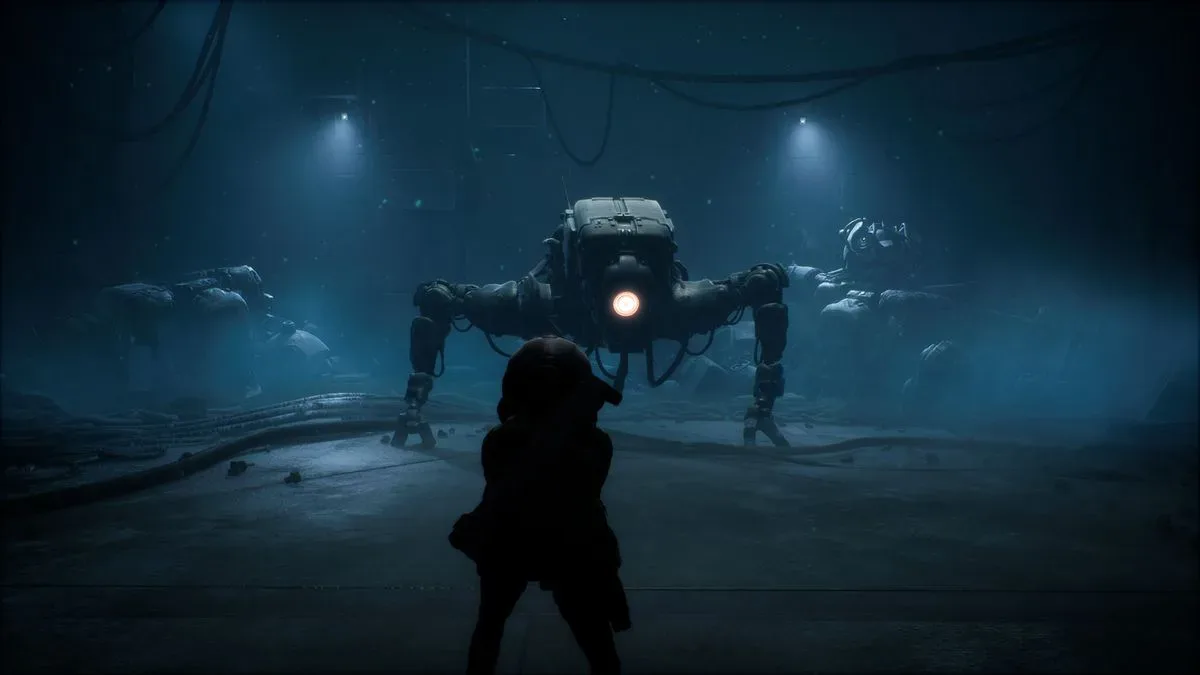
End of Abyss is at its best when it trusts its atmosphere. This survival-horror adventure sends players through dark, hostile facilities and contaminated environments where an unseen threat may be waiting just beyond the edge of the screen. Its distant viewpoint, smoky lighting, and grotesque inhabitants create an immediately memorable identity. There is a clear affection here for the tension and environmental puzzle-solving of classic survival horror, paired with a more modern sense of movement and action.
That foundation is strong enough to make the game compelling in substantial stretches. Careful exploration, limited resources, dangerous enemies, and a world full of locked doors all work together to establish a grim, methodical rhythm. Yet End of Abyss repeatedly interrupts its own strengths with unclear progression, exhausting detours, restrictive boss arenas, and a collection of technical problems. The result is a game that can be frightening and rewarding in one moment, then deeply aggravating in the next.
A survival-horror world built for caution
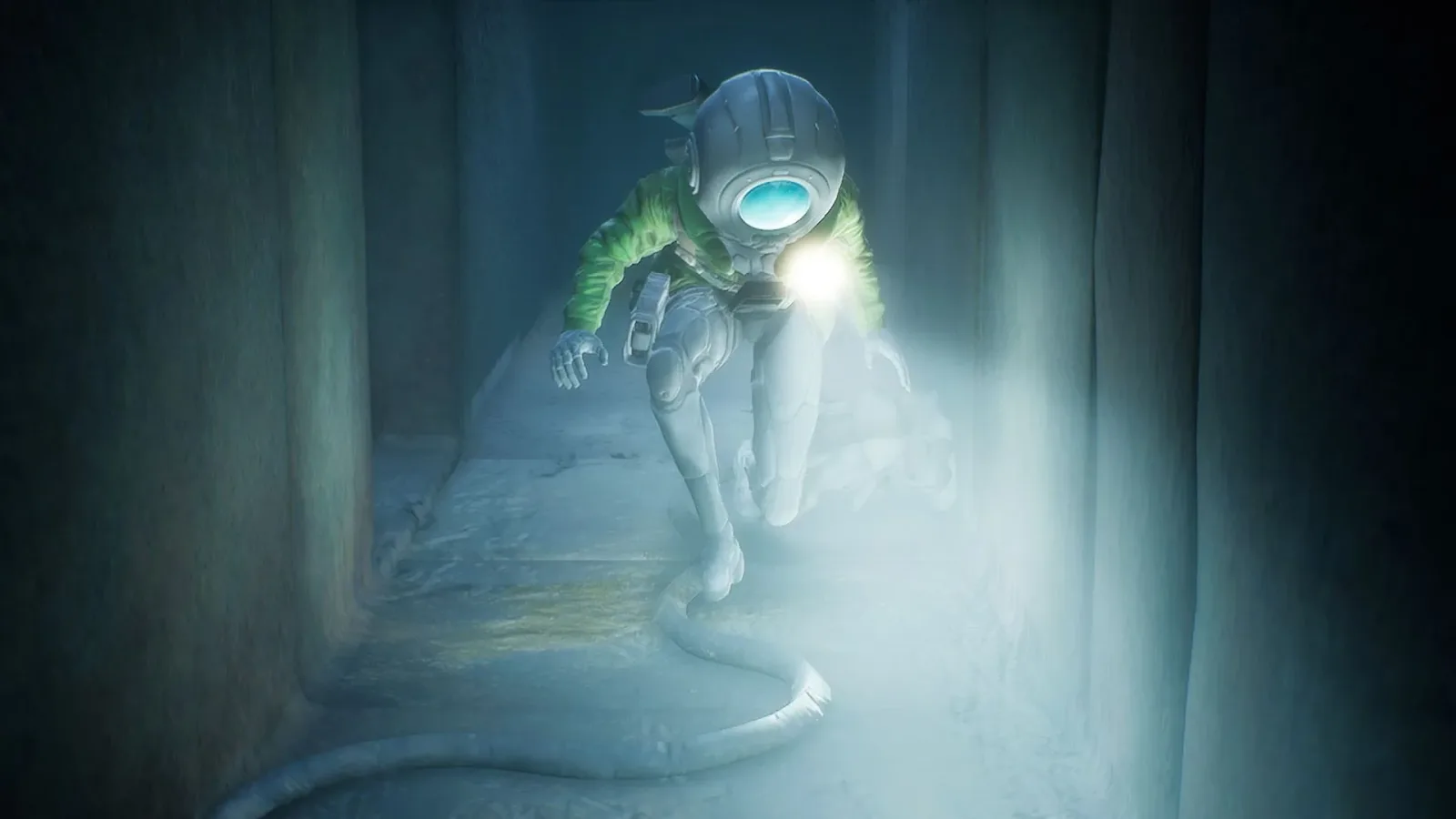
Released on October 1, 2026 for PC, PlayStation 5, and Xbox Series X, End of Abyss places its horror within an interconnected world that encourages revisiting old areas with new information or equipment. The game does not move with the deliberately tank-like controls of older genre landmarks; the protagonist can sprint, and the controls are more responsive. Still, its overall philosophy is unmistakably rooted in classic survival horror.
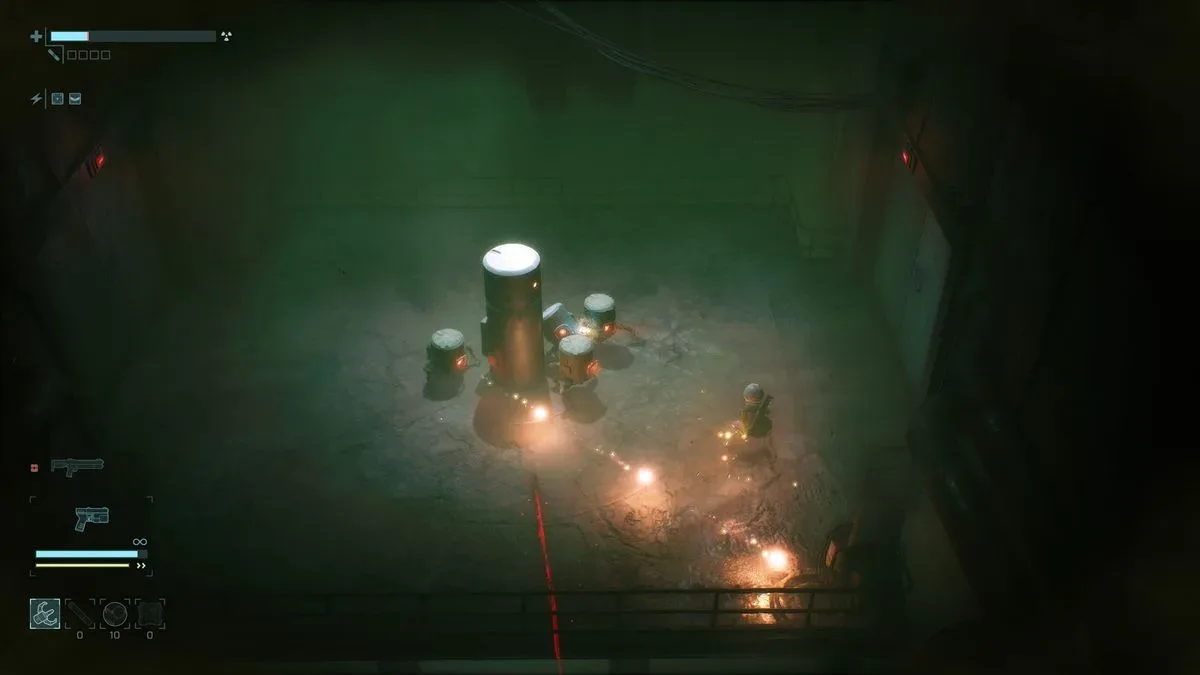
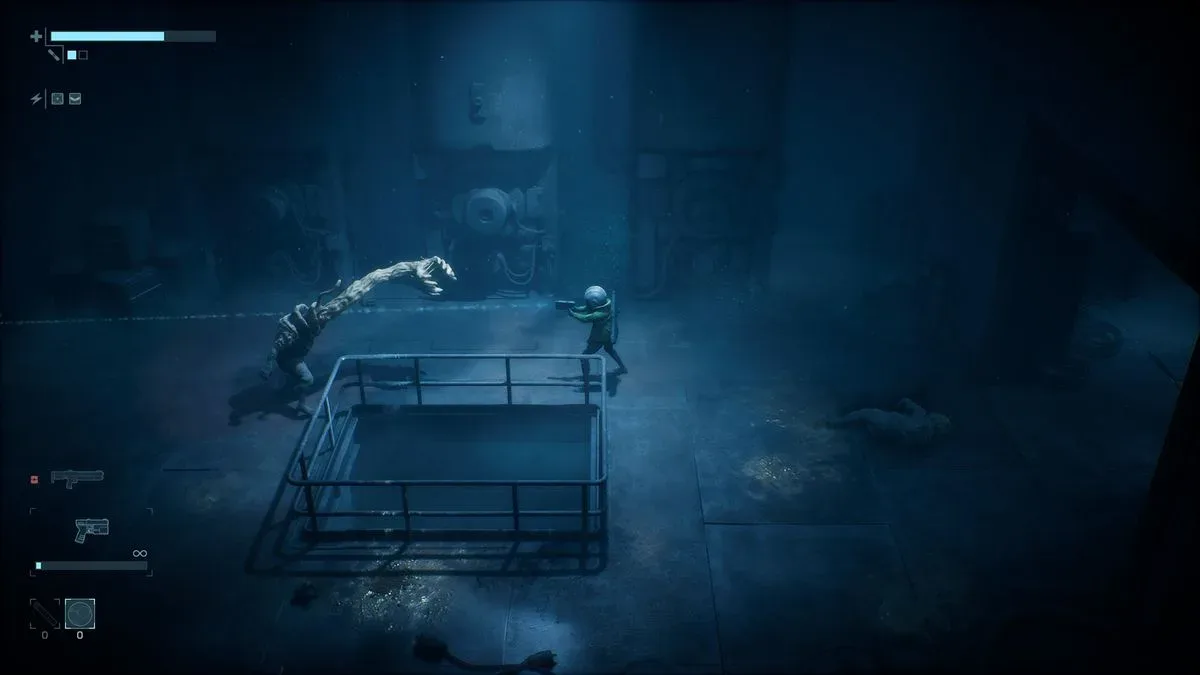
Unexplored rooms demand respect. An enemy can be waiting just off-camera, and most creatures deal enough damage to make reckless movement a costly decision. Combat is not meant to make players feel unstoppable. It asks for caution, positioning, ammunition management, and weapon upgrades, often creating satisfying moments where surviving an encounter feels earned rather than automatic.
For useful background on this topic, read Control Resonant's The Board Turns a Single Voice Into a Horror Highlight.
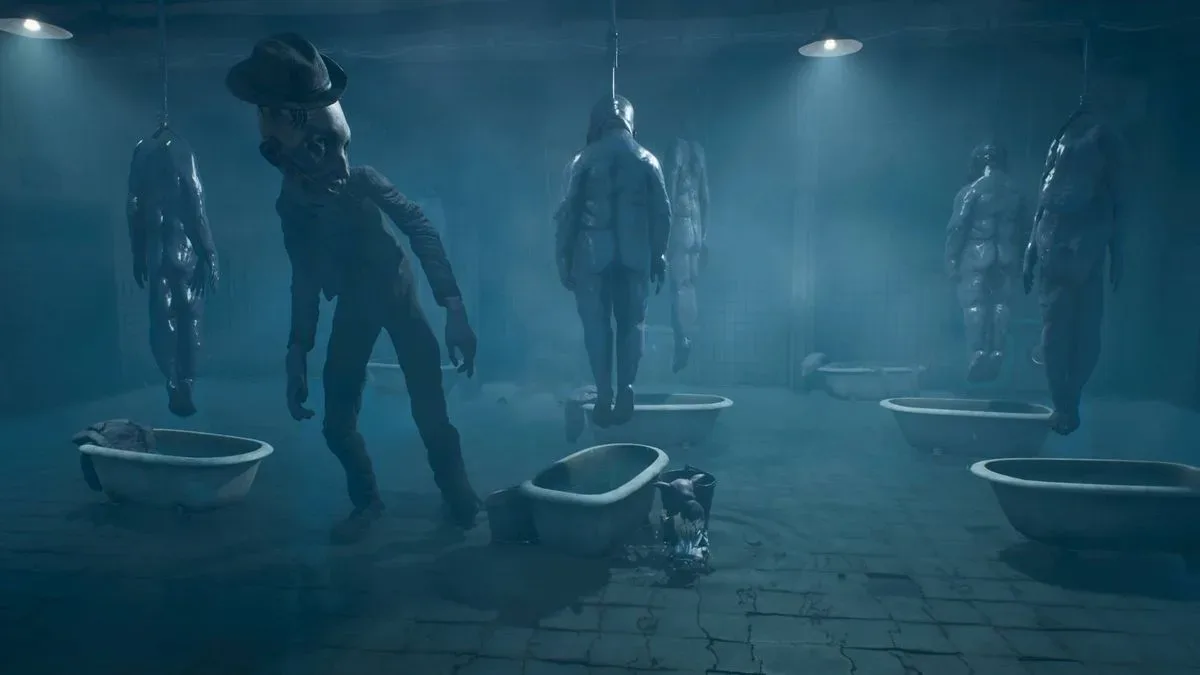
The monster design is among End of Abyss' greatest achievements. Its abominations have the body-horror ugliness expected of the genre, with silhouettes that remain unsettling even before they begin to attack. The visual design helps sell the danger of every new corridor and chamber. These creatures feel as though they belong to the environment rather than merely serving as targets, and their presence sustains the game's oppressive tone.
That atmosphere is reinforced by gloomy environments where the darkness is not simply decorative. Limited visibility makes movement tense and helps establish a constant sense of uncertainty. Unfortunately, it also exposes one of the game's recurring problems: objects needed for progression can be too easy to overlook. Levers, interactable devices, and destructible surfaces may blend into the scenery, transforming what should be an observant player's discovery into a prolonged search for a barely visible solution.
Exploration offers rewards, but not enough direction
End of Abyss includes a scanner intended to support navigation and investigation. It can identify the contents of notes, clarify which keycard is needed for a door, and trace power lines through walls to nodes that must be activated. The last of those uses is the scanner's most distinctive contribution, providing an old-school environmental puzzle structure that fits the game well.
Elsewhere, however, the scanner often feels less useful than it should. Learning that a door is locked is rarely enough when the game provides little indication of where to find the means to unlock it. Much of the information it delivers could be handled by a faster basic interaction, and it does not do enough to prevent players from becoming lost in familiar regions.
The world has a light Metroidvania flavor. Doors and devices are encountered before they can be used, and later discoveries can open paths through older spaces. But the structure is closer to a survival-horror labyrinth than a full equipment-driven exploration game. There is only one major traversal tool, a grappling hook, so the sense of growing movement options is limited.
Exploring beyond the main route can pay off handsomely. Players willing to search can find crafting materials, lore, powerful weapons, and even optional boss encounters that are possible to miss entirely. There are also items that appear to make the final boss easier, rewarding a thorough approach to the campaign. These discoveries make the game feel richer and give its world a welcome sense of hidden depth.
The problem is that the same structure can produce hours of unproductive wandering. Dark environments and missable resources are a difficult combination, especially when a vital upgrade can be missed. One late radioactive zone illustrates the issue particularly well: entering without the right suit modification causes constant damage, but the modification itself needs four energy points to activate. It is possible to reach this point with only three points available, leaving the player forced to search for an additional upgrade that may have been missed much earlier. The needed pickup can ultimately be found within the very area that requires the protection, but getting there can be an unnecessarily punishing process.
This is not the rewarding uncertainty of a well-designed mystery. A progression system should allow players to make mistakes without letting them unknowingly create a sprawling, hours-long detour. End of Abyss too often mistakes obscurity for tension.
Combat works until the arena walls close in
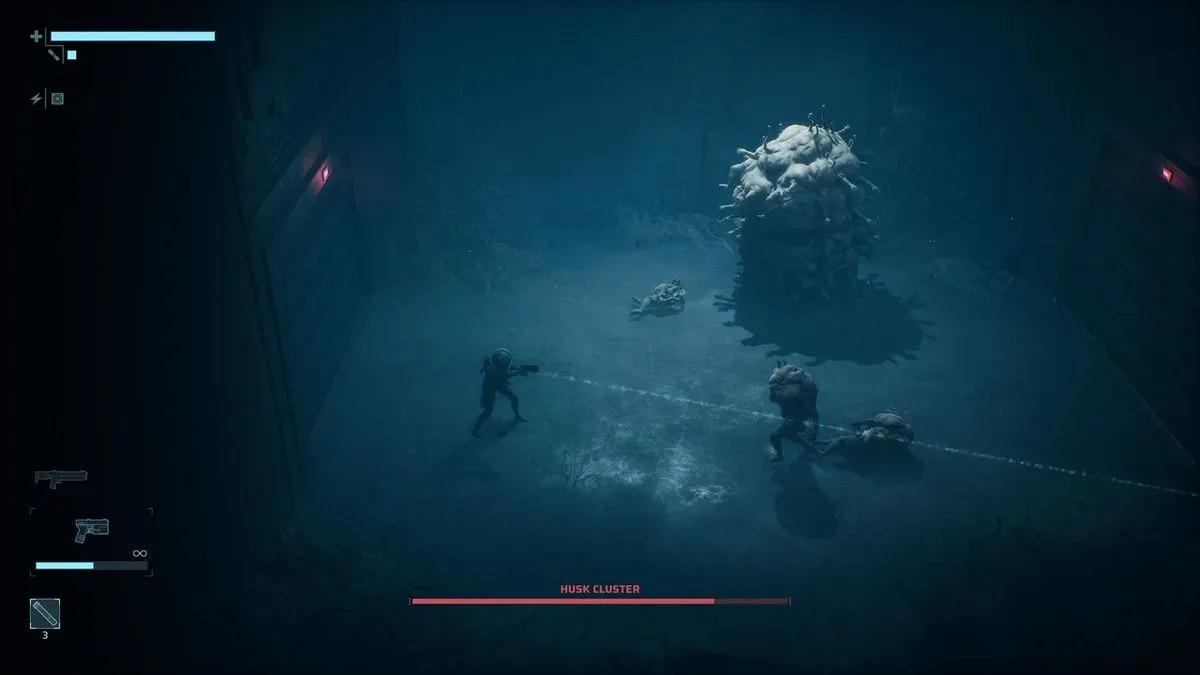
Ordinary combat has a useful degree of friction. Enemies are resilient, ammunition matters, and weapon upgrades are important. The awkwardness generally feels intentional rather than clumsy, making confrontations stressful without becoming unmanageable. When the game lets players use the wider spaces of its environments, it can produce the right kind of survival-horror pressure.
The balance falls apart in the boss fights and other forced encounters. End of Abyss frequently confines players to tiny arenas against multiple threats, stripping away the space needed to make its combat systems interesting. Rather than promoting clever tactics, these battles can become circular chases around the perimeter, with players periodically stopping to take shots before running again. The pattern is less frightening than it is absurd, and it makes several major fights feel like endurance tests built around restriction rather than challenge.
The death and checkpoint structure has some smart ideas. Progression remains intact after death: collected items stay collected, opened doors stay open, and extended bridges remain in place. Regular enemies, other than bosses and special ambushes, respawn, while ammunition already spent does not return. That arrangement preserves forward progress while maintaining pressure on resources.
However, it also creates a frustrating failure state. If repeated boss attempts drain all available ammunition and crafting supplies, obtaining more can mean returning to previously cleared regions and killing respawned enemies for materials. Resource tension is central to survival horror, but farming old areas after each failed boss attempt is repetitive busywork rather than meaningful survival.
Technical issues make the journey rougher
End of Abyss is not only challenged by design inconsistencies. Its technical issues can directly undermine progress. Enemies may hit through walls, elevators can fail to load correctly, and at least one late-game soft lock can cost progress. Any one of these problems would be unfortunate; combined with already demanding navigation and boss design, they make the experience feel less reliable than a game built around careful resource management needs to be.
The PlayStation 5 version can take roughly 18 hours when exploration and getting lost are factored in, although a more direct run to the final boss can be completed in around half that time or less. That gap says a great deal about the game. End of Abyss is designed to reward curiosity, but its length can expand dramatically when its guidance systems fail to communicate what is required.
Who should descend into End of Abyss?
This is best suited to survival-horror players who enjoy studying maps, searching thoroughly, revisiting old zones, and accepting that the critical path may not always be clearly communicated. Those players will find a moody world, strong creature work, secrets worth uncovering, and bursts of genuinely effective tension.
Players looking for a cleanly paced horror story with straightforward objectives should approach with caution. Guides may become valuable, particularly when progression hinges on a subtle visual cue, an unclear locked door, or a missed upgrade. Likewise, anyone sensitive to bugs or hostile boss design may find the later portions difficult to enjoy.
Final takeaway
End of Abyss has the raw materials for an excellent survival-horror game. Its setting is oppressive, its monsters are memorable, and its best exploratory stretches deliver the careful, uneasy thrill the genre is built on. But its most frustrating decisions are not minor blemishes. Confined boss arenas, poor signposting, ammunition farming, excessive backtracking, and technical faults repeatedly drag the game away from its strongest ideas.
For patient horror fans, there is enough atmosphere and discovery here to justify a trip into the darkness. For everyone else, End of Abyss may feel less like a descent into terror and more like a battle against the path forward itself.
Community
Discussion
Start the conversation.
No comments have been posted yet.