

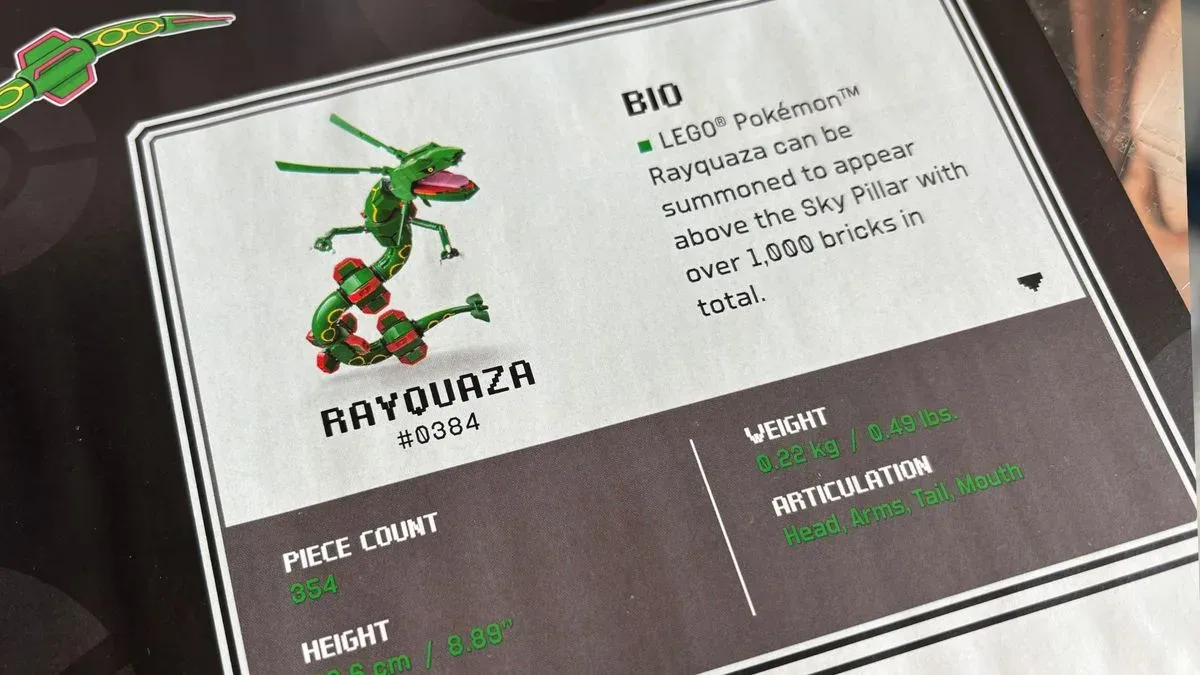
Lego Rayquaza 72168 is one of the most convincing Pokémon display sets Lego has produced so far. It succeeds not simply because Rayquaza is a beloved Legendary from the Game Boy Advance era, but because its long, sharp-edged body and dramatic green-and-yellow pattern are naturally compatible with brick construction. Rather than fighting against the medium's geometric limitations, this model leans into them. The result is a towering Sky Pillar diorama with a dragon at its center that looks imposing on a shelf.
There is one major caveat: this is an expensive collectible. At $129.99 / £119.99, the 1,038-piece, 18+ set asks a lot for an experience expected to take around two to three hours. It is a strong model, and among the better Pokémon-themed Lego builds available at the time of writing, but it does not entirely escape the broader issue of premium Lego pricing. Buyers should approach it as a display piece with a satisfying construction process, not as a high-value toy packed with extensive functions.
A Sky Pillar scene, not just a Pokémon statue
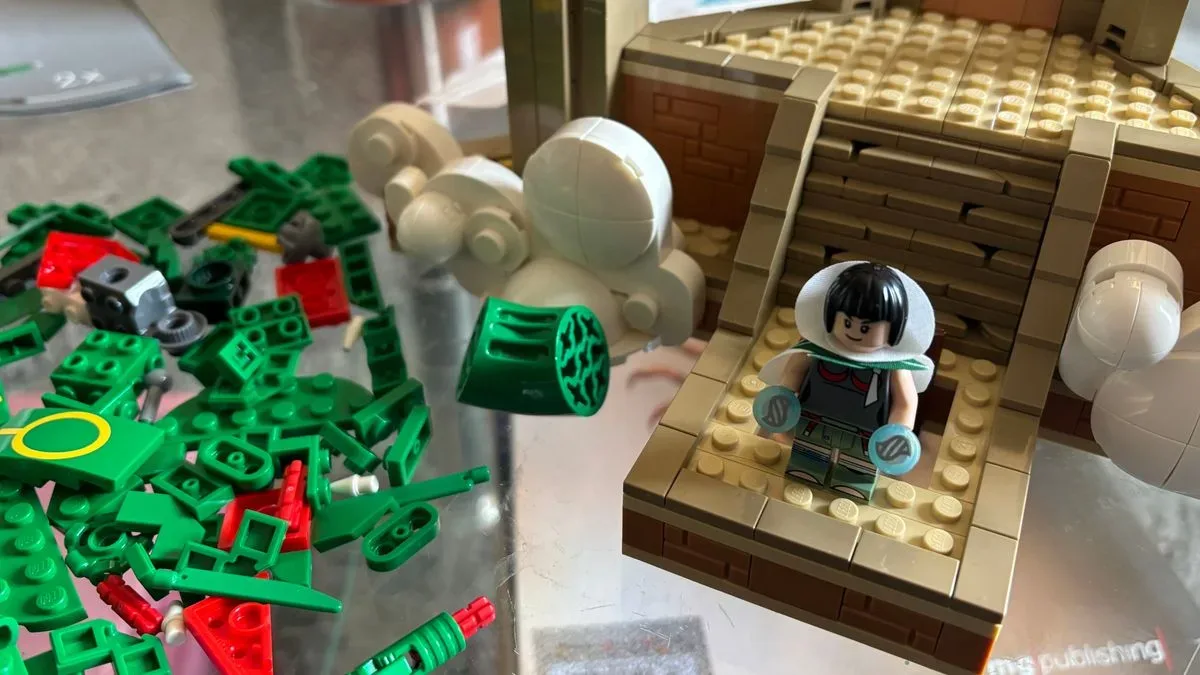
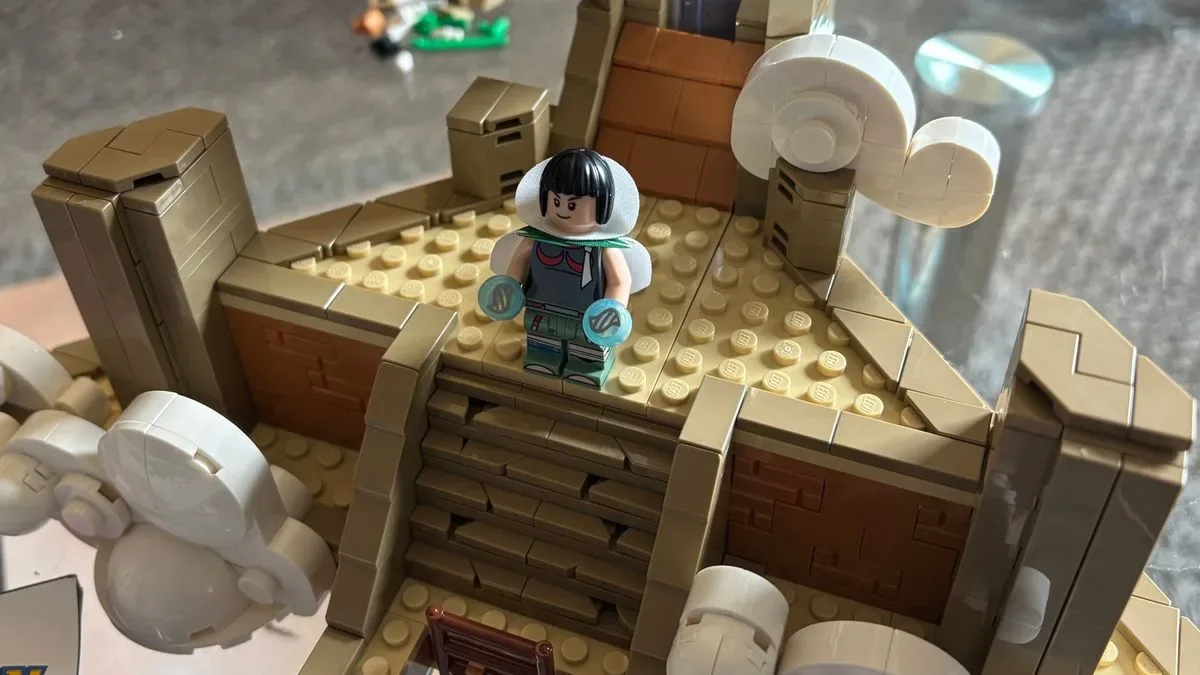
The set's greatest strength is that it gives Rayquaza a setting. Instead of presenting the Legendary as a freestanding creature on a plain plinth, Lego builds a compact version of the cloud-wrapped Sky Pillar location associated with Pokémon's Hoenn region. Broken stonework rises from the base, translucent elements support the dragon above the ruins, and small clusters of clouds obscure the structural support in a clever, attractive way.
That decision gives the finished set real visual storytelling. Rayquaza is not merely posed; it appears to be descending from the skies above an ancient ruin. The translucent pillar could have looked utilitarian in a less considered design, but the cloud pieces soften its appearance and make the elevation feel natural within the scene. It is one of those Lego solutions that is mechanically practical while still adding to the atmosphere.
For useful background on this topic, read Resident Evil 2 Is Being Rebuilt for Nintendo DS in Ambitious Homebrew Project.
The display is helped further by the inclusion of Draconic Loremaster Zinnia. She is not the most universally recognizable Pokémon character, particularly compared with figures such as Red, Cynthia, or N, but her presence matters. Positioned beside the enormous dragon, she establishes a sense of scale that the set would otherwise lack. A single minifigure makes Rayquaza feel gigantic, and it would be welcome to see future Lego Pokémon releases use the same technique.
Zinnia comes with a pair of Keystones, suggesting Mega Evolution. The reference is thematically fitting given Rayquaza's history, though it is also slightly odd: there is no alternate configuration for Mega Rayquaza included here. The accessories feel more like a nod toward the idea than a feature with a payoff in the build itself.
The build favors scenery over the serpent
Anyone expecting most of the construction time to be spent assembling Rayquaza may be surprised. The dragon itself accounts for a relatively small share of the overall build. Most of the experience goes into the Sky Pillar base, its ruins, its support structure, and its cloud effects.
That is not necessarily a negative. The base is substantially more involved than a basic character stand, and the varied materials keep the process from becoming monotonous. The ruined architecture can be a little fiddly in places, as fine environmental details often are, but the build maintains momentum by regularly shifting between stone textures, clouds, supports, and decorative elements. The cloud sections are especially satisfying. They use hard plastic geometry to suggest something soft and drifting, and the illusion works remarkably well.
Rayquaza comes together much faster. Its body is primarily a sequence of long, tube-like sections connected to create its serpentine shape, followed by the head, fins, arms, and other distinct features. This is an efficient approach, and the final silhouette is effective, but it means that the star Pokémon can feel like a surprisingly brief stage of the process. Those who buy the set chiefly for the pleasure of constructing Rayquaza may wish that portion lasted longer.
Still, the build benefits from the contrast. Starting at the ruins and working upward creates a satisfying sense of progression, culminating with the dragon at the top of the scene. The instructions are clear throughout, with no reported legibility problems or confusing assembly stages. Accessibility is strong for a set in the 18+ range: there are no stickers to apply, no frustrating instruction issues, and no unusually punishing techniques. Some details are delicate, but the overall process remains approachable.
A very good Lego translation of Rayquaza
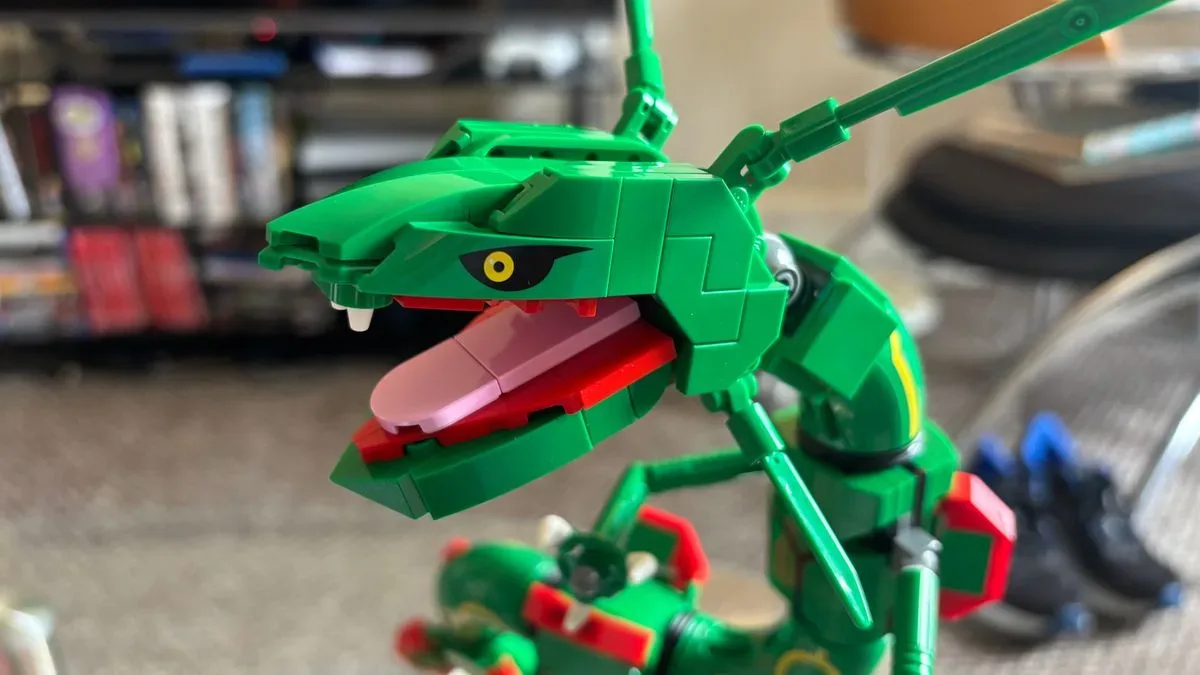
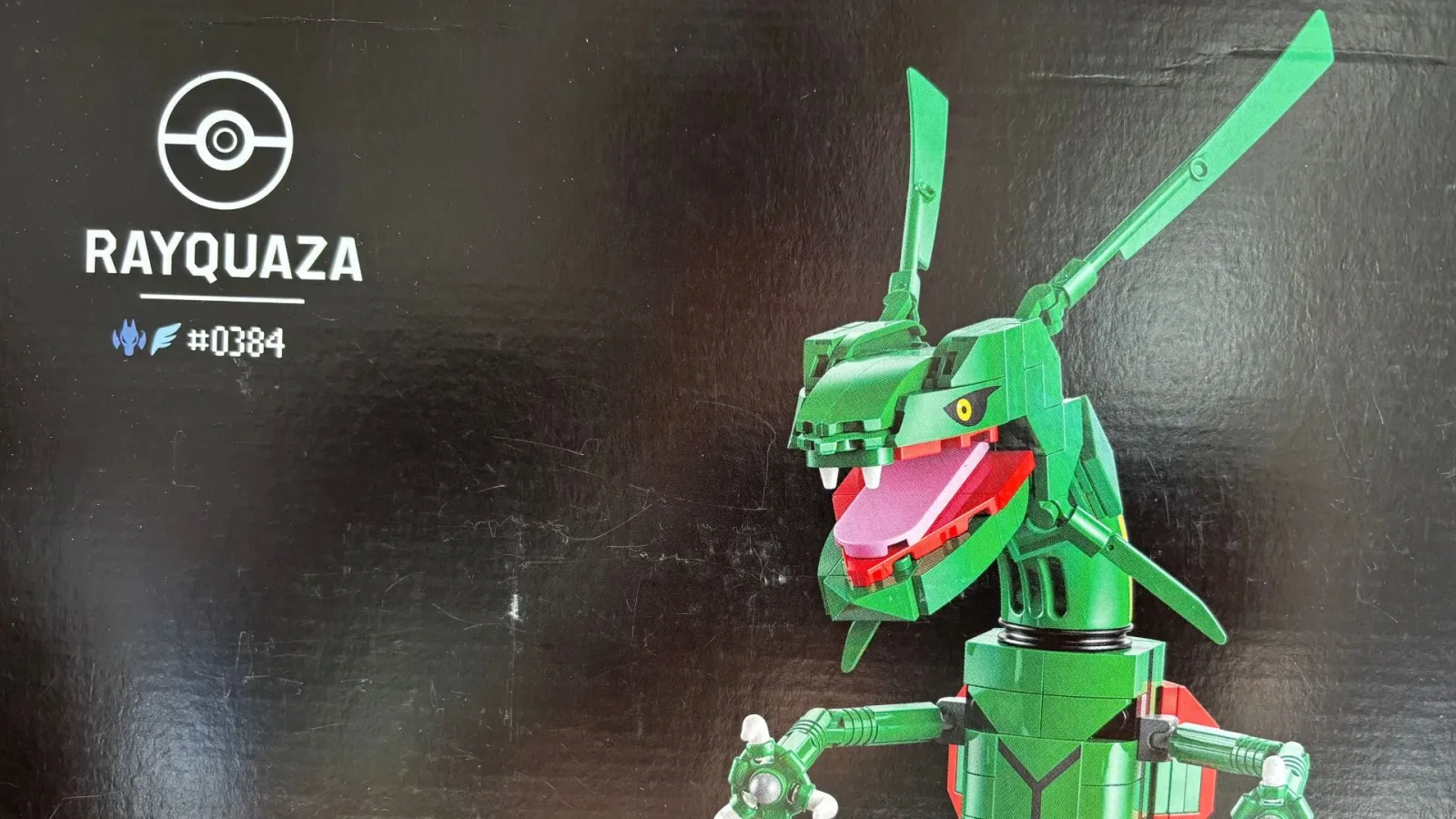
Rayquaza may be one of the best possible Pokémon choices for a Lego interpretation. Pokémon with round heads, smooth bodies, or heavily curved features can drift into an awkward middle ground when recreated in bricks. Rayquaza has the opposite advantage. Its design is defined by ridges, angles, fins, segmented forms, and dramatic projections, all of which translate cleanly into Lego's visual language.
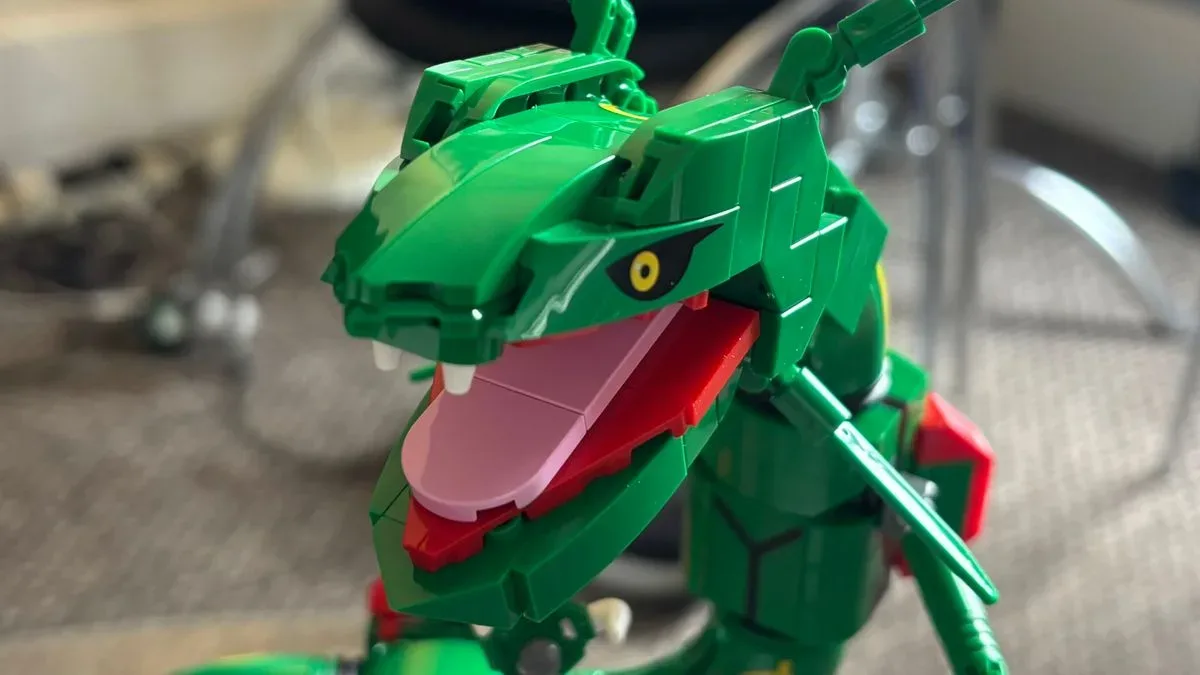
The finished dragon is recognizable immediately. Its coloration, upright pose, wide mouth, and long segmented body capture the essentials without asking Lego elements to imitate organic curves they cannot easily reproduce. There is some inherent goofiness when the mouth is opened very wide, but it is a minor quirk in an otherwise handsome model.
It is also worth emphasizing the absence of stickers. Printed and brick-built details are preferable on a premium display set, particularly one intended to remain assembled for years. Not having to align decals on curved or small pieces is a welcome quality-of-life advantage.
Articulation exists, but play is not the priority
Rayquaza has adjustable elements, including the arms, mouth, ear-like protrusions, and dorsal fins. On paper, that gives the model a respectable number of points of articulation. In practice, the range is limited. The arms can be repositioned somewhat, the jaw can open and close, and the fins can be altered, but none of these adjustments dramatically change the display. Rayquaza will remain in a broadly upright, snarling pose.
This is best understood as pose refinement rather than action-figure flexibility. There is enough movement to customize the shelf presentation, but not enough robustness for repeated handling or a child's intensive play session. The build is also not designed for easy removal from its stand. Rayquaza and the central support are interlocked, so taking the dragon away requires partial disassembly and reassembly. Once separated, the long body can feel less stable around its midpoint.
That makes the intended use clear. Lego Rayquaza is a collectible centerpiece first, and a toy second. It has more flexibility than a completely static statue, but buyers looking for a durable, freely playable creature model may find it delicate and restrictive.
Who should buy Lego Rayquaza 72168?
This set is an easy fit for fans of Pokémon Ruby, Sapphire, Emerald, Omega Ruby, and Alpha Sapphire. Rayquaza has always held a distinctive place among Legendary Pokémon, and the Sky Pillar setting makes the model feel like a direct tribute to its Hoenn roots rather than a generic monster build.
It is also a good pick for collectors who want a proper scene. The ruins, clouds, elevated dragon, and minifigure give the set visual depth from multiple angles. It should look particularly good on a bookcase, desk, countertop, or alongside other premium Pokémon collectibles.
Those on a budget should be more cautious. Over one hundred dollars or pounds is a serious ask for a set with a relatively short build time, even one with excellent presentation. Likewise, anyone wanting a rugged, extensively poseable Rayquaza toy should look elsewhere. This is not built to withstand constant movement, transport, or imaginative battles.
Final takeaway
Lego Rayquaza 72168 earns its strong score through presentation, smart design choices, and an unusually natural fit between subject and medium. The Sky Pillar base elevates the entire package, the clouds are a highlight, and the Zinnia minifigure provides valuable scale. Rayquaza itself looks powerful and recognizably true to its source, while the instructions and sticker-free construction make the build pleasantly straightforward.
The price remains the sticking point, and the limited, somewhat fragile articulation confirms that this is a display model rather than a plaything. But for collectors willing to accept that framing, Lego Rayquaza is a worthy Hoenn tribute and a compelling example of what future Lego Pokémon sets should aim to be: not just character sculptures, but carefully staged scenes with personality and presence.
Community
Discussion
Start the conversation.
No comments have been posted yet.