

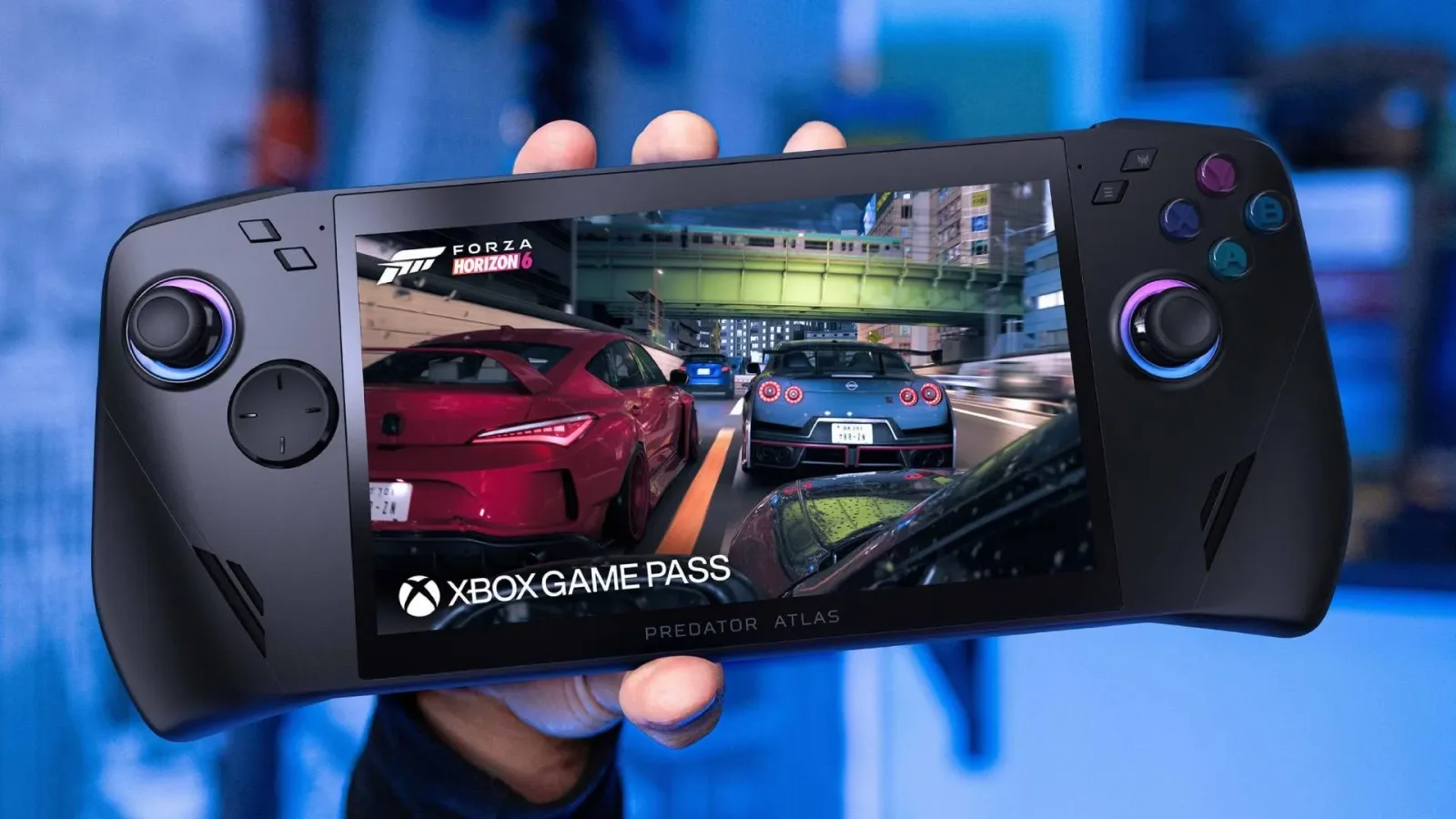
Acer's new Predator Atlas 8 gaming handheld has reached the UK, bringing a notably high-specification -- and high-priced -- entrant to the increasingly crowded Windows portable market. The 8-inch device is available through Currys for £1,299.99, with a configuration that includes Intel's Arc G3 Extreme platform, 24GB of RAM and a 1TB SSD.
Players in the United States will need to wait a little longer. The Predator Atlas 8 is expected to arrive at relevant US retailers in October. A final US price has not been confirmed here, although it is expected to land at roughly $1,700. That prospective figure places it well beyond mainstream handheld territory and means Acer is targeting buyers prepared to pay for a fully loaded portable PC rather than an inexpensive companion to a desktop or console.
The launch is important for Acer for another reason: it gives the company a more substantial opportunity to establish itself in handheld gaming PCs. Its earlier 7-inch Nitro Blaze model technically arrived first, but it did not achieve especially broad, lasting retail visibility. Its rollout was comparatively quiet in the UK and Europe and it was largely absent from the US market. The Predator Atlas 8, in contrast, is being positioned as a flagship release with a clearer UK debut and a scheduled US window.
A premium specification from top to bottom
The biggest headline is the Intel Arc G3 Extreme chipset. Acer is using the new platform to sell the Atlas 8 as a performance-focused machine, one intended to run demanding PC games locally instead of functioning mainly as a streaming device or retro-focused portable. Until extensive independent testing places the hardware alongside its rivals, it remains unclear exactly where Arc G3 Extreme will rank in real games, especially at the resolutions and power settings typically used on a handheld.
For useful background on this topic, read Dressmaker Stitches Detailed Fashion Design Sim Onto Steam.
Still, the rest of the specification makes Acer's ambitions obvious. The UK model has 24GB RAM and 1TB of storage, avoiding the compromises that can appear on lower-cost handhelds with less memory or smaller SSDs. Modern PC games can consume substantial storage capacity, while Windows itself, launchers and shader caches add their own demands. A terabyte is therefore a welcome starting point for a device expected to act as a primary portable PC library machine.
The Atlas 8 also includes an 80Wh battery, a sizeable capacity for this category. Battery capacity does not automatically guarantee long play sessions, since runtime will depend heavily on game load, screen settings, performance mode and power limits. More demanding titles can drain even large handheld batteries quickly. Nevertheless, an 80Wh unit gives Acer more room to pursue higher performance settings than smaller-capacity alternatives, or to offer better longevity when users choose more conservative configurations.
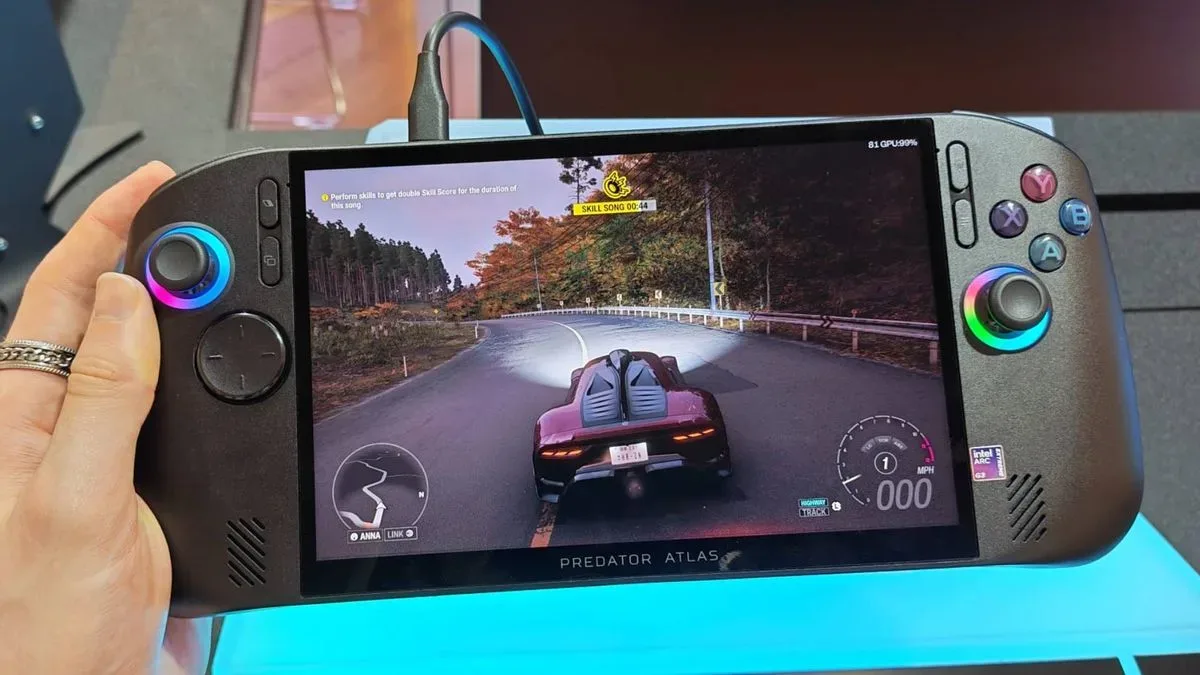
Controls are another area where the company is attempting to justify the flagship label. The handheld uses TMR thumbsticks alongside adjustable triggers. TMR, or tunneling magnetoresistance, is increasingly being presented as a premium stick technology that can offer improved precision and durability compared with more conventional designs. Whether it makes a meaningful difference for every player will vary, but it is the kind of hardware addition enthusiasts tend to notice, particularly on a device in this price bracket.
The 8-inch screen and the value question
An 8-inch display is a central part of the Predator Atlas 8 proposition. The extra physical screen space could make text-heavy games, strategy interfaces, launchers and Windows desktop tasks more comfortable than on many 7-inch devices. It may also help the handheld feel closer to a compact PC than a console-style portable. At the same time, display size alone will not decide the purchasing choice when competing models are offering different panel technologies, lower prices or alternative processor families.
That is where Acer faces its largest challenge. At £1,299.99 in the UK, the Predator Atlas 8 is unambiguously a luxury handheld. It is not trying to compete directly with the pricing of a Steam Deck, nor does it resemble a budget Windows option. Instead, it enters a segment where buyers will compare every feature -- processing hardware, panel quality, controls, storage, battery and software experience -- against other expensive models.
Memory and storage costs have also helped put pressure on the wider portable PC market. A configuration with 24GB of RAM and a 1TB SSD is desirable, but it adds to the bill in a period when high-end component pricing remains a concern. Acer's additional features, including TMR sticks, adjustable triggers and the larger battery, make the package more complete. They may not, however, be enough on their own to make a four-figure price feel easy to accept.
The key issue is how much of the Atlas 8's cost is tied to its performance platform and memory configuration rather than its enthusiast-friendly extras. If the Intel Arc G3 Extreme proves significantly faster or more efficient than alternatives, the premium could look more defensible to people who want the strongest available portable hardware. If the gap is modest, then buyers may prefer to save money, prioritize a superior display, or select a device with a more familiar chipset ecosystem.
An immediate comparison with Asus's next premium handheld
The most obvious comparison is the forthcoming ROG Xbox Ally X20, which is also due in October. Asus's model is expected to use an AMD Ryzen Z2 Extreme processor, TMR thumbsticks and a 7.4-inch OLED display. It is priced at $1,299, placing it below the estimated US pricing for Acer's handheld despite also occupying the premium end of the category.
That comparison is not purely about the price difference. The two devices make different arguments. Acer offers a slightly larger 8-inch display and Intel's newer Arc G3 Extreme hardware, while Asus is putting a major emphasis on OLED image quality. For players who value richer contrast, deep blacks and more vibrant color, OLED can be a more immediately visible upgrade than a small increase in screen size. The 0.6-inch diagonal difference will matter to some users, particularly those who want more desktop space, but it may not outweigh panel technology for everyone.
The X20 is also expected to cost the same as another 7.4-inch OLED handheld configuration, making the screen a defining part of the decision. Acer will need its silicon, battery capacity and larger display to provide a persuasive counterargument. It is possible that the Arc G3 Extreme will turn in stronger results in selected games or workloads; it is equally possible that performance will vary based on drivers, game engines and the power profiles manufacturers choose to implement.
Benchmarks and hands-on battery testing will be especially important before declaring a winner. Raw processor results are useful, but handheld buyers need to know whether a system can sustain smooth frame rates in current games without excessive fan noise, sharp power consumption or unwelcome compromises to image quality. Driver maturity also matters on a Windows handheld, where a technically capable chip can still feel less appealing if game compatibility or optimization is inconsistent.
What the Atlas 8 means for handheld PC buyers
The Predator Atlas 8 reinforces how quickly the definition of a high-end gaming handheld is changing. These devices are no longer solely competing on whether they can run PC games at all. At the upper end, manufacturers are layering in premium control sensors, larger batteries, high-capacity storage, more memory, advanced displays and increasingly powerful processors. The result is a category with impressive technical ambition, but one that is becoming harder to enter at a reasonable price.
For UK buyers, the practical decision is available now: the Predator Atlas 8 can be purchased for £1,299.99. For US buyers, the wait until October leaves time for Acer to clarify local pricing and for more comparisons to emerge. The expected price near $1,700 would make performance evidence particularly crucial, as it would ask consumers to pay substantially more than several established handheld alternatives.
Acer's latest device is therefore best viewed as a showcase machine. Its 24GB memory allocation, 1TB SSD, 80Wh battery, TMR sticks, adjustable triggers and 8-inch display indicate few corners have been cut in the specification. Yet the final verdict will not rest on the feature list alone. The Predator Atlas 8 must demonstrate that Intel Arc G3 Extreme performance and the overall design translate into a better day-to-day gaming experience than less expensive premium competitors. Until direct testing arrives, it is an intriguing but decidedly costly new option for handheld PC enthusiasts.

Community
Discussion
Start the conversation.
No comments have been posted yet.