

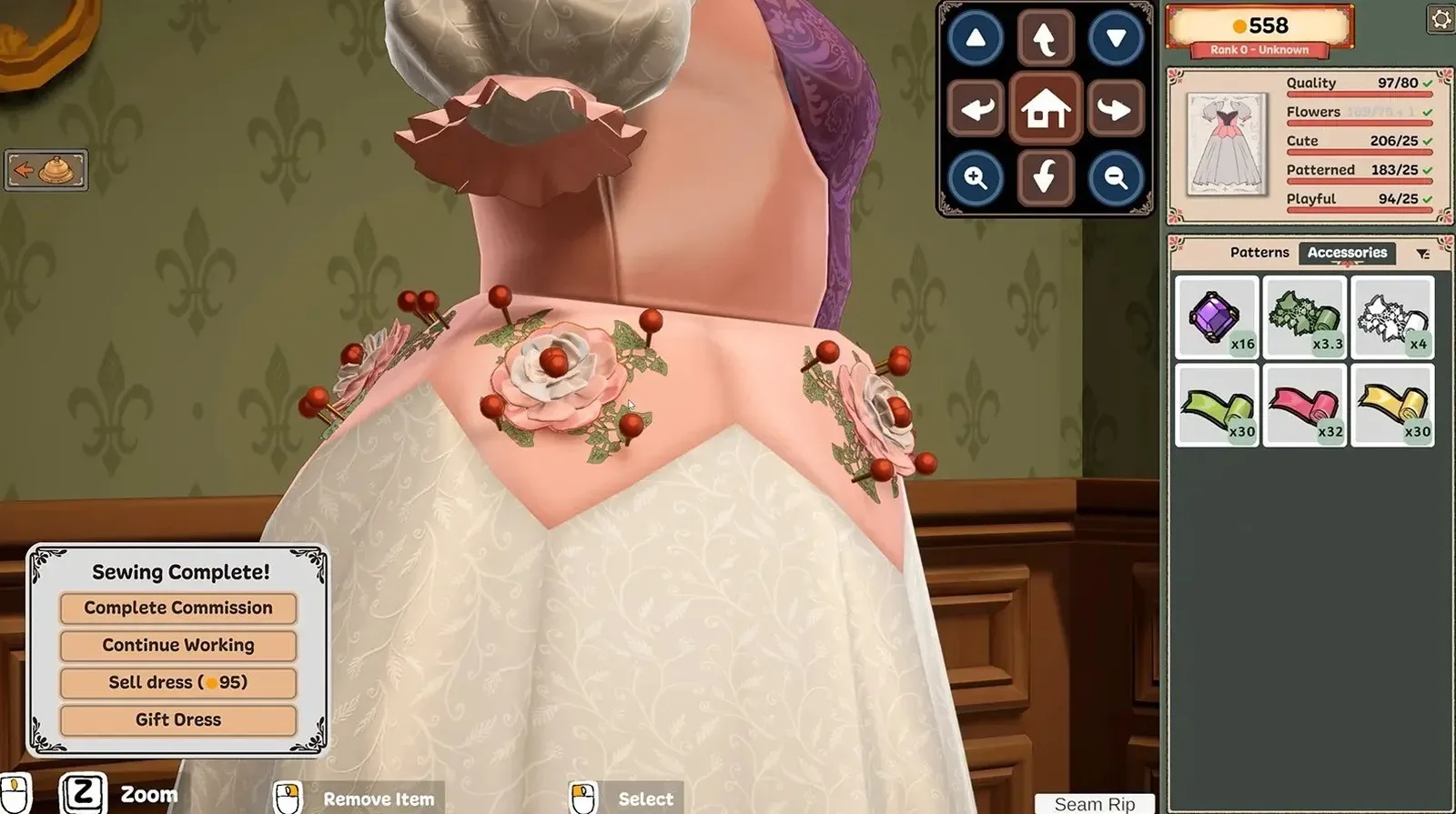
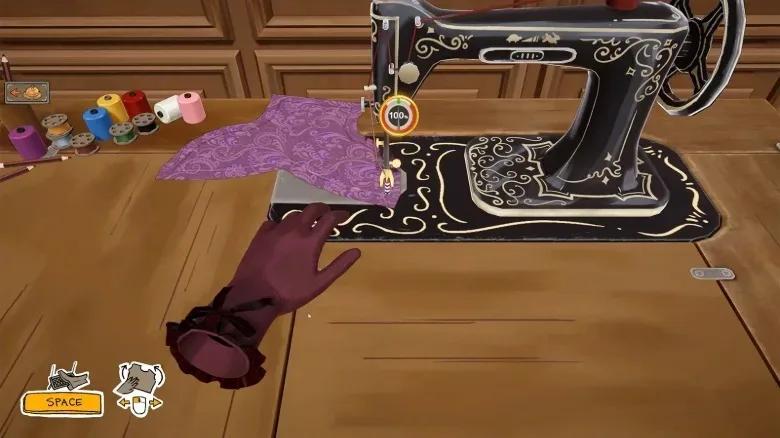
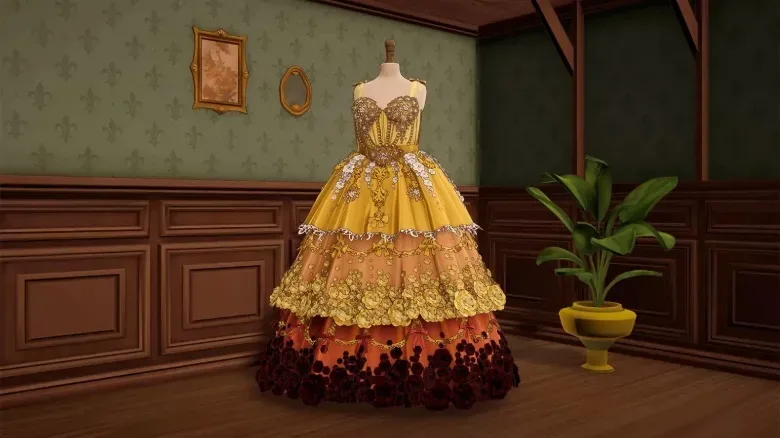
Dressmaker, a detailed sewing and fashion-design simulation from Cozy Lives, is now available on Steam for PC and Mac. The project invites players to take control over the journey from a garment concept to a finished dress, including selecting materials, laying out pattern pieces, cutting fabric, sewing panels together and adding final decorative touches.
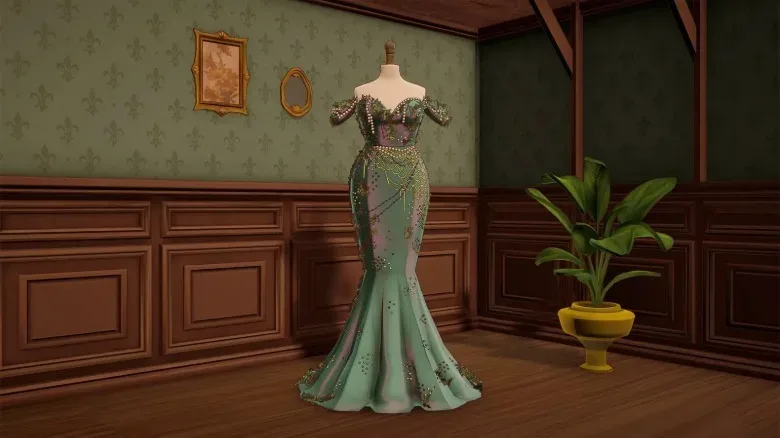
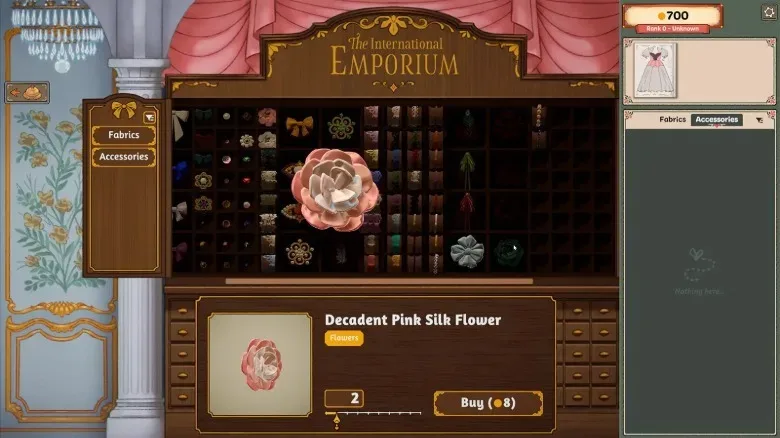
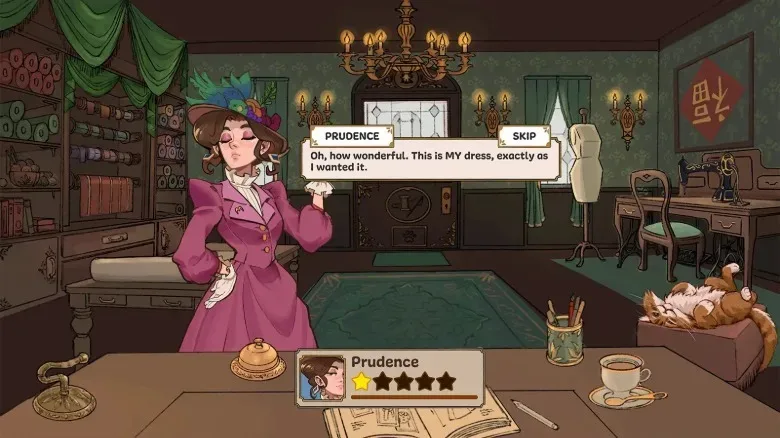
At its heart, Dressmaker is built around an unusually hands-on interpretation of fashion creation. Players can take commissions from women in an in-game town, each with their own tastes, or produce off-the-rack designs intended for sale. The goal is not simply to pick from a menu of pre-built outfits. A player's choices about fabric, patterns, trims, buttons, bows and other accessories all feed into the result.
The game comes from Cozy Lives, a small team operating within Cape Town-based studio Free Lives. Free Lives is known for games including Broforce, GORN and Terra Nil. Dressmaker was conceived by Terra Nil co-creator Jonathan Hau-Yoon alongside dressmaking expert Sabrina Becker, with the pair's shared interest in clothing and craft becoming the foundation for the game.
A simulation built around the construction process
Many fashion games focus primarily on styling: selecting an outfit, assigning colors and judging whether it matches a prompt. Dressmaker instead aims to make the creation process itself the central activity. The player starts with design decisions and continues through the practical stages necessary to turn a pattern into a garment.
For useful background on this topic, read Blizzard Says StarCraft Will Not Be Exclusive, but Platforms Remain Unclear.
That includes choosing separate fabrics for individual dress panels and arranging 2D pattern pieces on cloth before cutting them out. Those pieces then correspond to a 3D dress shown on a mannequin. The placement of a pattern on the fabric is important because the visual detail that occupies that particular spot is what subsequently appears on the finished 3D garment.
Hau-Yoon described this connection as resembling UV unwrapping in conventional 3D software, though with a distinctly different objective. Rather than only prioritizing efficient packing or low distortion, the pattern pieces need to look convincingly close to the kind of real garment patterns dressmakers would use. The team has had to manually shape and adjust those pattern layouts so the finished presentation feels plausible while remaining readable and satisfying as a game system.
The technical work also has to account for the elements involved in actual assembly. The game needs to understand where separate fabric panels meet, where seam allowances belong and where pattern markings for alignment should be displayed. It is a substantial undertaking for what initially appears to be a gentle creative game, but that complexity is part of what distinguishes Dressmaker from a standard outfit-customization tool.
For another perspective on this story, read Dressmaker Brings Detailed Sewing and Design to Steam.
Making clothes for different bodies
Sizing is another key component. Dressmaker has players take the measurements of customers and alter the mannequin to represent their body. This reflects a practical reality that standardized clothing measurements do not always neatly translate from person to person.
Adapting the mannequin creates another technical challenge: changing the 3D shape without adjusting the corresponding 2D pieces could make fabric look unnaturally stretched. Cozy Lives uses a lattice-based approach to reshape mannequins and dresses, while also adapting the two-dimensional patterns to limit unwanted distortion. Certain dress forms remain especially complicated, including designs with gathered edges, but the team's aim has been to preserve the appearance of fabric behaving as naturally as possible.
That attention to construction is also connected to the game's broader interest in clothing literacy. Becker introduced Hau-Yoon to subjects ranging from the narrative purpose of costume changes in film to historical accuracy in garments and the inventive ways costume departments modify period designs for screen. Their conversations also covered the environmental costs associated with fast fashion, polyester and other synthetic materials, as well as the decreasing prevalence of mending and personalizing clothes.
Dressmaker does not position itself merely as a lesson in those issues, but its design is clearly informed by the appreciation of clothing as something made, repaired and personally expressive rather than purely purchased. It seeks to offer a creative outlet to people fascinated by custom dresses without requiring them to own a sewing machine, buy material or physically cut patterns across a floor at home.
From vacation prototype to full release
The earliest version of Dressmaker began after Hau-Yoon finished work on the arid update for Terra Nil. During a vacation, he built a basic prototype centered on placing patterns onto fabric, rotating them to follow the grain line and cutting out the required pieces. A simple 3D mannequin allowed the pieces to be applied and viewed as a dress.
At that point, the concept was extremely early and did not yet even have a finalized name. Still, a social-media video of the prototype drew significant attention, reaching more than 600,000 views across TikTok and Instagram. Comments frequently asked where the game could be played, an encouraging sign for a project that was not yet much more than a proof of concept.
Hau-Yoon and Becker knew that pursuing the idea only as a hobby could take years, so the project was brought to Free Lives. Hau-Yoon worked with Ruan Rothman and Sara Laubscher to develop a more complete playable prototype over three weeks. That version was released on itch.io in July 2025, and Free Lives greenlit the project two months later, in September 2025.
The prototype reached roughly 30,000 downloads during its first month. While that total was not on the scale of some of the studio's prior successes, the response from players was especially passionate. People shared their dress designs, wrote extensive feedback and suggestions, while videos from several creators surpassed a million views. That combination of audience enthusiasm and clear interest in the core idea helped turn Dressmaker into a full production.
A small core team with a wider support network
Dressmaker's full-time core group at Free Lives consists of Rothman, Laubscher and Hau-Yoon. Sound designer Jason Sutherland has contributed while working across approximately four projects. Becker has served as the project's vision holder, consulting on the design and quality-assessing its decisions. The game has also received contributions from writer Kerstin Hall and composer Meydän, alongside additional assistance from Free Lives in art, design, production, media and community support.
The team has also called on friends to help during demanding periods, particularly with footage capture and quality assurance. That arrangement speaks to the realities of small-scale development, where a compact group can pursue a specific creative vision but must carefully balance its ambitions against time, funding and staffing.
For Hau-Yoon, choosing which idea to make is one of the biggest challenges facing smaller studios. A promising concept needs broad enough appeal while also being possible to complete at a high quality with the people and budget available. A project that is too large for its resources can put an entire studio at risk.
Free Lives' response is to prototype extensively and move forward with concepts that show both feasibility and evidence of an interested audience. Dressmaker's journey illustrates that approach closely: an early experiment, social-media testing, a more developed public prototype and sustained community feedback all helped demonstrate that the game had room to grow.
Creative work shaped by changing needs
Becker's role in Dressmaker has been shaped by her experience living with Ehlers-Danlos syndrome, a chronic illness that led her to move away from professional costume design and toward games. She has spoken about the need to recognize flare-ups, rest when needed and accept that work can sometimes progress more slowly than expected.
That process can be frustrating, particularly when someone worries about disappointing collaborators, but Becker has emphasized the value of working with supportive people who can help catch what might otherwise fall through the cracks. Friends have also stepped in to assist the project. Her expertise remains central to Dressmaker's understanding of the craft, from pattern authenticity to the small decisions that make a garment feel intentionally made.
The result is a game entering the broad cozy-game space from a distinctive angle. While the label "cozy" can be difficult to pin down, Dressmaker is focused on creativity, individual expression and a nonviolent craft process. Its premise is simple to describe, but its systems suggest an experience for players who want to spend time with the details of fabric, fit and construction rather than just the final look.
Part of a growing South African indie community
Dressmaker also arrives from an indie ecosystem that Free Lives says has been gaining momentum in South Africa. The studio points to more meet-ups, game jams and community events, as well as a deep pool of local talent. Free Lives has taken what it calls an "ubuntu" approach, treating community strength as connected to the success of individual studios.
Among the initiatives it supports are the Playtopia Foundation and its annual Playtopia festival, Super Friendship Arcade for the local alternative-controller scene, and Maker's Massive, a Discord and physical community space where developers can meet, work and jam at no cost. Free Lives has additionally invested R3 million in the Jam Dole, a stipend program designed to give younger South African developers room to prototype ideas without surrendering their income or intellectual property.
Games including Get Yoked, Detective Turner, Feather's Edge and Fossil Quest have emerged through that program over the past two years. Dressmaker, meanwhile, represents another example of how a narrowly focused personal interest can become a game concept with a dedicated audience.
For players eager to experiment with silhouettes, prints, fit and finishing details, Dressmaker is now on Steam. Its appeal lies in offering a digital dressmaking table where experimentation is encouraged, fabrics can be rethought and every finished creation begins with the player's own design choices.
Community
Discussion
Start the conversation.
No comments have been posted yet.