

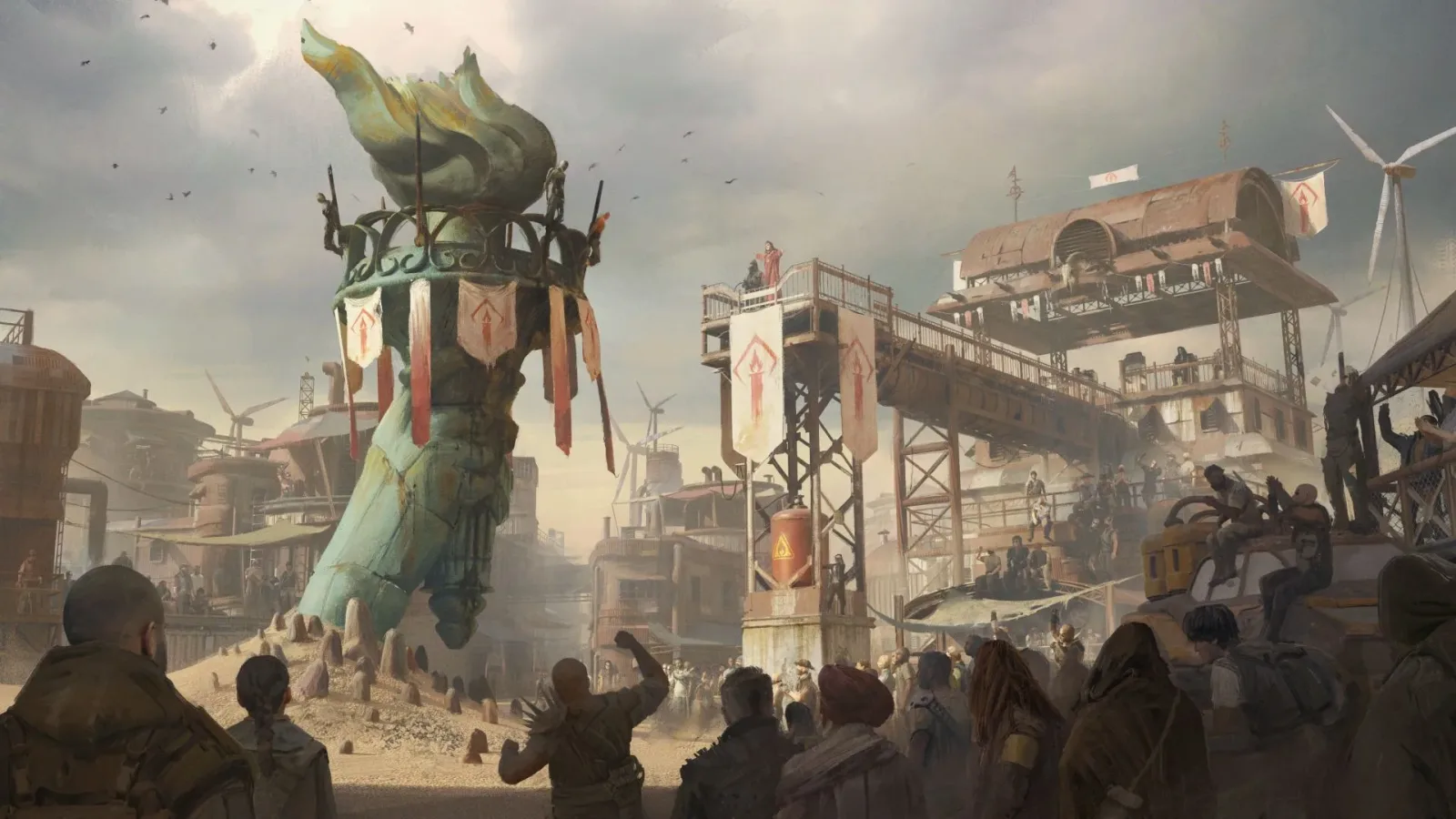
Paradox Interactive has built its reputation on immense strategy games that ask players to manage kingdoms, empires, star systems and the complicated people living within them. Those games can produce extraordinary stories, but their scale and dense interfaces have also made them intimidating for newcomers. Afterworld, the studio's newly revealed post-nuclear strategy game, appears to be a deliberate attempt to retain that storytelling potential while offering a clearer way in.
GamesRadar+ previewed the game following an hour-long hands-on session at Gamescom 2026 and spoke with game director Dan Lind. The central impression is of a grand strategy game focused on the survival and evolution of a tribe in a devastated America, but one that introduces its systems gradually through direct exploration and visible consequences. In the preview's early settlement, a risky decision to inhabit an irradiated factory eventually led to the birth of mutant fish-human descendants. That is an unusual outcome, but it neatly illustrates what Afterworld seems to want from its simulation: societies shaped by remembered choices, environmental pressure and the unpredictable ambitions of other groups.
A new society begins with its past
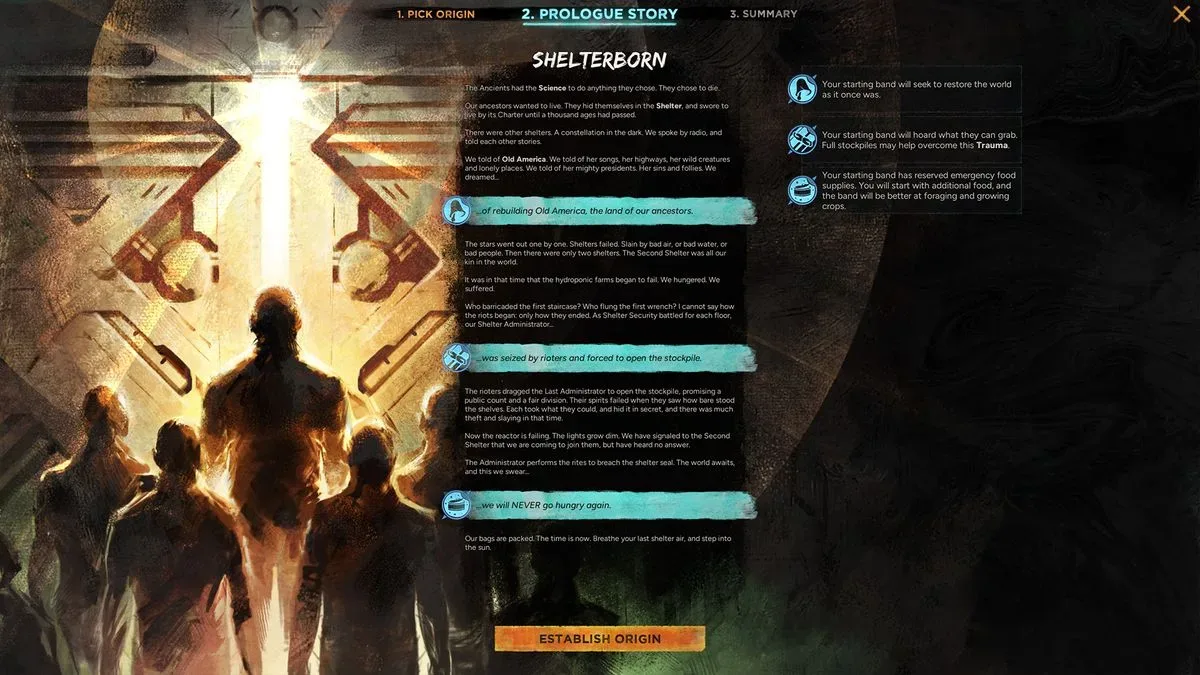
Afterworld is set roughly a century after a nuclear apocalypse. Players guide a tribe trying to establish itself in the ruins of the United States, with portions of Canada and Mexico also included on the wider map. Rather than beginning with a blank-slate settlement, the game reportedly asks players to define formative moments from their people's earlier history.
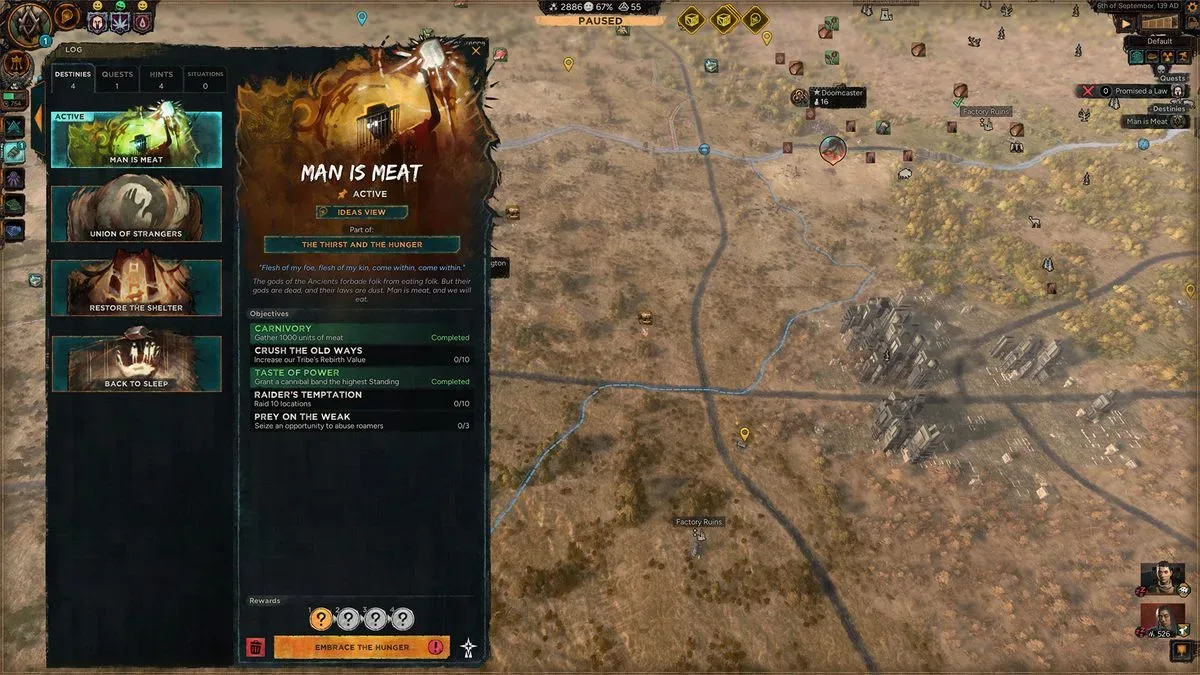
In GamesRadar+'s demonstration, the chosen group was leaving an underground shelter. Before its emergence, it had faced an earlier food crisis and political unrest. The player was asked how the group responded: through cannibalism or hoarding in the first case, and through concessions to rioters or the quiet removal of their leaders in the second. Those are not simply introductory flavor choices. Lind and the preview suggest they establish persistent cultural traits. A community descended from cannibals, for instance, may continue to regard people as food later in the campaign.
That premise gives Afterworld a potentially distinctive identity among large-scale strategy games. The game is not merely tracking resources and borders; it is trying to make a society's customs, beliefs and past decisions meaningful forces. The choices made at the start can echo through migration, diplomacy, research and conflict. A tribe's story is not a fixed faction description selected from a list. It develops as the player responds to discoveries and crises.
The preview's expedition beyond the vault demonstrates the intended chain of cause and effect. Rangers found an abandoned car-manufacturing site with accessible water and wood. It was heavily irradiated, but appeared useful enough for immediate settlement. The player accepted the danger, treating radiation as a problem for another day. The long-term cost became clearer later, when the inhabitants began producing fish-human hybrids. It is a bizarre and memorable result, but it follows directly from the environment chosen for the settlement rather than arriving as a disconnected scripted gag.
Exploration feeds technology, beliefs and political direction
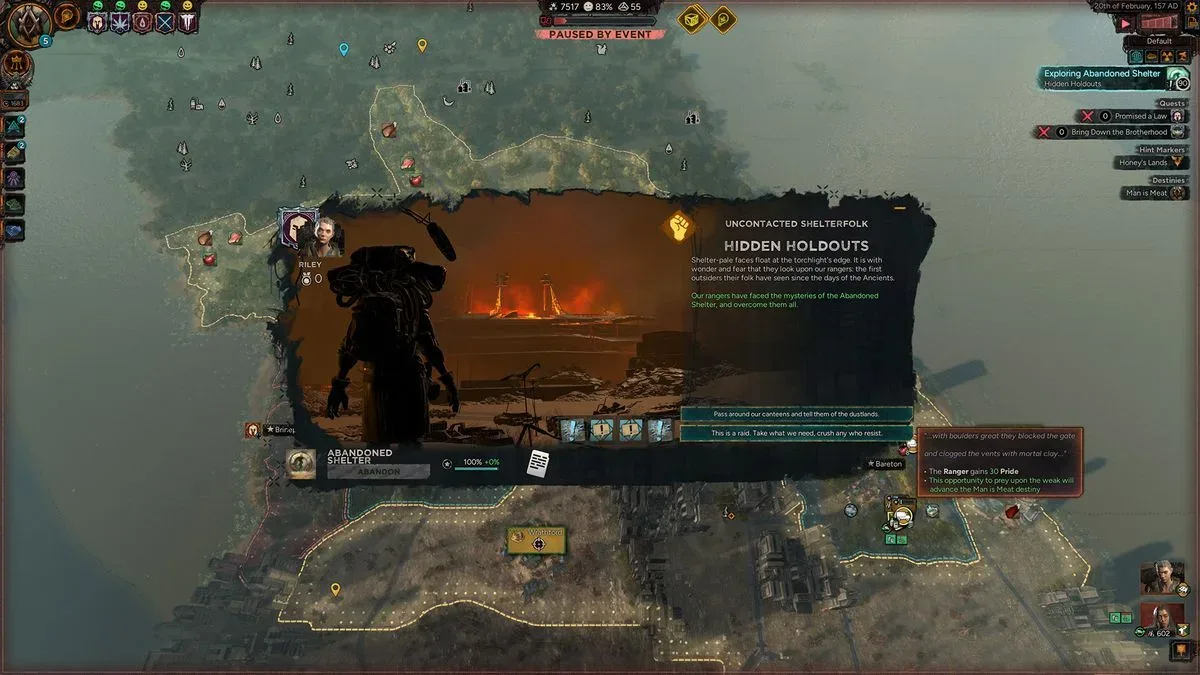
According to the preview, exploration does more than reveal useful locations. It also expands the options available to a growing society. Finding the sea can unlock a fishing-related research node, while interactions with hostile groups can affect social direction. In the hands-on session, refusing to back down against bandits moved the tribe further toward autocracy.
This approach may help make the game's many systems feel connected. In some strategy games, technology, ideology, settlement management and diplomacy are separated into distinct screens that can feel like parallel checklists. Afterworld's early design, as described by GamesRadar+, instead ties progression to events on the map and choices made in response to them. Discover a place, meet a threat, take a stand, and the society changes in a way that may open new possibilities or create future complications.
The result is intended to be variation between campaigns, not just variation in starting geography. Lind said the social landscape across the continental map is randomized. New York City could be a crater-like absence in one game, for example, while another playthrough may see it controlled by mutant rulers. This means familiar real-world locations are not promised to have a single predetermined role in the post-apocalyptic setting.
Once a player's own society is established, it will encounter the Ancients: warlords who have survived from before the apocalypse. Players can oppose these powerful figures or submit to their authority. Following an Ancient can involve gaining favor through service and by observing that ruler's rules. That offers a possible path of accommodation, rather than making military conquest the only response to a stronger neighboring power.
Paradox wants an 'infinite soup' of competing stories
Lind described the game's dynamic campaigns in terms of numerous AI actors pursuing their own agendas. Not every group will seek expansion, but many will, and those plans can interact with cultural practices and beliefs in unexpected ways. His phrase for that combination was an "almost infinite soup," an image that captures Afterworld's apparent ambition to generate emergent historical drama instead of delivering the same sequence of events every time.
"A lot of the dynamic playthrough comes from a lot of random actors, like the AIs and stuff, doing their thing," Lind told GamesRadar+. "All the AIs have their own plans, right?"
The important design challenge, in Lind's view, is not only allowing societies to choose different customs. The game also needs to show players why those customs matter and how they can become power. A belief or practice should visibly lead to action in the world. A group that embraces a particular path might become fervent religious crusaders, for example, and their ideology would help explain why they are marching on a town.
That emphasis on legibility matters. Grand strategy can create deep simulations that are difficult to read, leaving players unsure why a neighboring nation suddenly became an enemy or how a minor decision created a major crisis. Afterworld appears to be aiming for a clearer narrative link between cause and consequence. The simulation can still surprise players, but the resulting stories should be understandable as stories about people, values and survival.
Lind said the team often works backward from evocative fictional scenarios. The developers consider stories found in books and films, then ask what simulation building blocks would be necessary for the game to create comparable situations naturally. That does not mean Afterworld is adapting any one novel, but it does clarify why it is so invested in the rise of strange successor societies after catastrophe.
Post-apocalyptic fiction is a major influence
GamesRadar+ compared the appeal of watching new communities emerge to the post-apocalyptic novels The Stand by Stephen King and Swan Song by Robert R. McCammon. Both books were cited as influences, with Lind identifying Swan Song as one of the project's main inspirations. He reportedly includes it in introductory material for new members of the development team.
That literary connection fits the game's focus on belief, social friction and competing visions of the future. Lind described grand strategy as a natural progression in scale: players look beyond their immediate settlement and try to shape the wider world according to what they think is true. History, he noted, contains struggles of will and faith as well as battles between armies. For Afterworld, those conflicts are not background lore. They are part of the machinery that creates tension on the map.
The setting also leaves room for the kind of environmental storytelling familiar from post-apocalyptic games and fiction. The preview specifically highlights the appeal of uncovering history as it is being made, rather than only reading a completed record of it. A player may see a settlement transformed by radiation, a social taboo become a defining custom, or a local survival tactic grow into an ideology with regional consequences.
An easier entry point without abandoning scale
Perhaps the most notable claim around Afterworld is Paradox's intention for it to be the developer's "most approachable" game. That is a high bar considering the studio's catalog, which includes famously intricate series such as Crusader Kings, Europa Universalis and Stellaris. The GamesRadar+ writer said they had struggled to get comfortable with several earlier Paradox titles but found Afterworld immediately intuitive during the preview.
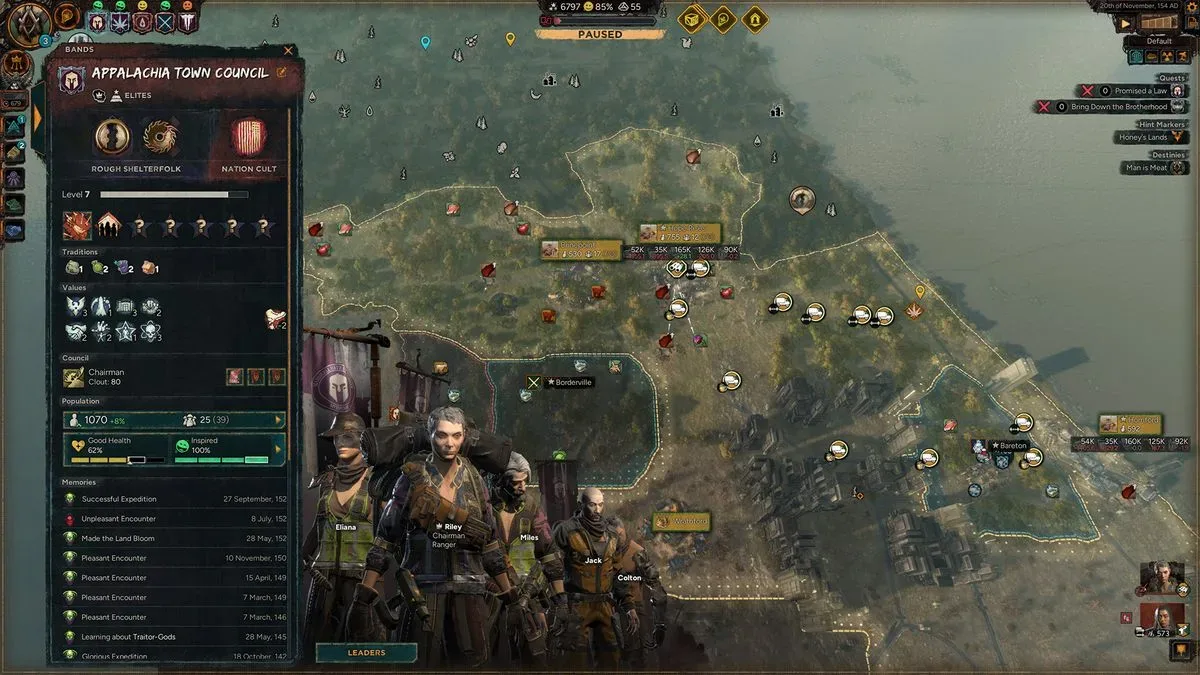
One practical reason is the presence of visible characters and models that players can follow in the world. This can make an abstract strategic decision feel grounded in the activities of actual settlers and rangers. The tutorial structure is also described as gradual rather than exhaustive. Players are introduced to basic concepts such as settlement, gathering and migration, while more systems unfold as they investigate the map and follow their curiosity.
The comparison made in the preview is to Dwarf Fortress in the sense that discovery is allowed to lead the learning process. Afterworld is still unmistakably grand strategy; zooming out reveals a map on a continental scale. Yet its complexity is meant to support the fantasy of building a resilient, unusual and perhaps deeply troubling new civilization, rather than presenting a wall of menus before that fantasy has a chance to take hold.
There is still much that has not been detailed publicly, including release timing and supported platforms. But the Gamescom 2026 showing offers a compelling picture of what Paradox is pursuing. Afterworld wants players to make consequential decisions without needing to master every system at once. It wants rival factions to develop recognizable motives, not merely different colors on a map. And it wants a seemingly expedient choice--such as settling near radiation--to leave a mark on generations yet to come.
If the final game can make those interconnected systems as readable as the preview suggests, Afterworld could offer an inviting route into Paradox-style grand strategy while preserving the studio's greatest strength: turning a collection of mechanics into an unforgettable, player-authored history. Sometimes that history may concern empires, religions and wars. Sometimes it may concern cannibal fish-mutants preparing to conquer America.
Community
Discussion
Start the conversation.
No comments have been posted yet.